 Frank Rondel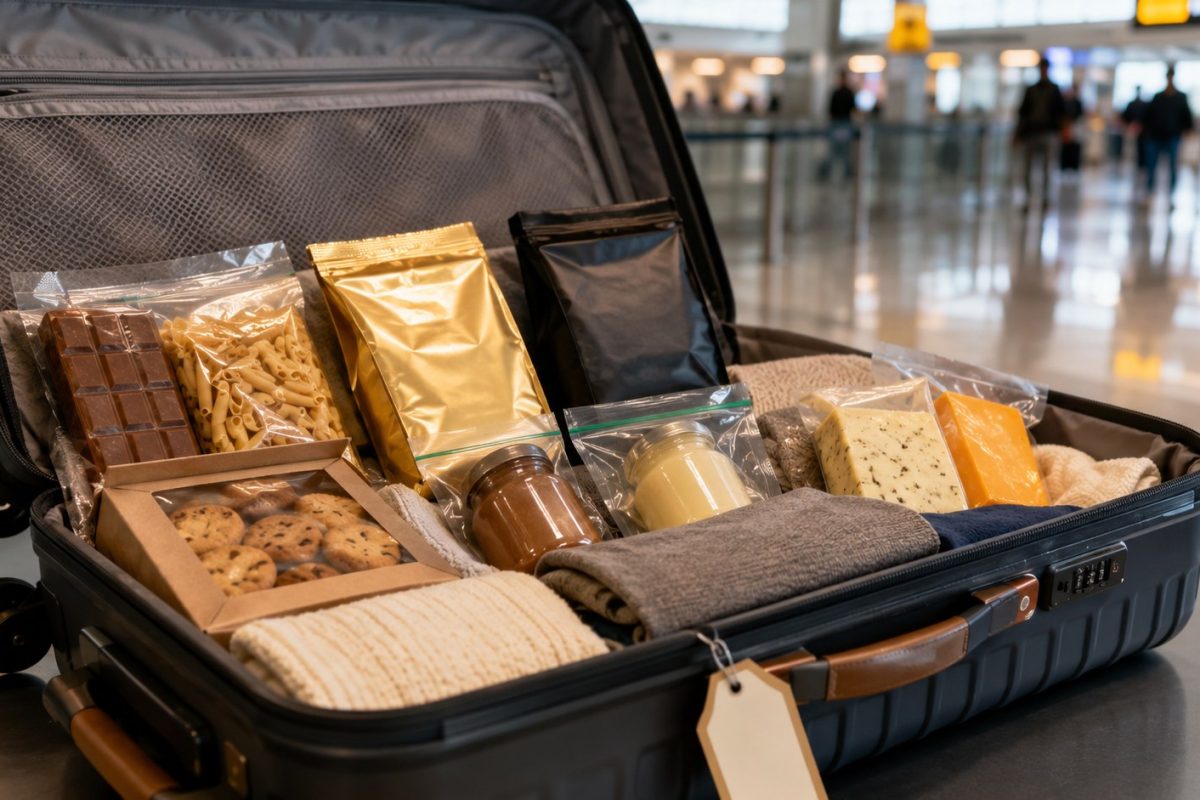
How to transport food in checked baggage is a question many travelers remember too late. Food seems harmless until a jar leaks, cheese starts to smell, or customs officers ask what exactly is inside the suitcase. Most solid food is usually easier to carry than sauces, creams, oils, frozen meals, or fresh products. The safest strategy is simple: pack dry food tightly, protect liquids in several layers, and check destination rules before flying, as noted by customreceipt.com.
Why checked baggage can be better for food
Checked baggage gives travelers more freedom than carry-on luggage. A bottle of olive oil, a jar of jam, a box of sweets, or a sealed sauce can travel more comfortably in a suitcase. The official TSA food rules explain that solid food can usually be packed in carry-on or checked bags. Liquid and gel food above 3.4 oz is usually better placed in checked baggage.
But checked luggage also creates its own risks. Bags are stacked, scanned, moved quickly, and sometimes opened for inspection. A weak cap or cracked glass jar can damage clothes within minutes. That is why food in checked baggage should always be packed as if the suitcase may fall sideways.
Good packing does not try to hide food. It makes every item safe, clean, and easy to identify.
What food is easiest to carry in a suitcase
Dry and factory-sealed products are the best option for flights. These include cookies, chocolate, candy, tea, coffee, spices, pasta, rice, crackers, cereal, and protein bars. Such products are easier to scan, less likely to leak, and usually easier to explain at inspection. Original packaging is useful because it shows ingredients, weight, expiry date, and country of origin.
Homemade food can also be carried, but it needs more care. Bread, dense cakes, dry pastries, and baked snacks usually travel better than creamy desserts. Travelers preparing food at home can think about texture before packing. For example, a loaf made from a reliable homemade bread recipe can be cooled, sliced, wrapped, and packed more safely than soft pastry with filling.
These foods are usually the easiest to pack:
- dry snacks in sealed packaging;
- chocolate, sweets, cookies, and biscuits;
- tea, coffee, spices, and dry herbs;
- pasta, rice, cereal, and flour in closed packs;
- vacuum-packed hard cheese;
- canned food, if destination rules allow it;
- sealed jars packed inside leak-proof bags.
After packing these products, check whether each item is clean and clearly labeled. Anonymous plastic bags can create questions during inspection. Factory packaging often looks safer and more transparent. If the product is valuable, unusual, or homemade, keep a receipt or label nearby. This is especially useful on international flights.
Sauces, honey, jam, and creamy products
Sauces, honey, jam, peanut butter, dips, yogurt, soft cheese, vinegar, syrup, and oils need stronger protection. These foods are often treated as liquids, gels, or spreads at security checkpoints. The official TSA food FAQ says food items must go through screening. Liquids, gels, and aerosols must follow the usual security restrictions.
Checked baggage is often the better place for these products. Still, the danger moves from security rules to leakage. A glass jar can crack. A plastic bottle can open. A metal can may dent if it hits another heavy item. For that reason, wet food should always have several protective layers.
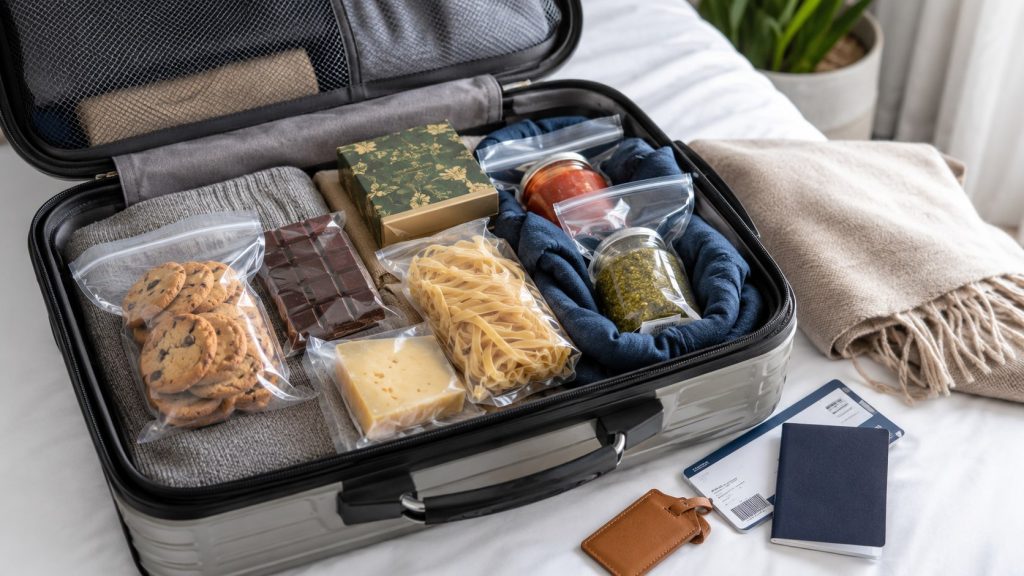
Wrap the lid with cling film first. Then place the product inside a zip bag. After that, wrap it in soft clothing and put it near the center of the suitcase. Never place oil, sauce, syrup, or jam near documents, laptops, cameras, or white clothes. A small leak can become an expensive problem.
Practical guide for common foods
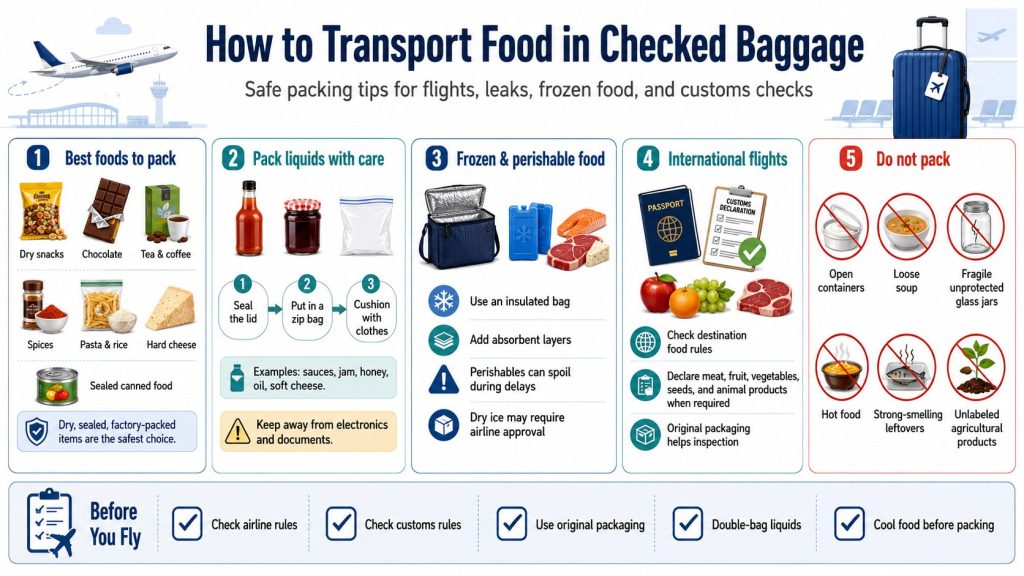
Before packing, divide food into 3 groups: dry, wet, and perishable. This makes the suitcase easier to organize. It also helps avoid last-minute mistakes at the airport. The guide below shows the safest approach for common food types.
| Food type | Best place | Packing method | Main risk |
|---|---|---|---|
| Chocolate and sweets | Checked or carry-on | Original packaging, away from heat | Melting |
| Sauces and jams | Checked baggage | Sealed jar, zip bag, soft padding | Leakage |
| Hard cheese | Checked baggage | Vacuum pack, odor protection | Smell and spoilage |
| Meat products | Depends on route | Original packaging, customs check | Entry restrictions |
| Fruit and vegetables | Depends on destination | Avoid on many international routes | Customs refusal |
| Frozen food | Checked baggage | Cooler bag, cold packs, absorbent layer | Thawing |
| Tea and spices | Checked or carry-on | Labeled sealed packs | Extra inspection |
This guide is a packing tool, not a replacement for border rules. If an item smells strongly, contains liquid, or needs cold storage, it needs extra protection. Fresh meat, fruit, vegetables, seeds, plants, and animal products require special attention. For the United States, the official CBP guidance on agricultural products says travelers must declare many agricultural items. Undeclared food can cause delays and possible penalties.
Perishable food: meat, fish, cheese, and cooked meals
Perishable food is the most difficult category. Meat, fish, seafood, dairy desserts, soft cheese, and cooked meals can spoil during delays. A suitcase may wait before loading. It can also sit in a warm baggage hall after landing. Even a short delay can change the condition of sensitive food.
For domestic flights, vacuum-packed food may be reasonable. For international travel, it is much more complicated. Meat, dairy, seafood, fruit, vegetables, seeds, and plant products can face strict controls. The official USDA APHIS page about traveling with agricultural products explains that travelers entering the United States must declare agricultural and wildlife products.
Cooked meals need special caution because fat, sauce, and moisture can damage luggage. Dishes similar to pappardelle with sous vide beef should be packed only after cooling and portioning. Meat-based meals may also be restricted on international routes. For that reason, prepared food is usually safer on short domestic trips.
Perishable food should never be packed “just in case.” It should be packed only when allowed and properly protected. Use insulated bags, cold packs, and tight containers. If the food already smells before departure, leave it at home.
Frozen food and dry ice rules
Frozen food looks easy because it starts solid. The problem begins when it melts. Ice packs, frozen sauces, or frozen liquids can turn into slush during travel. The official TSA page on frozen food explains that frozen liquids may pass screening when fully frozen. If they are partly melted, they may face restrictions at the checkpoint.
In checked baggage, frozen food needs insulation and leak control. Use a thermal bag inside the suitcase. Add absorbent material around the container. Do not rely only on supermarket wrapping because it is not designed for airport handling. If the food thaws, it should not flood the suitcase.
Dry ice has separate safety rules. The official FAA dry ice guidance allows up to 2.5 kg, or 5.5 lb, when used for perishables. Airline approval is required. The package must allow gas to vent and cannot be airtight. Checked baggage with dry ice must also be marked correctly.
How to prevent leaks, smells, and broken packaging
Packing food for a flight is closer to shipping a fragile product than preparing a picnic. Every item needs protection from pressure, movement, liquid, and odor. The suitcase may not stay upright. It may be placed under heavier bags. It may also be opened during inspection.
Use rigid containers for fragile food. Wrap lids with cling film. Put jars and bottles in separate zip bags. Add soft clothing around them, but do not make inspection impossible. If officers need to check the item, they should be able to understand it quickly.
Strong smells also matter. Coffee, spices, smoked products, fish, cheese, and cooked meals can spread odor through the suitcase. Airtight packaging helps. Double bags are often worth the effort. Clean packaging looks safer and more respectful during travel.
Domestic flights vs international flights
Domestic flights are usually simpler. You mostly deal with airline baggage weight, security screening, and the risk of leaks. International flights are different because customs and agricultural rules become important. A product allowed at departure can still be refused after arrival.
Fruit bought before boarding can become a customs issue in another country. Meat products may be restricted even when factory-sealed. Seeds, soil, plants, and homemade agricultural products are especially sensitive. The official CBP page about bringing food into the United States explains that agricultural items may be inspected by a CBP Agriculture Specialist.
Keep food easy to identify. Original labels help. Receipts help. A clear ingredient list helps. If you cannot explain what is inside a jar, an officer may not accept it. This is where many travelers lose time.
Smart packing plan before the airport
Good packing starts before the trip, not near the check-in counter. First, decide whether the food is dry, wet, frozen, or perishable. Then check whether your route is domestic or international. Finally, pack each item according to its weakest point.
Follow this simple plan:
- Check airline baggage limits and destination food rules.
- Keep food in original packaging when possible.
- Put sauces, oils, and jams into sealed bags.
- Use rigid containers for homemade or fragile food.
- Place heavy jars near the center of the suitcase.
- Add soft padding around every breakable item.
- Declare restricted food when customs rules require it.
After this checklist, your luggage should be easier to inspect and safer to handle. Avoid packing hot food because steam creates moisture. Let cooked food cool fully before sealing it. Do not overfill containers because pressure can push lids open. If you carry gifts, choose factory-packed products with labels.
What not to pack in checked baggage
Some foods are simply not worth the risk. Avoid open containers, weak plastic boxes, soups, loose sauces, fragile bottles without padding, and anything that needs constant refrigeration. Also avoid packing food with strong odor unless it is sealed very well. Smell can spread through clothing and attract extra attention.
Noodle dishes, broth-based meals, and soups are especially risky. Even when they look stable at home, they can separate or leak during a long route. If you like dishes such as homemade udon, it is safer to carry dry noodles separately. Broth, toppings, and sauces are better prepared later.
For U.S. routes, travelers can also check APHIS information about food and agricultural product categories before packing. This is useful for unusual foods, gifts, or homemade products. A confiscated item is annoying. A leaking suitcase is worse. A customs delay can be even more stressful.
FAQ
Can I put homemade food in checked baggage?
Yes, homemade food can often go in checked baggage, especially on domestic flights. It should be fully cooled, tightly sealed, and packed in a rigid container. Dry baked goods travel better than creamy or wet meals. For international flights, check rules for meat, dairy, fruit, vegetables, and seeds.
Can I pack honey, jam, or sauce in checked luggage?
Yes, checked luggage is usually the better place for honey, jam, sauce, syrup, and oil. These products may face carry-on liquid restrictions. Pack them in sealed containers, zip bags, and soft padding. Keep them away from electronics, papers, and light clothing.
Is frozen food allowed in checked baggage?
Frozen food can be packed, but it must be protected from thawing and leakage. Use insulated bags and absorbent material. If you use dry ice, follow the official FAA rules and airline requirements. The dry ice limit is 2.5 kg, or 5.5 lb, per passenger.
Do I need to declare food at customs?
On international routes, yes, many foods must be declared. For the United States, CBP requires travelers to declare meats, fruits, vegetables, plants, seeds, soil, animals, and plant or animal products. If you are unsure, declare the item. It is safer than hiding it.
What food is safest for a suitcase?
The safest food is dry, sealed, and commercially packaged. Good examples include biscuits, chocolate, tea, coffee, pasta, cereal, spices, crackers, and sweets. These products are less likely to leak or spoil. They are also easier for inspectors to recognize.
Earlier we wrote about How to Order a Vegetarian Meal on a Plane and Avoid Airline Catering Mistakes