 Frank Rondel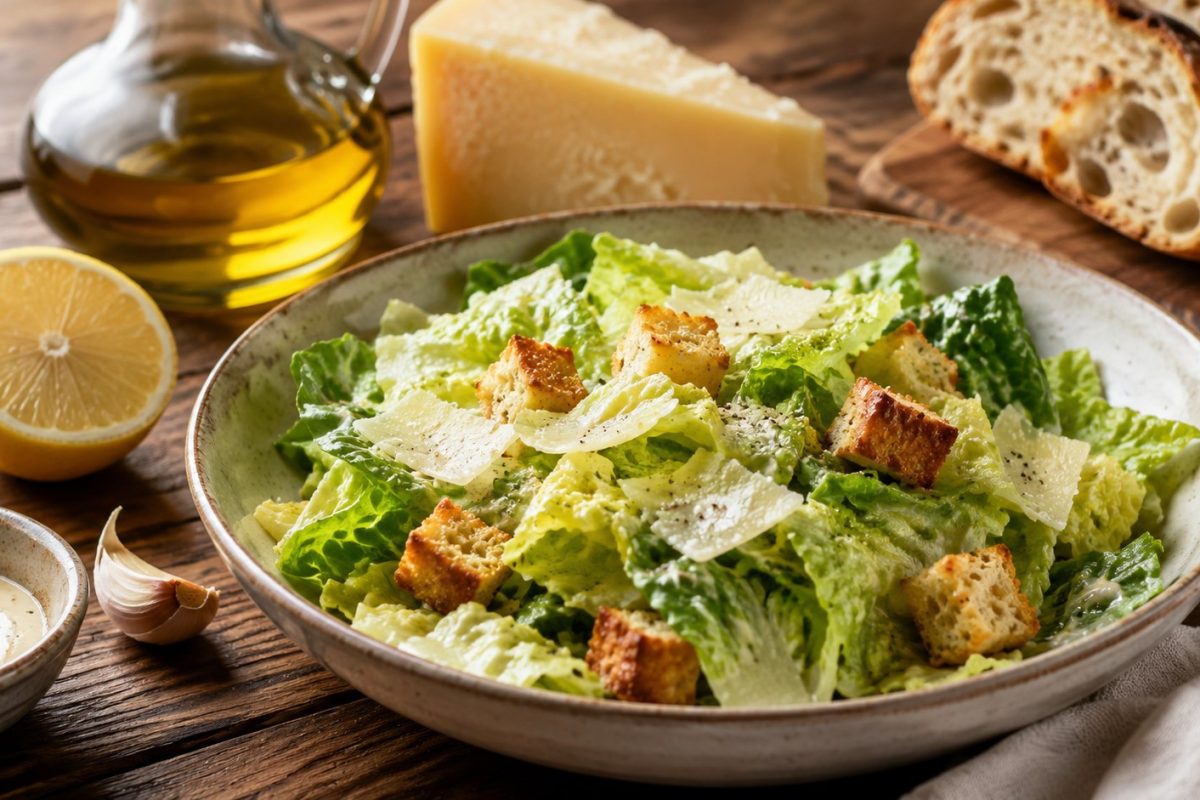
How to make Caesar salad is a question with a more surprising answer than many home cooks expect. The original dish contains no chicken, bacon, cherry tomatoes, or thick mayonnaise dressing. Its character comes from crisp romaine, Parmesan, toasted bread, egg, citrus, Worcestershire sauce, and olive oil. Every ingredient remains visible, while the dressing only creates a light, glossy coating. This restrained approach still separates a genuine Caesar from an overloaded restaurant salad, as noted by the customreceipt.com.
Where the original Caesar salad came from
Caesar salad was not created in Rome and has no direct connection with Julius Caesar. Its history leads to Tijuana, Mexico, where Italian-born restaurateur Caesar Cardini operated a popular restaurant.
The most widely accepted account dates the dish to 1924. During a crowded holiday weekend, Cardini reportedly prepared a salad from the ingredients still available in his kitchen. He mixed it beside the guests’ table, turning a simple recipe into a small performance.
The tableside ritual also served a practical purpose. The romaine stayed cold, the croutons remained crisp, and the dressing was added only seconds before serving.
Several later accounts challenged Cardini’s authorship. His brother Alex and restaurant employee Livio Santini were also connected with the recipe. Despite those disagreements, the salad remains closely associated with Caesar’s Restaurant in Tijuana.
What belongs in an authentic Caesar salad
Modern versions often contain grilled chicken, shrimp, bacon, avocado, or tomatoes. These additions can turn the salad into a substantial lunch. However, they do not belong to the simplest original structure.
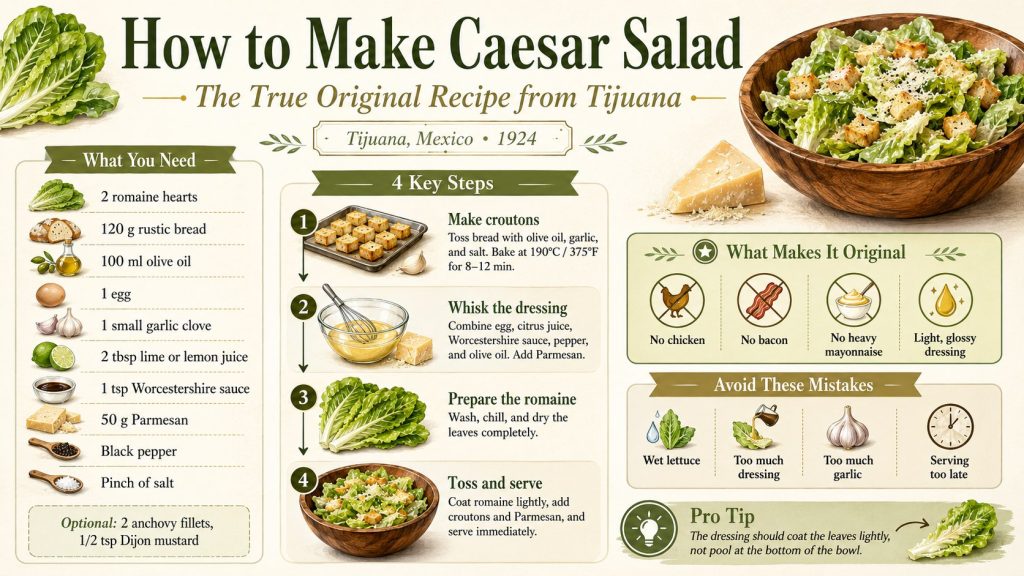
A classic version requires several carefully chosen ingredients:
- cold romaine hearts;
- extra-virgin olive oil;
- 1 lightly cooked or pasteurized egg;
- fresh lime or lemon juice;
- Worcestershire sauce;
- garlic;
- Parmesan cheese;
- toasted bread;
- black pepper;
- a small amount of salt.
Anchovies remain one of the most debated ingredients. Many current recipes use whole fillets or anchovy paste. Some early descriptions suggest that Worcestershire sauce supplied enough anchovy flavor without separate fish.
Dijon mustard creates similar debate. It helps stabilize the emulsion and adds gentle sharpness, but it may not have appeared in the earliest recipe. Home cooks can use a small amount without changing the overall character.
The quality of each ingredient matters because the recipe has nowhere to hide weaknesses. Wilted lettuce, stale cheese, or bottled citrus juice can flatten the entire dish.
Ingredients for 4 servings
The following proportions produce 4 side portions or 2 generous lunch servings. They preserve the traditional balance while remaining practical for a home kitchen.
| Ingredient | Amount | Purpose |
|---|---|---|
| Romaine lettuce | 2 medium hearts | Crisp base |
| Rustic bread | 120 g | Croutons |
| Extra-virgin olive oil | 100 ml | Dressing and croutons |
| Large egg | 1 | Emulsion |
| Garlic | 1 small clove | Aroma |
| Lime or lemon juice | 2 tbsp | Fresh acidity |
| Worcestershire sauce | 1 tsp | Savory depth |
| Parmesan | 50 g | Saltiness and umami |
| Dijon mustard | ½ tsp | Optional stability |
| Anchovy fillets | 2 | Optional stronger flavor |
| Black pepper | To taste | Final aroma |
| Salt | A small pinch | Seasoning |
Lime gives the dressing a profile closer to the salad served in Tijuana today. Lemon creates the brighter flavor familiar in many American restaurants. Fresh juice is essential in either case.
Choose a balanced olive oil without aggressive bitterness. A very strong oil can overwhelm the egg, lettuce, and citrus.
Parmigiano Reggiano provides the clearest flavor. Grana Padano is a softer and slightly milder alternative. Pre-shredded cheese should be avoided because it often contains anti-caking agents.
The egg must also be selected carefully. Pasteurized eggs are the safest option for children, older adults, pregnant women, and people with weakened immunity.
How to make garlic croutons
Cut the bread into irregular cubes measuring about 2 cm. Slightly stale baguette or sourdough works particularly well because it holds its structure during baking.
Use this method for evenly browned croutons:
- Heat the oven to 375°F or 190°C.
- Toss the bread with 1½ tablespoons of olive oil.
- Add a small pinch of salt.
- Mix in a little finely grated garlic.
- Spread the pieces in one layer.
- Bake for 8–12 minutes.
- Turn the croutons once during baking.
Remove the bread when the edges become golden. It should feel crisp outside while retaining a slight chew in the center.
Avoid using too much garlic. Small pieces can burn before the bread is ready, leaving an unpleasant bitterness.
Let the croutons cool without covering them. Warm bread releases steam and can soften the lettuce during assembly.
A frying pan can replace the oven. Toast the bread over medium heat and stir regularly. This method creates less even browning but offers a pleasant homemade texture.
Prepared croutons remain crisp for about 2 days in an airtight container. Add them only before serving because they absorb dressing quickly.
How to prepare the original Caesar dressing
Bring a small saucepan of water to a gentle boil. Lower the egg into the water for about 60 seconds, then remove it carefully. The brief heating slightly thickens the outer layer without cooking the center.
Rub the inside of a wide bowl with the cut surface of the garlic. This spreads the aroma without leaving harsh raw pieces. For a stronger taste, crush a small piece into a smooth paste.
Add the egg, Worcestershire sauce, citrus juice, black pepper, and optional mustard. Whisk until the mixture looks uniform.
Anchovies can be mashed into the bowl at this stage. They should disappear into the dressing rather than remain as noticeable pieces.
Pour in the olive oil through a thin stream while whisking continuously. The mixture should become lightly creamy but remain more fluid than mayonnaise.
Add about 30 g of finely grated Parmesan. Whisk again and taste before adding salt.
A well-made Caesar dressing is bright, savory, and light enough to coat every leaf. It should never feel like a thick layer of mayonnaise.
When the dressing tastes too sour, add a little olive oil. If it feels heavy or flat, add several drops of citrus juice.
Make every adjustment gradually. Parmesan, Worcestershire sauce, and anchovies can increase the saltiness after several minutes.
Avoid using a high-speed blender when possible. Rapid blades may make some olive oils taste bitter. A whisk offers more control over the final texture.
How to assemble Caesar salad correctly
Separate the romaine leaves and remove any damaged outer pieces. Wash them in cold water, then dry them thoroughly.
Remaining water prevents the dressing from attaching to the lettuce. A salad spinner is useful, although clean kitchen towels also work.
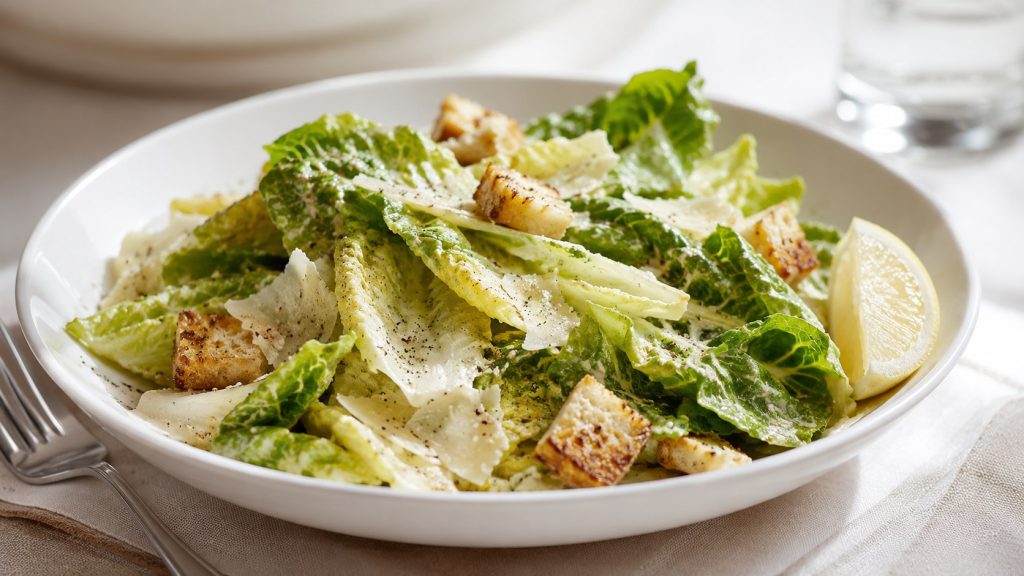
Traditional Caesar salad can be served with whole inner leaves. Guests may hold them by the firm stem. For easier eating, cut larger leaves into pieces measuring about 5–7 cm.
Pour the dressing into a wide bowl and add the romaine. Turn the leaves gently from the bottom until each one develops a light shine.
Add most of the croutons and the remaining Parmesan. Toss once or twice, then finish with black pepper and several cheese shavings.
Serve the salad immediately. Salt and citrus begin softening the lettuce as soon as they make contact.
The correct sequence protects every texture. Dressing coats the dry leaves first, while the bread and final cheese enter only near the end.
Original Caesar salad versus modern versions
The word “Caesar” now describes many different dishes. Some share only romaine, Parmesan, and a pale dressing with the original.
| Feature | Original-style Caesar | Common modern version |
| Lettuce | Romaine | Romaine, kale, or mixed greens |
| Added protein | None | Chicken, shrimp, salmon, bacon |
| Dressing base | Egg and olive oil | Often mayonnaise |
| Citrus | Lime or lemon | Usually lemon |
| Anchovies | Debated or indirect | Frequently included |
| Presentation | Whole or large leaves | Chopped lettuce |
| Serving time | Immediately | Sometimes prepared early |
Neither version must be treated as a culinary mistake. A chicken Caesar can become a complete meal, while the traditional salad works better as a starter.
The main difference lies in balance. The original relies on seasoning and freshness rather than a large quantity of sauce.
Modern restaurants often use mayonnaise because it remains stable during service. It also lets kitchens prepare dressing several hours ahead.
A homemade egg-and-oil dressing takes only a few extra minutes. Its flavor feels lighter and allows the romaine to remain central.
Caesar salad can also balance richer food. Its acidity and crisp texture work particularly well beside a creamy homemade mac and cheese recipe.
Serve the dishes separately rather than placing pasta directly on the lettuce. This protects the salad from heat and prevents the dressing from thinning.
Common mistakes that ruin Caesar salad
The first mistake is using too much garlic. One large raw clove can dominate the entire bowl. Begin with a small amount and add more only after tasting.
Another frequent problem is wet lettuce. Water dilutes the dressing and pushes olive oil away from the leaves.
Mayonnaise also changes the texture. It creates a stable sauce, but the result becomes heavier than authentic Caesar dressing made with egg and oil.
Other common errors include:
- using warm or wilted romaine;
- adding bottled lemon juice;
- choosing shelf-stable powdered cheese;
- overdressing the lettuce;
- preparing the completed salad too early;
- adding salt before tasting the Parmesan;
- allowing warm croutons to touch cold leaves.
After this list, the most important rule is restraint. The ingredients should support one another rather than compete.
The dressing must create a thin coating. Large pools at the bottom indicate that too much was added.
Temperature matters as well. Cold romaine creates contrast with room-temperature dressing and crisp bread.
Do not refrigerate olive oil dressing until it becomes solid. When it has been chilled, let it return toward room temperature before whisking.
Acidity should remain noticeable but controlled. Too much citrus makes the lettuce taste sour rather than fresh.
How to serve Caesar salad as a complete meal
The original salad does not contain meat, but it can still anchor a balanced menu. Serve it before pasta, roasted fish, steak, or grilled vegetables.
Chicken remains the most familiar addition. Grill the meat separately and slice it after a short resting period. Place it beside the salad rather than mixing it aggressively through the leaves.
Shrimp offers a lighter option. Season it simply with salt, pepper, and olive oil. Strong marinades can compete with the dressing.
For a vegetarian meal, add roasted chickpeas or white beans on the side. Their mild flavor does not overwhelm the Parmesan or citrus.
A light white wine, sparkling water with lime, or unsweetened iced tea works well. Very sweet drinks can make the dressing seem excessively sharp.
Dessert should offer contrast. A carefully chilled homemade cheesecake suits a weekend dinner, especially when served with fresh berries.
For a lighter summer menu, consider a strawberry tiramisu recipe. Its fruit and mascarpone create a softer finish without repeating the savory flavors of the salad.
Practical substitutions that preserve the character
A pasteurized egg is the easiest safety-focused substitution. It behaves like a regular egg and preserves the original emulsion.
People who avoid whole anchovies can omit them. Worcestershire sauce still provides some savory depth, although standard versions usually contain fish.
For a vegetarian dressing, use fish-free Worcestershire sauce and several finely chopped capers. The result is not historically exact but keeps the salty and acidic balance.
Gluten-free bread works for croutons when it has a firm structure. Cut the cubes slightly larger because fragile bread can crumble during mixing.
Pecorino Romano can replace Parmesan. However, it tastes sharper and saltier, so a smaller quantity is usually enough.
Iceberg lettuce should not replace romaine. It offers crunch but lacks the sturdy shape and mild bitterness needed for the recipe.
Kale creates an entirely different salad. Its leaves require longer mixing and more dressing, which removes the clean texture of the original.
FAQ
Does the original Caesar salad contain anchovies?
The question remains disputed. Some historical accounts suggest that separate anchovies were absent because Worcestershire sauce already contained their flavor. Many current restaurant versions use whole fillets.
Is Caesar salad Italian or Mexican?
The creator had Italian roots, but the salad became famous in Tijuana, Mexico. It combines Italian culinary influences with a Mexican place of origin.
Can Caesar dressing be made without raw egg?
Yes. Use a pasteurized egg or pasteurized yolk. A briefly coddled egg is another option, although it remains lightly cooked rather than fully cooked.
Should Caesar salad use lemon or lime?
Both are common. Lime is closely associated with the Tijuana version, while lemon is more familiar in many American recipes. Fresh juice matters more than the choice itself.
Why does homemade Caesar dressing split?
The oil was probably added too quickly. Temperature differences can also break the emulsion. Begin with the egg and citrus, then whisk in the oil gradually.
Can the salad be prepared in advance?
Prepare the components separately. Wash and dry the lettuce, toast the croutons, grate the cheese, and mix the dressing. Combine everything immediately before serving.
How long can Caesar dressing be stored?
Dressing made with pasteurized egg can be refrigerated in a sealed container for about 1–2 days. Whisk it before serving and discard it when its smell or texture changes.
Can chicken be added to an original Caesar salad?
Chicken can be added for a larger meal, but it changes the historical recipe. Serve it beside the dressed leaves to preserve their texture.
Why is my Caesar salad watery?
The lettuce was probably not dried completely. Excess water weakens the dressing and prevents it from adhering to the leaves.
Which Parmesan is best for Caesar salad?
Parmigiano Reggiano offers the strongest traditional flavor. Grana Padano is a milder alternative. Freshly grated cheese works better than pre-shredded products.
Earlier we wrote about How to Make a Blue Lagoon Cocktail at Home: Alcoholic and Virgin Recipes