 Frank Rondel
Mac and cheese recipe is one of those kitchen classics that looks simple, yet often disappoints when the sauce turns grainy, dry or bland. The good version is different: tender pasta, a silky cheese sauce, a little mustard for depth and a baked golden top if you want extra comfort. This homemade method takes about 30 minutes on the stove, or 45 minutes if you finish it in the oven. It is made for weeknights, family dinners and anyone who wants real comfort food without relying on a boxed mix, as noted by customreceipt.com.
Why homemade mac and cheese tastes better
A good homemade mac and cheese is not just pasta with melted cheese. The real difference comes from the sauce. You start with butter and flour, slowly add milk, then melt cheese into that warm base. This gives the dish a creamy structure that holds together instead of separating into oil and clumps. It is also the reason restaurant-style mac and cheese feels richer than a quick microwave version.
The best part is control. You decide how sharp the cheese should be, how thick the sauce becomes and whether the final dish stays creamy or gets a crisp baked layer. Boxed versions often depend on powdered cheese and stabilizers, while a homemade recipe gives you a warmer, deeper flavor. It also lets you use what is already in your fridge, which makes the dish cheaper and more flexible.
Many cooks fail with mac and cheese because they rush the sauce. Cheese does not like aggressive heat. If you boil it, it can split and turn rough. If you melt it slowly, the sauce becomes glossy and smooth. That one detail changes the whole dish, just like timing and texture decide the result in this guide on homemade bread with crispy crust.
Ingredients for classic mac and cheese
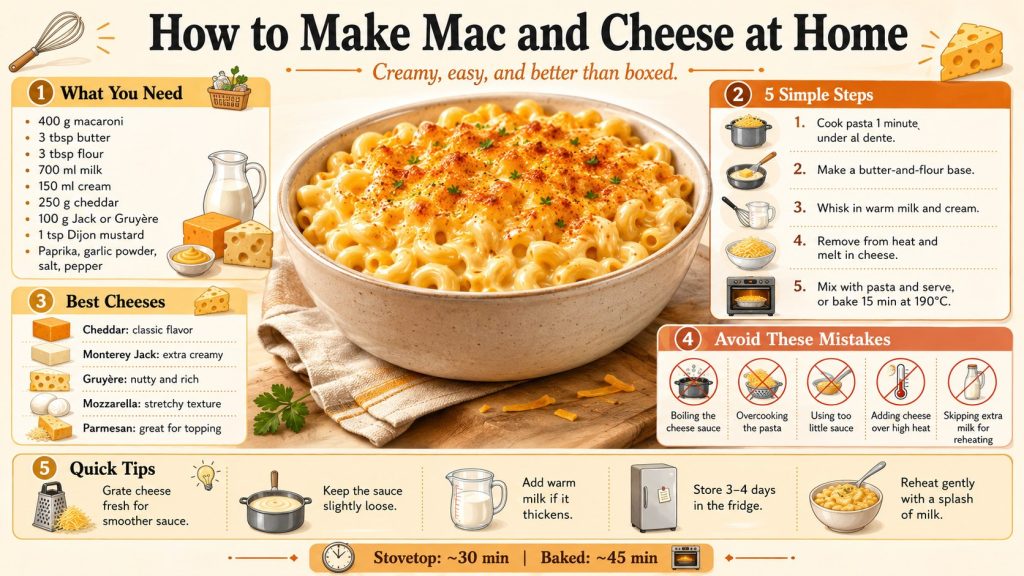
Before cooking, prepare everything near the stove. The sauce comes together quickly, and it is much easier when the cheese is already grated. Pre-shredded cheese can work in a hurry, but freshly grated cheese melts better because it has fewer anti-caking ingredients. For the creamiest result, use a mix of sharp cheddar and a softer cheese such as Monterey Jack, Gruyère or mozzarella.
- 400 g elbow macaroni, cavatappi or small shells
- 3 tbsp unsalted butter
- 3 tbsp all-purpose flour
- 700 ml whole milk, warm
- 150 ml heavy cream or evaporated milk
- 250 g sharp cheddar, freshly grated
- 100 g Monterey Jack, Gruyère or mozzarella
- 1 tsp Dijon mustard
- 0.5 tsp garlic powder
- 0.5 tsp smoked paprika
- Salt and black pepper to taste
- 70 g breadcrumbs, optional for baking
- 1 tbsp melted butter, optional for topping
After this list, the most important thing is balance. Too much pasta makes the dish dry, while too much cheese without enough milk can make the sauce heavy. A small amount of mustard does not make the dish taste like mustard. It simply sharpens the cheese flavor. Paprika adds warmth, and garlic powder gives the sauce a gentle savory background.
If you want a cheaper version, use only cheddar and milk. If you want a richer one, add cream and bake it under breadcrumbs. Both versions work, but they serve different moods. The stovetop version is softer and faster. The baked version feels more festive and gives you that crisp top many people expect from baked mac and cheese.
Step-by-step mac and cheese recipe
Bring a large pot of salted water to a boil. Add the pasta and cook it 1 minute less than the package says. This matters because the pasta will continue absorbing sauce after draining. Overcooked pasta makes the final dish soft and heavy. Drain it, but do not rinse it.
In a wide saucepan, melt butter over medium heat. Add flour and whisk for about 1 minute. The mixture should look smooth and slightly foamy, not brown. Slowly pour in warm milk while whisking constantly. Add cream, then cook for 3–5 minutes until the sauce thickens enough to coat a spoon.
Remove the pan from the heat before adding cheese. Stir in cheddar first, then add the second cheese. Mix gently until everything melts. Add Dijon mustard, garlic powder, paprika, salt and pepper. Taste the sauce before mixing it with pasta because cheese already contains salt.
Add the pasta to the sauce and stir until every piece is coated. At this point, you can serve it immediately as creamy stovetop mac and cheese. For a baked version, transfer it to a buttered baking dish. Mix breadcrumbs with melted butter, scatter them over the top and bake at 190°C for about 15 minutes. If you like restaurant-style pasta ideas, this pappardelle with sous vide beef and asparagus shows how technique changes texture.
“The safest way to keep mac and cheese creamy is to turn off the heat before adding the cheese. Gentle heat protects the sauce from breaking.”
Let the baked dish rest for 5 minutes before serving. This short pause helps the sauce settle without drying out. It also makes portions cleaner. If the mac and cheese looks too thick after resting, stir in 2–3 tablespoons of warm milk. That small fix brings back the creamy texture.
Best cheeses for creamy mac and cheese
Cheese choice defines the whole dish. Sharp cheddar gives the classic taste, but it can become intense if used alone. A melting cheese such as Monterey Jack makes the sauce smoother. Gruyère gives a nutty note and works well for a more adult version. Mozzarella adds stretch, though it should not be the main cheese because it has a mild flavor.
Here is a simple guide for choosing cheese combinations:
| Cheese option | Flavor | Best use |
|---|---|---|
| Sharp cheddar | Strong, classic | Everyday mac and cheese |
| Monterey Jack | Mild, creamy | Smooth stovetop sauce |
| Gruyère | Nutty, rich | Baked dinner version |
| Mozzarella | Mild, stretchy | Family-style creamy dish |
| Parmesan | Salty, sharp | Small amount in topping |
After choosing cheese, watch the heat carefully. Cheese melts best when the sauce is hot but not boiling. If the sauce bubbles hard, remove it from the stove for a minute. Then add cheese in small handfuls. This keeps the texture even and prevents that unpleasant oily layer.
A mix of 2 cheeses is usually enough. More than 3 can make the flavor muddy, especially if you use strong varieties. For a reliable family dinner, cheddar and Monterey Jack are the safest pair. For a deeper weekend version, cheddar and Gruyère create a more complex dish. Parmesan is best used as an accent, not as the main cheese.
How to avoid dry or grainy sauce
Dry mac and cheese usually has 2 causes: too much pasta or too little sauce. Pasta continues absorbing liquid even after cooking. This is why the sauce should look slightly looser than you think. If it looks perfect in the pan, it may become too thick on the plate. A splash of warm milk can fix that quickly.
Grainy sauce is different. It usually happens when cheese is overheated. Another reason is low-quality processed cheese or aged cheese that does not melt smoothly. Freshly grated cheese gives better results. It melts faster and blends more evenly into the milk base.
There are several small rules that make the recipe more reliable. They are simple, but they decide whether the dish tastes homemade in a good way or feels heavy and flat.
- Cook pasta slightly underdone.
- Warm the milk before adding it to the roux.
- Remove the sauce from heat before adding cheese.
- Use freshly grated cheese when possible.
- Keep extra warm milk nearby for adjusting texture.
- Season gradually because cheese can be salty.
After these steps, the recipe becomes much harder to ruin. You do not need expensive ingredients. You just need patience at the sauce stage. The roux should be smooth, the milk should go in slowly and the cheese should melt gently. That is the quiet discipline behind a great easy mac and cheese recipe.
If your sauce still becomes too thick, do not panic. Add warm milk 1 tablespoon at a time and stir. If it tastes bland, add a pinch of salt, mustard or paprika. If it tastes too salty, add a little more pasta or a spoon of cream. Small corrections work better than big changes.
Stovetop or baked mac and cheese: which is better
Stovetop mac and cheese is faster, creamier and better for immediate serving. It is the right choice when you want dinner in 30 minutes. The sauce stays soft, and the pasta feels coated rather than set. It is also easier to reheat because there is no dry breadcrumb crust competing with the sauce.
Baked mac and cheese has a different personality. It is thicker, warmer and more structured. The top becomes golden, and the edges get a little crisp. This version works better for Sunday dinner, potlucks or holiday meals. It also looks more complete on a table.
The only risk with baking is dryness. To avoid it, keep the sauce looser before the dish goes into the oven. Do not bake it too long. You only need to brown the top and heat everything through. A short, hot bake is better than a long one.
For busy nights, use the stovetop version. For guests, bake it with breadcrumbs and a little Parmesan. Both are valid. The right choice depends on timing, texture and who is eating. The same choice between speed and texture appears in many homemade dishes, including Japanese udon made at home, where resting time changes the final bite.
Useful add-ins and serving ideas
Mac and cheese can stay classic, but it also handles upgrades well. The key is not to overload it. Add-ins should support the cheese sauce, not hide it. Cooked ingredients work best because they do not release extra water into the dish. This is especially important if you plan to bake it.
Good additions include crispy bacon, roasted broccoli, caramelized onions, chicken, peas or sautéed mushrooms. For heat, add jalapeños or a little hot sauce. For a more balanced dinner, serve it with a green salad. The freshness cuts through the richness and makes the meal feel lighter.
For children, keep the seasoning simple and use mild cheese. For adults, a touch of smoked paprika or cayenne can make the dish more interesting.
You can also prepare the sauce ahead. Store it separately from the pasta if possible. When ready to serve, warm the sauce gently and loosen it with milk. Then mix it with freshly cooked pasta. This method gives a better texture than fully assembling the dish too early.
Storage, reheating and meal prep tips
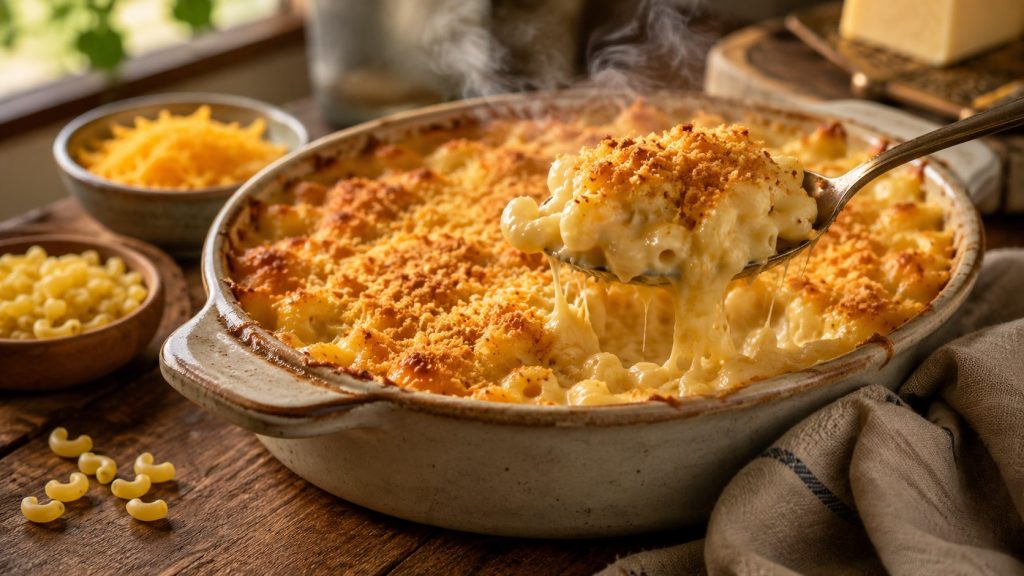
Mac and cheese keeps well in the fridge for 3–4 days. Store it in an airtight container. It will thicken as it cools because pasta absorbs the sauce. That is normal. Do not judge leftovers by their cold texture.
To reheat, add a splash of milk before warming. Use a saucepan over low heat and stir often. A microwave also works, but heat it in short intervals. Stir between each round. This keeps the sauce from drying at the edges.
Freezing is possible, but not ideal. Dairy sauces can become slightly grainy after thawing. If you must freeze it, choose the baked version and cool it completely first. Wrap it tightly and use it within 2 months. Reheat covered, then uncover near the end to refresh the top.
The smartest meal prep trick is simple: make the cheese sauce and cook pasta later. This gives you the flavor of homemade mac and cheese without the texture problems of stored pasta. It is also a good option for families who need quick dinners during the week. For dessert after a heavier dinner, readers may also like this lighter protein ice cream recipe.
FAQ
What pasta is best for mac and cheese?
Elbow macaroni is the classic choice because it catches sauce well. Cavatappi, shells and small ridged pasta also work very well. Avoid long pasta because it does not hold the sauce as evenly. The goal is to choose a shape with curves, ridges or small pockets.
Can I make mac and cheese without flour?
Yes, but the texture will be different. You can use evaporated milk and cheese for a faster sauce. Some cooks also use a little cornstarch mixed with milk. Flour-based roux remains the most reliable method for a stable, creamy result.
Why did my cheese sauce become grainy?
The most common reason is high heat. Cheese should melt off the heat or over very low heat. Pre-shredded cheese can also cause problems because it often contains anti-caking agents. Freshly grated cheese usually gives a smoother sauce.
Can I prepare mac and cheese ahead of time?
Yes, but keep the sauce slightly loose. Pasta absorbs liquid while it sits. If you assemble the dish ahead, add a little extra milk before baking. Cover it in the fridge and bake it until hot, then uncover it for the final golden top.
What can I serve with mac and cheese?
A crisp salad, roasted vegetables or grilled chicken are good choices. Acidic sides work especially well because they balance the richness. Pickles, tomato salad or slaw can also help. For another home dinner idea, try Philadelphia sushi rolls at home.
Is homemade mac and cheese cheaper than boxed?
It depends on the cheese. A basic version with cheddar, milk, butter and pasta can be affordable. Premium cheese makes it more expensive, but also more flavorful. The homemade version gives better texture, more control and a fuller taste.
Earlier we wrote about how to transport food in checked baggage safely: official TSA and customs rules