 Frank Rondel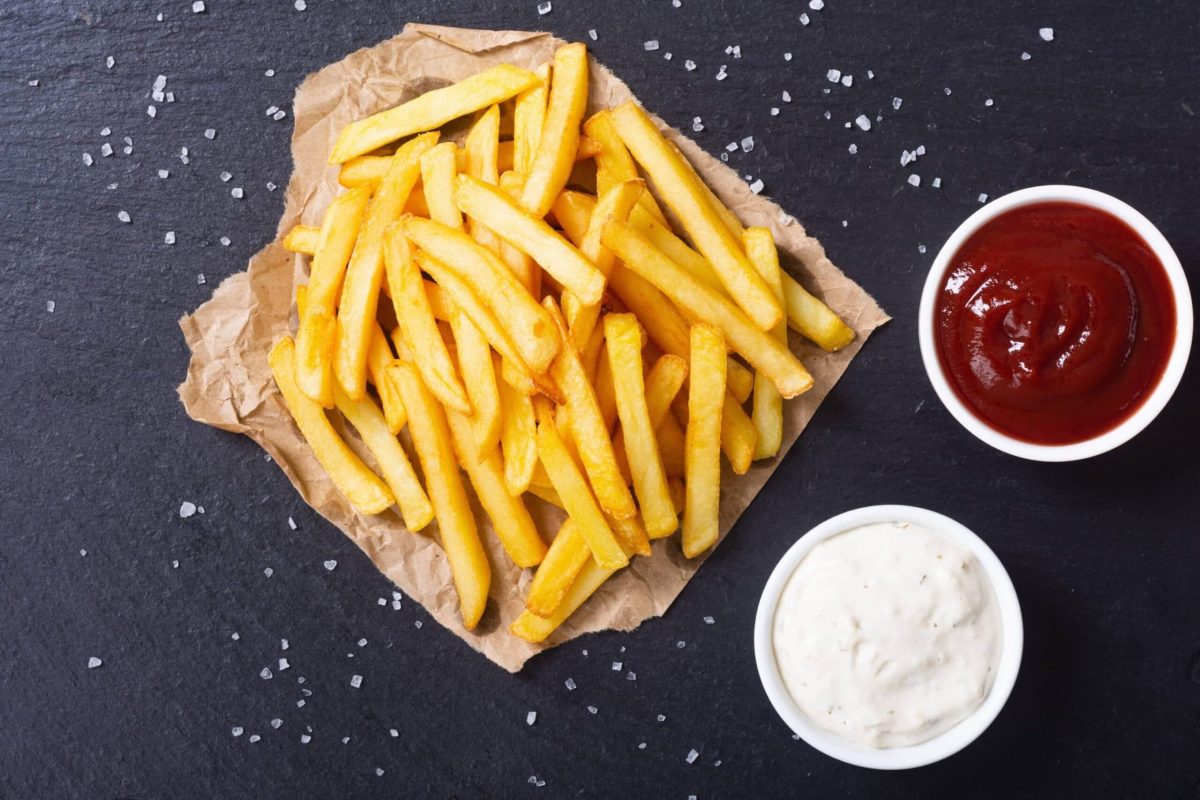
How to make French fries without a deep fryer is easier than many home cooks expect. You only need potatoes, oil, salt, and an ordinary oven or skillet. The best results depend on cutting, soaking, drying, and temperature control. Expensive kitchen equipment cannot replace these basic steps. This recipe produces golden fries with crisp edges and fluffy centers, as noted by the customreceipt.com editorial team.
Homemade fries usually become soft for 3 reasons. The potatoes remain wet, the cooking surface is overcrowded, or the temperature falls too quickly. Uneven pieces also create problems. Thin sticks burn while thick pieces remain firm inside.
This guide explains oven baking, shallow frying, and double cooking in a skillet. It also covers potato selection, seasoning, reheating, and common mistakes.
Which potatoes are best for homemade French fries
Russet potatoes are the most reliable choice for classic American-style fries. They contain plenty of starch and relatively little moisture. Their interiors become fluffy, while the outer surface develops a firm crust.
Yukon Gold potatoes can also be used. They create denser fries with a rich and slightly buttery flavor. However, they may remain softer than Russets.
Choose firm potatoes without large sprouts, green areas, or deep damage. Potatoes of similar size are easier to cut evenly. Uniform pieces finish cooking at nearly the same time.
The exact shape matters less than consistent thickness. Cut each stick about ⅜ inch thick. Very thin fries cook faster but can become dry. Thick steak fries need more time to soften inside.
Ingredients and equipment for 4 servings
This recipe uses inexpensive ingredients found in most grocery stores. You can adjust the spices after cooking. Salt should usually be added near the end.
You will need:
- 4 large Russet potatoes, about 2 pounds;
- 3–4 tablespoons neutral oil for baking;
- 2–3 cups neutral oil for skillet frying;
- 1 teaspoon fine salt;
- ½ teaspoon black pepper, optional;
- 1 tablespoon cornstarch, optional;
- 1 tablespoon white vinegar, optional;
- garlic powder, paprika, or dried herbs, optional.
Prepare a sharp knife, cutting board, large bowl, towels, and metal tongs. A heavy skillet distributes heat better than a thin pan. A wide baking sheet gives the potatoes more room. Parchment paper simplifies cleanup but can reduce direct browning.
Choose canola, peanut, sunflower, or refined avocado oil. These oils handle higher temperatures well. Extra-virgin olive oil has a stronger flavor and may smoke earlier. Butter is unsuitable because its milk solids burn quickly.
Never allow water to enter hot oil. Turn pan handles away from the counter edge. Keep children and pets outside the immediate cooking area. Hot oil should never be left unattended.
Oven, skillet, and shallow-frying methods compared
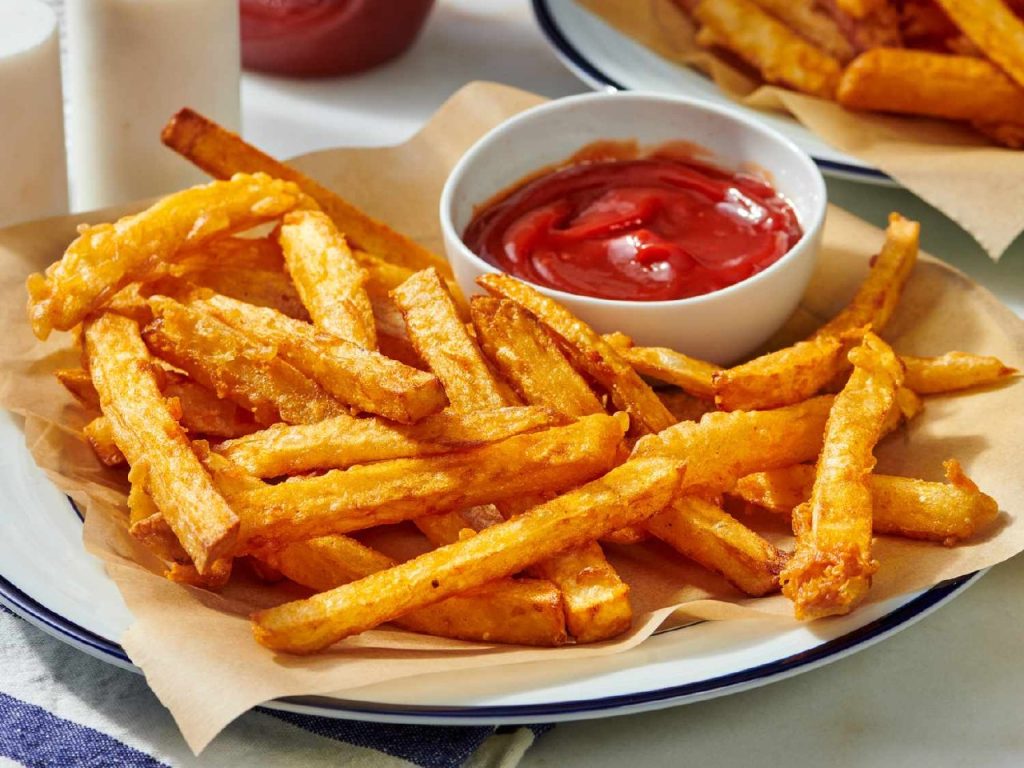
Different cooking methods create different textures. Oven fries use less oil and require less attention. Skillet fries develop a richer and more traditional crust.
The comparison below helps you select the right method:
| Cooking method | Oil required | Temperature | Approximate time | Final texture |
|---|---|---|---|---|
| Conventional oven | 3–4 tablespoons | 450°F | 30–40 minutes | Crisp edges and fluffy center |
| Convection oven | 2–3 tablespoons | 425°F | 25–35 minutes | Even browning and lighter crust |
| Double skillet frying | 2–3 cups | 325°F, then 375°F | 12–16 minutes | Closest to restaurant fries |
| Shallow frying | About ½ inch | Medium-high heat | 15–20 minutes | Rustic and crisp on several sides |
Ovens do not always maintain the temperature shown on their controls. Begin checking the fries before the estimated time ends. Rotate the sheet when one side browns faster. Avoid opening the door every few minutes.
A thermometer gives better control during skillet frying. Without one, test the oil with a single potato stick. Gentle bubbling indicates useful heat. Violent bubbling means the oil is probably too hot.
The potatoes should become golden rather than very dark brown. Deep browning can produce a bitter flavor. It also makes the surface dry before the center reaches the correct texture.
How to prepare potatoes for crispier fries
Wash the potatoes thoroughly. Peel them or leave the clean skins attached. Cut each potato into even slabs and then into sticks.
Place the cut potatoes in a large bowl of cold water. Soak them for at least 30 minutes. A 2-hour soak removes more loose surface starch.
Drain the potatoes and rinse them again. Spread them across clean kitchen towels. Dry every side before adding oil.
Moisture is the main enemy of crisp homemade fries. It creates steam in the oven and dangerous splashing in hot oil.
For oven fries, place the dry sticks in a clean bowl. Add a thin layer of oil and mix carefully. Sprinkle 1 tablespoon of cornstarch over the potatoes.
Cornstarch creates a delicate outer shell. Too much can leave a dusty and unpleasant coating. Add only enough to lightly cover the surface.
A short vinegar treatment can help thick fries keep their shape. Simmer the sticks for 4–5 minutes in water with 1 tablespoon vinegar. Drain them gently and let the surfaces dry.
How to make oven fries without a deep fryer
Preheat the oven to 450°F. Leave the baking sheet inside during preheating. Hot metal starts browning the potatoes immediately.
Place the prepared fries on the hot sheet. Keep them in one layer with visible spaces. Use 2 sheets when necessary.
Bake the fries for 15 minutes without moving them. Turn each piece with a thin spatula. Continue cooking for another 15–25 minutes.
Remove thin pieces when they finish earlier. The correct color is golden yellow with several deeper edges. Salt the fries immediately after baking.
Follow this order for better results:
- Cut the potatoes into equal sticks.
- Soak them in cold water.
- Dry each piece thoroughly.
- Coat them lightly with oil.
- Arrange them in one uncrowded layer.
- Turn them after the first crust develops.
- Season and serve immediately.
The heated sheet protects the underside from slow steaming. Dry potatoes brown more efficiently. A thin oil layer transfers heat without making the fries greasy.
Spacing allows moisture to escape. Overcrowded potatoes cook inside trapped steam. Turning too early can tear the developing crust.
Finished fries should remain uncovered. A lid or deep bowl traps steam around them. Their crisp exterior can soften within several minutes.
For a complete casual dinner, serve them beside grilled chicken or vegetables. They also pair well with creamy homemade mac and cheese. Keep both portions moderate because the dishes are filling.
Double-cooked skillet fries
Pour about 1 inch of oil into a heavy skillet. The pan should never be more than one-third full. Extra space reduces the risk of overflow.
Heat the oil to 325°F. Add one loose layer of potato sticks. Cook them for 4–6 minutes without deep browning.
The potatoes should become pale and flexible. Remove them with a slotted spoon. Let them rest on a wire rack or paper towels.
Raise the oil temperature to 375°F. Return the cooled potatoes in small batches. Fry them for another 2–4 minutes.
The second stage creates the crisp exterior. Remove the fries when they become light golden. Season them while their surfaces remain hot.
Do not add frozen or wet potatoes to hot oil. Moisture can cause aggressive splattering. Never attempt to cool burning oil with water.
Double cooking separates 2 important tasks. The first stage softens the interior. The second removes surface moisture and builds the crust.
How to shallow-fry potatoes with less oil
Shallow frying uses less oil than the double-cooking method. Pour about ½ inch of oil into a wide skillet. Heat it over medium-high heat.
Add completely dry potato sticks. Avoid creating several heavy layers. Fry one side until it develops a golden surface.
Turn the potatoes several times. Reduce the heat when the outside darkens too quickly. The center still needs enough time to soften.
Cooking usually takes 15–20 minutes. Test one thick piece before removing the entire batch. Drain the fries on a wire rack or paper towels.
The texture will look more rustic than restaurant fries. Some sides may become darker than others. The flavor, however, remains rich and satisfying.
Cold citrus drinks create contrast with salty potatoes. Adults can prepare a Blue Lagoon cocktail at home. The linked recipe also includes an alcohol-free version for other guests.
Why homemade fries become soggy
Soft fries usually result from moisture, low heat, or overcrowding. Each problem prevents rapid crust formation. All 3 are easy to avoid.
Wet potato surfaces lower the temperature of hot oil. They also release steam inside the oven. Poorly preheated cookware creates a similar effect.
Salt can draw moisture toward the surface. Add it after cooking unless your recipe requires otherwise. Do not cover freshly cooked potatoes.
Common mistakes include:
- cutting potatoes into different sizes;
- using waxy potatoes with high moisture;
- adding too much cornstarch;
- placing too many fries on one sheet;
- frying a very large batch;
- turning oven fries too often;
- storing hot fries in a closed container.
Uneven pieces always cook at different speeds. Too much cornstarch produces a dry coating. Large batches also reduce the oil temperature.
Frequent turning interrupts browning. It may also break soft potato sticks. Wait until the lower side develops a stable crust.
When preparing several portions, cook in batches. Keep earlier oven fries warm at 225°F. Place them on a wire rack.
Do not pile them into a deep bowl. Air circulation protects the surface. Serve every batch as soon as possible.
Seasoning ideas for homemade fries
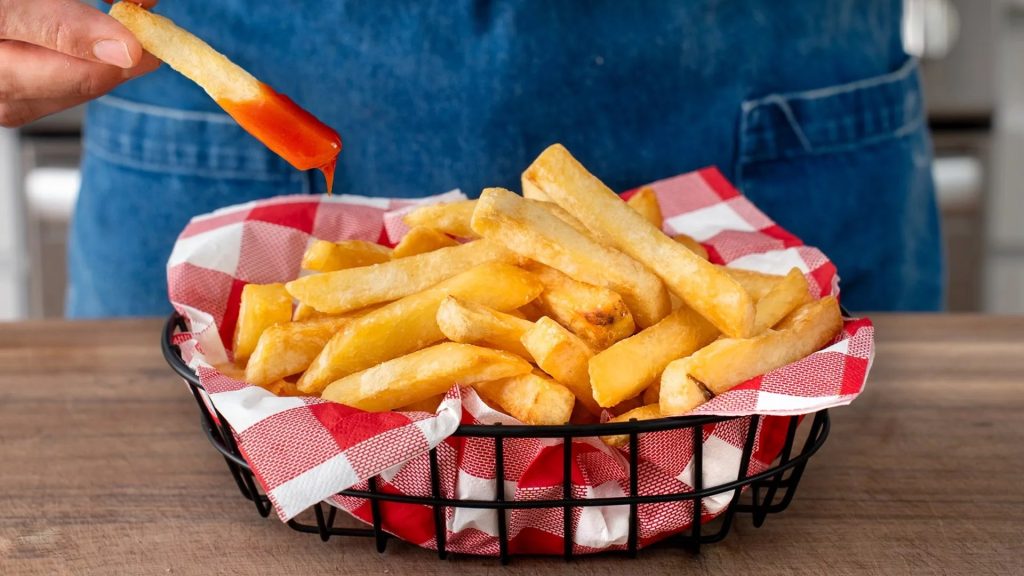
Salt remains the classic seasoning, but it is not the only option. Start with small quantities and taste before adding more.
For smoky fries, combine paprika, garlic powder, and black pepper. Parmesan fries need finely grated cheese and dried parsley. Add the cheese only after cooking.
Cajun seasoning creates a stronger and spicier flavor. Check the label because many prepared blends already contain salt. Additional salt may become unnecessary.
Rosemary and fresh lemon zest create a lighter profile. Chop the rosemary very finely. Add the zest seconds before serving.
Serve fries with ketchup, mustard, garlic yogurt, or spicy mayonnaise. Keep sauces beside the potatoes. Pouring sauce over them quickly softens the crust.
A crisp original Caesar salad can balance a richer plate of fries. Its lettuce and citrus dressing add freshness. Serve both dishes separately to protect their textures.
How to store and reheat leftover fries
Allow the fries to cool briefly before refrigeration. Do not leave them at room temperature for several hours. Transfer them into a shallow container.
Refrigerated fries are best used within 3–4 days. Their texture will decline during storage. Proper reheating can restore part of the original crust.
Heat the oven to 425°F. Spread the fries in one layer. Reheat them for 5–10 minutes.
A dry skillet also works. Warm the fries over medium heat with very little added oil. Turn them several times.
Avoid the microwave when crispness matters. It heats internal moisture and softens the outer surface. Some pieces may also become unevenly hot.
A dessert can be prepared before the main meal. This homemade cheesecake without cracks can chill while the potatoes cook. Serve the fries first and keep the dessert refrigerated.
For a lighter summer option, try this strawberry tiramisu recipe. It requires no oven and contains no coffee. Its fresh berry flavor contrasts with salty food.
FAQ
Can I make crispy fries without soaking the potatoes?
Yes, but soaking usually improves the final texture. It removes loose starch from the surface. At minimum, rinse the cut potatoes well. Drying remains essential before cooking.
Why are potatoes cooked twice in a skillet?
The first stage softens the center without heavy browning. The second stage creates the crisp outer shell. This method gives the best contrast between crust and interior.
Which oil is best for homemade French fries?
Canola, peanut, sunflower, and refined avocado oil work well. They have neutral flavors and tolerate high temperatures. Avoid butter because it burns quickly.
Can fries be made without cornstarch?
Yes. Cornstarch is optional. Proper drying, spacing, and temperature control can create crisp fries without it.
How do I keep homemade fries crispy?
Serve them immediately and leave them uncovered. Keep multiple batches on a wire rack in a 225°F oven. Avoid stacking them deeply.
Should potatoes be peeled before making fries?
Peeling is optional. Clean skins add flavor and a rustic texture. Remove green, damaged, or heavily sprouted sections.
Can I use olive oil for oven fries?
Refined olive oil is suitable. Extra-virgin oil adds stronger flavor and may smoke earlier. Watch the fries carefully at high temperatures.
Why do my oven fries stick to the baking sheet?
The sheet may not be hot enough. The potatoes may also remain wet. Use enough oil and wait before turning them.
Earlier we wrote about How to Make Caesar Salad: The True Original Recipe from Tijuana