 Frank Rondel
How to make KFC-style chicken at home is one of those kitchen questions that sounds simple until the first batch comes out pale, oily, or dry. The secret is not one magic spice, but a chain of small decisions: buttermilk, flour, starch, resting time, oil temperature, and a spice mix built around paprika, garlic, black pepper and white pepper, as noted by customreceipt.com.
KFC’s exact Original Recipe remains a protected brand secret. That is why any home version should be treated honestly: this is not the official formula, but a practical KFC-style chicken recipe designed to deliver the same idea at home — tender chicken, a seasoned crust, and a deep fried-chicken aroma without restaurant equipment.
Why KFC-style chicken tastes different from ordinary fried chicken
Classic fast-food fried chicken is not just chicken dipped in flour. The real character comes from a seasoned coating that clings to the skin, absorbs moisture from the marinade, then turns crisp in hot oil. A good home version needs 3 things at once: salt inside the meat, spice in the crust, and enough heat to cook the chicken without burning the flour.
The famous KFC image is built around “11 herbs and spices”, pressure frying, and a closely controlled process. At home, pressure frying is not recommended because domestic pressure cookers are not designed for deep frying. A heavy Dutch oven, cast-iron pot, or deep pan is safer and gives a strong result.
The goal is simple: make homemade fried chicken that stays juicy after the first bite. Dark meat helps. Thighs and drumsticks forgive small mistakes, while breast pieces need shorter cooking and better temperature control. If you want the most reliable result, start with bone-in thighs.
Ingredients for homemade KFC-style chicken
Before mixing anything, check the size of your chicken pieces. Large drumsticks cook slower than small thighs, and uneven pieces create a common problem: some parts burn while others remain undercooked near the bone.
For 4 servings, use:
- 1.2 kg chicken thighs and drumsticks
- 500 ml buttermilk
- 1 large egg
- 250 g plain flour
- 60 g cornstarch
- 2 tsp fine salt
- 2 tsp paprika
- 1 tsp smoked paprika
- 1 tsp garlic powder
- 1 tsp onion powder
- 1 tsp white pepper
- 1 tsp black pepper
- 1 tsp dried oregano
- 1 tsp dried basil
- 0.5 tsp dried thyme
- 0.5 tsp mustard powder
- 0.5 tsp ground ginger
- 1 tsp baking powder
- 1.5–2 l neutral frying oil
This mix gives the crust a warm, peppery taste rather than a flat salty coating. White pepper matters because it gives that sharp, old-school fried-chicken note many people associate with fast-food chicken. Cornstarch is also useful because it lightens the flour coating and helps it crackle.
Do not skip the baking powder. It creates a slightly rougher crust and helps the coating blister. The effect is subtle, but visible when the chicken rests after frying.
For a complete dinner, this chicken pairs well with potatoes. Customreceipt has a practical guide on how to make French fries without a deep fryer, which works naturally beside fried chicken when you want a fast-food-style plate at home.
Spice balance: what each ingredient does
A copycat recipe fails when all spices are thrown in without purpose. Paprika brings color, garlic and onion create the savory base, dried herbs add aroma, and pepper gives the finish. Salt does the most important job: it seasons the meat, not only the crust.
| Ingredient | Why it matters | Best amount for 250 g flour |
|---|---|---|
| Salt | Seasons the coating and supports the marinade | 2 tsp |
| Paprika | Adds color and mild sweetness | 2 tsp |
| White pepper | Gives a sharp fast-food style note | 1 tsp |
| Garlic powder | Builds the savory base | 1 tsp |
| Dried herbs | Adds the “herbs and spices” aroma | 2.5 tsp total |
| Cornstarch | Makes the crust lighter and crispier | 60 g |
This balance is designed for home cooking, not industrial production. If you prefer a hotter crust, add 0.5 tsp cayenne pepper. If you cook for children, reduce black pepper to 0.5 tsp and keep the paprika mild.
The best version is not the spiciest one. It is the version where the chicken still tastes like chicken. A heavy hand with garlic powder or mustard powder can quickly make the crust bitter, especially if the oil runs too hot.
Step-by-step recipe for crispy KFC-style chicken
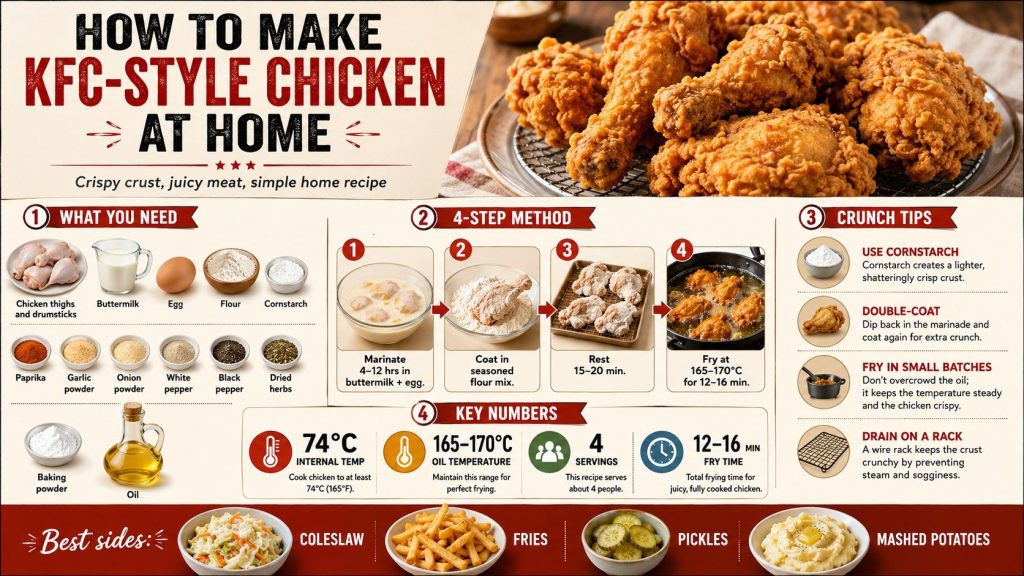
First, pat the chicken dry with paper towels. Mix buttermilk, egg, 1 tsp salt and 0.5 tsp black pepper in a large bowl. Add the chicken, cover it, and refrigerate for at least 4 hours. For deeper flavor, leave it overnight.
In another bowl, combine flour, cornstarch, baking powder and all remaining spices. Take each piece from the marinade, let the excess drip off, then press it firmly into the seasoned flour. Do not just roll it lightly. Press, turn, press again, and make sure the flour gets into every fold of the skin.
For a thicker crust, dip the coated chicken briefly back into the buttermilk, then coat it once more in the flour mix. This double coating gives a more dramatic crunch and a more restaurant-like look.
Place coated pieces on a wire rack for 15–20 minutes before frying. This short rest helps the flour hydrate and stick to the chicken. If you fry immediately, loose flour often falls into the oil and burns at the bottom of the pot.
Heat oil to 165–170°C. Fry chicken in small batches for 12–16 minutes, depending on size. Turn pieces carefully every few minutes. The safe internal temperature for chicken is 74°C, checked at the thickest part without touching the bone.
After frying, rest the chicken on a wire rack, not on paper towels. Paper traps steam and softens the crust. A rack keeps the bottom crisp while the juices settle inside the meat.
The oil temperature mistake that ruins most fried chicken
The most common home error is overcrowding the pot. When 6 cold pieces enter the oil at once, the temperature drops fast. The crust absorbs oil, turns heavy, and loses the dry crunch people expect from crispy chicken at home.
Use a thermometer if possible. Without one, test with a small pinch of flour. It should sizzle immediately, but not turn dark in 10 seconds. If the oil smokes, it is too hot. If bubbles are lazy, wait.
Frying is less about bravery and more about control. Keep the heat medium to medium-high, and adjust between batches. Let the oil return to temperature before adding the next pieces.
How to make the crust extra crunchy
For a crunchier crust, use a flour-cornstarch mix instead of flour alone. Cornstarch reduces gluten development and gives the coating a lighter bite. A little baking powder also helps create tiny bubbles in the crust.
You can also add 2 tbsp of the buttermilk marinade into the flour bowl and rub it with your fingers. This creates small clumps. Those clumps stick to the chicken and fry into crunchy flakes.
Use these tricks when you want a more textured coating:
- double-coat the chicken for a thicker crust
- rest coated pieces before frying
- fry in small batches
- keep the oil around 165–170°C
- drain on a rack instead of paper towels
- salt lightly right after frying
After these steps, the crust should look uneven, golden, and slightly craggy. That rough surface is what makes every bite feel crisp. A perfectly smooth coating usually means the chicken was not pressed well into the flour.
The salt after frying should be minimal. The coating already contains salt, and extra seasoning should only sharpen the surface. If the chicken tastes bland, the problem usually started in the marinade.
What to serve with KFC-style chicken
The best sides are simple because the chicken is already rich. Coleslaw cuts through the oil. Mashed potatoes make it feel like a full dinner. Pickles add acidity, and corn brings sweetness.
Good side options include:
- creamy coleslaw with cabbage, carrot and vinegar
- mashed potatoes with light chicken gravy
- buttered corn or corn ribs
- pickled cucumbers
- soft dinner rolls
- green salad with lemon dressing
These sides keep the meal balanced. Fried chicken is salty, fatty and aromatic, so it needs freshness nearby. Even a quick cabbage salad can make the plate feel less heavy.
If you want a sharper salad beside the chicken, use the logic of Caesar dressing: salt, acid, fat and garlic must work together. Customreceipt explains this balance in its guide to the original Caesar salad recipe with garlic croutons.
If serving for guests, fry the chicken last. Prepare sides first, warm the plates, and keep the cooked pieces on a rack in a low oven for no more than 20 minutes. Longer holding time slowly softens the crust.
Oven and air fryer versions: easier, but different
You can make a lighter version in the oven or air fryer, but it will not taste exactly like deep-fried chicken. That is not a failure. It is a different cooking method with less oil and a drier crust.
For an oven version, heat to 220°C. Place coated chicken on a rack over a tray. Spray generously with neutral oil and bake for 35–45 minutes, turning once. The crust will be firm, but less blistered.
For an air fryer, cook at 190°C for 22–28 minutes, depending on piece size. Spray the coating with oil before cooking and again after turning. Dry flour spots need oil; otherwise, they remain pale and powdery.
The air fryer works best with boneless thighs or small drumsticks. Large bone-in pieces may brown outside before cooking fully inside. A meat thermometer removes the guesswork.
Drinks and extra dishes for a homemade fast-food menu
Fried chicken needs a drink that refreshes rather than overwhelms the palate. Sweet soda works, but it can make the meal feel heavier. Iced tea, lemon water, cold matcha, or a light milk drink gives a cleaner finish.
For a cooler pairing, Customreceipt has a detailed guide on how to make iced matcha latte at home. Matcha’s grassy bitterness can balance salty chicken better than very sweet drinks.
If you are making a full weekend menu, add one lighter dish. A cold noodle bowl with vegetables can work beside chicken, especially when the sauce has garlic, soy sauce and vinegar. Customreceipt’s guide on how to cook funchoza with chicken, vegetables and sauces gives useful timing tips for glass noodles.
Hot chocolate is not an obvious pairing for fried chicken, but it makes sense for a family winter dinner. The site also has a guide on how to make hot chocolate at home, which can work as a dessert drink after a salty meal.
Storage and reheating without losing the crunch
Leftover fried chicken should cool completely before storage. Put it in an airtight container and refrigerate for up to 3 days. Do not seal hot chicken because steam will make the coating wet.
To reheat, use an oven at 190°C for 12–18 minutes. An air fryer works even better: 180°C for 6–10 minutes. Avoid the microwave unless you accept a soft crust.
Cold fried chicken can also be used in sandwiches. Slice the meat, add pickles, lettuce, and a little mayo with mustard. This is often better than reheating a small leftover piece.
If you plan to take chicken outside, keep food safety in mind. For picnic and travel ideas, Customreceipt has a useful guide on what to cook for a road trip and how to store food safely.
Safety notes for deep frying at home
Deep frying needs attention. Use a heavy pot and fill it no more than halfway with oil. Keep the handle turned inward, dry the chicken before coating, and never drop wet food into hot oil.
If oil flares, do not use water. Turn off the heat and cover the pot with a metal lid if it is safe to do so. Keep children and pets away from the stove while frying.
A thermometer is the cheapest safety upgrade. It protects the chicken from undercooking and keeps the oil from overheating. For chicken, the internal target is 74°C.
FAQ
Can I make KFC-style chicken without buttermilk?
Yes. Mix 500 ml milk with 1.5 tbsp lemon juice or vinegar, then rest it for 10 minutes. It will not be identical to cultured buttermilk, but it tenderizes the chicken and helps the coating stick.
What is the best chicken cut for this recipe?
Bone-in thighs and drumsticks are the easiest. They stay juicy and handle longer frying better than breast meat. For faster cooking, use boneless thighs.
Why does the coating fall off?
The coating usually falls off when the chicken is too wet, the flour is not pressed firmly, or the coated pieces are fried too soon. Rest them for 15–20 minutes before frying.
Can I bake this recipe instead of frying?
Yes, but the texture changes. Spray the coated chicken with oil and bake on a rack at 220°C until cooked through. The crust will be lighter and less oily.
How do I make the chicken spicier?
Add 0.5–1 tsp cayenne pepper to the flour mix. You can also add hot sauce to the buttermilk marinade. Start small because pepper intensifies during frying.
Earlier we wrote about What Foods Should Diabetics Avoid? Practical Guide Explains Sugar, Starch and Safe Swaps