 Frank Rondel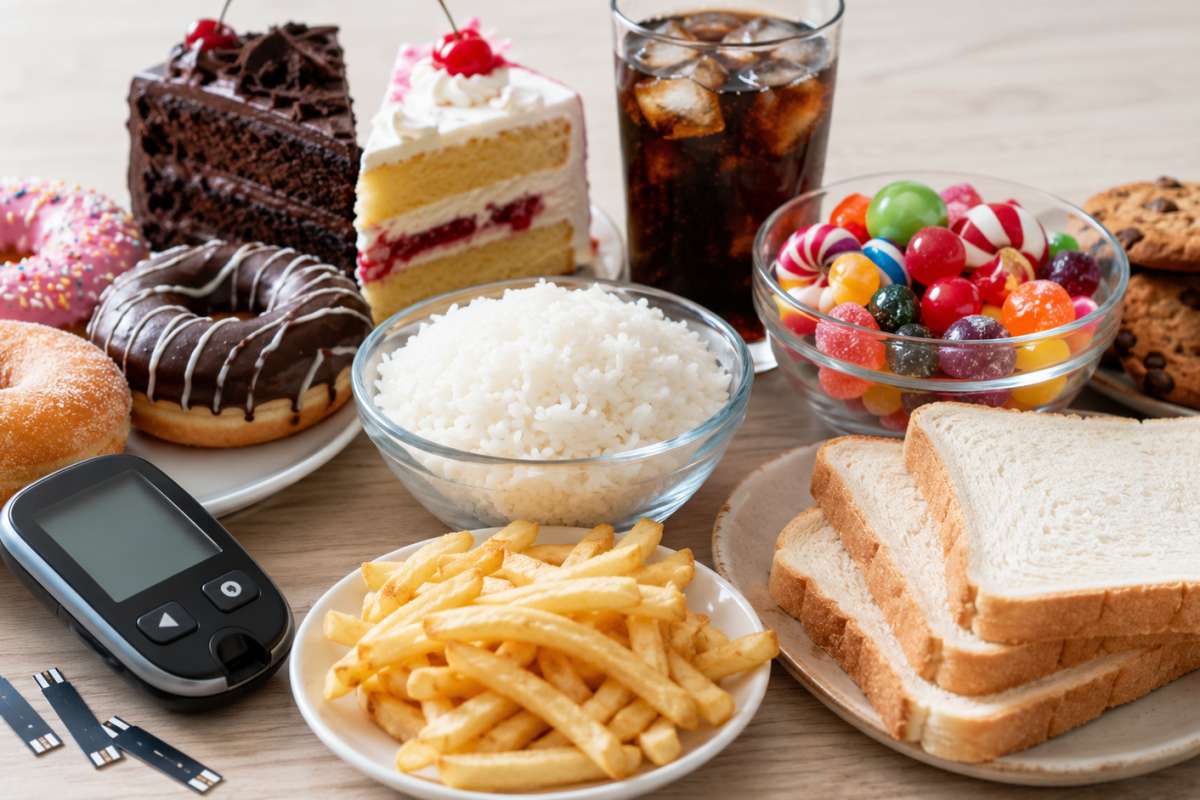
Foods diabetics should not eat are not always “forbidden” forever, but some products make blood sugar harder to control. The real danger comes from liquid sugar, refined starch, deep-fried meals, oversized portions, and snacks that look harmless on the label. A smart diabetes diet is not punishment. It is a system that keeps glucose, hunger, weight, and heart risk under control, as the editors at customreceipt.com note.
Foods diabetics should not eat every day
The worst foods for diabetes usually share 4 traits. They contain fast carbohydrates, little fiber, added sugar, and too much saturated fat. This mix can raise glucose quickly and leave the person hungry again soon.
The CDC explains that foods higher in carbohydrates include grains, rice, pasta, beans, fruit, yogurt, milk, and starchy vegetables. These foods are not all bad. The difference is quality, portion, and what sits beside them on the plate. Whole beans behave differently from sweet cereal. A small baked potato with fish is not the same as a large portion of fries.
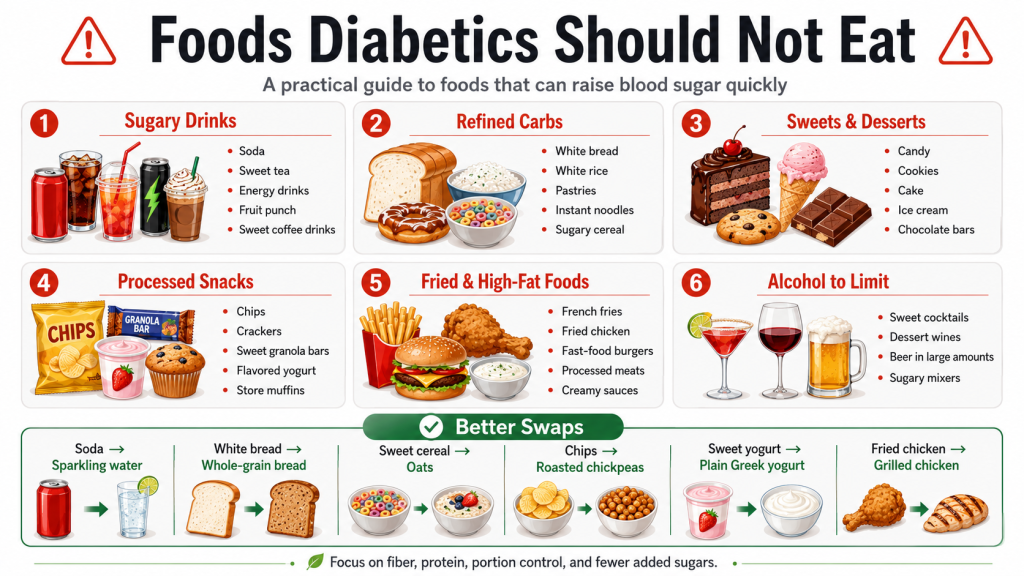
For daily meals, diabetics should limit products that give calories without enough fiber or protein. This includes sugary drinks, candy, cakes, white bread, instant noodles, chips, sweet yogurts, and fried fast food. These foods make glucose less predictable. They also push many people toward overeating.
A useful rule is simple. If the food is sweet, white, fried, ultra-processed, or easy to eat mindlessly, it deserves caution. If it contains fiber, protein, water, and real texture, it is usually safer.
Sugary drinks are the first thing to remove
Sugary drinks are often the fastest way to raise blood glucose. Soda, sweet tea, lemonade, bottled coffee drinks, energy drinks, fruit punch, and cocktails with syrup can deliver a large sugar load in minutes. They do not require chewing. They also do not create lasting fullness.
The American Heart Association recommends limiting added sugar to no more than 6% of daily calories. For many adults, one sweet drink can use most of that limit before lunch. That is why sugary drinks should not be part of a regular diabetic diet.
Avoid these drinks as daily choices:
- regular soda;
- sweetened iced tea;
- energy drinks with sugar;
- fruit punch;
- sweet bottled coffee;
- lemonade with sugar;
- bubble tea with syrup;
- milkshakes;
- sweet cocktails;
- large glasses of fruit juice.
After removing sweet drinks, many people notice better glucose readings within days. Water, unsweetened tea, black coffee, and sparkling water are better routine options. Fruit juice is different from whole fruit because it lacks the same fiber effect. A smoothie can also become a sugar bomb when it uses juice, banana, honey, and no protein. For home cooking, a better starting point is this guide on how to make a smoothie. For diabetes, use unsweetened liquid, berries, Greek yogurt, chia, or flax. Skip syrup and sweetened milk.
White bread, white rice and refined carbohydrates
Refined carbohydrates are tricky because they do not always taste sweet. White bread, white rice, regular pasta, crackers, bagels, pancakes, waffles, pastries, and instant noodles can still raise glucose fast. The reason is simple. Milling removes much of the grain structure.
Fiber slows digestion. Refined flour digests faster. That speed can create a sharper glucose rise after eating. It can also bring hunger back earlier.
Limit these refined carbs:
- white sandwich bread;
- white rice in large portions;
- regular pasta without vegetables;
- instant noodles;
- crackers made with white flour;
- sweet breakfast cereal;
- pancakes with syrup;
- croissants and sweet rolls;
- flour tortillas;
- thick pizza crust.
This does not mean all carbohydrates are banned. The better choice is high-fiber carbohydrates in measured portions. Oats, barley, buckwheat, lentils, chickpeas, beans, quinoa, and dense whole-grain bread work better for many people. The American Diabetes Association plate method places quality carbohydrates on 1 quarter of a 9-inch plate. That visual rule prevents a meal from becoming a starch-heavy pile.
Homemade bread is not automatically diabetes-safe. Still, it gives more control than many packaged loaves. The baker can adjust flour, sugar, salt, seeds, fermentation, and slice size. Readers who cook at home can use this guide to homemade bread with a crispy crust and soft center, then adapt it with whole-grain flour and smaller portions.
Sweets, cakes and desserts that raise glucose fast
Candy, cookies, donuts, cakes, pies, ice cream, sweet rolls, chocolate bars, and packaged desserts combine added sugar with refined flour. Many also contain saturated fat. That makes them risky for both glucose and heart health.
Diabetes UK warns that biscuits, crisps, chocolates, cakes, ice cream, butter, and sugary drinks are high in calories. These products can raise blood sugar and worsen cholesterol patterns when eaten often.
Dessert should be occasional, small, and planned. It should not sit on top of a full carbohydrate meal. A slice of cake after pasta, bread, and soda creates a much bigger problem than a small dessert after protein and vegetables.
Better dessert ideas include berries with plain Greek yogurt, a small square of dark chocolate, or a controlled homemade frozen dessert. One practical example is protein ice cream with Greek yogurt and frozen banana. For diabetics, the portion still matters. Banana, honey, chocolate chips, and toppings must be counted.
Processed snacks and hidden sugar products
Processed snacks are dangerous because they are easy to underestimate. Chips, crackers, cereal bars, sweet granola, flavored yogurts, rice cakes, and “fitness” snacks can look light. Many are still built from refined starch, sugar, salt, and cheap oils.
Some products carry healthy words on the front label. The real answer is usually on the nutrition panel. Look for added sugar, total carbohydrate, fiber, protein, saturated fat, and serving size.
| Product | Main risk | Better option |
|---|---|---|
| Potato chips | Salt, fat, fast starch | Roasted chickpeas |
| Sweet granola bars | Syrup and low satiety | Plain yogurt with berries |
| Rice cakes | Fast carbs, little fiber | Whole-grain crispbread |
| Flavored yogurt | Added sugar | Plain Greek yogurt |
| Crackers | Refined flour and salt | Vegetables with hummus |
| Sweet cereal | Sugar and refined grain | Oats with seeds |
| Store muffins | Sugar, flour, saturated fat | Egg and whole-grain toast |
This comparison shows why snacks need structure. A safer snack has protein, fiber, or both. Boiled eggs, cottage cheese, hummus, nuts, cucumber, apple slices, and Greek yogurt are easier to control. Sauces also deserve attention. Bottled dressings can add sugar, syrup, and sodium to an otherwise good salad. A simple homemade dressing gives more control over ingredients. For ideas, use this guide on how to make salad dressing at home. Olive oil, vinegar, lemon juice, mustard, herbs, and measured portions are usually stronger choices.
Fried foods and saturated fat
Fried foods are not always high in sugar, but they still matter in diabetes. Diabetes increases concern about heart health. Fried chicken, French fries, battered fish, fast-food burgers, creamy sauces, sausages, bacon, and cheese-heavy meals can raise saturated fat and calories.
The American Heart Association advises limiting saturated fat because it can affect LDL cholesterol. For people with diabetes, that is not a minor detail. Heart protection is part of diabetes care.
Fried meals can also delay glucose rises. A person may see a moderate reading soon after pizza, fries, or fried chicken. Hours later, glucose may climb again because fat slows digestion.
French fries are a good example. Potato starch, salt, fat, and portion size work together. If fries appear at home, baking or controlled pan cooking is usually better than a large fast-food order. This guide to French fries without a deep fryer is a better starting point. For diabetes, fries should remain occasional, measured, and paired with protein and salad.
Fruit diabetics should limit, not fear
Fruit is not the enemy. Whole fruit contains water, vitamins, minerals, and fiber. The problem appears with juice, dried fruit, canned fruit in syrup, and oversized servings.
Whole berries behave differently from juice. An apple is different from apple concentrate. A bowl of grapes can affect glucose more than a small peach. Portion size decides a lot.
Limit these fruit forms:
- fruit juice;
- smoothies with juice or syrup;
- dried dates;
- raisins;
- sweetened dried cranberries;
- canned fruit in syrup;
- fruit yogurt with added sugar;
- oversized fruit bowls.
After fruit, glucose response can differ between people. That is why home monitoring helps. A useful test is checking glucose before a meal and 1–2 hours after. If one fruit causes repeated spikes, reduce the portion or pair it with protein. Apple with peanut butter is usually steadier than apple juice. Berries with Greek yogurt are usually steadier than a sweet smoothie.
Alcohol and diabetes
Alcohol can raise or lower blood sugar. The result depends on the drink, food, medication, and timing. Sweet cocktails raise glucose quickly. Alcohol on an empty stomach can increase the risk of hypoglycemia, especially with insulin or sulfonylureas.
The ADA warns that too much alcohol can lead to higher glucose and A1C. It also highlights hypoglycemia risk when alcohol is combined with diabetes medicines.
Avoid or sharply limit:
- sweet cocktails;
- dessert wines;
- regular beer in large amounts;
- hard lemonade;
- cream liqueurs;
- alcohol with sugary mixers;
- drinking on an empty stomach;
- binge drinking.
Alcohol should never be used as a glucose strategy. People who do not drink should not start for health reasons. Those who drink should eat, monitor glucose, and discuss medication risks with a clinician. Night drinking is especially risky because low glucose can happen during sleep. Dry wine or spirits with sugar-free mixers may contain fewer carbohydrates, but they do not remove the safety issue.
Best swaps for a diabetic diet
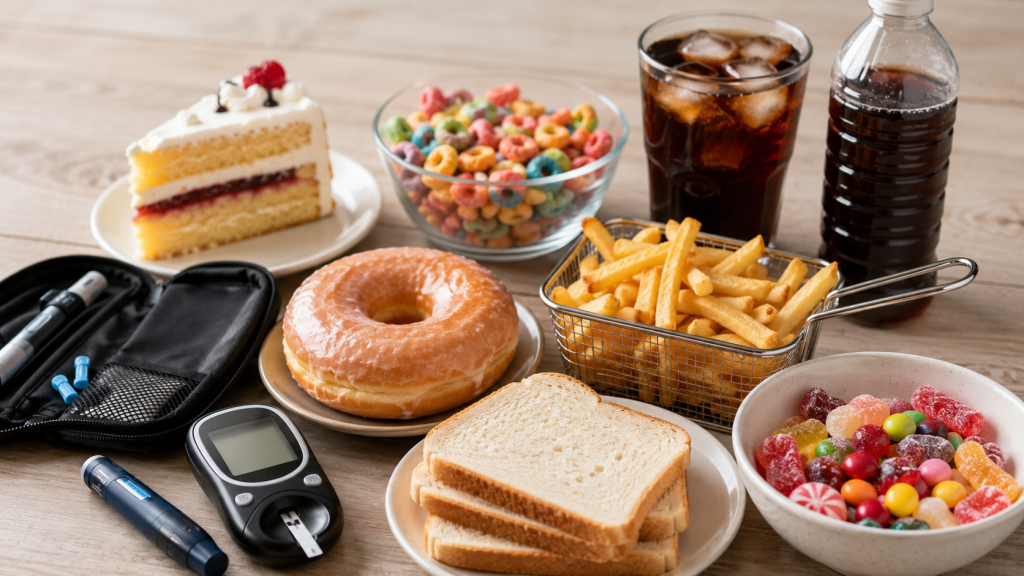
The best diabetic diet is not built on fear. It is built on repeatable swaps. A person should know what to buy, what to cook, and what to avoid when tired.
Use these swaps:
- soda → sparkling water with lemon;
- fruit juice → whole fruit;
- white bread → dense whole-grain bread;
- sweet cereal → oats with seeds;
- white rice → lentils or smaller brown rice portions;
- chips → roasted chickpeas;
- sweet yogurt → plain Greek yogurt;
- fried chicken → grilled chicken;
- cream sauce → tomato-based sauce;
- candy → berries with yogurt.
These swaps work because they change meal structure. More fiber slows digestion. More protein improves satiety. Less liquid sugar reduces fast spikes. Less fried food supports heart health. Homemade cooking also makes ingredients visible. Instead of bottled dressing, make vinaigrette. Instead of juice-heavy smoothies, build a protein-and-fiber drink. Instead of regular ice cream, try a small high-protein dessert. Instead of deep-fried fast food, prepare oven fries in a controlled portion.
“A meal plan is your guide for when, what, and how much to eat,” the CDC says in its diabetes meal-planning guidance.
That sentence captures the main rule. Diabetes nutrition is not only a blacklist. Timing, medication, movement, sleep, stress, and portion size also change blood sugar. Two people can eat the same meal and see different readings. Personal monitoring turns general advice into a practical plan.
FAQ
Can diabetics eat bread?
Yes, but bread type and portion matter. White bread usually raises glucose faster than dense whole-grain bread. Choose bread with fiber, seeds, and visible grains. Eat it with protein, not jam alone.
Are bananas forbidden for diabetics?
No. Bananas are not forbidden. Large ripe bananas can raise glucose quickly. A smaller banana with yogurt or peanut butter is usually safer than a banana smoothie.
Is rice bad for diabetes?
Large portions of white rice can be difficult for glucose control. Smaller portions, brown rice, lentils, vegetables, and protein can reduce the spike. The full meal matters more than one ingredient.
Can diabetics eat potatoes?
Yes, but portions and cooking method matter. French fries are the worst common form. Boiled or baked potatoes in a small portion are usually better than deep-fried potatoes.
Are diabetic sweets safe?
Not automatically. Some still contain calories, refined starch, sweeteners, or saturated fat. Read the label and keep portions small. A “diabetic” claim does not make dessert unlimited.
What is the worst drink for diabetes?
Regular soda is one of the worst routine choices. It delivers sugar quickly and gives almost no satiety. Sweet energy drinks, fruit punch, and syrup cocktails belong in the same risk group.
Earlier we wrote about What to Cook for a Road Trip: Safe Foods, Easy Recipes, and Storage Tips for Long Journeys