 Frank Rondel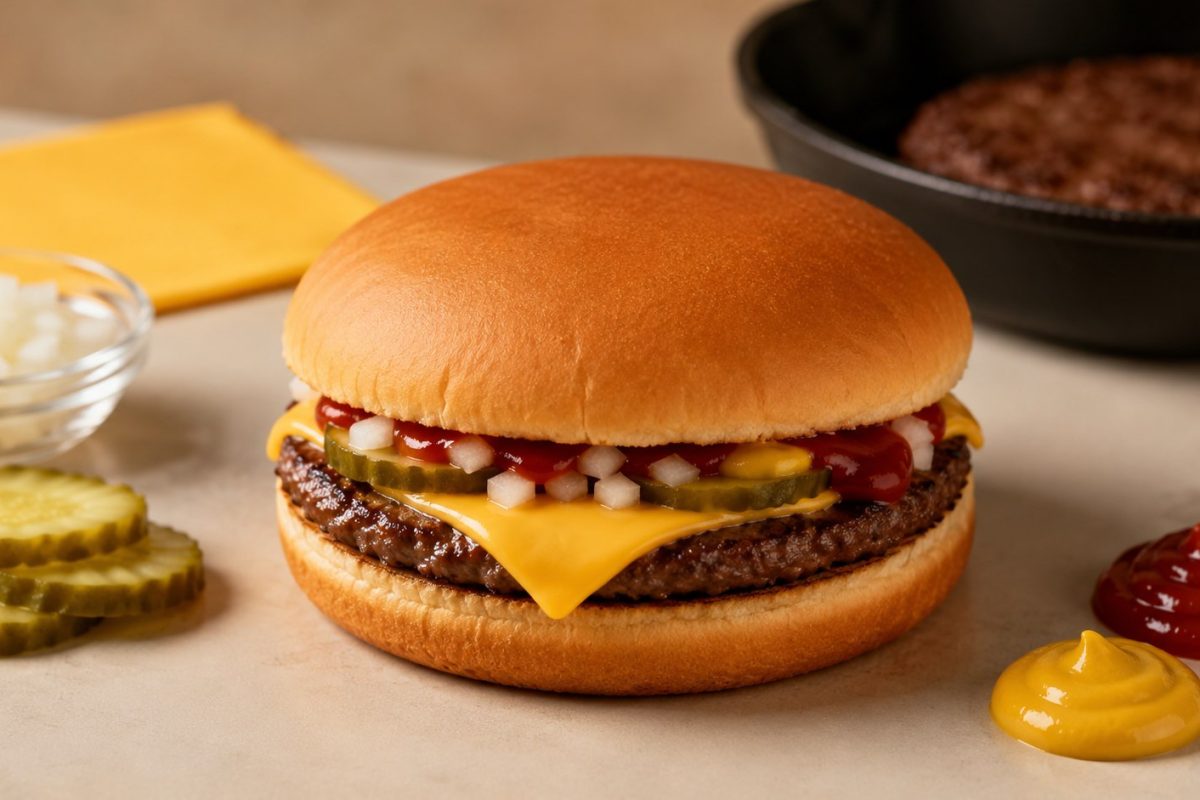
How to make a McDonald’s cheeseburger at home depends less on secret ingredients than on precise proportions. You need a thin beef patty, soft white bun, American cheese, chopped onion, sour pickles, ketchup, and yellow mustard. The burger must also rest briefly after assembly, as noted by the customreceipt.com.
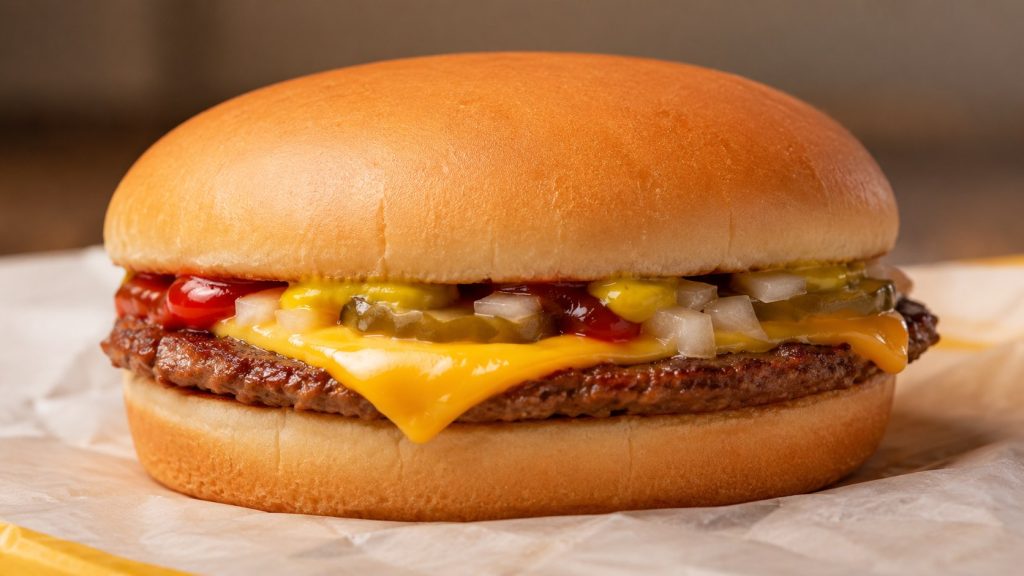
McDonald’s describes its U.S. Cheeseburger as a beef patty seasoned with salt and pepper. It is served with American cheese, chopped onions, pickle, ketchup, and mustard. The recipe looks simple, but small changes can produce a completely different burger.
A thick patty makes the sandwich feel like a pub burger. A toasted brioche bun adds too much sweetness and richness. Strong cheddar, large onion slices, or excessive sauce also move the flavor away from the original.
This recipe makes 4 compact cheeseburgers and takes about 30 minutes.
Why a McDonald’s Cheeseburger Tastes Different
The familiar flavor comes from balance rather than complexity. Every ingredient appears in a small amount, allowing the beef, cheese, acidity, and sweetness to remain noticeable.
The patty is thin and cooked quickly on a hot surface. It develops browned edges without gaining the thick center found in many homemade burgers. The cheese melts directly against the hot beef, while the pickles and mustard provide acidity.
The bun is also important. It should remain soft, flexible, and only lightly warmed. A hard crust prevents the burger from compressing into the dense, unified texture associated with fast food.
Several details create a more accurate result:
- Choose plain white hamburger buns without seeds.
- Use finely minced or rehydrated onion.
- Select thin dill pickle chips rather than sweet pickles.
- Apply ketchup and mustard in narrow lines.
- Make the raw patties wider than the buns.
- Wrap each assembled burger for 1–2 minutes.
These choices prevent one ingredient from dominating. The pickle adds sharpness, while the ketchup contributes sweetness. Mustard cuts through the cheese, and the onion gives the burger its familiar aroma.
Ingredients for 4 McDonald’s-Style Cheeseburgers
The following proportions create small burgers similar to the classic fast-food format. This is an independent copycat recipe, not an official McDonald’s formula.
| Ingredient | Quantity | Recommended type |
|---|---|---|
| Ground beef | 320 g or 11.3 oz | 80% lean and 20% fat |
| Small hamburger buns | 4 | Plain white buns |
| American cheese | 4 slices | Thin melting slices |
| Dill pickle chips | 8–12 | Sour and thinly sliced |
| Yellow onion | 2 tablespoons | Finely minced |
| Ketchup | 4 teaspoons | Smooth tomato ketchup |
| Yellow mustard | 2 teaspoons | Mild American mustard |
| Fine salt | ½ teaspoon | Divide between patties |
| Black pepper | ¼ teaspoon | Finely ground |
| Water | 1 teaspoon | For softening the onion |
| Neutral oil | ½ teaspoon | Use only when needed |
American cheese produces the smoothest melt and the closest texture. Regular cheddar can work, but mature cheddar tastes stronger and may release oil.
Ground beef containing about 20% fat is preferable. Leaner meat can dry out before its surface develops enough browning. The fat also helps the thin patty remain flavorful after fast cooking.
After preparing the cheeseburgers, you can complete the meal with crispy homemade French fries without a deep fryer. That method is useful when you want crisp potatoes without filling a pan with oil.
How to Prepare the Onion and Pickles
Cut the onion into pieces only a few millimeters wide. Large pieces taste sharper and can fall from the burger while eating.
Place the minced onion in a small bowl. Add 1 teaspoon of cold water and leave it for 10 minutes. Drain the onion before using it.
This step softens its texture and reduces its harsh raw flavor. It also makes fresh onion resemble the moist, finely chopped onion used in many fast-food burgers.
Dried minced onion offers another option. Cover 1 tablespoon with warm water, wait 10 minutes, then drain it thoroughly. Rehydrated onion often provides an especially convincing McDonald’s-style burger flavor.
Pat the pickle chips lightly with a paper towel. They should stay moist inside, but excess brine can make the upper bun wet.
Use 2 or 3 pickle slices per cheeseburger. Adding more can overwhelm the beef and cheese.
How to Form Thin Beef Patties
Divide the cold ground beef into 4 portions weighing approximately 80 g each. A kitchen scale helps produce evenly sized patties.
Roll every portion into a loose ball. Do not knead or squeeze the beef, because heavy handling creates a firmer texture.
Place one ball between 2 sheets of parchment paper. Press it into a thin disc measuring about 11–12 cm across. The raw patty should be slightly wider than the bun.
Repeat with the remaining portions, then refrigerate the patties for 10–15 minutes. Cooling helps them retain their shape during transfer to the pan.
Do not mix salt into the beef. Salt added too early changes the meat’s proteins and can produce a springy texture. Season each surface immediately before cooking.
The patties should be thin but not transparent. Very thin edges may tear when lifted or dry out before the center finishes cooking.
How to Cook a McDonald’s Cheeseburger Patty
Heat a cast-iron skillet, steel pan, or flat griddle over medium-high heat. The surface must be hot before the beef is added.
Season the first side of each patty with salt and pepper. Place that side against the pan, then season the exposed surface.
Use this sequence:
- Cook the first side for 60–90 seconds.
- Wait until the underside develops brown spots.
- Turn the patty with a thin metal spatula.
- Cook the second side for another 60–90 seconds.
- Check the internal temperature.
- Add 1 cheese slice during the final 20–30 seconds.
Avoid repeatedly pressing the patties. Pressure pushes rendered fat and moisture onto the pan, leaving the beef drier.
Ground beef should reach 160°F or 71°C internally. The USDA recommends checking it with a food thermometer because color alone cannot confirm safety. For thin patties, insert the thermometer from the side.
Cook the patties in batches when necessary. Crowding the pan lowers its temperature and produces steam. A hot, uncrowded surface creates better browning.
How to Warm the Hamburger Buns
The buns need gentle heat, not aggressive toasting. A crisp bakery-style crust changes the sandwich’s texture.
Place the bun halves cut-side down in a dry pan for 20–30 seconds. Remove them when the surface feels warm and slightly dry.
Do not wait for dark grill marks. The bread should remain pale and flexible.
A microwave can also soften the buns. Wrap them in a barely damp paper towel and heat them for about 10 seconds. This method is fast, although the buns can become rubbery when overheated.
When preparing several burgers, keep the warmed buns covered with a clean towel. This prevents them from drying while the patties finish cooking.
The Correct Order for Assembling the Burger
Assembly order controls how the sauces spread and how well the burger holds together. Wet toppings should not remain against the lower bun for too long.
Build each cheeseburger in this order:
- Bottom bun
- Hot beef patty
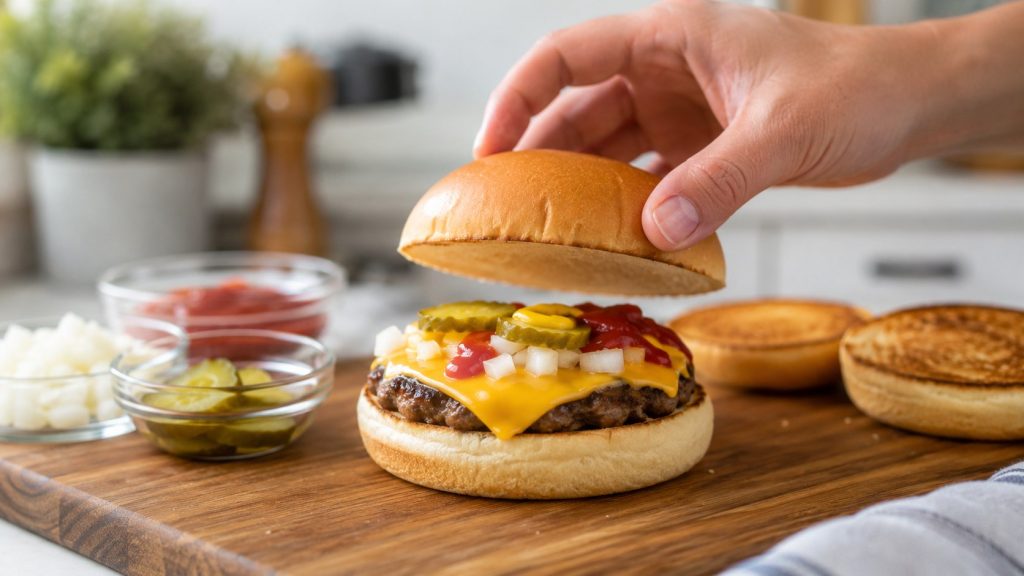
- Melted American cheese
- Finely chopped onion
- 2–3 dill pickle chips
- About 1 teaspoon of ketchup
- About ½ teaspoon of yellow mustard
- Top bun
The cheese should remain directly against the beef. The onion and pickles sit above it, where they provide texture without cooling the patty too quickly.
Keep the sauces controlled. Too much ketchup makes the burger sweet and slippery. Too much mustard can hide the mild flavor of the beef.
Wrap the assembled burger loosely in parchment or food-safe sandwich paper. Leave it for 1–2 minutes before serving.
The trapped heat softens the bun and allows the cheese, sauces, onion, and pickles to settle. This small step is one of the most effective ways to improve a homemade McDonald’s cheeseburger.
How to Make the Flavor Closer to the Original
Use small, inexpensive hamburger buns rather than premium brioche. Their lighter structure creates a closer bread-to-meat ratio.
Choose ordinary yellow mustard instead of Dijon, wholegrain, or hot mustard. The original flavor profile is mild, acidic, and slightly sweet.
Smooth ketchup works better than artisan ketchup containing visible tomato pieces or strong spices. Dill pickles should be sour rather than sweet.
A kitchen scale improves consistency. Patties of equal weight cook at the same rate and fit the buns more evenly.
A flat griddle produces an evenly browned surface, although a cast-iron skillet performs almost as well. Use little added oil because 80/20 beef releases enough fat during cooking.
For a larger fast-food dinner, serve the burgers alongside homemade KFC-style chicken with a crispy peppery crust. Keep the chicken and burgers on separate serving plates, so the stronger seasoning does not cover the cheeseburger’s milder taste.
Common Mistakes That Ruin the Copycat Result
Many homemade versions fail because cooks try to improve every ingredient. Better-quality components do not always create a more accurate copy.
Avoid these common mistakes:
- Making the patty thick and steak-like
- Using oversized brioche buns
- Adding mayonnaise or burger sauce
- Choosing mature or smoked cheese
- Cutting the onion into large pieces
- Using sweet pickle chips
- Applying excessive ketchup
- Burning the cut sides of the bun
- Skipping the wrapped resting stage
- Pressing the patty throughout cooking
A McDonald’s Cheeseburger is intentionally restrained. The official product description emphasizes a simple combination of beef, salt, pepper, cheese, pickle, chopped onion, ketchup, and mustard.
Adding lettuce, tomato, bacon, or special sauce may produce a good sandwich. However, it becomes a different type of burger.
Salt also needs control. Cheese, pickles, ketchup, and mustard already provide seasoning. Excess salt makes the sandwich taste harsh.
How to Make a Double Cheeseburger Version
Prepare 8 thin patties instead of 4. Each finished burger needs 2 patties and 2 slices of American cheese.
Cook the patties using the same method. Place cheese over each patty during the final seconds.
Stack the first cheeseburger patty over the bottom bun, then add the second. Finish with onion, pickles, ketchup, mustard, and the top bun.
McDonald’s describes its Double Cheeseburger as 2 beef patties seasoned with salt and pepper. It also includes pickles, onion, ketchup, mustard, and 2 cheese slices.
Do not double every topping. Slightly increase the onion and pickles, but keep the sauces restrained. Excess ketchup and mustard can make a double burger difficult to hold.
What to Serve With a Homemade Cheeseburger
French fries remain the closest side dish, but several alternatives provide useful contrast. Choose something crisp or acidic rather than another heavy main course.
Suitable side dishes include:
- Thin salted French fries
- Oven-baked potato wedges
- Dill pickle spears
- Vinegar-based coleslaw
- Corn on the cob
- A small green salad
- Crisp tortilla chips
- Lightly seasoned onion rings
Serve wet dips separately. Sauce poured directly over fries or chips quickly removes their crisp texture.
For a shared meal, prepare homemade nachos with crispy chips and melted cheese. Use lighter toppings when serving them with cheeseburgers, since both dishes already contain cheese.
Prepare all cold toppings before the patties enter the pan. Thin burgers cook rapidly and should be assembled immediately.
Serve the meal while the beef remains hot and the cheese stays soft. Waiting too long makes the bun absorb moisture from the pickles and sauces.
How to Store and Reheat Leftovers
Store cooked patties separately from buns, onion, pickles, and sauces. Separate storage protects the bread from moisture.
Place the cooled patties in a sealed container and refrigerate them promptly. Raw ground beef should not remain at room temperature while other ingredients are prepared.
Reheat a patty in a covered skillet over low heat. Add several drops of water beside the meat, then warm it for 2–3 minutes per side.
Place a fresh cheese slice over the patty near the end. Assemble the reheated burger with fresh toppings and a newly warmed bun.
Microwaving a complete cheeseburger can heat the pickles and make the bread rubbery. Reheating only the beef usually gives a better result.
Prepared raw patties can be separated with parchment and refrigerated for up to 24 hours. Keep them covered and cold until cooking.
FAQ
What ground beef is best for a McDonald’s-style cheeseburger?
Use ground beef containing approximately 20% fat. An 80/20 blend browns well and stays flavorful during quick cooking.
How thin should the burger patty be?
Press each 80 g portion into an 11–12 cm disc. It should be thin and slightly wider than the bun.
What cheese is closest to McDonald’s cheese?
Thin American cheese provides the closest melting behavior and mild flavor. Burger cheese sold in individual slices also works.
Should the hamburger bun be toasted?
Warm it lightly for 20–30 seconds. Avoid creating a hard brown crust.
Can I cook the patties in an air fryer?
Yes, although a skillet gives a closer result. Direct contact with hot metal creates stronger browning.
Why should the raw patty be wider than the bun?
Ground beef contracts during cooking. A wider raw patty becomes closer to the bun’s diameter after shrinking.
Can I use fresh onion instead of dried onion?
Yes. Mince it finely and soak it briefly in cold water. Rehydrated dried onion can provide a more recognizable fast-food texture.
How do I keep the burger from becoming dry?
Use 80/20 beef, avoid overcooking, and never press the patty repeatedly. Cook it quickly on a properly heated surface.
What temperature should ground beef reach?
Cook ground beef to 160°F or 71°C and check it with a food thermometer. Do not rely only on its color.
How long does the complete recipe take?
Preparation and cooking require about 30 minutes. Preparing the onion and forming the patties account for most of that time.
Earlier we wrote about How to Cook Paella: Original Valencian Recipe With Bomba Rice and Crispy Socarrat