 Frank Rondel
How to make clam chowder at home starts with one decision: the soup should taste of clams, not only cream. A proper New England chowder combines briny clam liquor, tender shellfish, potatoes, onion, bacon, and dairy without turning into a heavy white sauce, as noted by the customreceipt.com editorial team.
The recipe looks luxurious, yet it uses familiar techniques. Bacon supplies smoky depth, flour lightly thickens the broth, and potatoes give the soup body. The clams enter near the end, protecting their delicate texture.
This version serves 6 people and takes about 55 minutes. Fresh clams deliver the strongest maritime flavor. However, canned clams make a practical and reliable substitute for weekday cooking.
What Is Original New England Clam Chowder?
New England clam chowder is a creamy American soup built around clams, potatoes, onion, and salt pork or bacon. Milk, half-and-half, or cream distinguishes it from tomato-based Manhattan chowder.
The dish developed along the northeastern coast of the United States. Seafood was abundant, while potatoes and preserved pork stored well during colder months. Early cooks used available shellfish and created filling meals in one pot.
Modern recipes vary considerably. Some resemble thick restaurant sauces, while older coastal versions remain thinner and more broth-driven. The Culinary Institute of America recipe uses fresh clams, clam juice, bacon, onion, flour, potatoes, cream, and dry sherry.
Authentic chowder should remain rich but spoonable. It should not stand upright like mashed potatoes or taste mainly of flour.
The three best-known American styles differ in their liquid base and overall character:
| Chowder style | Main liquid | Color | Typical character |
|---|---|---|---|
| New England | Milk, cream, clam broth | White | Creamy, smoky, briny |
| Manhattan | Tomato and broth | Red | Tangy, lighter, vegetable-rich |
| Rhode Island | Clear clam broth | Pale or clear | Strong seafood flavor, no dairy |
New England chowder is usually the richest version. Manhattan chowder gains acidity from tomatoes. Rhode Island chowder places the greatest emphasis on clear clam liquor.
None of these versions is automatically more authentic than another. They represent different regional traditions. For a first homemade attempt, the New England style offers the most recognizable result.
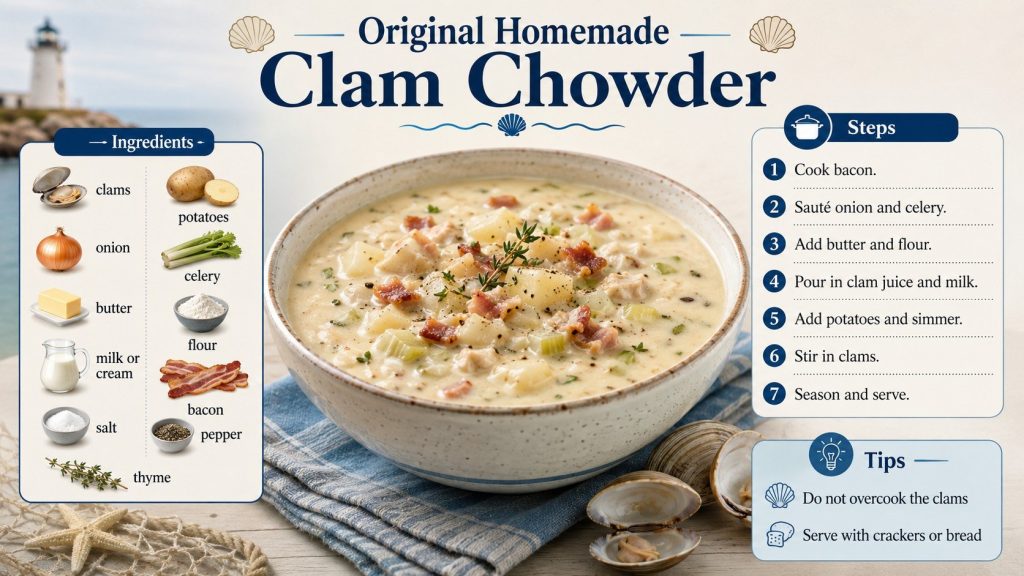
Ingredients for Homemade Clam Chowder
This original clam chowder recipe produces approximately 6 medium bowls. Measure everything before heating the pot because the roux develops quickly.
| Ingredient | Amount | Purpose |
|---|---|---|
| Chopped clams | 450–500 g | Main seafood flavor |
| Reserved clam liquid | 500 ml | Briny broth |
| Bacon | 120 g | Fat and smoky flavor |
| Yellow onion | 1 medium | Sweet aromatic base |
| Celery | 2 stalks | Freshness and structure |
| Garlic | 2 cloves | Savory background |
| All-purpose flour | 35 g | Light thickening |
| Potatoes | 600 g | Body and texture |
| Half-and-half | 500 ml | Creamy base |
| Butter | 20 g | Richness |
| Bay leaf | 1 | Herbal aroma |
| Dried thyme | ½ teaspoon | Earthy flavor |
| Black pepper | ½ teaspoon | Mild heat |
| Worcestershire sauce | 1 teaspoon | Umami |
| Salt | As needed | Final seasoning |
| Parsley or chives | For serving | Fresh garnish |
Fresh littleneck, cherrystone, or chowder clams can be used. Large clams should be chopped after steaming. Their cooking liquid must be strained through a fine sieve.
Canned clams are faster and usually more affordable. Choose clams packed in their own juice, not seasoned sauce. Keep every drop of liquid from the can.
For another seafood meal, the guide to cooking crab by boiling, steaming, baking, or grilling explains timings for fresh and frozen crab.
Fresh Clams or Canned Clams?
Fresh clams provide cleaner aroma and firmer texture. They also require scrubbing, steaming, shelling, chopping, and careful straining.
Canned clams reduce preparation time by at least 20 minutes. Their texture is softer, but they work well when combined with quality bottled clam juice.
Choose the option that matches the occasion:
- Use fresh clams for a dinner where seafood is the main attraction.
- Use canned clams for a quick family meal.
- Combine both for deeper flavor and easier preparation.
- Avoid smoked clams because they dominate the dairy broth.
- Do not use clams packed in oil or tomato sauce.
- Check fresh shells and discard damaged specimens before cooking.
Fresh clams should close when tapped. Open shells that remain unresponsive may indicate dead shellfish. After steaming, discard any clams that stay closed.
Canned products should smell clean and maritime after opening. A sour, fermented, or strongly metallic odor is a reason to discard them. Never taste questionable shellfish.
Mixing fresh and canned clams gives a useful balance. The fresh meat provides texture, while canned liquid strengthens the broth. This method also lowers the total cost.
How to Prepare Fresh Clams
Place the clams in a large bowl and cover them with cold salted water. Leave them for 20–30 minutes, then lift them out without pouring the gritty water over them.
Scrub every shell under running water. Transfer the clams to a wide pot with 250 ml of water. Cover and steam over medium-high heat for 5–8 minutes.
Follow these steps after the shells open:
- Remove each open clam with kitchen tongs.
- Discard any shell that remains closed.
- Pour the cooking liquid through a fine sieve.
- Line the sieve with cheesecloth when visible grit remains.
- Remove the meat from the shells.
- Chop large clams into bite-sized pieces.
- Refrigerate the meat until the soup base is ready.
Do not boil the clam meat for an extended period. Excessive heat contracts its proteins and creates a rubbery texture.
The strained liquid may taste intensely salty. Dilute it with water or unsalted seafood stock when necessary. Taste it before adding extra salt.
Fresh clam liquor can replace bottled clam juice completely. However, the total quantity should remain close to 500 ml. Too little liquid creates a pasty chowder.
How to Make Clam Chowder Step by Step
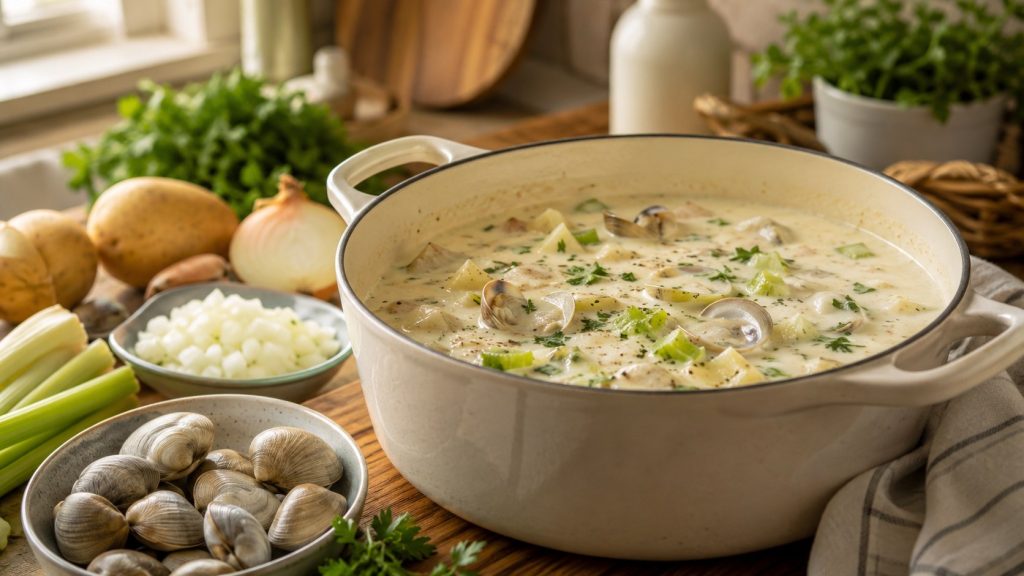
Use a heavy pot with a thick base. A Dutch oven distributes heat evenly and reduces the risk of scorching the dairy.
Cut the bacon into small strips. Dice the onion, celery, and potatoes into pieces of similar size. Smaller potato cubes cook more quickly and thicken the broth slightly.
Cook the homemade clam chowder in this order:
- Place the bacon in a cold pot.
- Set the heat to medium.
- Cook for 7–9 minutes until lightly crisp.
- Transfer some bacon to a plate for garnish.
- Add onion and celery to the rendered fat.
- Cook for 5 minutes without browning.
- Add garlic, thyme, and butter.
- Stir for 30 seconds.
- Sprinkle in the flour.
- Cook the flour for 2 minutes.
- Slowly whisk in the clam liquid.
- Add potatoes and the bay leaf.
- Simmer for 15–18 minutes.
- Pour in the half-and-half.
- Add the chopped clams.
- Heat gently for 3–4 minutes.
- Stir in Worcestershire sauce and pepper.
- Taste before adding salt.
- Remove the bay leaf.
- Rest the chowder for 5 minutes before serving.
The flour must cook briefly before liquid enters the pot. Raw flour leaves a chalky aftertaste. However, allowing it to brown deeply changes the pale color and delicate flavor.
Add clam liquid gradually while whisking. This prevents flour pockets from forming. Scrape the base of the pot because bacon residue contains valuable flavor.
After the dairy enters, keep the heat low. A violent boil can separate the fat and toughen the clams. Gentle steaming is sufficient.
The Culinary Institute of America builds its chowder by cooking bacon and onion first, adding flour, then whisking in clam juice before the potatoes and cream.
This is a paraphrase of the institute’s published cooking sequence, not a fabricated quotation. The original method is available through CIA Foodies.
How to Get the Correct Chowder Texture
A well-made New England clam chowder recipe should coat the spoon lightly. It should still flow easily when poured into a bowl.
Flour is not the only thickener. Potatoes release starch while simmering, especially when their edges begin to soften. Crushing several cubes against the side of the pot creates additional body.
Use these adjustments carefully:
- Add 50–100 ml of warm milk when the chowder becomes too thick.
- Simmer the potato base longer when it remains watery.
- Mash several potato pieces instead of adding extra flour.
- Add cream only after the potatoes become tender.
- Avoid cornstarch unless the finished soup is extremely thin.
- Let the chowder rest for 5–10 minutes before judging its texture.
A chowder often thickens as it cools. Making it extremely dense on the stove can produce a gluey result in the bowl.
Cream provides richness but can mute the shellfish. Half-and-half offers a more balanced taste. Whole milk creates a lighter soup, although the final texture will be thinner.
Never pour cold cream directly into rapidly boiling broth. Reduce the heat first. Tempering is unnecessary when the temperature difference is controlled.
The best bowl has visible pieces of clam and potato. Its broth carries smoke, salt, cream, and the clean mineral taste of the sea.
Common Clam Chowder Mistakes
The most common failure is overcooking the clams. Their meat needs only enough heat to become hot after entering the finished soup.
Another mistake is salting too early. Bacon, clam juice, canned clams, Worcestershire sauce, and crackers already contain sodium. Final seasoning should happen after these ingredients combine.
Watch for these warning signs:
- Rubbery clams indicate excessive cooking.
- A floury taste means the roux cooked too briefly.
- A greasy surface suggests too much bacon fat.
- Grainy dairy may result from aggressive boiling.
- Bland broth usually needs clam juice, not more cream.
- Uneven potatoes result from inconsistent cutting.
- A smoky taste may come from burnt bacon or garlic.
Remove excess bacon fat before cooking the vegetables when the pot contains more than 3 tablespoons. Enough fat must remain to coat the flour.
If the soup separates, remove it from the heat. Whisk in several tablespoons of warm milk. The texture may not become perfectly smooth, but the flavor can still be saved.
For cooks practicing other classic techniques, the guide to authentic Valencian paella with Bomba rice explains heat control and ingredient sequencing in detail.
What to Serve With Clam Chowder
Oyster crackers are the traditional partner. Their dry crunch contrasts with the soft potatoes and creamy broth.
Sourdough bread is another strong option. Its acidity cuts through the dairy, while its firm crust can be dipped without collapsing immediately.
Consider these serving combinations:
- Oyster crackers with chopped chives.
- Toasted sourdough with garlic butter.
- A bread bowl for a restaurant-style presentation.
- Green salad with mustard vinaigrette.
- Roasted asparagus with lemon.
- Pickled onions or cucumbers.
- Cornbread with minimal added sugar.
Avoid heavy side dishes with cheese sauces or creamy dressings. The chowder already supplies considerable richness.
A sharp salad works particularly well. Lettuce, radish, cucumber, and a vinegar-based dressing refresh the palate between spoonfuls.
Serve the soup in warmed bowls. Cold ceramic cools the chowder quickly and allows the dairy fat to thicken around the edges.
How to Store and Reheat Clam Chowder
Cool leftovers promptly and transfer them into shallow, airtight containers. Refrigerate the chowder within 2 hours of cooking.
Properly handled chowder keeps for 2–3 days in the refrigerator. Its flavor often improves overnight because the bacon, herbs, and clam broth become more integrated.
Reheat it using these recommendations:
- Use a saucepan rather than a microwave when possible.
- Keep the heat low.
- Stir frequently across the base.
- Add a small amount of milk when needed.
- Do not bring the soup to a rolling boil.
- Reheat only the portion being served.
- Discard leftovers with an unusual odor or texture.
Freezing cream-based chowder is possible, but the texture may change. Potatoes can become grainy, while dairy may separate after thawing.
For better freezer results, prepare the soup without dairy. Freeze the clam and potato base for up to 2 months. Add fresh half-and-half during reheating.
Thaw frozen chowder overnight in the refrigerator. Slow thawing protects the texture better than direct high heat.
FAQ
Can I make clam chowder without bacon?
Yes. Replace bacon fat with 30 g of butter. Add smoked paprika sparingly when a mild smoky note is desired.
Can frozen clams be used?
Yes, provided they were frozen safely and remain within their recommended storage period. Thaw them in the refrigerator and retain any clean liquid.
Which potatoes are best for clam chowder?
Yukon Gold potatoes hold their shape while adding creaminess. Russet potatoes release more starch and produce a thicker broth.
Can I use milk instead of cream?
Whole milk works, although the result will be lighter. Avoid skim milk because it provides little body and separates more easily.
Why did my chowder become too thick?
The soup may contain too much flour or too little clam liquid. Potatoes also continue absorbing liquid after cooking.
How do I make clam chowder gluten-free?
Replace wheat flour with a gluten-free flour blend. Alternatively, thicken the soup by mashing several cooked potato cubes.
When should clams be added?
Add them during the final 3–4 minutes. They only need to heat through because prolonged cooking makes them tough.
Can clam chowder be prepared one day ahead?
Yes. Prepare it completely, cool it quickly, and refrigerate it. Reheat slowly without boiling.
What gives clam chowder the strongest flavor?
Reserved clam liquor provides the main seafood character. Bacon, onion, thyme, and Worcestershire sauce support rather than replace it.
Is New England clam chowder always very thick?
No. Traditional versions range from brothy to creamy. A balanced chowder should remain fluid enough to pour easily.
Earlier we wrote about How to Make Piña Colada at Home: Alcoholic and Non-Alcoholic Recipes