 Frank Rondel
How to cook crab at home depends on the product you have purchased. Live crab, frozen legs, cooked claws, and packaged meat require different methods. The main goal is always the same: heat the meat without destroying its delicate sweetness, as the customreceipt.com editorial team notes.
Crab may look like restaurant-only food, yet it needs little specialized equipment. A deep pot, kitchen scissors, tongs, and a baking dish cover almost every method. Good timing matters more than complicated marinades or expensive sauces.
This guide explains how to boil, steam, bake, grill, sauté, and reheat crab. It also covers thawing, serving, seasoning, storage, and common cooking mistakes.
Which Crab Is Best for Cooking at Home?
The seafood counter may offer whole live crab, chilled claws, frozen clusters, or cleaned meat. Before choosing a cooking method, check whether the product is raw or already cooked.
Most frozen king crab and snow crab legs are cooked before freezing. Their bright red shells can mislead inexperienced cooks. These products need reheating, not another complete cooking cycle.
Common varieties include:
- Blue crab, known for sweet meat and smaller claws.
- Dungeness crab, with a mild and slightly nutty taste.
- Snow crab, which has long legs and delicate fibers.
- King crab, prized for thick legs and large pieces of meat.
- Stone crab, usually sold as cooked claws.
- Packaged lump crab meat, suitable for cakes, dips, and pasta.
Blue crab is usually steamed whole with seasoning. Dungeness crab works well boiled, steamed, or roasted. Snow crab needs careful reheating because its meat dries quickly. King crab handles baking and grilling better because the legs are thicker.
The seafood should smell mild and marine. Avoid products with a sour, chemical, or ammonia-like odor. Damaged packaging and heavy ice crystals may indicate poor frozen storage.
How to Prepare Frozen or Fresh Crab
Frozen crab produces better results when thawed before cooking. Place the package in a covered container inside the refrigerator. Most legs and clusters thaw within 8–12 hours.
A faster method uses cold water. Keep the crab inside a sealed bag and submerge it completely. Replace the water every 30 minutes until the center softens.
Never thaw seafood in hot water. The exterior can warm quickly while the center remains frozen. Leaving crab on the counter for several hours is also unsafe.
Before cooking, complete these steps:
- Read the label and confirm whether the crab is raw or cooked.
- Rinse away loose ice and visible shell fragments.
- Pat the shell dry before baking or grilling.
- Cut thick shells with kitchen scissors when needed.
- Keep raw seafood away from ready-to-eat ingredients.
- Wash the cutting board and utensils immediately.
Cutting the shell helps butter and seasoning reach the meat. However, exposed crab cooks faster. Reduce the time when the shell has been opened.
The same careful thawing principles apply to other seafood. The guide on how to clean and cook octopus at home explains why controlled heat protects texture.
Crab Cooking Times for Every Method
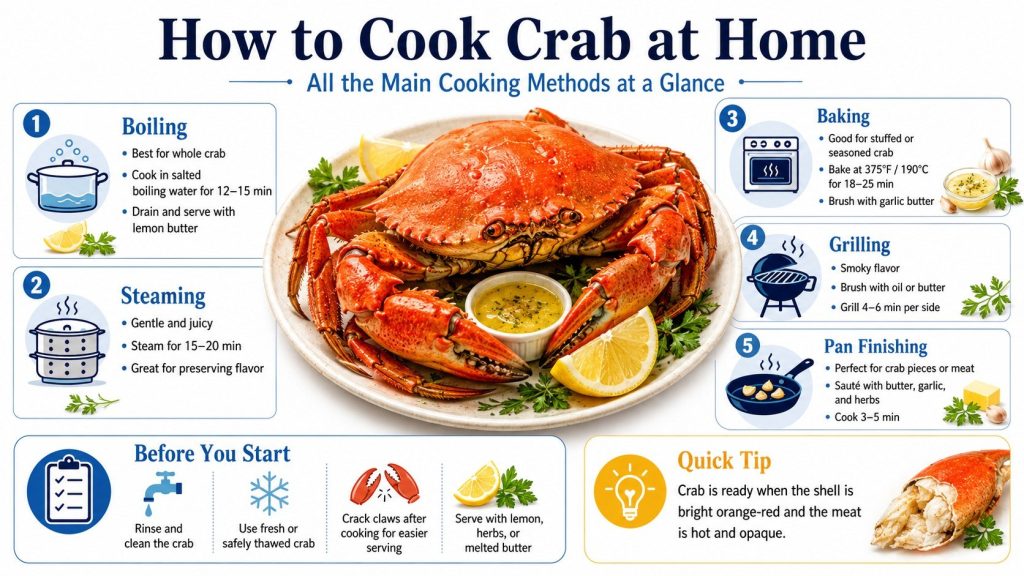
Cooking times vary according to shell thickness, portion size, and starting temperature. The ranges below apply mainly to thawed crab.
| Cooking method | Best product | Approximate time | Expected result |
|---|---|---|---|
| Steaming | Legs, clusters, whole crab | 5–20 minutes | Moist and concentrated flavor |
| Boiling | Whole raw crab, large batches | 8–18 minutes | Evenly heated meat |
| Baking | Split legs and large claws | 12–20 minutes | Rich and buttery texture |
| Grilling | King crab and snow crab | 5–10 minutes | Smoky aroma and browned edges |
| Pan heating | Cleaned crab meat | 3–5 minutes | Soft meat with sauce |
| Microwave | Pre-cooked portions | 2–4 minutes | Fast but less even heating |
Begin counting after the water returns to a boil. For steaming, start when steady steam fills the covered pot. Frozen portions need several additional minutes.
Raw crab meat becomes firm, pearly, and opaque when cooked. Pre-cooked crab only needs to become hot throughout. Do not use shell color as the only indicator.
Large king crab legs take longer than narrow snow crab legs. Whole Dungeness crab also requires more time than separated claws. Check the thickest section before removing everything from the heat.
How to Steam Crab Legs
Steaming is the most reliable way to cook crab legs without washing away their flavor. The meat stays above the water, where hot steam warms it gently.
Pour 2–3 inches of water into a deep pot. Add lemon slices, bay leaves, garlic, or peppercorns. Fit a steamer basket above the water and cover the pot.
Bring the water to a strong simmer. Place the crab inside without overcrowding the basket. Cover it again and maintain steady steam.
Use these times as a guide:
- Thawed pre-cooked snow crab: 5–7 minutes.
- Thawed king crab legs: 6–9 minutes.
- Frozen pre-cooked legs: 8–12 minutes.
- Raw crab clusters: 12–20 minutes.
- Whole small crabs: 15–20 minutes.
Remove one thick leg and check the center. The meat should be hot, moist, and easy to release. If the center remains cold, steam everything for another 2 minutes.
Serve steamed crab immediately. Melted butter, lemon juice, and chopped parsley provide enough flavor. Heavy seasoning can overpower naturally sweet meat.
How to Boil Whole Crab
Boiling suits whole blue crab, Dungeness crab, and large family portions. It also allows seasoning to reach the joints and body cavities.
Fill a large stockpot with enough water to cover the crab. Add salt carefully because seafood already contains natural salinity. Lemon, garlic, bay leaves, mustard seeds, or seafood seasoning may be included.
Bring the water to a full boil before adding the crab. Lower each piece with long tongs. Do not drop live or raw crab from a distance because boiling water may splash.
Suggested boiling times include:
- Small blue crabs: 8–10 minutes.
- Medium whole crabs: 12–15 minutes.
- Large Dungeness crabs: 15–18 minutes.
- Pre-cooked thawed legs: 4–6 minutes.
- Frozen pre-cooked legs: 8–10 minutes.
Start the timer after the water boils again. Remove the crab promptly when cooking ends. Leaving it in hot water creates dry meat and weakens its texture.
Drain the crab for several minutes before cracking it. Serve it with bread, corn, potatoes, or a light soup. A bowl of homemade tomato soup with deep tomato flavor can create a warming seafood dinner.
How to Bake Crab Legs with Garlic Butter
Baking produces a richer result than boiling. It works especially well for thick king crab legs and split clusters.
Preheat the oven to 375°F, or 190°C. Arrange the crab inside a shallow baking dish. Add 3–4 tablespoons of melted butter and several spoonfuls of water.
Season the dish with garlic, black pepper, lemon zest, and chopped herbs. Cover it tightly with foil. The trapped steam prevents the meat from drying.
Bake according to size:
- Snow crab clusters need 12–15 minutes.
- Thick king crab legs need 15–20 minutes.
- Split claws usually need 10–14 minutes.
- Frozen legs may need 5–7 additional minutes.
Remove the foil during the final 2 minutes for light browning. Do not leave exposed meat under high heat for long. It can shrink and become stringy.
Use butter as a coating rather than a deep sauce. Too much fat hides the crab’s flavor. Add fresh lemon juice only after removing the dish from the oven.
How to Grill Crab Legs
Grilled crab legs develop smoky edges and a stronger aroma. Use large pre-cooked legs because small pieces may dry quickly.
Heat the grill to medium. Cut one side of each shell with kitchen scissors. Brush the crab lightly with oil or melted butter.
Place the legs shell-side down. Close the lid and grill for 3–4 minutes. Turn them carefully and continue for another 2–3 minutes.
Keep exposed meat away from direct flames. Butter can drip and create flare-ups. A cooler section of the grill provides better control.
Suitable seasonings include:
- Garlic butter and parsley.
- Smoked paprika and black pepper.
- Chili flakes and lime zest.
- Ginger, scallions, and sesame oil.
- Brown butter and capers.
Brush thick sauces onto the crab near the end. Sugar-heavy glazes burn easily over open heat. Lemon or lime juice tastes fresher when added after grilling.
Rest the legs for 2 minutes before serving. This brief pause makes handling easier. It also prevents hot liquid from escaping during cracking.
How to Cook Crab Meat in a Pan
Packaged crab meat is usually already cooked. Long frying makes it dry and breaks attractive pieces into small fibers.
Melt butter in a skillet over medium-low heat. Add garlic, shallot, or green onion. Cook the aromatics until soft without browning them heavily.
Add the crab and fold it gently through the butter. Heat for 3–5 minutes. Large pieces should remain intact.
Crab meat works well in:
- Pasta with cream, lemon, and herbs.
- Scrambled eggs or omelets.
- Fried rice with ginger and scallions.
- Tacos with cabbage and lime.
- Crab cakes with mustard.
- Warm dips with cheese.
- Savory tarts with spinach or leeks.
Do not add every seasoning at once. Taste the crab before adding salt. Packaged products may already contain enough.
Crab can also form the filling for a savory pastry. The instructions for making a classic homemade tart explain pastry preparation and moisture control.
How to Reheat Cooked Crab Without Drying It
Reheating is often mistaken for cooking. Most supermarket crab legs have already received their full cooking process before freezing.
Steaming remains the best reheating method. Place thawed legs above simmering water for 5–7 minutes. Thick king crab may need 2 additional minutes.
Other reheating options include:
- Bake covered at 350°F for 10–15 minutes.
- Simmer in water for 4–5 minutes.
- Heat shelled meat in butter for 2–3 minutes.
- Microwave covered portions in short intervals.
For microwave reheating, wrap the legs in damp paper towels. Place them inside a covered microwave-safe dish. Heat for 30 seconds, rotate, and check.
Avoid reheating the same portion several times. Repeated heating removes moisture and reduces flavor. Warm only the amount needed for one meal.
Do not boil pre-cooked crab for 20 minutes. This common mistake produces rubbery meat that sticks to the shell.
The Best Sauces and Seasonings for Crab
Crab tastes best with seasoning that supports its sweetness. Acidity, mild heat, butter, and fresh herbs work better than heavy marinades.
Classic melted butter needs little preparation. Warm unsalted butter gently and remove any foam. Add lemon zest, parsley, or crushed garlic.
Other useful sauces include:
- Dijon mustard, mayonnaise, and lemon juice.
- Brown butter with capers and parsley.
- Yogurt with dill and cucumber.
- Chili butter with lime zest.
- Soy sauce with ginger and scallions.
- Tomato sauce with basil and white wine.
Cold stone crab claws traditionally pair well with mustard sauce. Grilled king crab benefits from chili butter. Steamed snow crab needs little more than lemon.
Serve sauces in separate bowls. Guests can control the amount, while the shell remains easier to hold. Separate sauces also make it possible to compare different combinations.
“The best crab seasoning should sharpen the seafood flavor, not cover it.”
Avoid excessive salt and strong smoke flavor. Both can dominate delicate crab meat. Taste every sauce before serving it with seafood.
How to Crack and Serve a Whole Crab
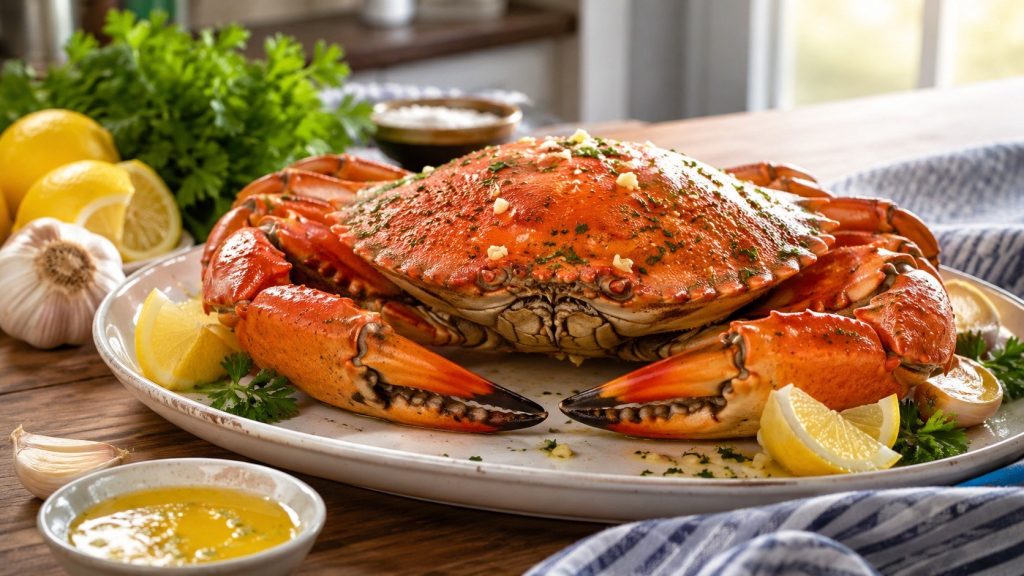
Let the cooked crab cool until it can be handled safely. Twist off the legs and claws first. Separate the upper shell from the main body.
Remove the gills and any inedible internal material. Divide the body into smaller sections with a sturdy knife. Use a cracker for thick claws.
Prepare the dining area with:
- Seafood crackers.
- Narrow seafood picks.
- Kitchen scissors.
- Bowls for empty shells.
- Damp towels.
- Lemon wedges.
- Small bowls of sauce.
- A separate plate for extracted meat.
Crack the shell gently instead of crushing it. Small fragments can become mixed with the meat. Check every portion before serving children.
Warm plates prevent extracted meat from cooling too quickly. Stable, shallow butter dishes reduce spills. Cover the dining surface with washable paper or a large serving tray.
Common Crab Cooking Mistakes
The most damaging mistake is treating cooked frozen crab as raw seafood. A long second cooking cycle removes moisture and destroys texture.
Other frequent errors include:
- Thawing crab at room temperature.
- Boiling legs much longer than required.
- Adding excessive salt to the cooking water.
- Grilling exposed meat over direct flames.
- Crowding the steamer basket.
- Leaving cooked crab inside hot liquid.
- Reheating leftovers repeatedly.
- Ignoring an unpleasant smell.
Seasoning cannot make spoiled seafood safe. Garlic, lemon, and chili may cover an odor temporarily, but they do not remove contamination.
Do not depend completely on a timer. Product size and shell thickness vary. Check the thickest section and extend cooking in short intervals.
Dry crab meat is usually overcooked rather than undercooked. A cold center can be heated again. Tough, dehydrated meat cannot be restored completely.
How to Store Cooked Crab
Transfer cooked crab into a shallow covered container. Refrigerate it within 2 hours after cooking. Keep the refrigerator at 40°F, or 4°C, or colder.
Use refrigerated crab within 2–4 days. Smell and appearance still matter. Discard leftovers that develop slime, sour odors, or unusual discoloration.
For longer storage, remove the meat and freeze it in airtight portions. Press out excess air before sealing each package. Label it with the date.
Thaw frozen cooked meat inside the refrigerator. Gentle pan heating works better than aggressive boiling. Cold thawed crab can also be used in salads and sandwiches.
Live crab should be cooked as soon as possible. Do not keep it submerged in fresh water. Do not place it inside an airtight container without ventilation.
FAQ
How long should crab legs be cooked?
Pre-cooked thawed legs usually need 5–8 minutes of steaming. Raw clusters may require 12–20 minutes, depending on thickness.
Can crab legs be cooked from frozen?
Yes, although thawed crab cooks more evenly. Add approximately 5 minutes when steaming or baking frozen legs.
Is steaming better than boiling?
Steaming usually preserves more moisture and flavor. Boiling works well for whole crabs and large seasoned batches.
How do you know when crab is done?
Raw crab meat becomes firm, pearly, and opaque. Pre-cooked legs should become hot throughout without shrinking.
Why is my crab meat rubbery?
The crab was probably cooked too long. This often happens when pre-cooked legs receive a second full cooking cycle.
Should crab legs be rinsed before cooking?
A brief cold-water rinse removes ice glaze and loose shell fragments. Pat them dry before baking or grilling.
What is the best sauce for crab?
Melted butter with lemon remains the classic choice. Mustard sauce, chili butter, and herb mayonnaise also work well.
How much crab is needed per person?
Allow 1–1.5 pounds of whole crab per adult. For cleaned meat, 4–6 ounces per person usually provides a main serving.
Can cooked crab be eaten cold?
Yes. Properly refrigerated crab works in salads, sandwiches, dips, and chilled seafood platters.
How long can cooked crab stay in the refrigerator?
Cooked crab generally keeps for 2–4 days under proper refrigeration. Store it promptly in a sealed container.
Earlier we wrote about How to Make Homemade Nutella: Easy Chocolate Hazelnut Spread Recipe