 Frank Rondel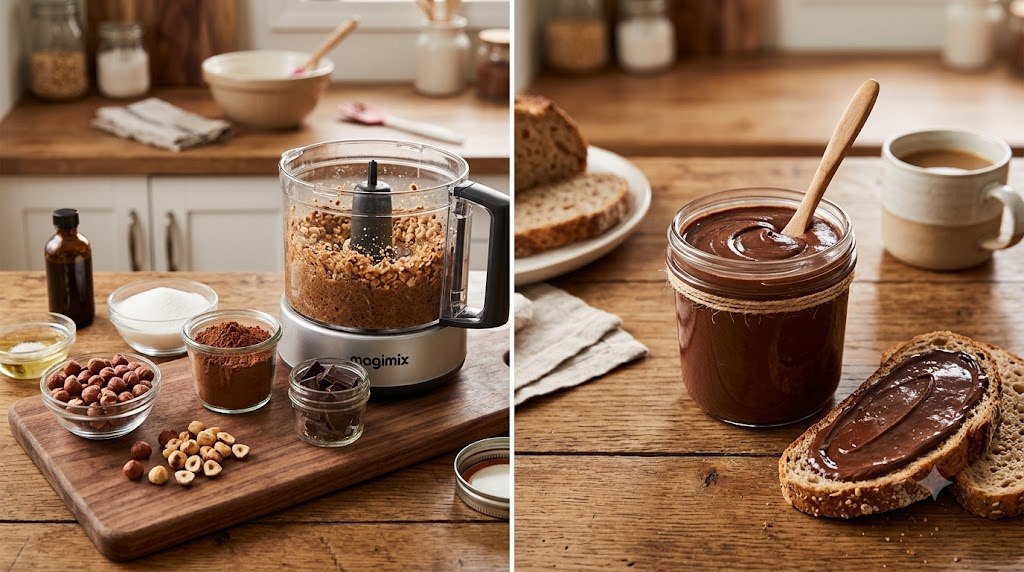
How to make homemade Nutella is easier than many people expect. Roasted hazelnuts, cocoa, chocolate, sugar, and a small amount of oil create a rich spread in about 25 minutes, as the customreceipt.com editorial team notes.
The homemade version has a stronger nut flavor than most commercial products. You can reduce the sugar, choose better chocolate, and control every ingredient. The recipe also contains no unnecessary flavorings or industrial stabilizers.
This quantity produces about 350–400 g of homemade chocolate hazelnut spread. It can be served with toast, pancakes, waffles, fruit, cookies, or warm pastries.
Ingredients for Homemade Nutella
A good hazelnut spread requires balance. Too much cocoa makes it dry and bitter. Too much oil weakens the chocolate flavor and causes separation.
Fresh hazelnuts are the foundation of the recipe. Avoid nuts with a sour, stale, or dusty smell. Old hazelnuts may remain bitter even after roasting.
| Ingredient | Amount | Role in the recipe |
|---|---|---|
| Hazelnuts | 250 g | Provide flavor, texture, and natural oil |
| Powdered sugar | 70–90 g | Adds sweetness without coarse crystals |
| Unsweetened cocoa powder | 25 g | Creates chocolate flavor and color |
| Milk or dark chocolate | 80 g | Improves sweetness, body, and smoothness |
| Neutral vegetable oil | 1–2 tbsp | Adjusts the consistency |
| Vanilla extract | 1 tsp | Softens bitterness |
| Fine salt | 1 pinch | Strengthens the main flavors |
Start with 70 g of powdered sugar. More can be added after tasting the finished mixture.
Milk chocolate creates a softer and sweeter spread. Dark chocolate produces a deeper cocoa taste. Chocolate containing 50–60% cocoa offers a balanced result.
Do not add water or ordinary milk. Moisture can cause melted chocolate to form lumps. It also reduces the storage life of the finished product.
Equipment You Will Need
A food processor is the most suitable appliance for this recipe. A powerful blender can also work, but the mixture may stick under its blades.
Prepare the following equipment before roasting the nuts:
- baking sheet;
- baking parchment;
- clean kitchen towel;
- food processor or high-speed blender;
- heatproof bowl;
- silicone spatula;
- clean glass jar with a lid.
The processor and bowl must be completely dry. Even a small amount of water can damage the texture of melted chocolate.
Choose a jar with a wide opening. The spread becomes firmer after refrigeration, so a narrow container makes serving less convenient.
The jar must not contain strong food odors. Nut oils absorb aromas from garlic, pickles, sauces, and spices.
How to Roast Hazelnuts
Roasting develops the deep flavor associated with Nutella-style hazelnut spread. Raw nuts create a flatter and less aromatic result.
Preheat the oven to 175°C or 350°F. Spread the hazelnuts across a baking sheet in one layer.
Roast them for 10–12 minutes. Shake the baking sheet after about 6 minutes so the nuts brown evenly.
The hazelnuts are ready when their skins begin cracking. Their aroma should become stronger, but the centers must not burn.
Transfer the warm nuts to a clean towel. Fold it over them and rub firmly to remove most of the skins.
Some skin can remain without ruining the recipe. However, removing most of it reduces bitterness and improves the color.
Leave the hazelnuts to cool for about 5 minutes. Slightly warm nuts release their natural oil faster during processing.
How to Make Homemade Nutella Step by Step
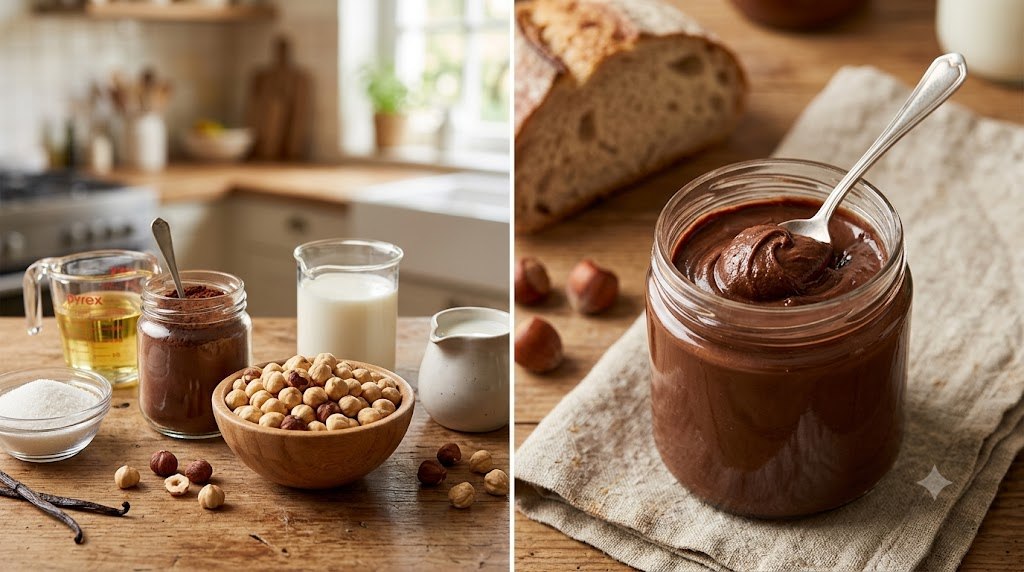
Place the roasted hazelnuts inside the food processor. Blend them at high speed and stop regularly to scrape down the sides.
During processing, the nuts pass through several stages:
- They become coarse crumbs.
- The crumbs turn into a dry powder.
- The powder begins forming moist clumps.
- Natural oil appears inside the mixture.
- The hazelnuts become a thick, glossy butter.
This process usually takes 5–8 minutes. The exact time depends on the motor power and blade design.
Pause if the appliance becomes hot. Overheating can damage the machine and warm the nut butter excessively.
Melt the chocolate separately. Use short microwave intervals or place the bowl above gently simmering water.
Stir until the chocolate becomes completely smooth. Do not allow steam or water to enter the bowl.
Add powdered sugar, cocoa, vanilla, salt, and 1 tbsp of oil to the hazelnut butter. Blend for another minute.
Pour the warm chocolate into the processor. Continue blending until the spread looks glossy and uniform.
The mixture may seem thin while warm. Chocolate thickens after cooling, so do not add more cocoa immediately.
How to Achieve a Smooth Texture
The most common problem with homemade Nutella is a grainy texture. This usually means the nuts were not processed long enough.
Powdered sugar works better than granulated sugar. It dissolves faster and does not leave large crystals in the spread.
Sift the cocoa and sugar before adding them. Small lumps can remain visible even after several minutes of blending.
Warm ingredients also combine more easily. Slightly warm hazelnuts and melted chocolate create a more fluid mixture.
This attention to temperature also matters in other baking recipes. For example, a classic apple pie with a flaky crust depends on controlled moisture and properly chilled dough. In hazelnut spread, patient grinding plays the same structural role.
If the spread remains too thick, add oil 1 tsp at a time. Blend thoroughly after each addition.
Do not pour several tablespoons into the processor at once. Excess oil can create a greasy consistency that is difficult to correct.
A smooth hazelnut spread comes from patient grinding, not from excessive oil.
A home processor may not create the perfectly polished texture of industrial equipment. However, long blending produces a creamy and easily spreadable result.
Which Oil Is Best for Homemade Nutella?
The oil should improve texture without changing the main flavor. Strong olive oil usually tastes too bitter and peppery.
The most suitable options include:
- refined sunflower oil;
- grapeseed oil;
- mild avocado oil;
- hazelnut oil;
- refined coconut oil.
Refined sunflower oil is affordable and neutral. Hazelnut oil provides the strongest nut aroma, but it usually costs more.
Coconut oil creates a firmer spread after refrigeration. It works well when the Nutella will be used as a pastry filling.
Unrefined coconut oil adds a noticeable coconut flavor. Use it only when that combination suits the dessert.
Some hazelnuts release enough natural fat during processing. In that case, only 1 tsp of additional oil may be required.
Homemade Nutella Without Refined Sugar
The standard recipe uses powdered sugar because it creates the most predictable consistency. Alternative sweeteners can also work.
Powdered coconut sugar adds a caramel note. However, it makes the spread darker and slightly grainier.
Erythritol must be ground into a fine powder. Coarse crystals create an unpleasant cooling sensation.
Honey and maple syrup introduce water. They may cause the chocolate to tighten and shorten the storage period.
For a lower-sugar version, use:
- 250 g roasted hazelnuts;
- 25 g cocoa powder;
- 80 g sugar-free chocolate;
- 50–70 g powdered coconut sugar;
- 1 tsp vanilla extract;
- 1 tbsp neutral oil;
- 1 pinch of salt.
Blend the ingredients using the same method. Taste the mixture only after several minutes of processing.
Cocoa tastes more bitter at the beginning. Its flavor becomes softer after it combines with the chocolate and hazelnut oil.
This version will not taste exactly like commercial Nutella. It has a stronger nut character and lower sweetness.
Vegan Homemade Nutella
The recipe can easily be made vegan. Hazelnuts, cocoa, sugar, vanilla, and vegetable oil contain no dairy.
The chocolate label requires closer attention. Avoid products containing milk powder, whey, butterfat, or other dairy ingredients.
Choose dairy-free chocolate containing 55–70% cocoa. Extremely dark chocolate may make the spread too bitter and firm.
A small amount of oat milk powder can add a softer taste. Unlike liquid oat milk, it introduces very little moisture.
Do not assume every dark chocolate bar is vegan. Many products include milk ingredients or cross-contact warnings.
The finished vegan chocolate hazelnut spread works well with toast, crepes, bananas, and dairy-free cookies.
Common Problems and Practical Fixes
Most recipe problems can be corrected before the mixture enters the jar. Check both temperature and ingredient proportions first.
| Problem | Probable cause | Solution |
| Grainy spread | Nuts were not blended long enough | Process longer and scrape the bowl |
| Paste is too thick | Too much cocoa or too little oil | Add oil 1 tsp at a time |
| Paste is too thin | Excess oil or warm chocolate | Let it cool before changing anything |
| Bitter flavor | Burned nuts or excessive cocoa | Add sugar or milk chocolate |
| Weak hazelnut taste | Nuts were under-roasted | Roast them longer in the next batch |
| Chocolate lumps | Water entered the mixture | Blend carefully with warm oil |
Allow a thin mixture to rest for 30–60 minutes. Warm chocolate needs time to set.
If the cooled spread remains too runny, blend in 20–30 g of melted chocolate. This improves structure without weakening the flavor.
Do not add flour or starch. Both ingredients can leave an unpleasant raw taste.
If the spread becomes too firm, leave it at room temperature for 15 minutes. Then stir in 1 tsp of oil if necessary.
A bitter mixture can sometimes be balanced with sugar or milk chocolate. Burned hazelnuts cannot be repaired.
Visible nut particles mean the mixture needs more processing. Blend in short intervals to protect the motor.
How to Store Homemade Nutella
Transfer the spread into a clean and completely dry jar. Let it cool before closing the lid.
The recipe contains no industrial preservatives or stabilizers. Refrigeration is therefore the safest storage option.
Keep the jar at about 4°C. Always use a clean and dry spoon.
For the best flavor, consume the spread within 2–3 weeks. Discard it earlier if the smell or appearance changes.
Refrigerated Nutella becomes firmer. Leave the required amount at room temperature for 10–15 minutes before serving.
Do not return crumbs, fruit juice, or dairy residue to the container. These contaminants can accelerate spoilage.
Small batches are more practical than long pantry storage. Homemade nut spread is designed to be eaten fresh.
How to Serve Homemade Chocolate Hazelnut Spread
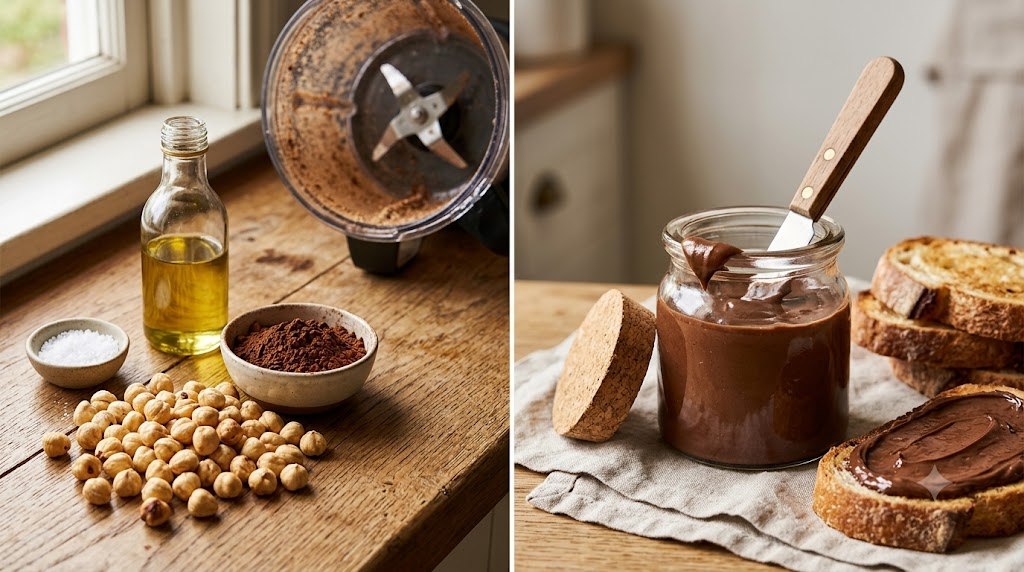
Toast and pancakes are the most obvious options, but the spread has many other uses.
It can be served with:
- waffles and crepes;
- bananas, strawberries, pears, or apples;
- brioche and croissants;
- oatmeal;
- cookies;
- brownies;
- cheesecake;
- vanilla ice cream;
- warm milk.
For a simple dessert, spread Nutella between 2 cookies. Refrigerate them for 20 minutes so the filling becomes firmer.
A spoonful can also enrich warm oatmeal. Add it after cooking to preserve the roasted hazelnut aroma.
For cake filling, mix 150 g of the spread with 100 g of mascarpone. Keep the finished dessert refrigerated.
Homemade Nutella can also complete a larger meal. A bowl of homemade tomato soup with a creamy texture works well before a sweet course. Tomato acidity creates a clear contrast with chocolate and roasted nuts.
For a casual party menu, place sweet and savory dips on separate sides of the table. Serve fresh guacamole for nachos with chips and vegetables. Offer homemade Nutella with fruit, cookies, and toasted brioche.
Keep serving spoons separate. Returning dipped fruit or crumbs to the original jar can introduce moisture.
FAQ
Can I Make Homemade Nutella Without a Food Processor?
A powerful blender can work, especially with a smaller batch. Stop often and scrape the mixture toward the blades.
Do I Have to Peel the Hazelnuts?
No, but removing most skins reduces bitterness. It also produces a smoother texture and cleaner flavor.
Can I Use Almonds Instead of Hazelnuts?
Yes, but the result will be chocolate almond butter. It will not have the classic Nutella flavor.
Why Is My Homemade Nutella Grainy?
The nuts may need more processing. Coarse sugar or insufficient roasting can also affect the texture.
Can I Add Regular Milk?
Liquid milk is not recommended. It reduces storage life and may cause melted chocolate to seize.
How Long Does Homemade Nutella Last?
Store it in the refrigerator and use it within 2–3 weeks. Always check its smell and appearance before serving.
Is Homemade Nutella Healthier Than Store-Bought Nutella?
It can contain more hazelnuts and less sugar. However, it remains an energy-dense food containing chocolate, nuts, and oil.
Can Homemade Nutella Be Frozen?
Yes. Freeze it in a sealed container for up to 2 months. Defrost it slowly in the refrigerator and stir well.
Earlier we wrote about What Is a Tart and How to Make It: A Classic Homemade Tart Recipe