 Frank Rondel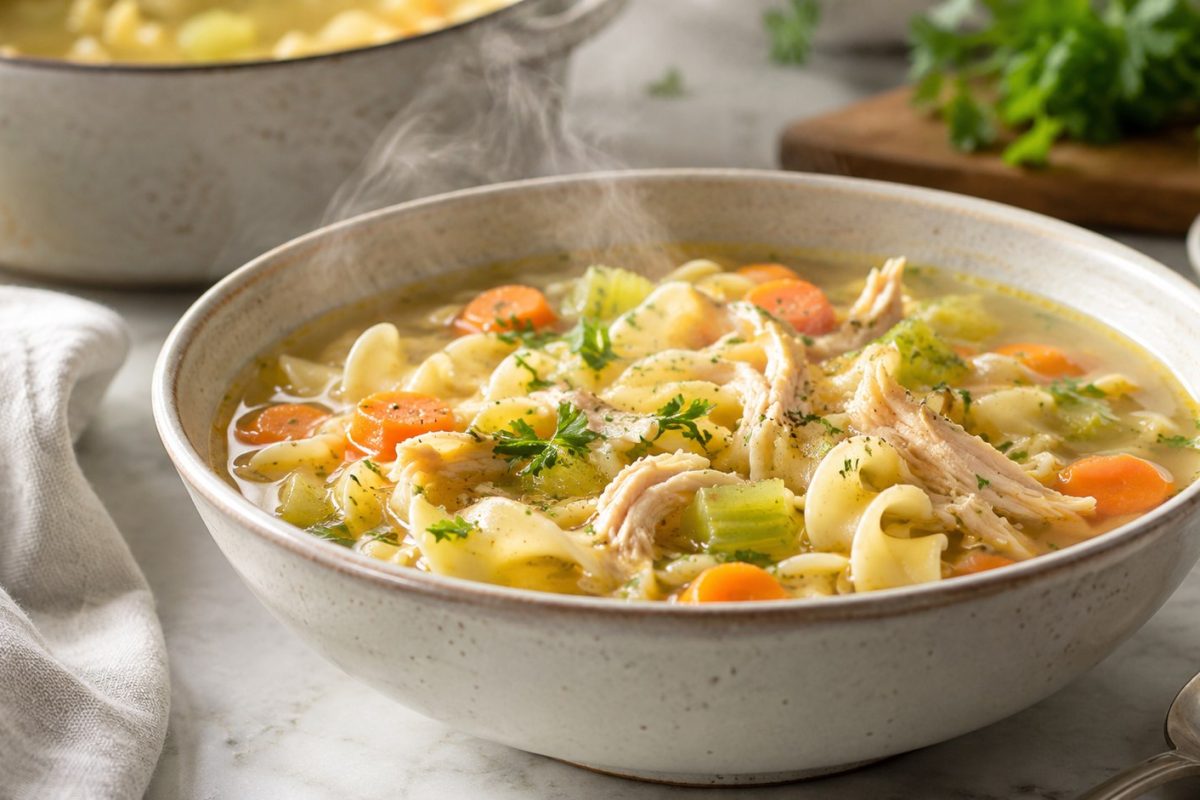
Low-sodium chicken noodle soup without canned broth replaces the salty carton or bouillon cube with a fresh stock built directly in the pot. Chicken, browned vegetables, herbs, garlic, and controlled simmering create a full-bodied soup without relying on processed broth, as noted by the customreceipt.com editorial team.
The recipe takes about 75 minutes and produces 6 generous servings. Most of that time is passive simmering. One pot delivers tender chicken, fragrant broth, vegetables, and noodles with far less sodium than many canned soups.
The American Heart Association recommends no more than 2,300 milligrams of sodium daily. It considers 1,500 milligrams an ideal target for most adults. Packaged foods supply much of the sodium in American diets, so preparing soup from scratch offers useful control over every ingredient.
Why Homemade Chicken Soup Does Not Need Canned Broth
Canned broth is convenient, but it is not essential. Chicken produces its own cooking liquid when simmered with water, vegetables, herbs, and aromatics. The key is extracting flavor in stages rather than boiling everything together immediately.
Bone-in thighs give the broth more body than boneless breasts. Their connective tissue softens during cooking and adds richness. A chicken breast may still be added for leaner pieces, but it should not form the entire stock base.
Browning the chicken and vegetables creates roasted flavors before water enters the pot. Onion, carrot, celery, and garlic then release natural sweetness. Thyme, bay leaf, parsley, pepper, and lemon provide contrast without adding meaningful sodium.
Salt is only one source of perceived flavor. Browning, acidity, herbs, fat, aroma, and natural sweetness can make a lightly salted soup taste complete.
The same approach appears in many slow-built dishes. The site’s guide to authentic Valencian paella shows how browned chicken strengthens cooking liquid before rice is added.
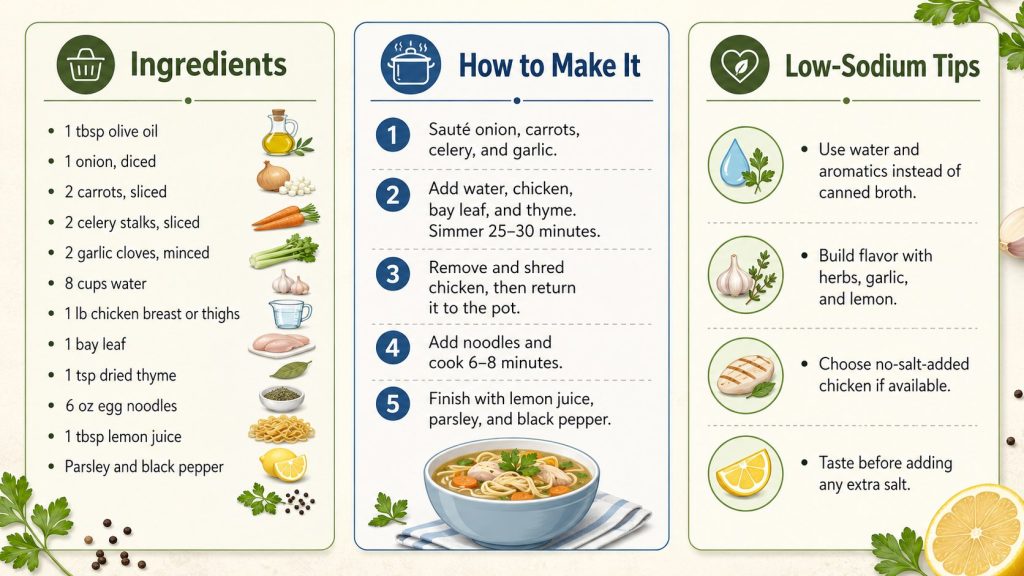
Ingredients for Low-Sodium Chicken Noodle Soup
This recipe makes approximately 10 cups. Use a heavy 5-quart or 6-quart pot with a lid.
| Ingredient | Amount | Purpose |
|---|---|---|
| Bone-in, skinless chicken thighs | 1½ pounds | Rich stock and tender meat |
| Water | 10 cups | Unsalted liquid base |
| Olive oil | 1 tablespoon | Browning vegetables |
| Yellow onion | 1 medium | Sweetness and aroma |
| Carrots | 3 medium | Color and natural sweetness |
| Celery stalks | 3 | Traditional savory flavor |
| Garlic | 3 cloves | Depth and aroma |
| Dried thyme | ¾ teaspoon | Herbal character |
| Bay leaves | 2 | Background fragrance |
| Black pepper | ½ teaspoon | Mild heat |
| Fresh parsley stems | 6–8 | Stock flavor |
| Wide egg noodles | 5 ounces | Structure and comfort |
| Fresh lemon juice | 1–2 tablespoons | Brightness |
| Chopped parsley | ¼ cup | Fresh finish |
| Salt | ¼ teaspoon, optional | Final adjustment |
The recipe contains only ¼ teaspoon of added salt across 6 servings. That amount contributes about 575 milligrams of sodium to the entire pot, or roughly 96 milligrams per serving. Chicken and noodles naturally contain additional sodium, so the exact total depends on their labels.
Choose plain raw chicken without injected broth or seasoning. Some poultry is enhanced with a sodium solution, which can significantly change the nutritional result. The package may say “contains up to” a stated percentage of solution.
Egg noodles also vary widely. Compare labels and select an option with the lowest sodium per serving. Plain dried pasta can replace egg noodles when necessary.
How to Prepare the Ingredients
Cut the onion into small dice. Slice the carrots into ¼-inch rounds and the celery into similar pieces. Keeping the vegetables near the same size helps them cook evenly.
Pat the chicken dry with paper towels. Moisture prevents proper browning and can make the first stage taste boiled rather than roasted.
Prepare these items before heating the pot:
- measured herbs and pepper;
- peeled garlic cloves;
- parsley stems tied with kitchen string;
- lemon juice;
- noodles weighed according to the package;
- clean plate for the cooked chicken;
- food thermometer for checking doneness.
A thermometer removes guesswork. The USDA lists 165°F, or 73.9°C, as the safe minimum internal temperature for poultry. Measure the thickest section without touching bone.
After preparation, keep raw chicken separate from ready-to-eat ingredients. Wash the knife, board, and hands before chopping parsley or handling cooked meat. Do not rinse raw chicken because splashing water can spread bacteria around the sink.
Keep the noodles dry until the final stage. Cooking them too early makes them absorb liquid and lose their texture. Fresh lemon juice should also remain separate because prolonged boiling weakens its brightness.
How to Make Chicken Noodle Soup Without Broth
Heat the olive oil over medium-high heat. Add the chicken in a single layer and cook for 4 minutes without moving it. Turn each piece and brown the second side for another 3 minutes.
The chicken will not be fully cooked at this point. Transfer it to a clean plate while the vegetables form the aromatic base.
Follow these steps:
- Add the onion, carrots, and celery to the same pot.
- Cook for 6–8 minutes, stirring occasionally.
- Add the garlic, thyme, and black pepper.
- Stir for 30 seconds without browning the garlic.
- Return the chicken and its juices to the pot.
- Pour in 10 cups of cold water.
- Add the bay leaves and parsley stems.
- Bring the liquid to a gentle boil.
- Reduce the heat and partially cover the pot.
- Simmer for 35–40 minutes.
- Remove the chicken after it reaches 165°F.
- Discard the bones and shred the meat.
- Return the meat to the pot.
- Add the noodles and cook until just tender.
- Remove the bay leaves and parsley stems.
- Stir in lemon juice and chopped parsley.
- Taste before adding any salt.
A gentle simmer produces a cleaner broth than a rolling boil. Strong boiling breaks chicken proteins into smaller particles and can make the liquid cloudy. It may also toughen the meat before the connective tissue softens.
Skim foam from the surface during the first 15 minutes when necessary. A small amount is harmless, but removing it improves the broth’s appearance.
After the instructions, let the soup rest for 5 minutes. The noodles continue absorbing liquid, while the lemon and herbs spread through the pot. Taste again before serving. Additional acid may be more useful than additional salt.
How to Build Strong Flavor With Less Sodium
Low-sodium soup should not taste like hot water. The recipe needs several flavor layers working together.
Browning provides the first layer. Aromatic vegetables create the second. Chicken, herbs, and slow extraction form the third. Lemon juice and parsley supply the final contrast.
Useful salt-free flavor boosters include:
- ½ teaspoon smoked paprika;
- ¼ teaspoon ground turmeric;
- 1 teaspoon grated fresh ginger;
- ½ teaspoon onion powder without salt;
- ½ teaspoon garlic powder without salt;
- 1 strip of lemon peel;
- chopped dill instead of parsley;
- ½ teaspoon crushed fennel seed;
- 4 ounces of sliced mushrooms.
Mushrooms provide savory depth and work especially well with thyme. Add them beside the onion and cook until their released moisture evaporates. Ginger creates a lighter, sharper soup that pairs well with rice noodles.
Do not add every option at once. Choose 1 or 2 additions that support the intended style. Too many spices can hide the clean chicken flavor.
Acidity deserves special attention. One tablespoon of lemon juice can make the broth taste more seasoned without increasing sodium. Add it after cooking, then taste before using the optional salt.
The best low-sodium soup does not imitate an aggressively salted product. It develops a different balance based on roasted flavor, herbs, acidity, and fresh ingredients.
Sodium Comparison and Portion Planning
Exact sodium levels depend on brands, serving sizes, and whether the chicken was enhanced. The figures below provide a practical comparison rather than a medical calculation.
| Soup option | Approximate sodium per serving | Main sodium sources |
|---|---|---|
| Homemade recipe, no added salt | 90–180 mg | Chicken and noodles |
| Homemade recipe with ¼ teaspoon salt | 180–280 mg | Chicken, noodles, added salt |
| Reduced-sodium canned soup | 450–700 mg | Broth, seasoning, noodles |
| Regular canned chicken soup | 700–1,000+ mg | Salt, broth concentrate, additives |
The FDA states that Americans consume about 3,400 milligrams of sodium daily on average. Federal dietary guidance recommends less than 2,300 milligrams for most adults.
A large bowl may contain 1½ or 2 listed servings. Always check the serving size before comparing packaged products. A label showing 600 milligrams can exceed 1,200 milligrams when the whole container is eaten.
Homemade soup makes portion control easier because the total ingredients are known. However, “homemade” does not automatically mean low sodium. Bouillon, soy sauce, seasoning packets, cured chicken, and salted noodles can quickly raise the total.
People following a medically prescribed sodium limit should calculate their specific products. A physician or registered dietitian can provide an individual target, particularly for heart, kidney, or liver conditions.
What Noodles Work Best?
Wide egg noodles create the familiar American chicken soup texture. They cook quickly and hold enough broth without dominating the bowl.
Other useful options include:
- small shells for children;
- ditalini for spoon-friendly portions;
- whole-wheat noodles for more fiber;
- rice noodles for a lighter texture;
- gluten-free pasta for suitable diets;
- cooked brown rice instead of noodles;
- pearl barley for a thicker soup.
Check sodium labels on gluten-free and flavored products. Some alternatives contain seasoning or additives that plain wheat pasta does not.
Whole-wheat pasta requires slightly longer cooking. Rice noodles may need only several minutes. Barley should be cooked separately or added much earlier because it requires more liquid.
For meal preparation, cook noodles in a separate saucepan. Place them in each bowl and pour hot soup over them. This prevents the remaining pasta from swelling during refrigeration.
Mistakes That Make Low-Sodium Soup Bland
The most common mistake is skipping the browning stage. Pale chicken and watery vegetables cannot create a concentrated stock.
Other frequent problems include:
- using too much water for the amount of chicken;
- boiling the soup aggressively;
- adding noodles before the stock develops;
- using old, weak herbs;
- forgetting acid at the end;
- choosing sodium-enhanced chicken;
- seasoning before the liquid reduces;
- storing noodles inside the soup for several days.
After reviewing these mistakes, correct flavor gradually. Simmer uncovered for 10 minutes when the broth is weak. Add lemon juice in 1-teaspoon portions. Stir in fresh herbs immediately before serving.
Garlic powder or onion powder can repair a thin aromatic base, but both must be salt-free. Black pepper adds warmth rather than saltiness. A small amount of olive oil can improve mouthfeel when skinless chicken produces a very lean stock.
Never pour in concentrated bouillon as a quick repair without checking its label. One teaspoon may contain several hundred milligrams of sodium. Reduction, aromatics, mushrooms, and acidity are more controllable options.
Serving Ideas for a Complete Meal
Serve the soup with a simple salad, roasted vegetables, or unsalted whole-grain toast. A small bowl also works as a starter before a larger meal.
For a plant-based side, homemade creamy hummus can be prepared with reduced salt. Serve it beside cucumber, carrot, or bell pepper slices.
Other serving options include:
- warm whole-grain bread without salted butter;
- cabbage slaw with lemon dressing;
- roasted broccoli with garlic;
- tomato and cucumber salad;
- baked sweet potato wedges;
- sliced avocado with lime;
- fresh fruit after the meal.
These sides add texture without competing with the soup. Fresh produce also allows diners to build a larger plate without relying on processed foods.
Avoid pairing low-sodium soup with heavily salted crackers, cured meat, or commercial garlic bread. Those additions can erase much of the sodium reduction achieved in the pot.
Storage, Freezing, and Reheating
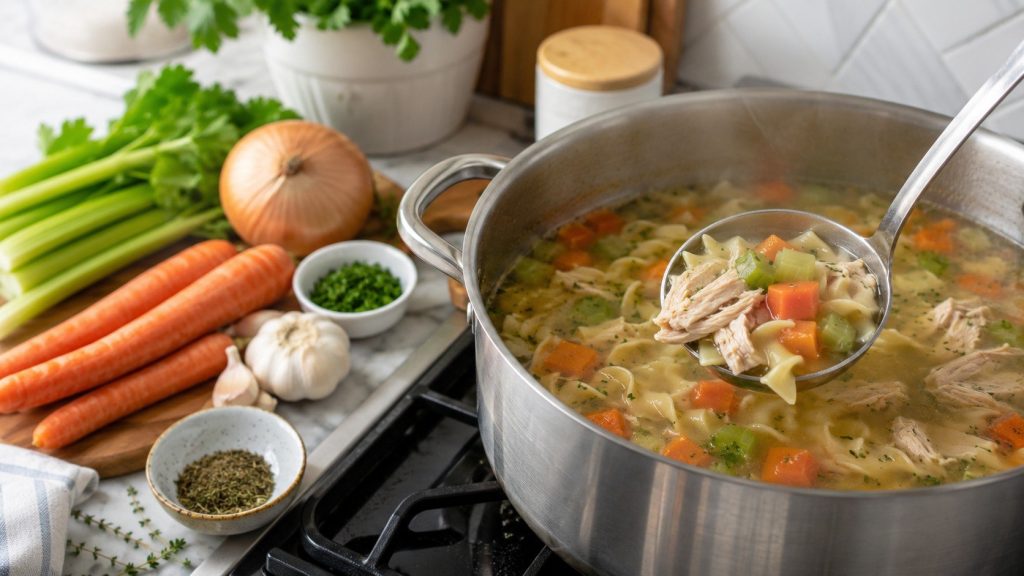
Refrigerate leftovers within 2 hours. Divide a large batch among shallow containers so it cools faster.
Store the soup for 3–4 days in the refrigerator. Keep separately cooked noodles in another container. Add them only when reheating each portion.
For freezing, leave out the noodles. Pasta often becomes soft and swollen after thawing. Freeze the chicken, vegetables, and broth for up to 3 months, then cook fresh noodles during reheating.
Bring reheated leftovers to 165°F throughout, following USDA guidance. Stir the soup during heating because the center may remain cooler than the edges.
If the broth thickens in storage, add a small amount of water. Restore brightness with fresh lemon juice and parsley rather than salt.
FAQ
Can chicken noodle soup taste good without broth?
Yes. Browned chicken, onion, carrots, celery, garlic, herbs, and slow simmering create broth directly inside the pot.
What chicken cut makes the best homemade broth?
Bone-in thighs provide the strongest flavor and body. A breast can be added for lean meat, but thighs form a better stock base.
How much sodium is in homemade chicken noodle soup?
This version usually contains about 180–280 milligrams per serving with the optional salt. Product labels can change the final number.
Can I use boneless chicken breast?
Yes, but the broth will be lighter. Add mushrooms, extra herbs, or a bone-in thigh for more depth.
Should noodles cook inside the soup?
They can cook inside the soup when it will be served immediately. For leftovers, cook them separately to prevent swelling.
How can I make the soup gluten-free?
Use certified gluten-free noodles, rice noodles, brown rice, or potatoes. Check every packaged ingredient for sodium and allergen information.
Can I use leftover cooked chicken?
Yes. Build the vegetable stock first, then add shredded cooked chicken during the final 10 minutes. Reheat it to 165°F.
Is sea salt lower in sodium than regular salt?
Not necessarily. Crystal size changes how much fits inside a spoon, but both products contain sodium. Compare weights and nutrition labels.
What can replace lemon juice?
Use a small amount of apple cider vinegar, white wine vinegar, or unsalted tomato. Add acid gradually and taste after each addition.
How do I fix soup that tastes watery?
Simmer it uncovered, add fresh herbs, increase the vegetables, or include mushrooms. Lemon juice can sharpen flavor after reduction.
Earlier we wrote about Where can you buy Pringles Pop Dog Buns on July 8 and July 15