 Frank Rondel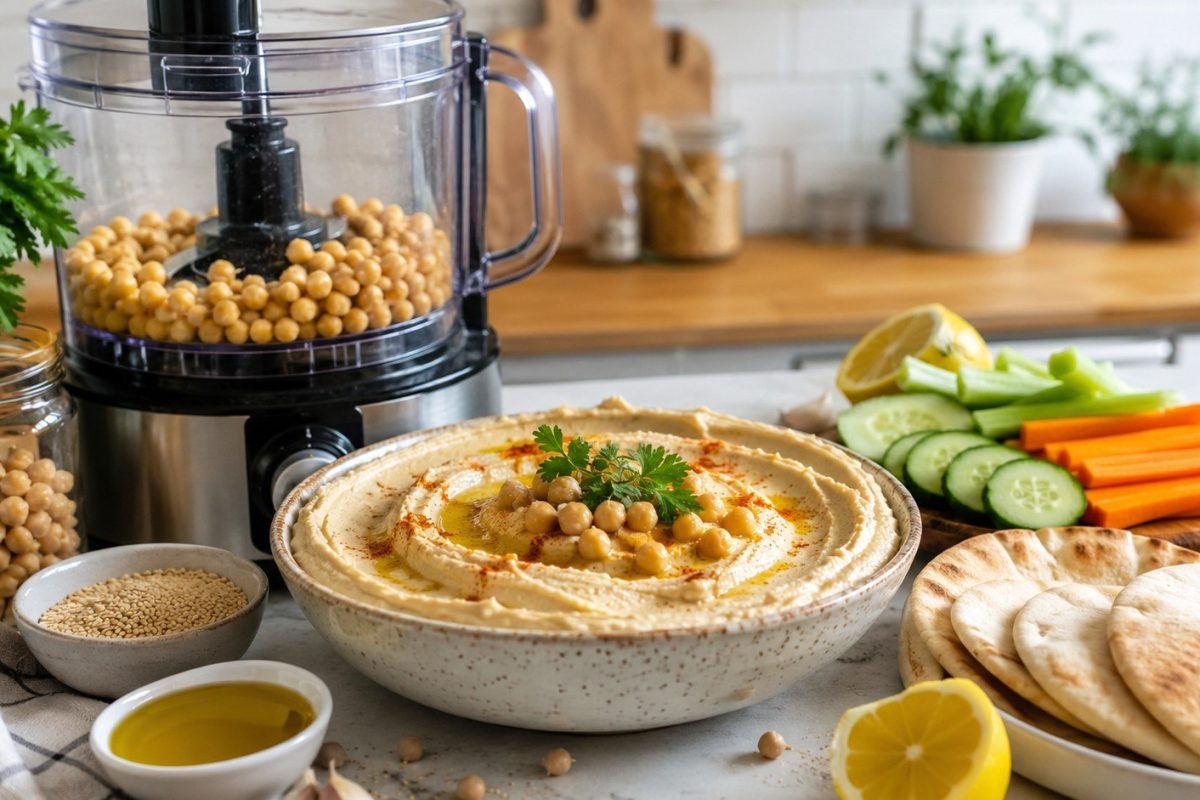
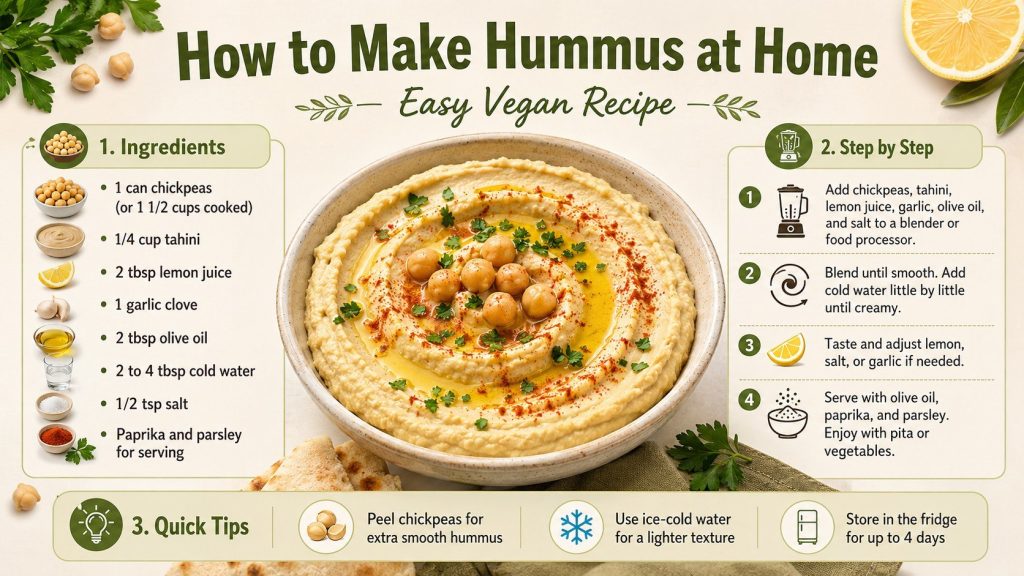
How to make hummus at home becomes simple once the correct balance of chickpeas, tahini, lemon juice, garlic, and water is understood. This vegan recipe takes about 15 minutes with canned chickpeas and produces a smooth dip without dairy, eggs, or specialist equipment, as noted by the customreceipt.com editorial team.
Homemade hummus usually tastes fresher than packaged products. It also allows complete control over salt, acidity, garlic, tahini, and texture. The finished dip works with vegetables, flatbread, grain bowls, salads, wraps, and sandwiches.
What Is Traditional Hummus Made From?
Traditional hummus combines cooked chickpeas, tahini, lemon juice, garlic, salt, and water. Olive oil is usually poured over the finished dish rather than used as its main liquid.
Each ingredient performs a separate task. Chickpeas create the body, while tahini adds richness and sesame flavor. Lemon juice balances the fat with acidity. Garlic supplies sharpness, and cold water makes the mixture lighter.
The basic ingredients are:
- cooked chickpeas;
- sesame tahini;
- freshly squeezed lemon juice;
- garlic;
- fine salt;
- ice-cold water or chickpea liquid;
- olive oil for serving;
- cumin, paprika, or sumac, if desired.
Traditional hummus is naturally vegan. It contains no milk, butter, cream, eggs, or meat products. However, packaged flavored hummus should still be checked for non-vegan toppings or additives.
The quality of the chickpeas and tahini has a stronger influence than an expensive blender. Soft beans and fresh sesame paste provide the best foundation.
Ingredients for Homemade Vegan Hummus
This recipe makes about 500 grams. It provides 4 large portions or 6 smaller servings.
| Ingredient | Amount | Main purpose |
|---|---|---|
| Canned chickpeas | 1 can, about 400 g | Structure and plant protein |
| Tahini | 60 g | Creaminess and sesame flavor |
| Fresh lemon juice | 45 ml | Acidity and freshness |
| Garlic | 1 small clove | Aroma and mild heat |
| Fine salt | ½ teaspoon | Flavor balance |
| Ground cumin | ¼ teaspoon | Optional earthy flavor |
| Ice-cold water | 60–100 ml | Smooth, light texture |
| Olive oil | 1–2 tablespoons | Garnish and aroma |
| Paprika or sumac | ¼ teaspoon | Optional seasoning |
A standard 400-gram can usually provides about 230–250 grams of drained chickpeas. Choose a product without sauces or strong seasoning.
Tahini often separates during storage. Stir the contents thoroughly before measuring. The paste should smell pleasantly nutty rather than stale or bitter.
Fresh lemon juice gives hummus a cleaner taste than bottled concentrate. One medium lemon usually provides enough juice for this recipe.
How to Make Hummus at Home Step by Step
Drain the chickpeas but reserve several tablespoons of their liquid. Rinse the beans under cold water to remove excess salt and the stronger canned aroma.
For a softer texture, simmer canned chickpeas in fresh water for 10 minutes. They should crush easily between 2 fingers before entering the food processor.
Follow these steps:
- Add tahini and lemon juice to a food processor.
- Blend for 45–60 seconds.
- Add garlic, salt, cumin, and 2 tablespoons of water.
- Process until the mixture becomes pale and creamy.
- Add half of the chickpeas.
- Blend for 1 minute.
- Add the remaining chickpeas.
- Process for another 2 minutes.
- Pour in cold water gradually.
- Taste and adjust the seasoning.
- Transfer the hummus to a shallow bowl.
- Finish with olive oil, paprika, or sumac.
Whipping tahini with lemon juice first creates a smoother base. It distributes the sesame paste before the chickpeas thicken the mixture.
Do not pour in all the water immediately. Chickpeas absorb different amounts depending on their size, age, and cooking method. Add 1 tablespoon at a time until the desired consistency appears.
The hummus should look slightly softer than expected. It becomes thicker after cooling in the refrigerator.
How to Make Hummus Extra Smooth
The secret of creamy homemade hummus is not excessive olive oil. The main factors are soft chickpeas, properly emulsified tahini, enough liquid, and sufficient blending time.
Warm chickpeas break down faster than cold beans. This is especially useful with a basic food processor or blender.
Some cooks remove every chickpea skin. The method works, but it requires considerable time. Simmering the beans until very soft delivers a similar result with less effort.
Use these techniques:
- simmer canned chickpeas for 10–15 minutes;
- blend tahini and lemon juice before adding beans;
- use ice-cold water instead of excessive oil;
- process the hummus for at least 3 minutes;
- scrape the sides of the bowl several times;
- add liquid in small portions;
- let the hummus rest before serving.
Longer processing breaks down remaining chickpea pieces and introduces air. Scraping the bowl prevents dense paste from collecting beyond the blades.
Cold water lightens the mixture without covering the sesame taste. Extra oil can make hummus richer, but too much produces a heavy texture.
The finished hummus should hold a visible swirl. However, it should remain soft enough to spread without tearing bread.
Canned Chickpeas or Dried Chickpeas?
Canned chickpeas provide speed and consistent results. Dried chickpeas require soaking and longer cooking, but they offer greater control over softness.
Both options can produce excellent hummus.
| Method | Preparation time | Advantages | Possible drawback |
|---|---|---|---|
| Canned chickpeas | 15–25 minutes | Fast and convenient | May contain more salt |
| Dried chickpeas | 8–14 hours | Better control over texture | Require soaking |
| Pressure-cooked chickpeas | 60–90 minutes | Very soft and consistent | Requires suitable equipment |
| Frozen cooked chickpeas | 15–20 minutes | Useful for meal preparation | Must be prepared earlier |
For dried chickpeas, soak 150 grams in plenty of water overnight. Drain them, add fresh water, and cook until completely tender.
Cooking usually takes 45–90 minutes. Older chickpeas often require more time. Firm beans create grainy hummus even inside a powerful blender.
Reserve some cooking liquid. It contains starch and can replace plain water during blending.
The chickpeas are ready when they collapse under gentle finger pressure. They should appear softer than beans intended for salads.
How to Make Hummus Without Tahini
A hummus recipe without tahini tastes lighter and less nutty. It remains useful when sesame paste is unavailable or unsuitable.
Replace 60 grams of tahini with one of these alternatives:
- 2 tablespoons of sunflower seed butter;
- 2 tablespoons of cashew butter;
- 3 tablespoons of olive oil;
- 3 tablespoons of aquafaba and 1 tablespoon of oil;
- 2 tablespoons of unsweetened vegan yogurt.
Sunflower seed butter produces the closest dense texture. Cashew butter creates a mild flavor but changes the traditional character.
Aquafaba is the liquid found inside canned chickpeas. It gives the dip volume without adding much fat. Vegan yogurt introduces extra acidity, so less lemon juice may be needed.
Anyone cooking for a person with allergies should check every replacement carefully. Sesame, cashews, and sunflower seeds can cause serious reactions.
Add substitutes gradually and taste after blending. Hummus without tahini often needs slightly more cumin, salt, or lemon juice.
Common Hummus Mistakes and Easy Fixes
Homemade hummus may become dry, watery, bitter, or dominated by garlic. Most problems result from incorrect proportions.
Too much tahini creates bitterness, especially when the paste is old. Add more chickpeas, water, and lemon juice to restore balance.
Raw garlic becomes stronger while hummus rests. One small clove is enough for a standard batch. For a gentler taste, soak chopped garlic in lemon juice for 5 minutes.
Avoid these mistakes:
- using firm or undercooked chickpeas;
- adding several raw garlic cloves;
- pouring in all the water immediately;
- using stale tahini;
- blending for less than 1 minute;
- adding too much olive oil;
- serving hummus directly from the refrigerator.
If the hummus is too thick, add cold water in 1-tablespoon portions. If it becomes too thin, blend in more chickpeas or tahini.
Extra lemon juice fixes a flat, heavy flavor. A small pinch of salt strengthens the remaining ingredients.
Hummus that tastes bitter may need more chickpeas rather than more oil. Let chilled hummus stand for 15 minutes before judging its flavor.
Vegan Hummus Variations
The basic recipe provides a foundation for several variations. Add extra ingredients only after the classic hummus has reached the correct texture.
For roasted pepper hummus, blend in 100 grams of drained roasted peppers. Reduce the water because peppers contain additional moisture.
Other combinations include:
- beet hummus with 100 grams of cooked beetroot;
- herb hummus with parsley, cilantro, or basil;
- spicy hummus with harissa or roasted chili;
- roasted garlic hummus with 4 soft cloves;
- pumpkin hummus with 100 grams of roasted pumpkin;
- olive hummus with 50 grams of pitted olives;
- avocado hummus with ½ ripe avocado.
Each addition changes the moisture balance. Watery vegetables require less cold water, while dense pumpkin may need more lemon juice.
Roasted garlic provides depth without the aggressive taste of raw cloves. Fresh herbs create a brighter dip but shorten its refrigerator life.
Avocado hummus should be served soon after preparation. Exposure to air can darken the avocado.
For another dairy-free meal, the site’s guide to opening a coconut and preparing fresh coconut recipes includes homemade coconut milk and vegetable curry. Hummus can accompany that curry as a dip for flatbread or raw vegetables.
What to Serve With Homemade Hummus
Hummus is more than a snack dip. Its dense but spreadable texture makes it useful for breakfast, lunch, and simple dinners.
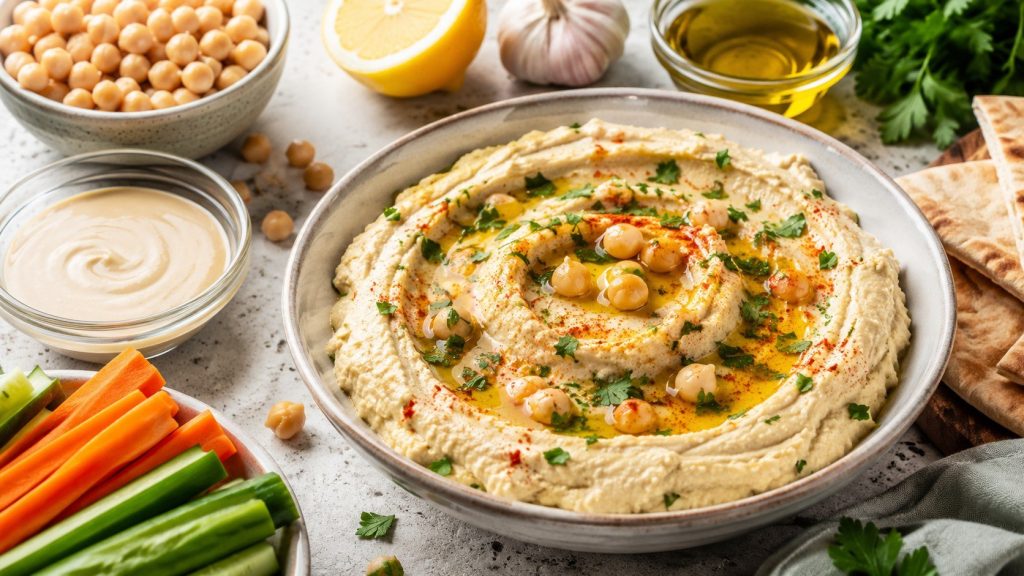
Serve it with warm pita, toasted sourdough, crackers, or sliced vegetables. Carrots, cucumbers, radishes, celery, and bell peppers provide a crisp contrast.
For a complete meal, spread hummus across a plate and add roasted vegetables, grains, herbs, and olives. Bulgur, couscous, quinoa, and brown rice all work well.
Hummus can also replace mayonnaise in sandwiches. Thin it with lemon juice and cold water to create a creamy salad dressing.
For a casual party menu, serve the dip beside the site’s homemade nachos with crispy chips and melted cheese. Use vegan cheese for a fully plant-based spread. Hummus also works as a cooler alternative to heavy cheese sauces.
A Mediterranean dinner can combine hummus with roasted peppers, tomato salad, olives, and rice. Readers planning a larger shared meal can also use the detailed guide on how to cook authentic Valencian paella. For a vegan menu, prepare vegetable rice without chicken or rabbit.
How Long Does Homemade Hummus Last?
Store vegan hummus inside a clean, airtight container. Refrigerate it within 2 hours of preparation.
Homemade hummus is best consumed within 3–4 days. Its shelf life depends on refrigerator temperature, ingredient freshness, and handling.
Always use a clean spoon. Bread crumbs and vegetable pieces introduce moisture and microorganisms into the container.
Discard the hummus if it develops mold, gas bubbles, an unpleasant fermented smell, or unusual discoloration. A dry surface usually indicates air exposure, but it also reduces quality.
Hummus can be frozen for 2–3 months. Divide it into small containers and leave space for expansion.
Thaw frozen hummus overnight in the refrigerator. Stir it thoroughly and add cold water or lemon juice when the texture appears grainy.
FAQ
Is homemade hummus always vegan?
Traditional hummus is vegan. It contains chickpeas, tahini, lemon juice, garlic, salt, and water. Check prepared toppings for dairy ingredients.
Can I make hummus in a blender?
Yes. Use very soft chickpeas and add liquid gradually. Stop the blender several times to scrape the sides.
Why is my hummus grainy?
The chickpeas may be too firm, or the mixture needs more processing. Simmer canned chickpeas for 10 minutes before blending.
Can hummus be made without olive oil?
Yes. Use cold water or aquafaba for texture. Olive oil can remain an optional garnish.
How much tahini should I use?
Use about 60 grams of tahini for 240 grams of drained chickpeas. Increase or reduce it according to taste.
Should hummus be served cold?
Hummus tastes more aromatic near room temperature. Remove it from the refrigerator about 15 minutes before serving.
Can I prepare hummus without garlic?
Yes. Omit the garlic and add more lemon, cumin, roasted pepper, or fresh herbs.
Can homemade hummus be frozen?
Yes. Freeze it in airtight portions for up to 2–3 months. Stir well after thawing.
Earlier we wrote about How Much Alcohol Can You Bring From Abroad? Rules for Traveling by Plane and Car