 Frank Rondel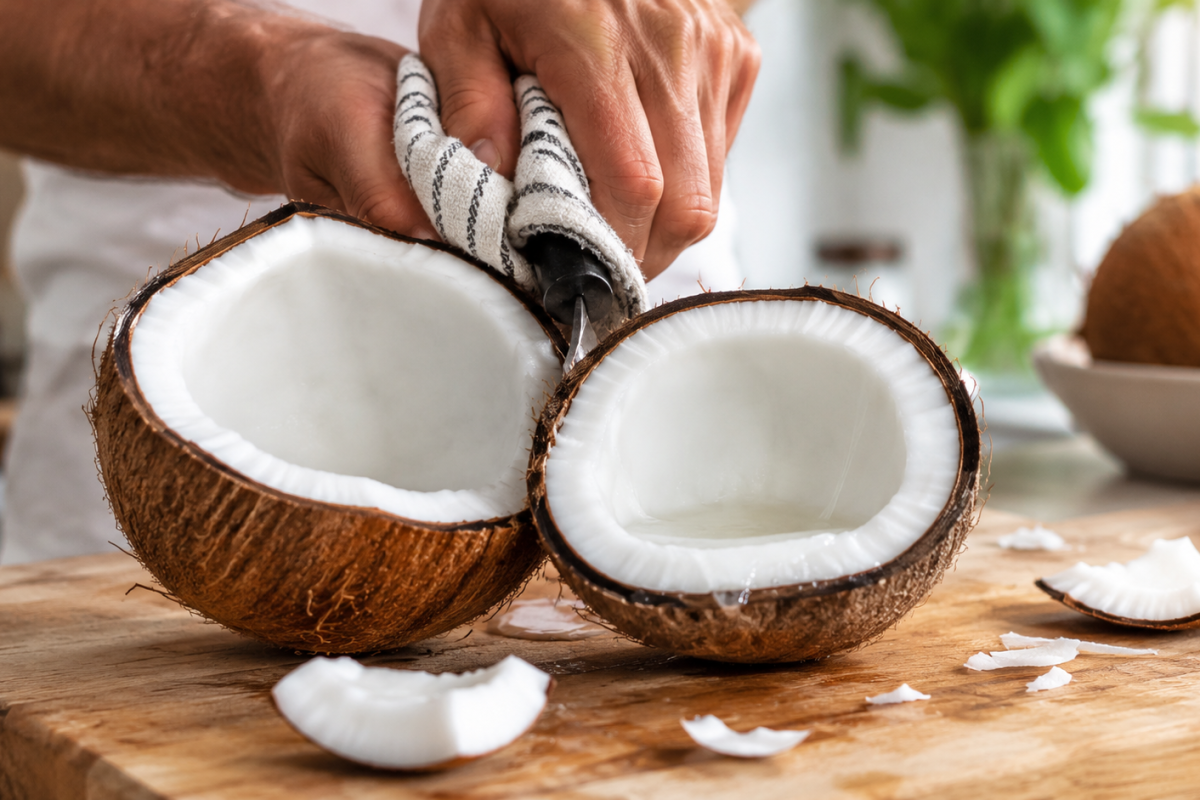
How to open a coconut safely is the first question that appears when a hard, brown fruit reaches the kitchen. Beneath the shell are fresh coconut water, firm white meat, and enough ingredients for drinks, snacks, sauces, desserts, and complete meals, as the customreceipt.com editorial team notes.
A mature coconut may seem difficult to handle, but the process requires no special machine. A screwdriver, towel, bowl, and hammer are usually enough. The main rule is to drain the liquid before cracking the shell.
Fresh coconut also creates less waste than many cooks expect. The water can be chilled, the meat can be grated, and the remaining pulp can become flour or granola.
How to Choose a Fresh Coconut at the Store
A good coconut should feel heavy for its size. Shake it close to your ear and listen for a clear sloshing sound. Plenty of moving liquid usually means the coconut has not dried out.
Examine the 3 dark circles at one end. These coconut “eyes” should be dry and firm. Mold, moisture, cracks, or a fermented smell may indicate spoilage.
Use this quick checklist before buying:
- Choose a coconut that feels dense and relatively heavy.
- Shake it and listen for moving water.
- Check the shell for deep cracks or wet patches.
- Inspect all 3 eyes for mold and softness.
- Avoid fruit with a sour or oily smell.
These signs cannot reveal every internal problem. However, they significantly reduce the chance of bringing home dry or rancid coconut.
Brown coconuts are mature fruits with firm meat. They are suitable for milk, baking, chips, and curry. Young green coconuts contain more water and much softer flesh, so they require a different opening method.
What You Need to Open a Coconut Safely
Most kitchens already contain the necessary equipment. A stable surface matters more than physical strength.
Prepare the tools before touching the coconut. Wet hands and a rolling shell create an unnecessary risk.
| Tool | Main purpose | Suitable alternative |
|---|---|---|
| Screwdriver | Piercing the soft coconut eye | Metal skewer or corkscrew |
| Bowl or jug | Collecting coconut water | Large drinking glass |
| Kitchen towel | Holding the coconut steady | Non-slip silicone mat |
| Hammer | Cracking the hard shell | Meat mallet |
| Butter knife | Separating meat from shell | Strong metal spoon |
| Vegetable peeler | Removing the brown skin | Small paring knife |
Place the coconut on a folded towel. Never hold it in your hand while striking the shell. Keep fingers away from the impact area.
Do not use the sharp edge of a chef’s knife. The blade can slip, chip, or become trapped inside the shell. A blunt hammer or meat mallet offers much better control.
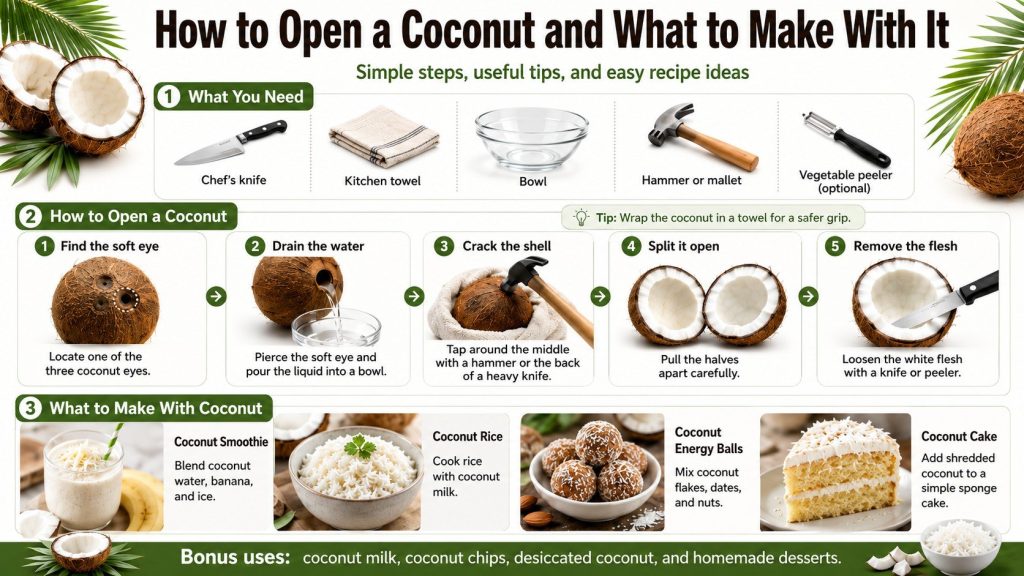
How to Open a Coconut Step by Step
Wash and dry the coconut before opening it. Dirt from the shell should not enter the water or touch the white meat.
Locate the 3 eyes at the narrow end. Press each one with a screwdriver. One eye is usually noticeably softer than the others.
Follow these steps:
- Push a clean screwdriver through the softest eye.
- Widen the opening with a gentle rotating motion.
- Turn the coconut over a bowl or measuring jug.
- Let the water drain for several minutes.
- Wrap the empty coconut in a folded towel.
- Strike around its middle with a hammer.
- Rotate the coconut after every blow.
- Continue until a crack runs around the shell.
- Pull the 2 halves apart carefully.
A circular series of controlled blows works better than one powerful strike. The shell usually opens into larger pieces, which are easier to manage.
Remove all loose fragments before touching the meat. Small shell particles may have sharp edges. Clean the work surface immediately after opening the coconut.
How to Open a Coconut Without a Hammer
An oven can help crack a drained coconut. Heat the oven to 190°C or 375°F. Place the empty coconut on a baking tray for about 10 minutes.
Watch for a visible crack. Remove the coconut with oven gloves and let it cool. Wrap it in a towel before pressing along the fractured area.
A rolling pin may provide enough force to separate the shell. Another option is the blunt spine of a heavy cleaver.
Hold the coconut over a towel-covered surface and tap around its middle. Rotate it after each tap.
Never use the sharpened edge of the cleaver. Also, never place an undrained coconut in the oven. Heating trapped liquid can create pressure inside the shell.
How to Remove Coconut Meat From the Shell
Fresh meat often clings tightly to the hard shell. Insert a butter knife between the white flesh and the brown inner layer.
Move slowly around the edge. Twist the knife gently instead of forcing it deeply. Large sections may release in one piece.
When the meat refuses to separate, place the shell pieces in the freezer for 30 minutes. Cooling causes slight contraction and often loosens the flesh.
The thin brown skin on the meat is edible. Remove it with a vegetable peeler when you need bright white coconut for milk or desserts.
Fresh meat can be prepared in several ways:
- Grate it for coconut milk, cakes, or energy bites.
- Cut it into thin strips for oven-baked chips.
- Chop it into cubes for smoothies.
- Blend it into sauces and dessert creams.
- Toast it for oatmeal, yogurt, salads, or granola.
Finely grated meat releases more fat and moisture. Thick pieces remain chewy after roasting. Small cubes are easier to process in a powerful blender.
After preparing the meat, refrigerate it immediately. Fresh coconut should not remain at room temperature for several hours.
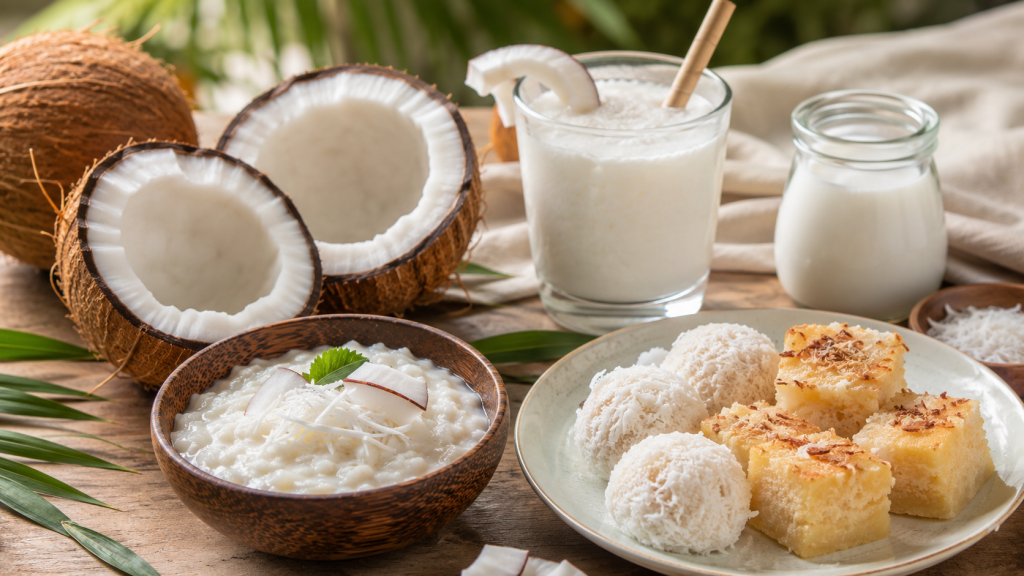
Coconut Water and Coconut Milk Are Different Products
The clear liquid inside the fruit is coconut water. It has a light sweetness and a relatively thin consistency.
Coconut milk does not naturally fill the coconut. It is produced by blending grated meat with warm water and then straining the mixture.
Taste the coconut water before using it. Fresh liquid should smell clean and taste mildly sweet. Discard it when it smells sour, alcoholic, or unpleasant.
Coconut water can be used in:
- Fruit smoothies;
- Homemade ice pops;
- Chia pudding;
- Rice dishes;
- Alcohol-free tropical drinks;
- Light marinades.
A mature coconut may contain less water than a young one. That is normal because more of the interior has developed into firm meat.
Refrigerate the drained water in a sealed bottle. Use it within 24 hours for the best flavor.
How to Make Homemade Coconut Milk
Homemade coconut milk is one of the most useful products made from fresh meat. It works in curry, soups, sauces, desserts, and drinks.
Ingredients
- 2 cups grated fresh coconut;
- 2½ cups hot water;
- 1 pinch of salt, optional.
Method
Place the coconut and hot water in a blender. Process for 1–2 minutes until the mixture becomes white and creamy.
Let it stand for 5 minutes. Pour everything through cheesecloth, a nut-milk bag, or a clean kitchen towel.
Squeeze firmly over a bowl. The first pressing produces thick coconut milk with a rich flavor.
The remaining pulp can be blended again with 1½ cups water. This second pressing creates thinner milk for rice, soup, or smoothies.
Natural separation in the refrigerator is normal. Coconut fat rises to the top, while water settles below. Shake the container before using it.
Fresh milk should be refrigerated and used within 3 days. It can also be frozen in ice cube trays for sauces and drinks.
Thick coconut milk works well in pastry creams and tropical fillings. It can replace part of the dairy in this classic homemade fruit tart recipe.
Pair the coconut cream with mango, pineapple, berries, or lime zest. Use first-press milk because thinner milk may prevent the filling from setting.
Cool the cream completely before adding it to a baked pastry shell. Warm filling can soften the crust and reduce its crisp texture.
Crispy Coconut Chips in the Oven
Fresh coconut recipes do not need long ingredient lists. Thin coconut slices become crisp with moderate heat and minimal seasoning.
Ingredients
- 1 cup thin coconut slices;
- 1 teaspoon neutral oil;
- 1 pinch of salt;
- ½ teaspoon cinnamon or smoked paprika.
Heat the oven to 160°C or 320°F. Toss the slices with oil and the selected seasoning.
Spread them in a single layer on a baking tray. Overlapping pieces will steam instead of becoming crisp.
Bake for 10–15 minutes. Turn the slices once and watch the edges closely. Coconut contains natural fat and can darken quickly.
The same control of thickness and oven temperature is essential when making natural potato chips at home.
Cool the coconut chips completely before transferring them to a container. They become firmer while cooling.
Sweet chips work with yogurt, porridge, and fruit. Savory chips can be seasoned with paprika, black pepper, curry powder, or garlic.
Store them in an airtight jar. If they soften, return them to a low oven for several minutes.
Quick Vegetable Curry With Fresh Coconut Milk
Fresh coconut milk creates a smooth sauce without dairy. This curry takes about 30 minutes and accepts many vegetable combinations.
Ingredients
- 1 tablespoon vegetable oil;
- 1 small onion, chopped;
- 2 garlic cloves, minced;
- 1 teaspoon grated ginger;
- 1 tablespoon curry powder;
- 2 cups mixed vegetables;
- 1½ cups coconut milk;
- ½ teaspoon salt;
- Lime juice and herbs.
Heat the oil in a deep pan. Cook the onion for about 4 minutes until it softens.
Add garlic, ginger, and curry powder. Stir for 30 seconds without allowing the spices to burn.
Add the vegetables and coconut milk. Simmer for 12–15 minutes until the vegetables are tender.
Carrots, cauliflower, peas, green beans, pumpkin, and sweet potatoes work well. Cut dense vegetables into small, equal pieces.
Add spinach or fresh herbs during the final minutes. Finish the dish with lime juice and serve it with rice or flatbread.
The curry can be refrigerated for 2 days. Reheat it gently because intense boiling may separate the coconut fat.
No-Bake Coconut Energy Bites
These bites use grated coconut without baking. They are suitable for lunch boxes, road trips, or a quick afternoon snack.
Ingredients
- 1 cup grated fresh coconut;
- 1 cup rolled oats;
- ½ cup peanut butter;
- 3 tablespoons honey;
- 1 teaspoon vanilla;
- 1 pinch of salt.
Mix all ingredients in a bowl. Chill the mixture for 20 minutes, then shape it into small balls.
Roll each ball in extra grated coconut. Refrigerate the finished bites in a closed container.
When the mixture feels too soft, add more oats. If it crumbles, add another spoonful of peanut butter.
Cocoa powder creates a chocolate version. You can also add a small amount of homemade chocolate hazelnut spread for a richer flavor.
Reduce the amount of honey when adding chocolate spread. Otherwise, the bites may become too soft and excessively sweet.
Dates can replace honey. Blend the dates into a paste before mixing them with the other ingredients.
What to Make With Leftover Coconut Pulp
The pulp left after producing milk still contains fiber and coconut flavor. It should not automatically go into the trash.
Spread the moist pulp over a lined baking tray. Dry it at 90°C or 195°F until all visible moisture disappears.
Stir it several times during drying. The process may take 1–2 hours, depending on the pulp thickness.
Once dry, the pulp can be used in:
- Granola;
- Pancake batter;
- Muffins;
- Crumble toppings;
- Smoothie bowls;
- Homemade snack bars.
Blend dried pulp to produce coarse coconut flour. It absorbs much more liquid than ordinary wheat flour.
Do not replace wheat flour in equal quantities. Begin by replacing only a small portion and adjust the recipe gradually.
Moist pulp can also be frozen. Divide it into small portions and label each container with the date.
How to Store Fresh Coconut Correctly
An unopened coconut can remain in a cool, dry place. After opening, both the water and meat require refrigeration.
Store the meat in an airtight container. Use it within 3–4 days for the best flavor and texture.
Grated, sliced, or cubed coconut can be frozen. Divide it into recipe-sized portions before freezing.
Frozen coconut works particularly well in smoothies, curry, sauces, and baking. Its texture may become slightly softer after thawing.
Use these storage periods as a practical guide:
| Coconut product | Storage method | Recommended period |
| Coconut water | Sealed bottle in refrigerator | Up to 24 hours |
| Fresh coconut meat | Airtight refrigerated container | 3–4 days |
| Homemade coconut milk | Sealed refrigerated container | Up to 3 days |
| Frozen coconut meat | Airtight freezer bag | About 3 months |
| Dried coconut chips | Airtight container | About 1 week |
Check the coconut before every use. Discard meat with mold, pink spots, a slippery surface, or a fermented smell.
Rancid coconut may smell like old oil or soap. Do not taste suspicious pieces to check their quality.
Freezer containers should contain as little excess air as possible. Air promotes drying and freezer burn.
Common Mistakes When Opening and Cooking Coconut
The most common mistake is cracking the shell before draining the water. The liquid spills and makes the work surface slippery.
Another mistake is striking the coconut while holding it. Always place it on a stable, towel-covered surface.
Using a sharp knife as a hammer is also dangerous. A heavy blunt tool provides better control.
Home cooks sometimes mistake coconut water for coconut milk. Remember that milk requires processed meat and additional water.
High oven temperatures can quickly burn chips and grated coconut. Use moderate heat and inspect the food frequently.
Opened coconut should not remain on the counter. Refrigerate the meat and water immediately after preparation.
“A coconut is easier to open when force is distributed around its middle instead of concentrated on one point.”
This method produces a cleaner crack. It also reduces the number of small shell fragments.
FAQ
How long does it take to open a coconut?
Draining and cracking a mature coconut usually takes 5–10 minutes. Removing the meat may take another 10 minutes.
Which coconut eye should be pierced?
Test all 3 eyes with a screwdriver. One is usually softer and opens with less pressure.
Can a coconut be opened in the oven?
Yes, but the water must be drained first. Heat the coconut at 190°C for about 10 minutes.
Is the brown skin on coconut meat edible?
Yes. The thin brown layer is edible and can remain on the meat. Remove it for smoother white milk or desserts.
Why does homemade coconut milk separate?
Coconut fat naturally rises above the water. Shake or stir the milk before using it.
Can fresh coconut meat be frozen?
Yes. Freeze grated, sliced, or cubed coconut in airtight portions for about 3 months.
What is the easiest fresh coconut recipe?
Oven-baked coconut chips require little preparation. Homemade coconut milk is another simple and versatile option.
How can you tell whether a coconut is spoiled?
Spoiled coconut may have mold, pink discoloration, slippery meat, or a sour smell. The water may taste fermented.
What can coconut pulp be used for?
Use it in granola, pancakes, muffins, snack bars, smoothies, or homemade coconut flour.
Can coconut water replace ordinary water in recipes?
Yes. It works in smoothies, rice, chia pudding, ice pops, and some light marinades.
Earlier we wrote about How to Cook Crab at Home: Boiling, Steaming, Baking and Grilling Times