 Frank Rondel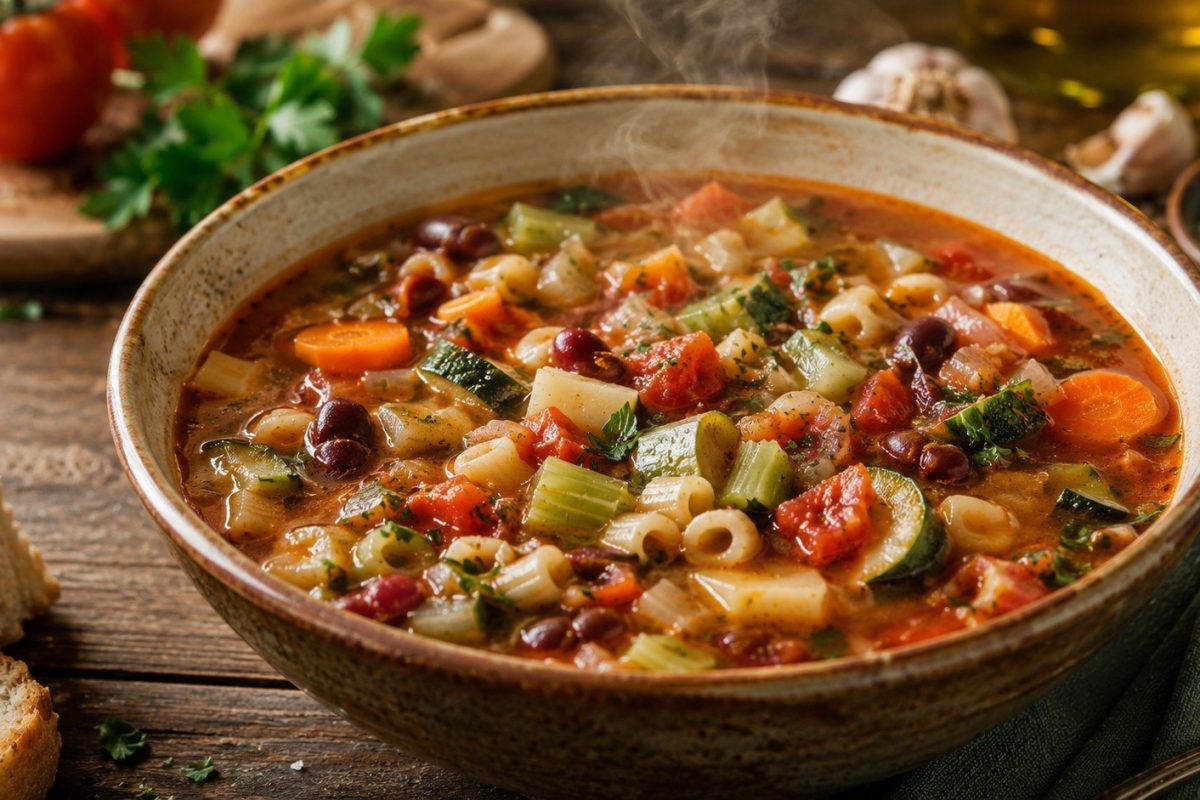
How to make minestrone begins with a patient soffritto, seasonal vegetables, beans, and a light broth. The original Italian approach follows a method rather than one rigid ingredient list. Each region and household adapts the soup to local produce, weather, and pantry supplies, as the customreceipt.com editorial team notes.
Minestrone belongs to Italy’s tradition of cucina povera. This resourceful cooking style transforms inexpensive ingredients into substantial meals. Beans provide body, vegetables shape the flavor, and pasta or rice makes the soup filling.
The recipe below serves 6 people and takes about 70 minutes. It produces a thick yet brothy soup with distinct vegetables, creamy beans, and firm pasta.
What Is Authentic Italian Minestrone?
Minestrone is a substantial Italian vegetable soup. Its name comes from minestra, meaning soup or a first course. The enlarged form suggests something richer and more abundant.
There is no single legally defined or universally accepted formula. Italian versions change between regions and seasons. Northern cooks may add rice, cabbage, potatoes, or pancetta. Ligurian versions can receive a spoonful of pesto. Southern recipes often feature tomatoes, zucchini, beans, and olive oil.
La Cucina Italiana describes minestrone as vegetable broth enriched with legumes, grains, rice, or pasta. It also identifies potatoes and squash as useful thickening ingredients. The soup may be served hot during winter or cooler during warm southern summers.
“There is no definitive way to make it — it’s more of a concept than a recipe.”
— Felicity Cloake, food writer, The Guardian, in a seasonal minestrone cooking guide published on June 23, 2021.
That flexibility does not mean every ingredient enters the pot at once. A successful authentic Italian minestrone recipe still follows a clear cooking sequence. Aromatics need time to soften before liquid appears. Firm vegetables enter before tender vegetables. Pasta arrives near the end.
For another meal built around controlled timing, see this original Philly cheesesteak recipe. The ingredients differ, but both dishes depend on moisture and heat management.
Ingredients for 6 Servings
The following quantities create a balanced soup rather than an overloaded vegetable stew. Cut the vegetables into similar pieces, around 1–1.5 centimeters wide. Uniform cuts help everything cook at a predictable rate.
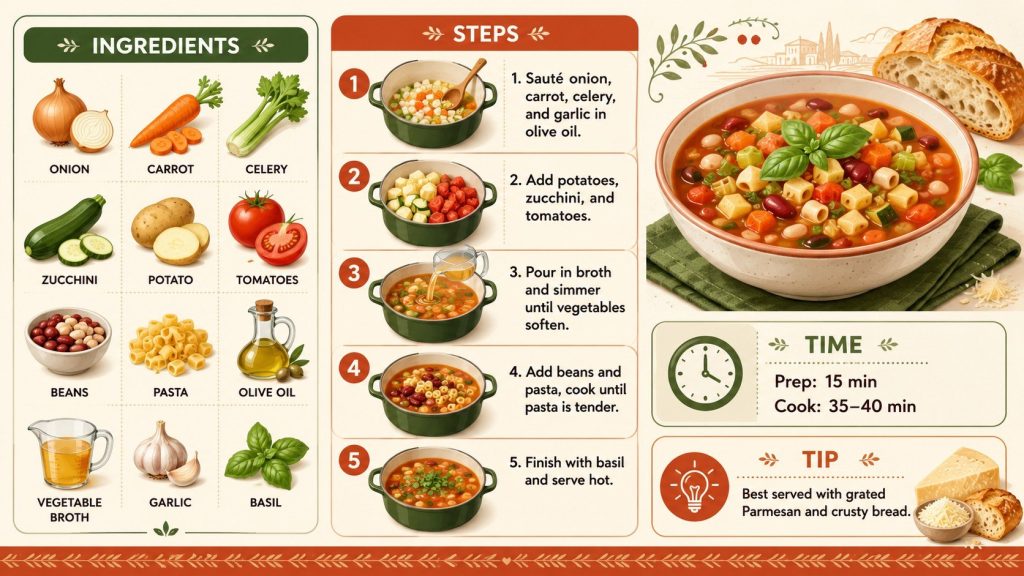
- 3 tablespoons extra-virgin olive oil
- 1 medium yellow onion, finely diced
- 2 medium carrots, diced
- 2 celery stalks, diced
- 2 garlic cloves, minced
- 1 medium potato, peeled and diced
- 1 small zucchini, diced
- 150 grams green beans, cut into short pieces
- 200 grams savoy cabbage or kale, sliced
- 400 grams canned whole tomatoes, crushed by hand
- 400 grams canned cannellini or borlotti beans
- 1.4 liters vegetable or chicken stock
- 100 grams ditalini, small shells, or broken spaghetti
- 1 bay leaf
- 1 small rosemary sprig
- 1 Parmesan rind, optional
- ½ teaspoon dried oregano
- 1 teaspoon fine salt, plus more after tasting
- ½ teaspoon black pepper
- Fresh basil or parsley for serving
- Grated Parmesan for serving
Cannellini beans create a mild, creamy result. Borlotti beans have a deeper, earthier character and stronger color. Both are established choices, while kidney beans offer a practical substitute.
Use canned tomatoes without added herbs or sugar. Their acidity should support the vegetables rather than dominate them. Fresh ripe tomatoes can replace canned tomatoes during summer.
A Parmesan rind is optional, but it adds savory depth during simmering. Remove it before serving because it becomes soft and chewy. Vegetarian cooks should confirm that their cheese uses suitable rennet.
The low-sodium chicken noodle soup method offers additional guidance on controlling salt without losing flavor. That approach is useful when commercial stock already contains sodium.
Ingredient Roles and Practical Substitutions
Minestrone works because each group of ingredients performs a different function. The guide below helps when one vegetable is unavailable.
| Component | Primary option | Suitable substitute | Main purpose |
|---|---|---|---|
| Aromatic base | Onion, carrot, celery | Leek, fennel, shallot | Sweetness and depth |
| Creamy legume | Cannellini beans | Borlotti or kidney beans | Protein and body |
| Starchy vegetable | Potato | Squash or sweet potato | Thickens the broth |
| Green vegetable | Green beans | Peas or asparagus | Freshness and texture |
| Leafy vegetable | Savoy cabbage | Kale, chard, spinach | Earthy flavor |
| Carbohydrate | Ditalini pasta | Rice, farro, broken spaghetti | Makes the soup substantial |
| Savory accent | Parmesan rind | Nutritional yeast when serving | Adds umami |
| Acidic base | Canned tomatoes | Fresh tomatoes or passata | Brightness and color |
Choose substitutes according to cooking time, not only flavor. Sweet potato softens faster than ordinary potato. Spinach needs only 2 minutes, while cabbage may need 15 minutes.
Rice absorbs more broth during storage. Pasta also expands, but usually less aggressively. Farro remains firmer and produces a more rustic result.
Frozen peas should enter during the final 5 minutes. Fresh asparagus also needs limited cooking. Butternut squash can enter beside the potato.
Do not combine every available vegetable. Around 6 varieties create enough complexity. Too many ingredients blur their individual textures and overcrowd the pot.
The best minestrone tastes layered, not complicated. Each spoonful should contain broth, beans, vegetables, and a small amount of pasta.
How to Make Minestrone Step by Step
Use a heavy 5–6 liter pot or Dutch oven. A wide base helps the soffritto cook evenly and allows moisture to evaporate before the stock enters.
- Heat the olive oil over medium-low heat.
- Add the onion, carrot, celery, and a small pinch of salt.
- Cook for 10–12 minutes, stirring every few minutes.
- Add the garlic and oregano, then cook for 30 seconds.
- Add the potato, zucchini, and green beans.
- Cook the vegetables without liquid for another 5 minutes.
- Add the tomatoes, bay leaf, rosemary, and Parmesan rind.
- Pour in the stock and bring everything to a gentle boil.
- Reduce the heat and simmer uncovered for 20 minutes.
- Drain and rinse the beans, then add them with the cabbage.
- Simmer for another 10 minutes.
- Add the pasta and cook until barely al dente.
- Remove the herbs and Parmesan rind.
- Taste, then adjust the salt and black pepper.
- Rest the soup for 10 minutes before serving.
The first 12 minutes build the soup’s foundation. The onion should become translucent and lightly golden. It should not develop dark or burnt edges.
Cooking the potato and zucchini briefly in oil concentrates their flavor. Adding stock immediately would produce a flatter result. The tomatoes also benefit from direct contact with the hot pot.
Maintain a gentle simmer after adding the liquid. Aggressive boiling breaks delicate vegetables and clouds the broth. It can also damage beans near the surface.
Add pasta only after the vegetables are nearly tender. Pasta placed into the pot too early becomes soft before the potatoes finish. Check the package timing, then begin tasting 2 minutes early.
For another recipe where surface moisture changes the final texture, read this guide to homemade hash browns that stay crisp.
The Secret to a Rich Minestrone Broth
The broth should taste vegetable-forward, savory, and lightly sweet. It should not resemble diluted tomato sauce. Proper soffritto creates more depth than extra seasoning powder.
Cook the onion, carrot, and celery slowly. Their natural sugars soften and concentrate without becoming caramelized. Garlic joins later because it burns faster.
Mash about 100 grams of the cooked beans with a fork. Stir this paste into the soup before adding pasta. The released starch thickens the broth without cream or flour.
A Parmesan rind contributes glutamates and a subtle dairy richness. Rosemary adds a pine-like aroma, but excessive amounts can make the soup medicinal. One small sprig is enough.
Allow the finished soup to rest before serving. Those 10 minutes settle the broth and connect flavors that seemed separate inside the pot.
Finish each bowl with fresh olive oil, chopped basil, and grated cheese. These ingredients should remain bright and aromatic. Long boiling would weaken their effect.
Pasta, Rice or No Starch: Which Version Works Best?
The choice depends on serving time and storage plans. Pasta creates the most familiar Italian-American version, while rice appears in several northern Italian preparations.
Ditalini remains ideal because its small shape fits easily onto a spoon. Small shells trap broth and pieces of bean. Broken spaghetti works when specialty pasta is unavailable.
Arborio rice makes the soup thicker and softer. Long-grain rice produces a looser texture but feels less traditional. Farro offers a nutty flavor and stays pleasantly chewy.
For meal preparation, cook pasta separately. Add it to each bowl before pouring over hot soup. This method prevents pasta from absorbing the broth overnight.
A no-pasta version still feels substantial when it contains potatoes and enough beans. It also freezes more successfully because cooked pasta often becomes fragile after thawing.
Seasonal Minestrone Variations
An original minestrone soup recipe changes with the produce available. Seasonal choices usually taste better and cost less than vegetables transported outside their natural period.
Spring versions can contain asparagus, peas, young spinach, leeks, and small potatoes. Add asparagus and peas during the final minutes. Their color fades after prolonged cooking.
Summer minestrone may feature zucchini, fresh tomatoes, green beans, basil, and corn. Serve it warm rather than extremely hot. A spoonful of fresh pesto creates a Ligurian accent.
Autumn supports squash, chard, borlotti beans, and rosemary. Winter versions become denser with cabbage, kale, potato, celery root, and pancetta.
Useful combinations include:
- Spring: peas, asparagus, spinach, leek, and potato
- Summer: zucchini, tomato, green beans, basil, and cannellini beans
- Autumn: squash, chard, borlotti beans, rosemary, and farro
- Winter: savoy cabbage, kale, potato, celery root, and pasta
- Ligurian-style: green beans, zucchini, potato, beans, and pesto
- Vegan version: vegetable stock, beans, pasta, herbs, and nutritional yeast
Each combination should retain the same basic architecture. Begin with aromatics, add firm produce, then introduce stock. Tender greens and small pasta belong near the end.
Fresh pesto should not boil inside the soup. Heat darkens basil and weakens its aroma. Place a small spoonful into each finished bowl.
Pancetta is optional rather than essential. Cook 80–100 grams before the soffritto when using it. Reduce added salt because cured meat and Parmesan already contribute sodium.
Corn is not common in every traditional version, but it suits a late-summer adaptation. Use it sparingly so its sweetness does not dominate.
Seasonal variation is not a compromise. It reflects the dish’s historical logic and remains central to traditional Italian minestrone.
Common Mistakes That Ruin Minestrone
Most disappointing results come from poor timing. The recipe itself remains forgiving, but every vegetable cannot receive identical treatment.
Avoid these problems:
- Adding all vegetables simultaneously
- Rushing the soffritto
- Using excessive tomato paste
- Boiling the soup aggressively
- Overcooking the pasta
- Adding spinach or peas too early
- Salting heavily before the stock reduces
- Cutting vegetables into inconsistent pieces
- Using too many dried herbs
- Storing pasta inside the broth for several days
A rushed soffritto leaves the broth thin and sharply vegetal. Give the aromatics at least 10 minutes. Low or medium-low heat works better than rapid browning.
Too much tomato transforms minestrone into tomato soup with vegetables. Tomatoes should provide acidity and color, not conceal the beans. Begin with 400 grams for 1.4 liters of stock.
Large potato pieces remain hard while zucchini collapses. Keep most cuts near the same size. Adjust only for ingredients with very different cooking speeds.
Taste the broth after the beans and cheese rind have simmered. Both can change the salt level. Final seasoning should happen after pasta cooks.
Cooked pasta continues absorbing liquid away from heat. Stop cooking when it remains slightly firm. The 10-minute resting period completes the texture.
How to Serve Minestrone
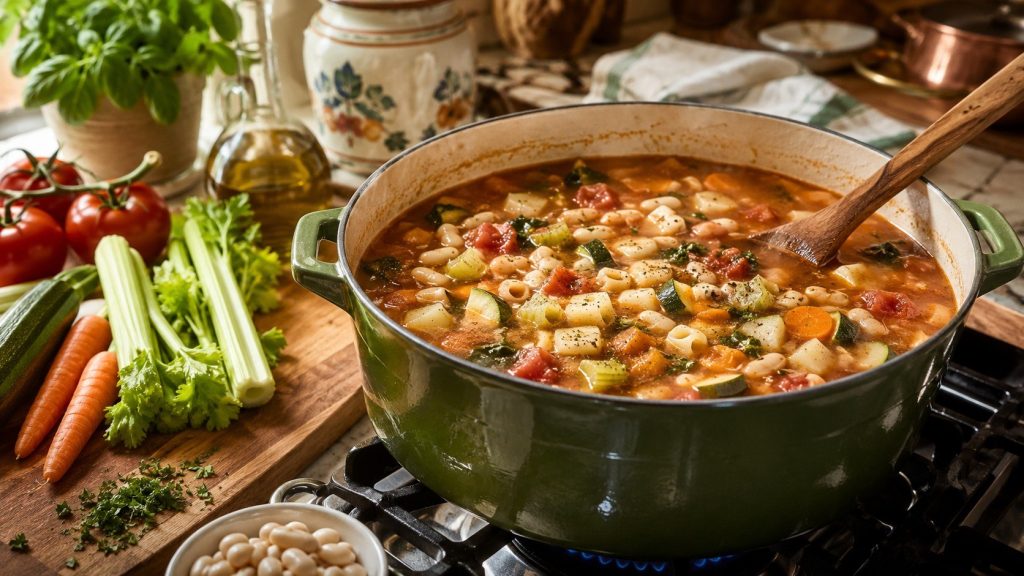
Serve homemade minestrone soup in warmed bowls with grated Parmesan, fresh basil, and a narrow stream of olive oil. Crusty bread can turn one bowl into a complete meal.
Garlic bread is unnecessary when the soup already contains strong herbs. Plain sourdough, ciabatta, or country bread absorbs broth without competing with it.
For a lighter lunch, offer a bitter green salad with lemon dressing. For dinner, follow the soup with roasted fish, chicken, or a small cheese plate.
Minestrone often tastes better several hours after cooking. The beans, vegetables, and herbs continue exchanging flavor. Reheat it gently and add stock when the broth becomes too thick.
A serving usually contains about 350–450 milliliters. Smaller portions work as a first course. Larger bowls suit a main meal.
Storage, Freezing and Reheating
Cool leftovers promptly and transfer them into shallow sealed containers. Refrigerate the soup within 2 hours of cooking.
Minestrone without pasta keeps its best texture for about 4 days. A version containing pasta remains safe under proper refrigeration, but the pasta becomes progressively softer.
Freeze the base without pasta for up to 3 months. Leave a little empty space because liquid expands. Thaw it overnight inside the refrigerator.
Reheat only the amount needed. Bring refrigerated soup to a steady simmer while stirring occasionally. Add water or stock in 60-milliliter portions when necessary.
Fresh herbs, Parmesan, and olive oil should be added after reheating. Their flavor remains cleaner when they avoid repeated cooking.
FAQ
What makes minestrone different from ordinary vegetable soup?
Minestrone usually includes beans and a substantial carbohydrate. Pasta, rice, farro, or potatoes create its characteristic body.
Does authentic minestrone contain meat?
Not necessarily. Many versions are vegetarian. Others begin with pancetta, salt pork, or a meat-based stock.
Which beans are best for minestrone?
Cannellini and borlotti beans are the strongest choices. Kidney beans and chickpeas can also work.
Can minestrone be prepared without tomatoes?
Yes. Several regional and seasonal versions use a clear vegetable broth. Beans, greens, potatoes, and herbs provide the main flavor.
Should pasta be cooked separately?
Cook it separately when storing the soup. Pasta cooked inside the pot gives better integration when everything will be eaten immediately.
How can I thicken minestrone naturally?
Mash some beans or potatoes into the broth. Longer uncovered simmering also removes excess liquid.
Can frozen vegetables be used?
Yes. Frozen peas, green beans, spinach, and mixed vegetables are practical options. Add tender frozen produce near the end.
Why does minestrone taste better the next day?
Resting allows starches, herbs, vegetables, and broth to combine. The flavor becomes rounder, although pasta may soften.
Earlier we wrote about How to Cook Sweet Potatoes With Marshmallows: A Creamy, Golden Holiday Side Dish