 Frank Rondel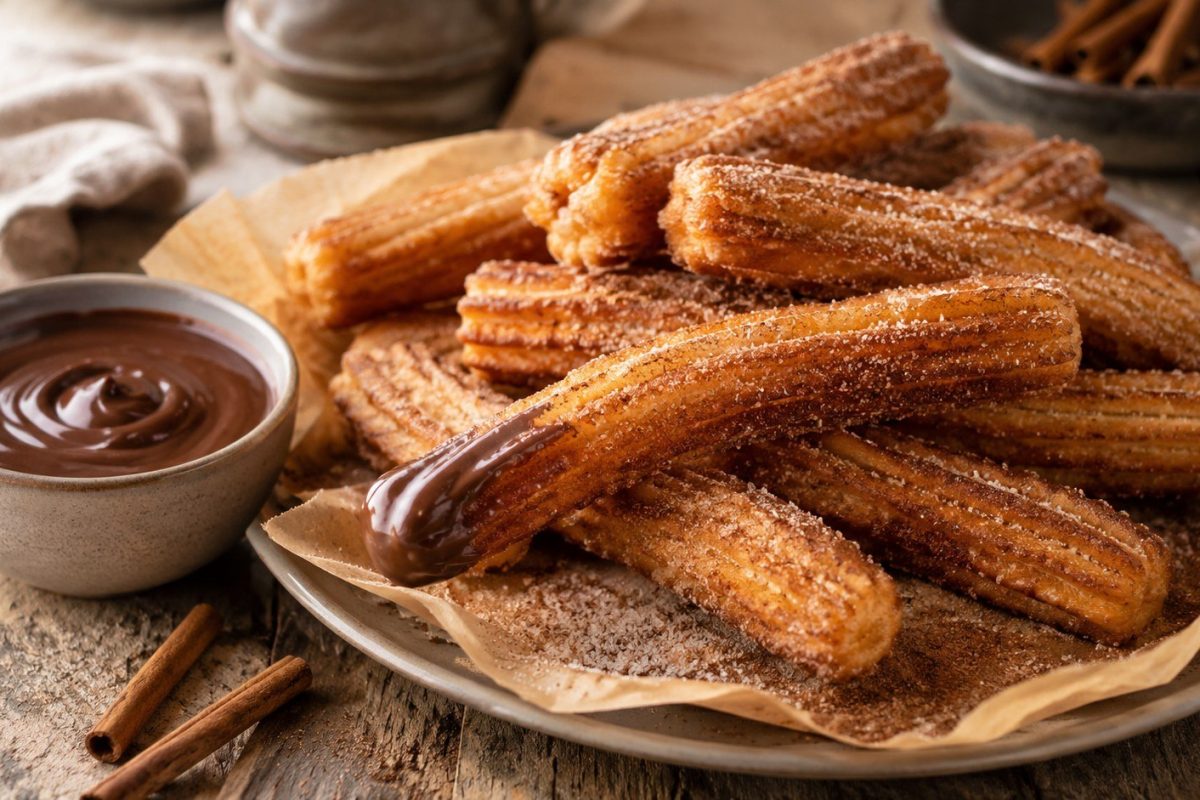
How to make cinnamon sugar churros begins with a firm cooked dough, stable frying heat, and immediate coating. Done correctly, each churro develops crisp ridges, a tender center, and an aromatic cinnamon crust, as the customreceipt.com editorial team notes.
Churros look simple because their ingredient list is short. However, temperature and dough consistency leave little room for improvisation. Oil that is too cool produces greasy pastry. Excessively hot oil burns the ridges before the center cooks.
This recipe makes 18–22 medium churros. Preparation takes about 20 minutes. Frying requires another 20–25 minutes, depending on the pan size.
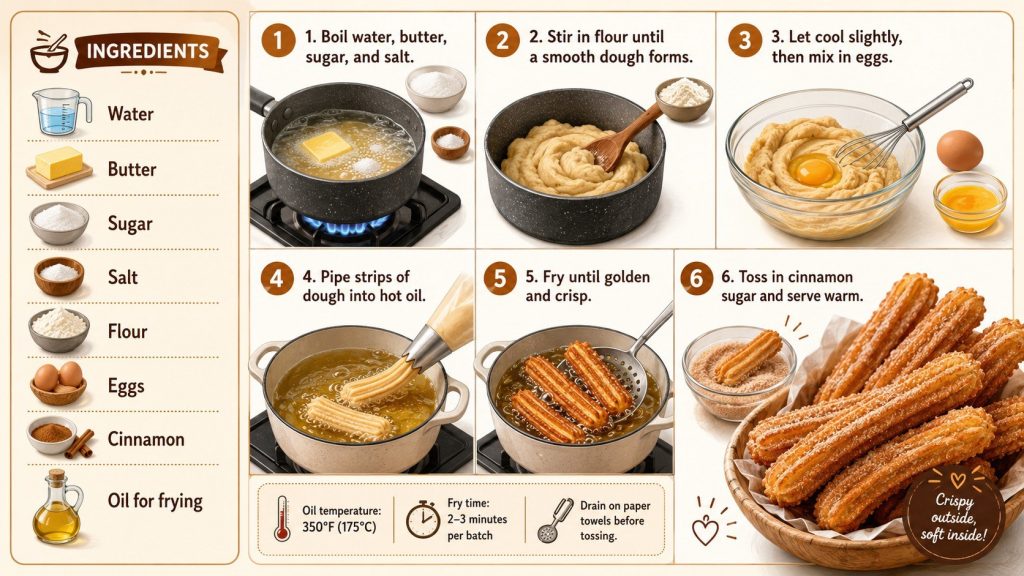
Ingredients for Cinnamon Sugar Churros
Classic churro recipes vary across Spain, Mexico, and other Spanish-speaking regions. Some use only flour, water, and salt. Richer versions include butter, eggs, vanilla, or additional cinnamon.
This homemade version uses eggs and butter. They create a softer center while preserving the characteristic crisp exterior.
| Ingredient | Quantity | Purpose |
|---|---|---|
| Water | 240 ml | Hydrates the dough |
| Unsalted butter | 85 g | Adds richness and tenderness |
| Granulated sugar | 15 g | Lightly sweetens the dough |
| Fine salt | ¼ teaspoon | Balances sweetness |
| All-purpose flour | 140 g | Provides structure |
| Large eggs | 3 | Bind and aerate the dough |
| Vanilla extract | 1 teaspoon | Adds aroma |
| Neutral frying oil | 1–1.5 liters | Cooks the churros evenly |
| Granulated sugar | 100 g | Forms the coating |
| Ground cinnamon | 2 teaspoons | Flavors the coating |
Weigh the flour whenever possible. A tightly packed measuring cup can add too much flour and stiffen the dough. The eggs should be at room temperature, which helps them combine more evenly.
Choose canola, sunflower, peanut, or refined vegetable oil. These oils have neutral flavors and tolerate frying temperatures well. Avoid oils with strong aromas because they can dominate the cinnamon.
The cinnamon mixture can be adjusted without changing the dough. Increase the cinnamon to 1 tablespoon for a darker, spicier coating. Reduce it slightly when serving churros with a strongly flavored chocolate sauce.
Equipment Needed for Homemade Churros
A standard saucepan and piping bag are enough, but the right tools make frying more controlled. The piping bag must withstand pressure because churro dough is considerably firmer than frosting.
Prepare the following equipment before heating the oil:
- a heavy-bottomed pot or deep saucepan;
- a digital kitchen thermometer;
- a strong piping bag;
- a large closed-star piping tip;
- kitchen scissors;
- a slotted spoon or frying spider;
- a wire cooling rack;
- a rimmed tray;
- parchment paper.
A star-shaped nozzle creates more than decoration. Its grooves increase the dough’s surface area and encourage a crisp crust. A round nozzle can leave a thick center that cooks slowly.
Avoid filling a lightweight disposable piping bag completely. Strong dough can split its seams. Fill the bag halfway, twist the top firmly, and refill it between batches.
A thermometer remains the most reliable tool. Visual tests cannot reveal whether oil has fallen by 20°C after adding several pieces. Temperature changes happen quickly, especially in a small saucepan.
For another practical frying guide, see this recipe for crispy homemade onion rings. It explains how batter, crowding, and oil heat affect crust formation.
How to Make Churro Dough
Place the water, butter, 15 g sugar, and salt in a medium saucepan. Bring the mixture to a steady boil over medium heat. Stir until the butter melts completely.
Remove the pan from the heat. Add all the flour at once, then stir firmly with a wooden spoon. The mixture will first appear lumpy before forming a compact mass.
Return the saucepan to low heat for 60–90 seconds. Keep pressing and turning the dough. A thin film should develop across the bottom of the pan.
This brief cooking stage removes excess moisture. It also strengthens the dough enough to hold deep ridges during piping.
Transfer the dough to a mixing bowl. Spread it against the sides and leave it for 5–7 minutes. It should remain warm but should not feel dangerously hot.
Add the eggs individually using these steps:
- Beat the first egg in a small cup.
- Add it gradually to the warm dough.
- Stir until the mixture becomes smooth again.
- Repeat with the remaining eggs.
- Mix in the vanilla after the final egg.
- Check whether the dough holds a defined ridge.
The mixture may look separated after each egg. Continue beating rather than adding more flour. It will become glossy and cohesive as the egg is absorbed.
The finished dough should be thick, smooth, and pipeable. It should fall slowly from a spoon in a broad ribbon. Runny dough spreads in the oil and loses its ridges.
Egg sizes vary, so the final egg may not be needed completely. Add its final portion gradually. Stop when the dough reaches the correct consistency.
Readers interested in managing moisture within cake batter can also consult this moist carrot cake recipe. It explains how flour, eggs, and fat influence texture.
How to Pipe Churros Without Splitting the Bag
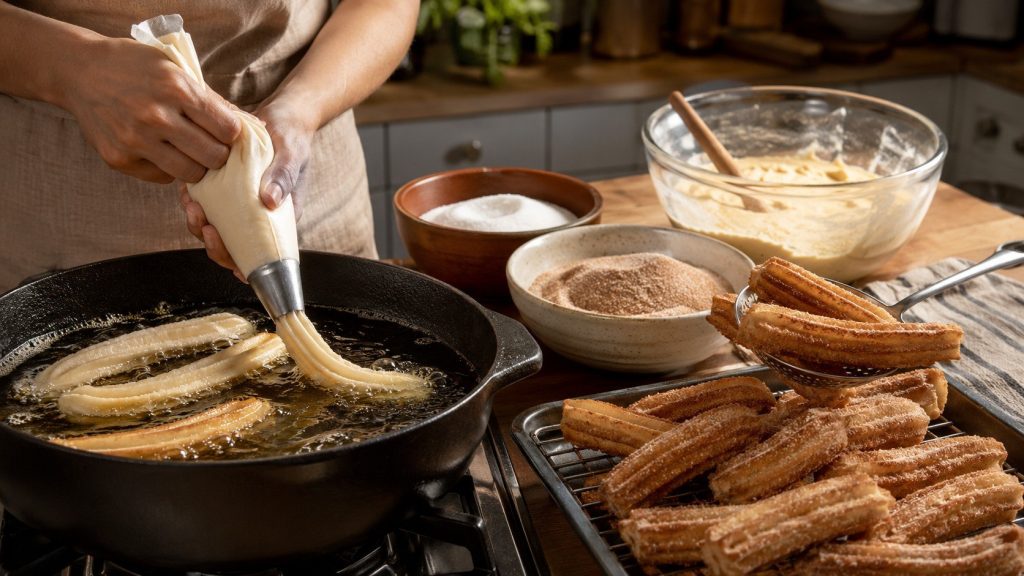
Fit the piping bag with a large star nozzle. Spoon in half of the dough and press out trapped air. Twist the open end tightly before piping.
You can pipe churros directly above the oil. However, beginners usually achieve safer, straighter pieces by shaping them on parchment first.
Pipe strips measuring 10–12 cm. Cut each strip with clean scissors. Leave space between the pieces so they remain easy to lift.
For uniform frying, keep every churro close to the same thickness. Length matters less than diameter because thick centers require additional cooking time.
Chill the shaped pieces for 10 minutes if the dough feels unusually soft. Do not refrigerate them for several hours. Their exposed surfaces may dry and crack.
Best Oil Temperature for Crispy Churros
Heat the oil gradually to 175–180°C, or 347–356°F. Fill the pot no more than one-third full. Bubbling dough raises the oil level and creates a serious spill risk.
| Oil temperature | Likely result | Recommended response |
|---|---|---|
| Below 165°C | Pale and greasy churros | Reheat before continuing |
| 175–180°C | Crisp crust and cooked center | Maintain this range |
| Above 185°C | Dark exterior and raw center | Reduce the heat |
| Above 200°C | Smoke and rapid burning | Stop frying safely |
Add only 3 or 4 medium churros per batch. Crowding lowers the temperature and makes the pieces stick together. Let the oil return to 175°C before starting another batch.
Most churros require 3–5 minutes. Turn them occasionally for even coloring. The surface should become deep golden rather than pale beige.
The USDA warns that deep-frying oil can exceed 400°F and is highly flammable. It advises keeping oil away from flames and using extreme care during frying.
Never pour water onto burning cooking oil. Turn off the heat when safe, cover the vessel, and use suitable fire equipment.
This guidance reflects official USDA deep-frying safety recommendations. Keep children away from the cooking zone. Never leave a heating pot unattended.
How to Coat Churros With Cinnamon Sugar
Combine 100 g granulated sugar with 2 teaspoons ground cinnamon in a shallow dish. Mix thoroughly before the first churros leave the oil.
Transfer cooked churros to a wire rack for 20–30 seconds. They should stop dripping, but their surfaces must remain warm and lightly oily.
Roll each piece through the cinnamon mixture. Press gently so the sugar reaches the grooves. Shake off only the loose excess.
A very fine sugar creates a smooth coating. Coarser crystals produce stronger crunch but adhere less evenly. Standard granulated sugar offers the most balanced result.
Do not leave fried churros on paper towels for several minutes. Trapped steam can soften the lower surface. A rack allows air to circulate around the pastry.
Coat every batch while it remains hot. Sugar applied after cooling falls away easily. Serve the churros within 10–15 minutes for their sharpest texture.
Why Homemade Churros Become Greasy or Soft
The most common failure is soft, oil-heavy churros. This usually indicates low oil temperature rather than excessive frying time. Cool dough absorbs fat before its crust sets.
Other frequent mistakes include:
- adding too many eggs;
- measuring flour inaccurately;
- using a narrow round piping tip;
- overcrowding the saucepan;
- frying pieces with different thicknesses;
- coating completely cooled churros;
- covering the pastries while warm;
- storing leftovers in an airtight container immediately.
Check the thermometer after every batch. A crowded pot can lose 15–25°C within seconds. Wait until the heat recovers before adding more dough.
If the churros brown too rapidly, reduce the burner rather than removing them immediately. Continue frying near 170°C until the centers set. Very thick pieces may require another minute.
A hollow center is not necessarily a defect. Steam expands inside the dough during frying and creates an airy interior. Large wet cavities, however, can indicate excessive egg.
Never cover freshly fried churros. Condensation destroys the crust. Leave leftovers uncovered until completely cool, then store them in a paper-lined container.
Chocolate Sauce and Other Serving Options
Cinnamon sugar is enough for a complete dessert, but a dipping sauce changes the experience. Spanish-style chocolate is usually thicker than ordinary drinking chocolate via https://yourashford.co.uk/.
For a quick chocolate dip, prepare:
- 150 g dark chocolate;
- 180 ml heavy cream;
- 1 teaspoon vanilla extract;
- 1 small pinch of salt;
- ¼ teaspoon cinnamon, optional.
Heat the cream until steaming, but do not boil it vigorously. Pour it over finely chopped chocolate. Wait 2 minutes, then stir from the center outward.
Salt sharpens the cocoa flavor and restrains sweetness. Use chocolate containing 55–70% cocoa for a balanced sauce. Milk chocolate creates a sweeter, softer dip.
Other suitable accompaniments include dulce de leche, salted caramel, berry sauce, or vanilla custard. Avoid serving several sweet sauces simultaneously. The churros can become cloying rather than complex.
For another layered dessert with contrasting textures, read the site’s easy banana pudding recipe.
Can Churros Be Prepared in Advance?
The dough can be prepared several hours before frying. Place it directly inside the piping bag, seal the opening, and refrigerate it. Let it soften for 15 minutes before piping.
Shaped uncooked churros can also be frozen. Pipe them onto parchment and freeze until firm. Transfer them to a sealed freezer container afterward.
Fry frozen churros without thawing. Add only a few pieces because frozen dough lowers the oil temperature sharply. Expect cooking to take 1–2 minutes longer.
Cooked churros are best eaten immediately. Refrigeration makes their crust chewy. Room-temperature storage also reduces crispness within several hours.
To refresh leftovers, bake them at 190°C, or 375°F, for 5–7 minutes. An air fryer needs approximately 3–4 minutes at 180°C. Add a light dusting of fresh cinnamon sugar after reheating.
FAQ About Cinnamon Sugar Churros
Why are my churros raw inside?
The oil was probably too hot, or the churros were unusually thick. Fry them at 175–180°C and use a large star nozzle.
Can I make churros without eggs?
Yes. Traditional Spanish-style recipes often use flour, water, salt, and sometimes oil. Egg-free churros usually have a denser, chewier center.
Which piping tip is best for churros?
Use a large closed-star tip measuring about 12–15 mm. The ridges create additional crisp surface area and improve even cooking.
Can I use olive oil for frying churros?
Refined or mild olive oil can work. However, neutral vegetable oils cost less and do not compete with the cinnamon flavor.
Why does cinnamon sugar fall off?
The churros probably cooled before coating. Roll them in sugar after draining for only 20–30 seconds.
How long should churros fry?
Medium pieces usually need 3–5 minutes at 175–180°C. Exact timing depends on thickness and oil recovery.
Can churro dough stay overnight?
Yes, when sealed and refrigerated. The dough may become firm, so leave it at room temperature briefly before piping.
How should used frying oil be discarded?
Cool it completely, pour it into a sealed container, and follow local disposal rules. Never pour cooking oil down a drain.
Earlier we wrote about Carolina Pulled Pork with Vinegar Sauce: A Detailed Oven and Smoker Recipe