 Frank Rondel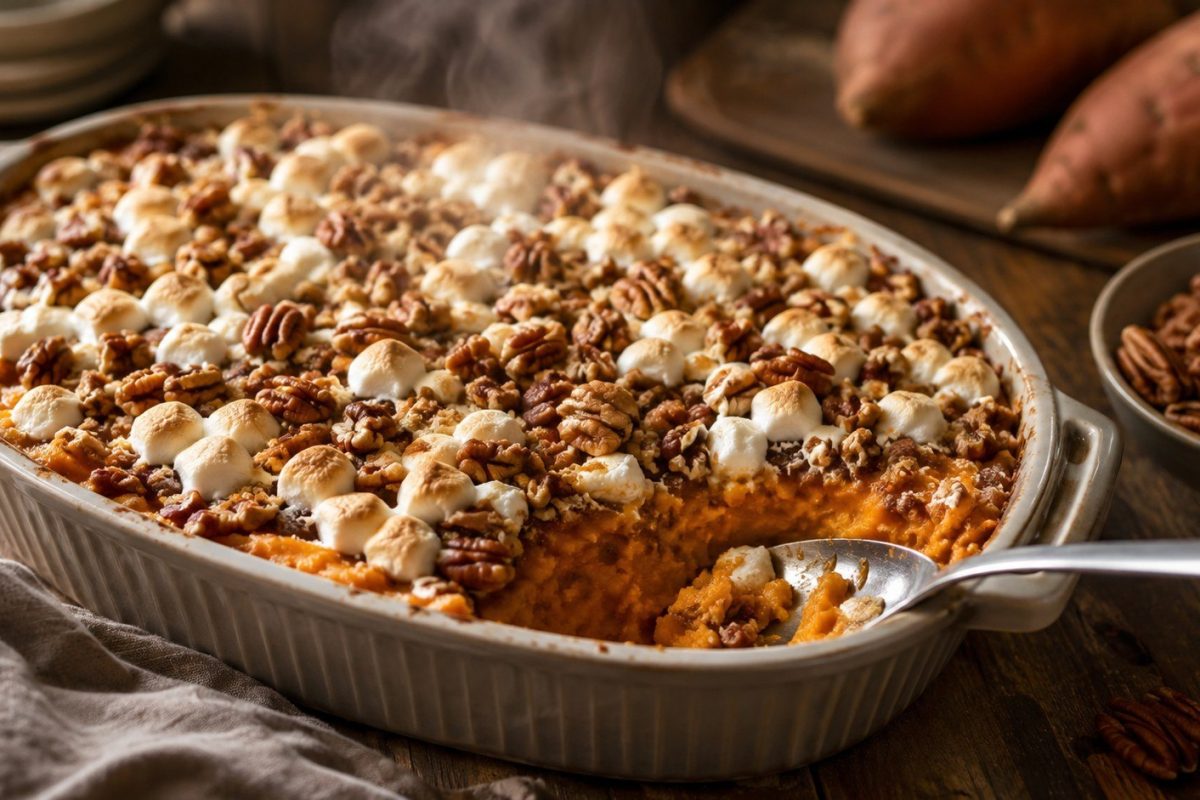
How to make sweet potato casserole without a watery center or an excessively sugary topping begins with proper roasting and careful seasoning. This recipe combines smooth sweet potatoes, butter, warm spices, and a crisp pecan layer, as the customreceipt.com editorial team notes.
Sweet potato casserole occupies an unusual place on the American table. It can accompany roast turkey, baked ham, or chicken, yet it often tastes rich enough for dessert. The best version keeps that balance under control. The filling should taste naturally sweet, while the topping adds texture rather than hiding the vegetables.
This recipe makes 8 generous servings. Preparation takes about 25 minutes, followed by 55–70 minutes of roasting and baking. The dish can also be assembled ahead, making it practical for Thanksgiving, Christmas, potlucks, and large family dinners.
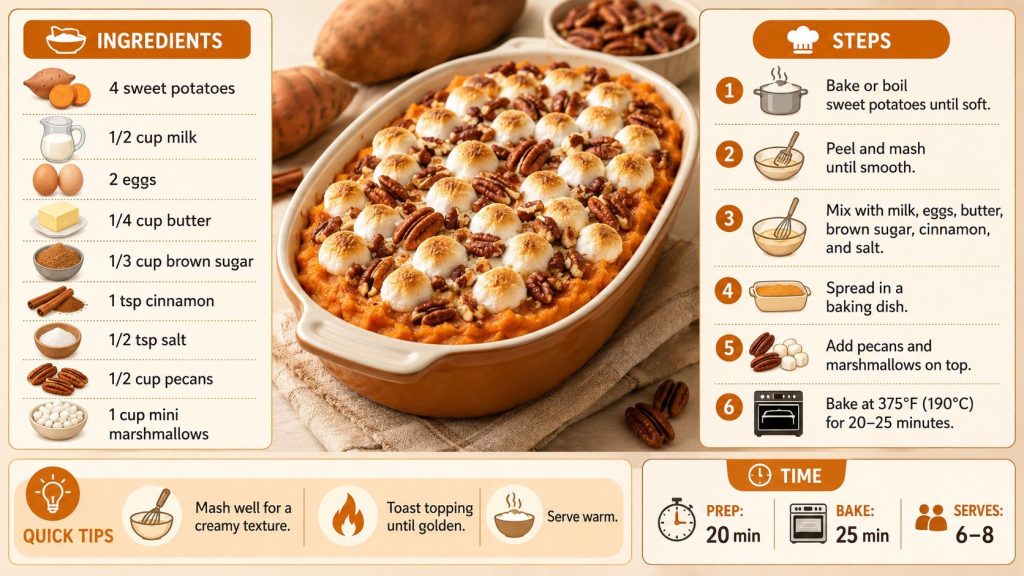
Ingredients for Homemade Sweet Potato Casserole
Orange-fleshed sweet potatoes work particularly well because they become soft and creamy when roasted. Choose firm roots without deep cuts, damp areas, sprouts, or wrinkled skin.
The following quantities fill a standard 9-by-13-inch baking dish:
| Ingredient | Quantity | Purpose |
|---|---|---|
| Sweet potatoes | 3 lb or 1.35 kg | Main filling |
| Unsalted butter | 6 tablespoons | Richness and smooth texture |
| Whole milk | ½ cup | Loosens the puree |
| Large eggs | 2 | Stabilize the filling |
| Brown sugar | ⅓ cup | Adds caramel notes |
| Vanilla extract | 2 teaspoons | Rounds out the flavor |
| Ground cinnamon | 1 teaspoon | Warm spice |
| Ground nutmeg | ¼ teaspoon | Adds depth |
| Fine salt | ¾ teaspoon | Balances sweetness |
| Chopped pecans | 1 cup | Crisp topping |
| All-purpose flour | ⅓ cup | Gives the topping structure |
| Melted butter | 4 tablespoons | Binds the topping |
| Brown sugar for topping | ½ cup | Creates a caramelized crust |
These measurements produce a moderately sweet casserole. Reduce the brown sugar in the filling to ¼ cup when serving it beside glazed ham or candied vegetables. For a sweeter holiday version, add mini marshmallows during the final minutes of baking.
Do not replace all the milk with heavy cream. Cream creates a dense filling that may feel greasy after cooling. Whole milk provides enough moisture while allowing the sweet potato flavor to remain clear.
For another autumn dessert with controlled sweetness, the site’s caramel apple recipe explains how temperature affects sugar texture.
Should Sweet Potatoes Be Roasted or Boiled?
Roasting is the more reliable method for creamy sweet potato casserole. Dry oven heat concentrates flavor and prevents the roots from absorbing extra water. The filling becomes thicker, sweeter, and easier to season.
Boiling is faster when the potatoes are peeled and cut into small pieces. However, overcooked cubes absorb water and can create a loose puree. Drain them thoroughly, then return them to the warm pot for 2–3 minutes. Residual heat will evaporate surface moisture.
The main differences are easy to compare:
| Method | Approximate time | Flavor | Texture | Best use |
|---|---|---|---|---|
| Whole roasting | 50–65 minutes | Deep and concentrated | Creamy and relatively dry | Best overall result |
| Cubed boiling | 15–20 minutes | Mild | Soft but potentially watery | Fast preparation |
| Steaming | 20–30 minutes | Clean and balanced | Moist but controlled | Lighter casserole |
| Pressure cooking | 12–18 minutes | Mild | Very soft | Large batches |
Roasting requires more time, but little active work. Place the potatoes on a foil-lined tray because natural sugars may leak during cooking. Pierce each root several times with a fork before placing it in the oven.
Bake them at 400°F or 205°C until a knife slides through the thickest section without resistance. Large potatoes may require more than 60 minutes. Small roots can soften within 45 minutes.
The potatoes must become completely tender before mashing. Firm pieces will not disappear later and may leave the finished casserole uneven.
Let roasted potatoes rest for about 10 minutes. Split the skins, scoop out the flesh, and discard any dark or fibrous sections. Mash while the flesh remains warm.
Equipment Needed for the Recipe
This dish does not require specialized appliances. A potato ricer creates the finest texture, but a standard masher works well when the potatoes are thoroughly cooked.
Prepare the following equipment before starting:
- a rimmed baking sheet;
- a 9-by-13-inch baking dish;
- a large mixing bowl;
- a potato masher or ricer;
- a whisk;
- measuring cups and spoons;
- a rubber spatula;
- a small bowl for the topping;
- an instant-read food thermometer.
Avoid processing hot sweet potatoes continuously in a blender. Aggressive blending can create a dense or slightly gluey puree. Mash by hand, or pulse very briefly in a food processor.
A glass baking dish allows you to monitor browning around the edges. A ceramic dish retains heat longer and presents well at the table. Metal heats quickly, so begin checking the casserole several minutes earlier.
For additional guidance on managing a creamy filling and baked structure, see this moist carrot cake recipe.
How to Make Sweet Potato Casserole Step by Step
Preheat the oven to 400°F or 205°C. Wash the sweet potatoes under running water, dry them, and pierce their skins.
Follow this sequence for a smooth filling:
- Roast the sweet potatoes until completely tender.
- Cool them for 10 minutes, then remove the skins.
- Measure approximately 5 cups of cooked flesh.
- Mash the potatoes while they remain warm.
- Add 6 tablespoons of softened butter.
- Mix in brown sugar, cinnamon, nutmeg, vanilla, and salt.
- Whisk the milk and eggs in a separate bowl.
- Stir the egg mixture gradually into the potatoes.
- Spread the filling evenly in a greased baking dish.
- Add the pecan topping and bake at 350°F or 175°C.
Mixing the eggs separately prevents streaks of cooked egg inside the warm puree. Add them only after the potatoes have cooled slightly. The filling may feel soft before baking, but it will firm as the eggs cook.
Spread the mixture into the corners without pressing it firmly. A compacted filling becomes heavy. Level the surface gently with a spatula, leaving shallow ridges that can hold some topping.
Reduce the oven temperature before the final baking stage. At 350°F, the center heats steadily while the pecans brown without burning. Bake the assembled casserole for 25–35 minutes.
The finished center should look set rather than liquid. It may move slightly when the dish is shaken, but it should not ripple like uncooked batter.
How to Make the Pecan Topping
A good topping provides contrast. The nuts should remain crisp, while the flour, sugar, and butter form small caramelized clusters.
Combine the topping ingredients in this order:
- mix ½ cup brown sugar with ⅓ cup flour;
- add 4 tablespoons of melted butter;
- stir until small crumbs form;
- fold in 1 cup of chopped pecans;
- distribute the mixture evenly over the filling.
Do not grind the pecans into powder. Pieces measuring approximately ¼ inch create a more noticeable crunch. Toasting them for 5–7 minutes before mixing develops a stronger aroma.
The topping should remain loose rather than becoming a paste. Add 1 tablespoon of flour when it appears wet. If it stays dusty, mix in another teaspoon of melted butter.
Leave a narrow uncovered border near the baking dish. This area makes it easier to judge whether the filling has set. It also prevents loose nuts from falling over the sides.
For sharper contrast, add a small pinch of flaky salt after baking. Salt reduces the impression of excessive sweetness without changing the filling.
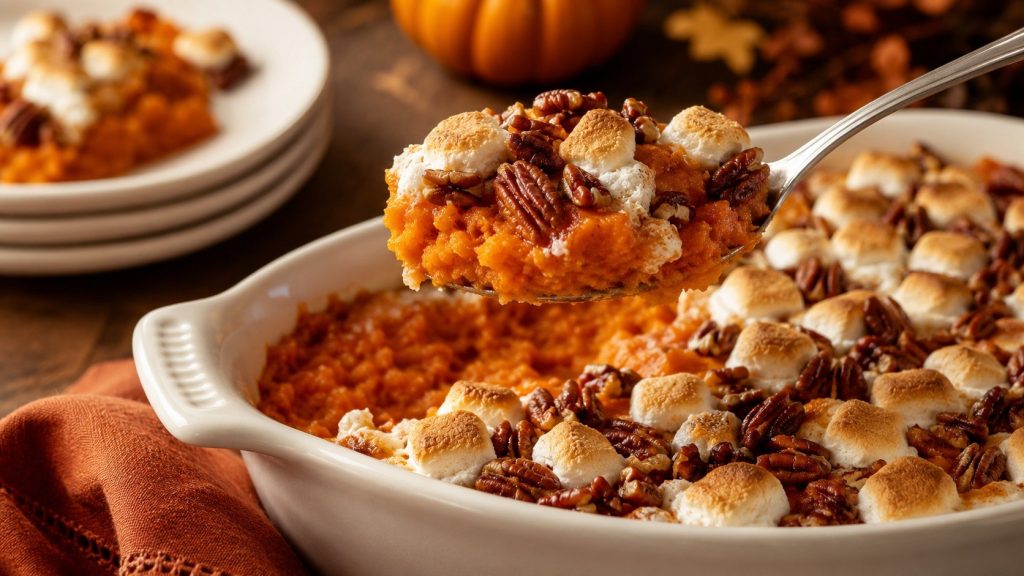
Allow the casserole to rest for 10–15 minutes before serving. The filling continues to stabilize during this period, while the topping remains crisp.
Sweet Potato Casserole With Marshmallows
Marshmallows create a sweeter, softer topping. They also brown quickly, so they should not remain in the oven throughout the complete baking time.
Prepare the filling as directed, then bake it without marshmallows for 20–25 minutes. Cover the surface with 2–3 cups of mini marshmallows. Return the dish to the oven for 5–8 minutes.
Watch the surface continuously during the final stage. Marshmallows can move from pale to scorched within a minute under strong upper heat. Rotate the dish if the back of the oven browns faster.
Several topping combinations are possible:
| Version | Main topping | Sweetness | Texture |
|---|---|---|---|
| Southern pecan | Pecans, flour, butter, brown sugar | Medium | Crisp and crumbly |
| Marshmallow | Mini marshmallows | High | Soft and toasted |
| Mixed holiday | Pecans and marshmallows | High | Crisp and chewy |
| Oat crumble | Oats, pecans, butter | Medium | Rustic and crunchy |
| Savory herb | Parmesan, sage, breadcrumbs | Low | Crisp and aromatic |
For a mixed topping, cover one half with pecans and the other with marshmallows. Guests can choose their preferred version, while the dish remains easy to prepare.
Do not place marshmallows beneath the pecans. They melt, trap steam, and soften the nut layer. Keep the toppings in separate areas or add marshmallows after the pecan section has already browned.
How to Prevent a Watery or Stringy Filling
Excess moisture causes most problems with this dish. Boiled potatoes, too much milk, or insufficient baking can all create a loose center.
Common warning signs include:
- liquid collecting near the edges;
- topping sinking into the filling;
- visible streaks of egg;
- fibrous pieces throughout the puree;
- a center that remains cold after baking;
- large cracks appearing across a dry surface.
Use roasted potatoes whenever possible. If boiling is necessary, drain the pieces thoroughly. Never add the full quantity of milk before checking the consistency.
Sweet potatoes vary in moisture. Begin with ⅓ cup of milk, then add more only when the puree feels unusually stiff. The final mixture should fall slowly from a spoon rather than pour freely.
Stringy texture often comes from mature or unusually fibrous roots. A potato ricer removes many tough strands. Another option is pushing the warm flesh through a coarse sieve.
Cracks usually indicate excessive baking. Remove the casserole when the center has set and the edges begin rising slightly. The filling continues cooking after leaving the oven.
Flavor Variations and Ingredient Substitutions
The base recipe can be adjusted without losing its structure. Change only 1 or 2 strong flavors in each batch.
Useful variations include:
- add 1 tablespoon of orange zest;
- replace cinnamon with pumpkin pie spice;
- add 2 tablespoons of bourbon;
- use maple syrup instead of some brown sugar;
- mix toasted walnuts into the topping;
- add ¼ teaspoon of ground ginger;
- replace milk with unsweetened oat milk;
- use gluten-free flour in the pecan layer.
Maple syrup adds liquid, so replace only 2–3 tablespoons of brown sugar. Larger quantities may require reducing the milk. Pure maple syrup provides more flavor than pancake syrup.
For a dairy-free version, use plant-based butter and unsweetened oat milk. Coconut milk works, but its flavor becomes noticeable. Choose a neutral product when serving the casserole with savory foods.
A gluten-free version needs only a simple topping adjustment. Use certified gluten-free oat flour or a reliable all-purpose blend. The sweet potato filling itself contains no wheat.
For a richer holiday menu, contrast this soft casserole with a crisp main dish. The site’s Maryland-style crab cake guide demonstrates another method built around controlled moisture and careful handling.
What to Serve With Sweet Potato Casserole
Sweet potato casserole pairs best with salty, roasted, or mildly acidic foods. These flavors balance its sweetness and buttery texture.
Serve it with:
- roast turkey and gravy;
- baked ham with mustard glaze;
- roasted chicken;
- pork loin;
- green beans;
- Brussels sprouts;
- cranberry sauce;
- collard greens;
- a sharp cabbage salad.
Portion size depends on the menu. Allow approximately ¾ cup per person when the casserole is the main side dish. Reduce that amount to ½ cup when several sides are available.
The pecan version works especially well beside roast meat because the topping remains crisp. Marshmallow casserole suits a sweeter Thanksgiving menu, particularly when served with cranberry sauce and salty gravy.
Avoid pairing it with several other sweet sides. Glazed carrots, sweet cornbread, cranberry relish, and marshmallow casserole can make the plate feel unbalanced. Include at least 1 bitter, acidic, or green vegetable.
Make-Ahead Instructions, Storage, and Reheating
The filling can be prepared up to 2 days before serving. Spread it into the baking dish, cover tightly, and refrigerate without the topping.
Use this preparation schedule:
- Roast and mash the sweet potatoes.
- Mix the filling and transfer it into the dish.
- Cool it before covering.
- Prepare the pecan mixture separately.
- Refrigerate both components.
- Add the topping immediately before baking.
- Extend baking by 10–15 minutes when starting cold.
A refrigerated ceramic or glass dish should not move directly into a very hot oven. Sudden temperature changes can damage some bakeware. Let the dish stand at room temperature while the oven preheats.
USDA guidance lists 165°F or 74°C as the safe internal temperature for casseroles and reheated leftovers. Check the center with a clean thermometer rather than judging only the browned surface.
Refrigerate leftovers within 2 hours of cooking. Store them in shallow, airtight containers for faster cooling. Properly refrigerated leftovers should generally be eaten within 3–4 days.
Reheat covered portions at 350°F or 175°C until hot throughout. Remove the cover during the final 5 minutes to restore some crispness. Microwave reheating is faster, but pecans and marshmallows become softer.
FAQ About Sweet Potato Casserole
Can sweet potato casserole be made the day before?
Yes. Prepare the filling, place it in the baking dish, and refrigerate it covered. Keep the topping separate and add it before baking.
Is it better to boil or bake sweet potatoes for casserole?
Baking produces stronger flavor and a less watery filling. Boiling is faster, but the potatoes must be drained and dried carefully.
Why is my sweet potato casserole runny?
The potatoes may contain excess water, or too much milk was added. The casserole may also need additional baking time.
Can I freeze sweet potato casserole?
Yes. Freeze the baked casserole without marshmallows for up to 2–3 months. Thaw it overnight in the refrigerator before reheating.
Can canned sweet potatoes be used?
Yes, but drain them thoroughly and reduce the added sugar. Many canned products are packed in sweetened syrup.
How long should sweet potato casserole bake?
Bake it at 350°F or 175°C for approximately 25–35 minutes. A refrigerated make-ahead dish may require 40–50 minutes.
How do I know when the casserole is ready?
The edges should rise slightly, and the center should appear set. For food safety, the middle should reach 165°F or 74°C.
Can I make the recipe without eggs?
Yes, although the filling will be softer. Replace 2 eggs with 2 tablespoons of cornstarch mixed into the milk.
Are yams and sweet potatoes the same?
They are different plants. In many American supermarkets, orange sweet potatoes are marketed as “yams,” although true yams have different skin and flesh.
How can I make the casserole less sweet?
Reduce the sugar in the filling to 2–4 tablespoons. Use a pecan topping without marshmallows and add extra salt or black pepper.
Earlier we wrote about Oreo × KFC fried chicken cookies: How much they cost and where to buy them in the US