 Frank Rondel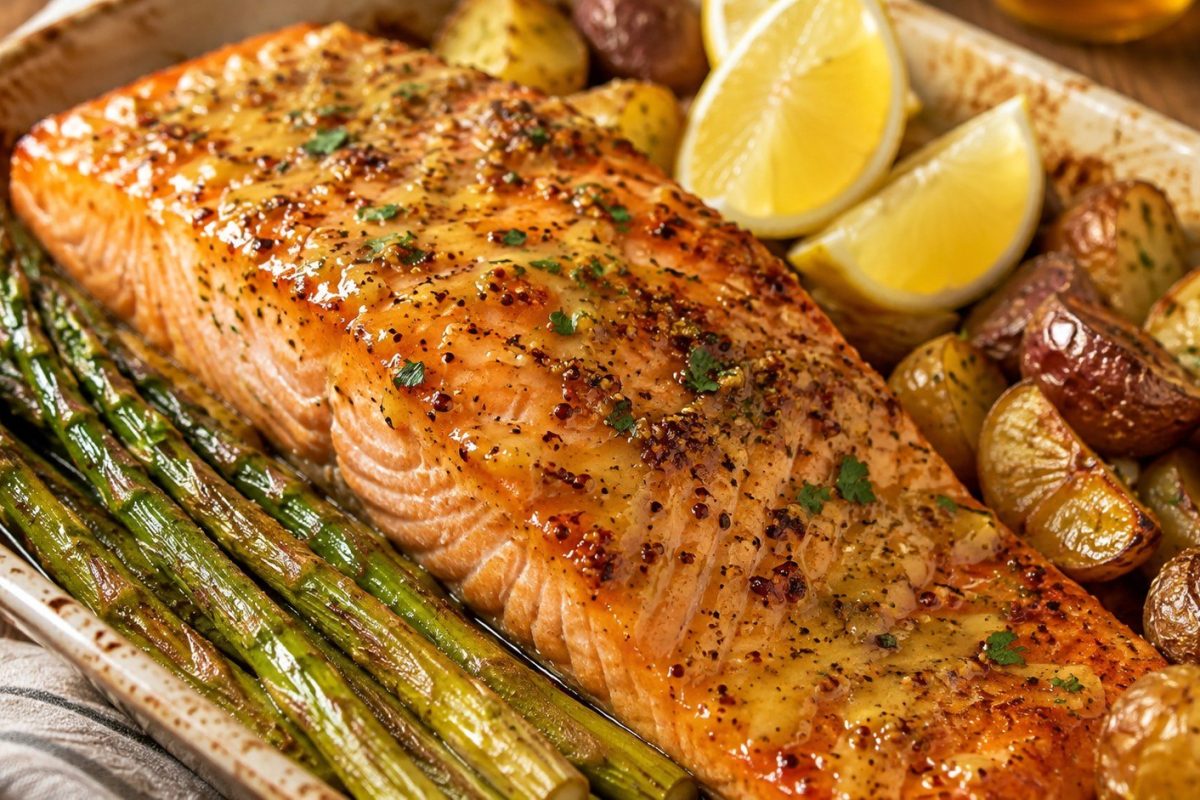
Baked salmon with honey mustard glaze turns a few ordinary ingredients into a dinner with crisp edges and a tender center. The glaze balances sweet honey, sharp Dijon mustard, lemon, and garlic without masking the salmon itself. Preparation takes about 10 minutes, while the oven handles almost everything else. That combination makes the dish useful for weeknight dinners and more polished meals alike, as customreceipt.com notes.
The recipe also leaves plenty of room for adjustment. More Dijon creates a sharper sauce, while extra honey produces deeper caramelization. A little smoked paprika adds warmth without making the fish noticeably spicy.
The most important detail is not adding more glaze. It is removing the salmon from the oven before its moisture disappears.
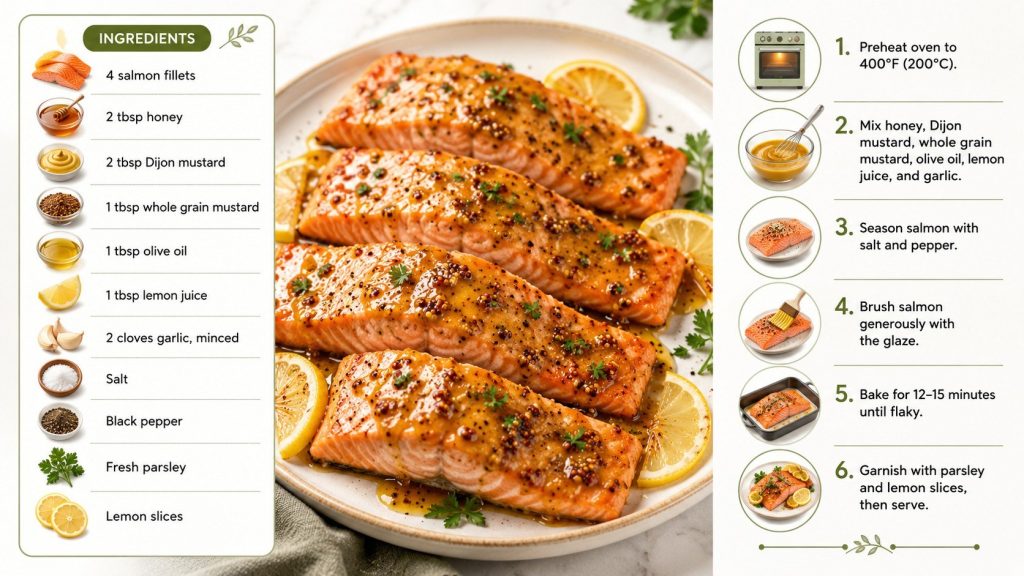
Ingredients for Honey Mustard Baked Salmon
The quantities below make 4 servings from standard individual salmon fillets. Skin-on pieces are particularly convenient because the skin protects the lower surface during baking.
- 4 salmon fillets, about 5–6 oz each
- 3 tablespoons Dijon mustard
- 2 tablespoons honey
- 1 tablespoon olive oil
- 1 tablespoon fresh lemon juice
- 1 garlic clove, finely grated
- 1/2 teaspoon smoked or sweet paprika
- 1/2 teaspoon kosher salt
- 1/4 teaspoon freshly ground black pepper
- 1 teaspoon chopped fresh thyme or dill, optional
- lemon wedges for serving
Dijon works better than mild yellow mustard because it brings acidity and depth rather than only mustard flavor. Whole-grain Dijon can replace about half the smooth mustard for additional texture. Maple syrup also works instead of honey, although the final flavor becomes less floral.
Fresh lemon juice prevents the glaze from becoming cloying. Garlic contributes savory depth, while olive oil helps the coating spread evenly. Fresh dill gives the dish a lighter profile, whereas thyme makes it more earthy.
If seafood appears regularly on your menu, this crispy fish tacos recipe offers another quick way to work fish into dinner without complicated preparation.
Baked Salmon Cooking Time and Temperature
For this recipe, preheat the oven to 400°F (204°C). That temperature is hot enough to set the glaze quickly but moderate enough to give a thick salmon fillet time to cook evenly.
Cooking time depends more on thickness than weight.
| Salmon thickness | Approximate time at 400°F | What to watch for |
|---|---|---|
| 1/2 inch | 7–9 minutes | Thin edges dry quickly |
| 3/4 inch | 9–11 minutes | Center begins turning opaque |
| 1 inch | 11–14 minutes | Typical individual fillet |
| 1 1/4 inches | 14–16 minutes | Check the center with a thermometer |
| 1 1/2 inches | 16–19 minutes | Thick cuts need closer temperature control |
These times are practical ranges rather than guarantees. A refrigerator-cold fillet takes longer than fish that has lost some of its chill. Oven calibration and the material of the baking pan also affect cooking speed.
The safest approach is therefore to combine timing with a food thermometer. Insert it into the thickest section without touching the baking sheet. The FDA recommends cooking most seafood to an internal temperature of 145°F. FDA seafood guidance also advises checking for flesh that is opaque and separates easily when a thermometer is unavailable.
How to Make Baked Salmon with Honey Mustard Glaze
The entire method is designed around one problem: honey burns faster than salmon cooks. A moderately hot oven and a short optional broil solve that problem better than prolonged high heat.
- Preheat the oven to 400°F.
- Line a rimmed baking sheet or shallow baking dish with parchment.
- Pat each salmon fillet thoroughly dry.
- Place the fish skin-side down.
- Season lightly with salt and black pepper.
- Whisk Dijon, honey, olive oil, lemon juice, garlic, and paprika.
- Spread the glaze across the top and exposed sides.
- Bake for 10–15 minutes, depending on thickness.
- Check the thickest piece before removing the entire tray.
- Broil for 30–60 seconds if you want darker caramelized edges.
- Rest the salmon for 2–3 minutes before serving.
Drying the fish first matters because surface water dilutes the glaze. It can also produce steam between the salmon and coating. That makes caramelization weaker.
Do not repeatedly open the oven to brush on more sauce. Every opening reduces oven temperature and interrupts cooking. Instead, apply one generous but controlled layer before baking. If you want sauce at the table, prepare extra glaze separately and never contaminate it with utensils that touched raw fish.
The same restrained approach works with other seafood preparations. For example, Maryland-style crab cakes depend on preserving the seafood’s texture rather than burying it beneath seasoning.
Why Honey and Dijon Mustard Work So Well with Salmon
Salmon contains enough fat to carry assertive flavors. Honey contributes sweetness and browning, while Dijon introduces acidity, salt, and mustard aromatics. Neither ingredient needs to dominate.
The glaze therefore works through contrast. Fatty salmon softens mustard’s sharpness. Lemon brightens both components, while garlic fills the savory gap between them.
For a balanced glaze, think in ratios rather than rigid measurements: slightly more mustard than honey usually keeps the sauce savory enough for a main course.
Recent chef recommendations collected by Food & Wine also include combinations of honey and mustard with ingredients such as hibiscus, while Dijon is paired with orange zest and dill. Those variations illustrate why mustard works especially well alongside richer fish.
A practical ratio is about 3 parts Dijon to 2 parts honey. Anyone who prefers a sweeter restaurant-style finish can move closer to equal quantities. Increasing honey beyond that point requires more care under the broiler.
How to Keep Baked Salmon Moist
Overcooking is the most common reason oven-baked salmon becomes dry. The thinner tail end may finish several minutes before the thick center.
When buying fillets, choose pieces with similar thickness whenever possible. Uniform portions make it easier to remove the entire pan at once.
Several small details also help:
- keep the skin attached while baking;
- avoid cutting deep slashes into the flesh;
- use a thermometer for thick fillets;
- remove individual pieces when they finish first;
- avoid an extended broiler finish;
- serve soon after cooking instead of holding the fish in a hot oven.
A baking sheet produces slightly faster cooking than a deep ceramic casserole. Parchment also makes cleanup easier because honey becomes sticky once its sugars caramelize.
For another straightforward comfort-food method built around controlled cooking time, see this American goulash recipe.
Should You Bake Salmon Covered or Uncovered?
Bake this salmon uncovered. Covering the pan traps steam, which keeps the surface wet and prevents the honey-mustard coating from developing a glossy, lightly caramelized finish.
Foil can still be useful underneath the fish, although parchment generally releases sticky glaze more cleanly. Avoid wrapping individual portions unless your priority is extremely soft, steamed-style salmon.
A brief broiler finish can deepen the color. Watch the pan continuously because honey can move from caramelized to burned very quickly. Usually 30–60 seconds is enough.
How Do You Know When Salmon Is Done?
Color alone can mislead. Some salmon remains deeper pink after cooking, while thinner pieces may look fully opaque before their centers reach the intended temperature.
“Most seafood should be cooked to an internal temperature of 145°F.”
— U.S. Food and Drug Administration, Selecting and Serving Fresh and Frozen Seafood Safely, cooking guidance.
The FDA gives 145°F as the recommended internal temperature for most seafood. Without a thermometer, it advises looking for fish that has become opaque and separates easily with a fork.
Measure temperature in the thickest section. Do not push the probe all the way through to the hot baking pan. Check several pieces separately when their sizes differ.
What to Serve with Honey Mustard Salmon
Because the glaze already contains sweetness, acidity, and richness, simple side dishes usually work better than strongly flavored sauces.
Good combinations include:
- roasted asparagus with lemon;
- green beans with garlic;
- broccoli or broccolini;
- roasted Brussels sprouts;
- mashed or baby potatoes;
- basmati or jasmine rice;
- quinoa with fresh herbs;
- cucumber salad;
- arugula salad with lemon vinaigrette;
- roasted carrots.
Roasted vegetables are particularly convenient because they can share the oven. Start dense vegetables before adding the salmon, since potatoes and carrots take longer.
Rice gives the plate a neutral base and absorbs any glaze that runs from the fish. A sharp green salad creates more contrast. For a lighter dinner, asparagus and cucumber salad are enough without another starch.
Avoid pairing the dish with an equally sweet side. Honey-glazed carrots, sweet potatoes, and sweet salad dressings can push the entire meal in one direction.
Easy Variations of the Honey Mustard Glaze
The base recipe can change considerably without altering the cooking method. Keep the liquid coating reasonably thick so it stays on the salmon.
For a spicier version, add cayenne or crushed red pepper. For a Mediterranean direction, replace paprika with oregano and finish with parsley.
Other combinations worth trying include:
- Dijon mustard, honey, and orange zest;
- whole-grain mustard, maple syrup, and thyme;
- Dijon, honey, smoked paprika, and cayenne;
- mustard, honey, garlic, and fresh dill;
- Dijon, honey, lemon zest, and black pepper.
Each variation keeps the same sweet-acidic structure. Citrus zest changes aroma without thinning the glaze as much as extra juice.
Maple syrup makes a darker, earthier coating. Whole-grain mustard adds texture and visible mustard seeds. Cayenne works best in small quantities because it can quickly obscure the salmon.
Can You Make Honey Mustard Salmon Ahead?
You can mix the glaze up to 2 days ahead and refrigerate it in a sealed container. Stir it before using because the ingredients may separate slightly.
The fish itself is better glazed shortly before cooking. Long exposure to acidic lemon juice can gradually change the outer texture.
Cooked salmon should be refrigerated promptly. USDA food-safety guidance recommends keeping perishable foods outside refrigeration for no more than 2 hours under normal conditions. That window drops to 1 hour when temperatures exceed 90°F.
For reheating, use gentle heat rather than another full baking cycle. A low oven keeps the salmon noticeably moister than aggressive high heat.
Common Mistakes When Baking Honey Mustard Salmon
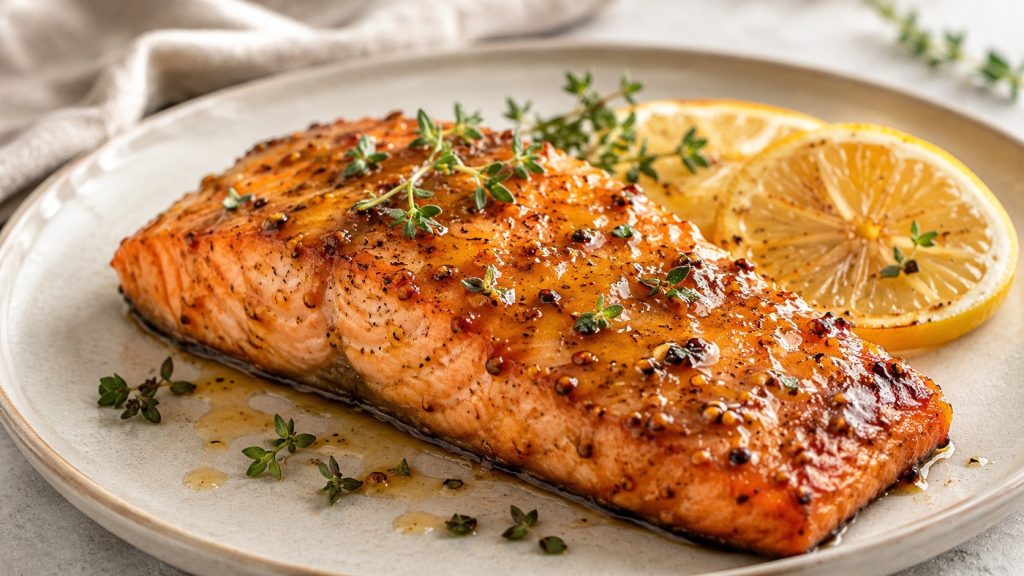
A simple recipe still has several failure points. Most involve excess moisture, excess heat, or poor timing.
The mistakes to avoid are:
- putting glaze on wet salmon;
- using fillets with dramatically different thicknesses;
- baking until every visible trace of pink disappears;
- using too much honey before broiling;
- leaving the broiler unattended;
- pouring sauce contaminated by raw fish over cooked portions;
- relying only on cooking time instead of checking the fish.
The first fix is inexpensive: paper towels. Dry fish accepts seasoning and glaze much more evenly.
The second fix is portion control. If one fillet is much thinner, remove it early. The third is temperature measurement. A small instant-read thermometer is more reliable than guessing from color.
FAQ About Baked Salmon with Honey Mustard Glaze
How long do you bake honey mustard salmon at 400°F?
Most 1-inch salmon fillets need about 11–14 minutes at 400°F. Thinner pieces cook faster, while thick center cuts may require several additional minutes.
What temperature should baked salmon reach?
FDA guidance recommends an internal temperature of 145°F for most seafood. Measure the thickest part of the fillet with a food thermometer.
Can I use regular mustard instead of Dijon?
Yes, but the flavor changes. Yellow mustard is milder and more vinegary, while Dijon creates a sharper and more complex glaze.
Can frozen salmon be used?
Yes, but thawing it first makes glazing and even cooking easier. The FDA recommends thawing frozen seafood overnight in the refrigerator when possible.
Can I replace honey with maple syrup?
Yes. Use roughly the same amount. Maple syrup produces a slightly darker, less floral flavor and works especially well with thyme.
Should salmon be baked skin-side up or down?
Bake it skin-side down. The skin creates a protective layer between the delicate flesh and the hot pan.
Why is my honey mustard glaze watery?
The salmon may have been wet before glazing, or too much lemon juice was used. Pat the fish dry and keep the glaze thick enough to coat a spoon.
What is the best mustard for honey mustard salmon?
Dijon is the most versatile choice. Combining smooth Dijon with whole-grain mustard gives stronger texture without making the glaze excessively sharp.
Earlier we wrote about How to Make Lasagna at Home: Easy Meat Sauce Recipe, Layers and Baking Time