 Frank Rondel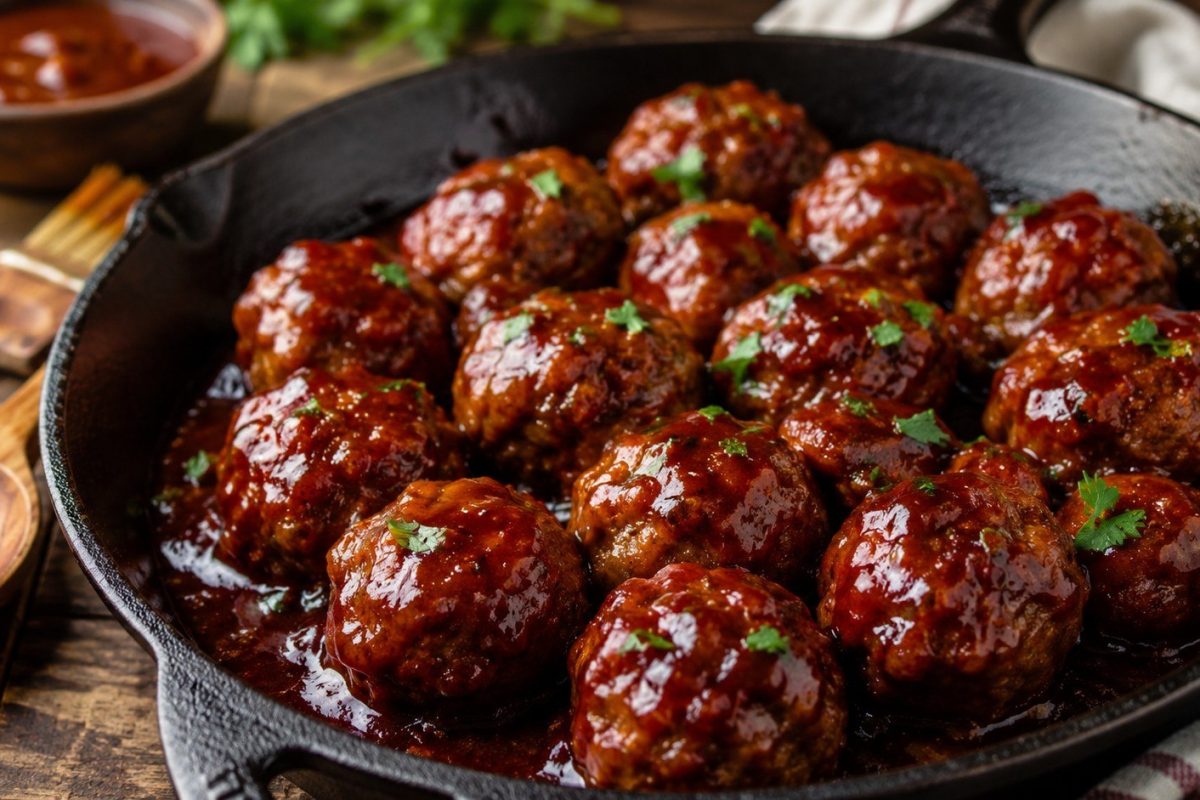
BBQ meatballs recipe success depends less on secret ingredients than on moisture, heat, and timing. A good meatball stays juicy inside while developing browned edges and a sticky barbecue glaze. The method is simple enough for dinner but reliable enough for a party, as the customreceipt.com editorial team notes.
The easiest approach is to bake the meatballs before coating them heavily with sauce. This keeps the surface from becoming soft before browning can begin. It also prevents sugary barbecue sauce from scorching during a long bake. Search results for this dish commonly center on how to make BBQ meatballs, baked versions, easy recipes, and oven cooking.
What makes good BBQ meatballs different
A meatball has 3 competing requirements. It needs enough fat for moisture, enough binder to remain intact, and enough seasoning to taste complete.
Ground beef around 80% lean is particularly forgiving. Leaner beef also works, but it leaves less margin for overcooking. Pork can be mixed with beef for extra richness. Ground turkey produces a lighter result, although its safe cooking temperature is higher.
The binder deserves more attention than it usually receives. Breadcrumbs absorb liquid and meat juices rather than merely holding the mixture together. Milk softens those crumbs and helps create a tender interior. Egg supplies structure.
The best BBQ meatball should not feel like a small hamburger covered with sauce. Its interior should be softer, while the outside remains browned enough to stand against the glaze.
For cooks building a larger casual meal, BLT salad with crispy bacon and tomatoes offers a fresh counterpoint. The cold vegetables and acidic dressing cut through a rich barbecue sauce.
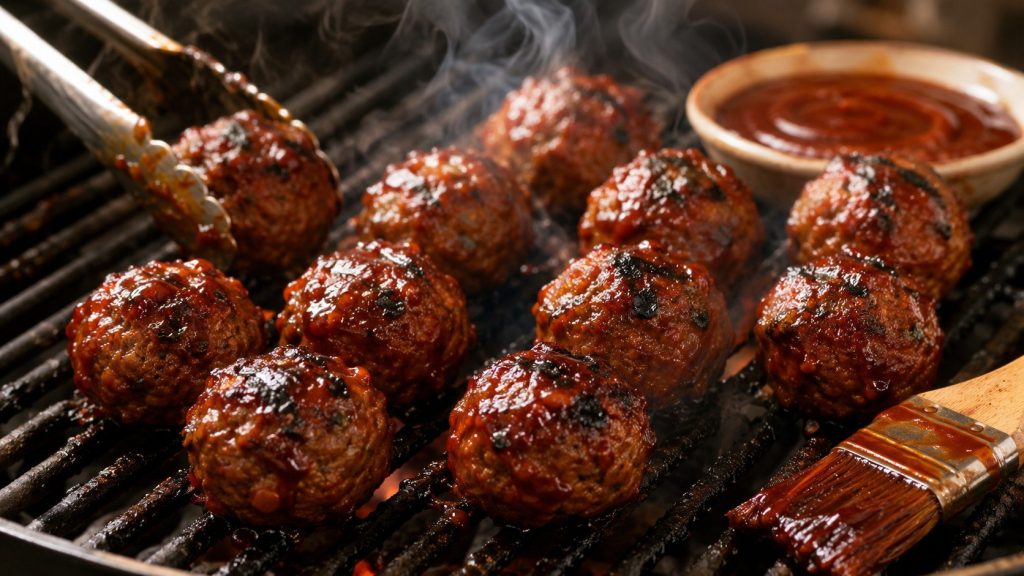
Ingredients for homemade BBQ meatballs
This version makes about 24 medium meatballs. It serves 4 to 6 people as a main course or more as an appetizer.
You will need:
- 1½ lb ground beef, preferably 80/20 or 85/15;
- ¾ cup panko or fine breadcrumbs;
- ⅓ cup whole milk;
- 1 large egg;
- ½ small yellow onion, very finely chopped;
- 2 garlic cloves, minced;
- 1 tsp kosher salt;
- ½ tsp black pepper;
- 1 tsp smoked paprika;
- ½ tsp onion powder;
- 1 tbsp Worcestershire sauce;
- 1¼ cups barbecue sauce;
- 1 tbsp brown sugar, optional;
- 1 tsp apple cider vinegar;
- ½ tsp hot sauce, optional.
Panko gives a slightly lighter texture than very fine breadcrumbs. Ordinary breadcrumbs create a tighter meatball that survives serving with toothpicks more easily. The milk quantity should wet the crumbs without leaving liquid in the bowl. Worcestershire sauce adds savory depth but should remain subtle. Smoked paprika reinforces the barbecue character before any sauce reaches the meat.
Do not pour all the barbecue sauce into the raw meat mixture. Too much sauce adds sugar and moisture before the meatballs have developed structure. Save most of it for glazing after the first cooking stage.
BBQ meatball ingredient ratios at a glance
The following proportions are useful when scaling the recipe for more guests.
| Component | Amount for 1½ lb beef | Purpose |
|---|---|---|
| Ground beef | 1½ lb | Main structure and flavor |
| Breadcrumbs | ¾ cup | Moisture retention |
| Milk | ⅓ cup | Tender texture |
| Egg | 1 large | Binding |
| Onion | ½ small | Sweetness and moisture |
| Worcestershire | 1 tbsp | Savory depth |
| Barbecue sauce | 1¼ cups | Glaze and finishing sauce |
| Smoked paprika | 1 tsp | Smoke and color |
| Salt | 1 tsp | Core seasoning |
These ratios are more useful than treating every recipe as rigid. Different breadcrumbs absorb different amounts of liquid. Very lean beef may benefit from slightly more milk. Very fatty meat needs less added moisture. Onion should be chopped finely so large pieces do not weaken the meatball. The final mixture should feel moist but hold its shape immediately.
For another beef dish where texture depends on careful preparation, see this pepper steak recipe with bell peppers. The same principle applies: temperature and timing matter more than adding extra ingredients.
How to make BBQ meatballs step by step
Heat the oven to 400°F. Line a rimmed baking sheet with parchment or lightly grease it. A rack can increase browning, but it is not essential.
Follow this order:
- Mix breadcrumbs and milk in a large bowl.
- Let them stand for 3 to 5 minutes.
- Add egg, onion, garlic, Worcestershire, salt, pepper, and paprika.
- Stir until the seasoning mixture looks even.
- Add the ground beef.
- Mix gently with clean hands until just combined.
- Form about 24 meatballs, each roughly 1½ inches wide.
- Arrange them with space between each piece.
- Bake for about 15 minutes.
- Brush or toss them with barbecue sauce.
- Return them to the oven for 5 to 10 minutes.
- Check the center with a food thermometer before serving.
The initial bake creates structure and allows the meat surface to brown. Adding sauce later gives it enough time to thicken without burning. Larger meatballs naturally need more cooking time than smaller ones. Oven calibration also creates differences between kitchens. Internal temperature therefore matters more than a fixed minute count.
Allow the finished meatballs to stand for about 5 minutes. The glaze thickens slightly during that period. It also becomes less likely to slide straight onto the serving plate.
The safe internal temperature for meatballs
USDA guidance sets 160°F, or 71.1°C, as the minimum internal temperature for ground beef, pork, veal, and lamb. Ground poultry should reach 165°F, or 73.9°C.
“Cook meat loaf, meatballs and hamburgers to a safe minimum internal temperature of 160 degrees F.”
— U.S. Department of Agriculture Food Safety and Inspection Service, guidance on ground beef and food safety.
Color is not a dependable safety test for ground beef. A meatball can brown before the center reaches the correct temperature. USDA therefore recommends checking with a food thermometer.
Insert the probe into the center of one of the largest meatballs. If several pieces differ significantly in size, check more than one.
How to make sticky BBQ sauce for meatballs
Bottled barbecue sauce works perfectly well, but its balance can be adjusted quickly. Some brands are very sweet, while others emphasize vinegar or smoke.
For a simple finishing glaze, combine:
- 1¼ cups barbecue sauce;
- 1 tbsp brown sugar or honey;
- 1 tsp apple cider vinegar;
- ½ tsp smoked paprika;
- several drops of hot sauce;
- 1 tsp Worcestershire sauce, optional.
Heat the mixture gently if you want a smoother glaze. Do not boil it aggressively because the sugars can become excessively concentrated. Brown sugar creates a darker, stickier coating. Vinegar prevents the sweetness from becoming flat. Hot sauce should sharpen the glaze rather than dominate it.
For a less sweet version, skip the brown sugar and add another teaspoon of vinegar. A sharper sauce often works better when the meatballs accompany rich side dishes.
A party menu can also include homemade French onion dip with caramelized onions. It can be prepared earlier, leaving the oven free for the meatballs.
Oven, grill or slow cooker: which method works best?
BBQ meatballs can be cooked several ways, but each method produces a different surface and sauce consistency.
| Method | Typical strength | Main drawback | Best use |
|---|---|---|---|
| Oven | Even cooking and easy browning | Less smoke flavor | Weeknight dinners |
| Grill | Strong char and smoke | Meatballs can break | Outdoor cooking |
| Slow cooker | Convenient for serving | Little browning | Parties |
| Skillet | Deep surface browning | Requires turning | Small batches |
| Smoker | Strong smoke character | Longest process | Barbecue-focused meals |
The oven is the most predictable method for homemade meatballs. A grill produces excellent flavor but requires firmer meatballs and careful handling. Slow cookers are better for holding already cooked meatballs than browning raw ones. A skillet gives strong caramelization but creates more splatter. A smoker adds genuine smoke but can overwhelm heavily seasoned sauce.
For most home cooks, baked BBQ meatballs provide the best balance between texture and effort.
How to stop BBQ meatballs from falling apart
Structural problems usually begin before cooking. The mixture may contain too much liquid, too little binder, or large pieces of onion.
Several corrections work reliably:
- let breadcrumbs absorb milk before adding meat;
- chop onions very finely;
- avoid adding excessive barbecue sauce to raw beef;
- use 1 egg for roughly 1 to 2 lb meat;
- shape each meatball firmly but do not compress it heavily;
- chill a very soft mixture for 15 to 20 minutes;
- keep meatballs similar in size.
Overmixing creates another problem. The meat becomes dense because the proteins are worked too aggressively. Mix only until the seasoning and binder are distributed. Cold meat is also easier to shape than warm meat. Slightly damp hands prevent the mixture from sticking during rolling. A small cookie scoop helps produce consistent portions.
If the mixture still collapses, add breadcrumbs 1 tbsp at a time. Adding a large amount immediately can make the cooked meatballs dry.
Why BBQ sauce can burn in the oven
Most commercial barbecue sauces contain sugar. Sugar darkens quickly once exposed to strong dry heat.
This is why coating raw meatballs heavily before a long bake often produces disappointing results. The sauce can become bitter before the meat reaches its safe temperature. A better method cooks the meatballs mostly uncovered and adds the glaze later.
The second bake needs only enough time to set the coating. Five to 10 minutes is usually sufficient at 400°F. Broiling can add extra caramelization, but watch the pan continuously.
Easy BBQ meatballs should look glossy and dark around the edges. They should not have a hard black sugar crust.
What to serve with BBQ meatballs
The sauce determines the best side dishes. A sweet sauce benefits from salty, acidic, or fresh accompaniments.
Useful choices include:
- coleslaw;
- baked beans;
- mashed potatoes;
- potato salad;
- cornbread;
- grilled corn;
- pickles;
- macaroni and cheese;
- green salad;
- roasted vegetables.
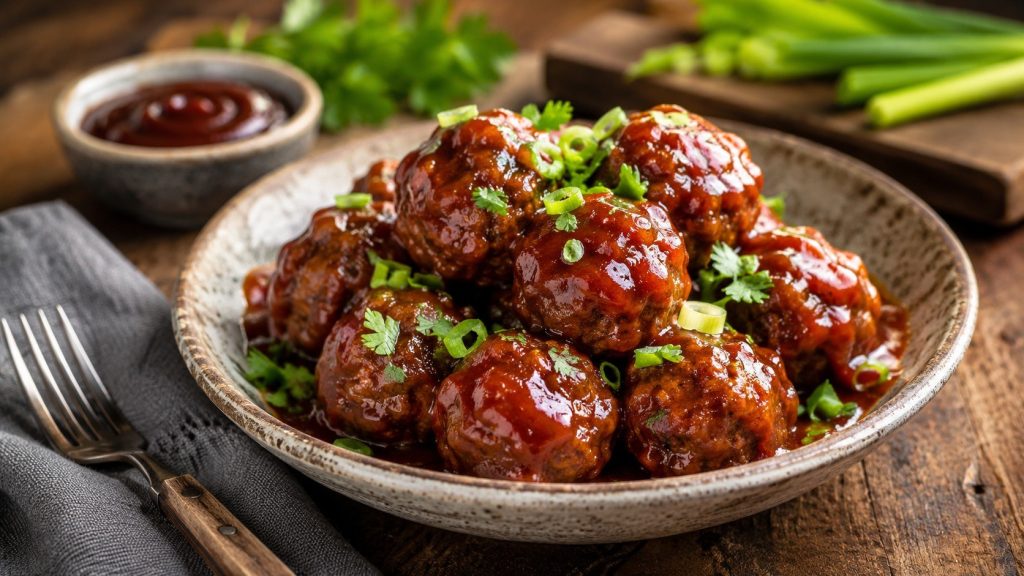
For appetizers, serve smaller meatballs with toothpicks. A main-course portion can include 4 to 6 medium pieces. Mashed potatoes catch the sauce particularly well. Coleslaw provides temperature and texture contrast. Pickles help cut through richer beef and sweeter barbecue sauces.
A slider is another practical option. Place 1 or 2 meatballs inside a small toasted roll and add a little extra glaze.
Can BBQ meatballs be made ahead?
Yes. In fact, this dish is well suited to advance preparation.
Shape the raw meatballs several hours earlier and keep them refrigerated. They should remain covered until cooking. You can also bake them first, cool them promptly, and refrigerate them separately from the sauce.
For freezing, baked meatballs are usually easier to manage than raw ones. Freeze them on a tray before transferring them into a freezer container. This prevents them from freezing into one large block.
Reheat cooked meatballs until thoroughly hot. Add fresh barbecue sauce near the end so the glaze tastes brighter.
FAQ about BBQ meatballs
How long do BBQ meatballs take in the oven?
Medium homemade meatballs generally need around 20 to 25 minutes at 400°F. Exact time depends on size and oven performance. Use internal temperature rather than appearance alone.
What temperature should BBQ meatballs reach?
Ground beef meatballs should reach 160°F or 71.1°C. Ground poultry meatballs should reach 165°F or 73.9°C under USDA guidance.
Can I use frozen meatballs with BBQ sauce?
Yes. Precooked frozen meatballs can be reheated with barbecue sauce. Follow the package instructions and ensure they are heated thoroughly.
Can BBQ meatballs be cooked in a slow cooker?
Yes. The best texture comes from browning or baking them first. They can then stay warm in sauce inside the slow cooker.
Why are my homemade meatballs tough?
Overmixing is a common reason. Too many breadcrumbs or very lean meat can also produce a dense texture.
Can I make BBQ meatballs without breadcrumbs?
Yes, but the texture changes. Crushed crackers, oats, or another suitable binder can replace breadcrumbs. Quantities may need adjustment.
What meat is best for BBQ meatballs?
Ground beef with moderate fat is the easiest option. Beef and pork mixtures are richer. Turkey works well when cooked to the higher poultry temperature.
Earlier we wrote about Loaded Mashed Potatoes: How to Make Them Creamy, Cheesy and Crispy