 Frank Rondel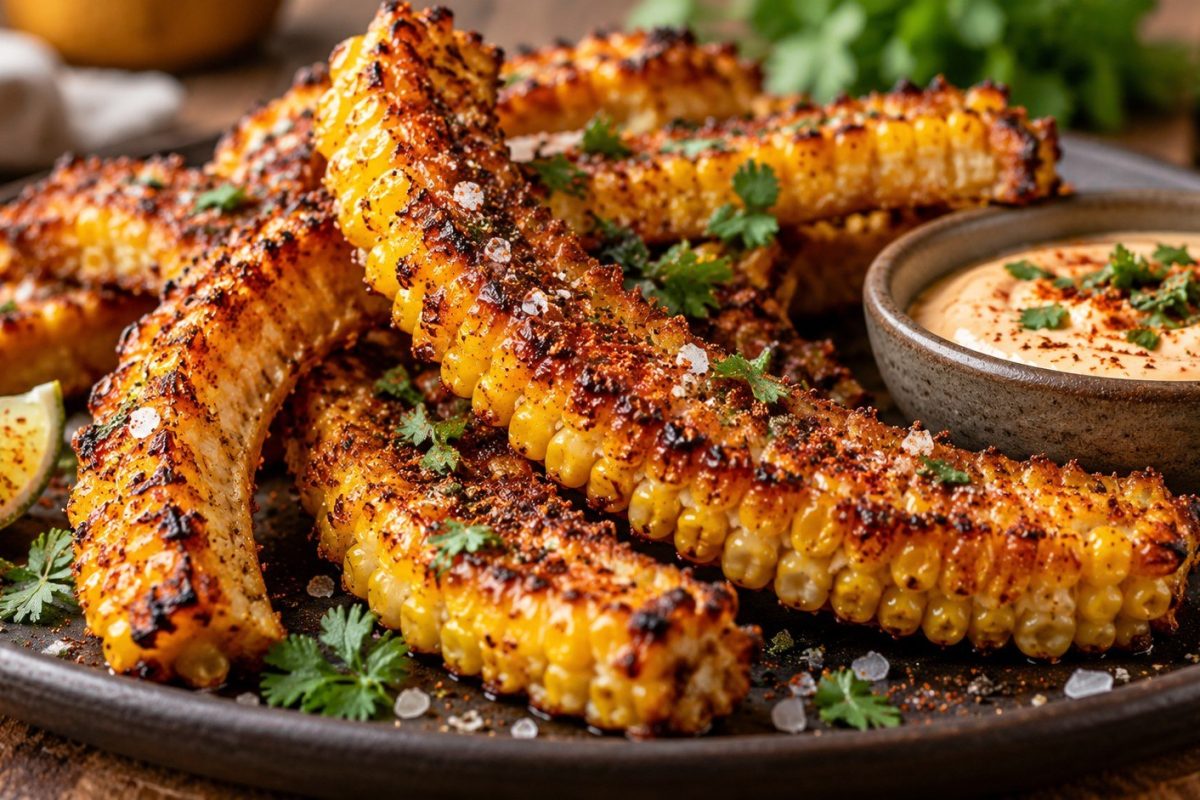
Corn ribs turn an ordinary ear of sweet corn into narrow, curved strips with browned kernels and crisp edges. The cob is cut lengthwise, seasoned, then roasted until heat pulls each strip into its characteristic arc. The technique needs no special equipment, but the cutting stage deserves more attention than the seasoning, as noted by the editorial team at customreceipt.com.
The appeal is partly visual, yet the cut also changes how corn cooks. More kernels face direct heat, seasoning reaches the spaces between them, and the exposed edges brown faster. A whole cob remains juicy and compact. Corn ribs produce more toasted surfaces while preserving the sweetness inside each kernel.
The defining feature is not a complicated sauce. It is the lengthwise cut that exposes more corn to dry heat.
What Corn Ribs Are and Why They Curl
Corn ribs are sections of corn on the cob cut lengthwise through the firm central core. One full ear usually becomes 4 long strips. Shorter ears can also be halved crosswise before quartering, which makes cutting easier.
During roasting, moisture leaves the exposed cob unevenly. The kernels and outer surface heat faster than the dense core. This difference encourages the strip to bend, although not every piece develops the same dramatic curve.
A standard oven produces reliable browning at 425°F, or about 218°C. Food Network’s published corn ribs method uses that temperature and an 18–20 minute cooking window. Exact timing changes with corn size, moisture and oven performance.
This cooking principle resembles other high-heat recipes where surface moisture controls browning. The same issue appears in crispy air fryer pickles, although corn needs no breading.
“Ears of corn are very hard in the center and can be difficult to cut into halves and quarters.”
Food Network, Cook’s Note accompanying Ree Drummond’s corn ribs recipe, referring to the cutting stage.
That warning matters more than any spice ratio. A corn cob can roll beneath a knife, while its core requires considerable pressure. A stable board and controlled cuts are essential.
Ingredients for Oven-Baked Corn Ribs
A simple seasoning works best because fresh sweet corn already provides sugar and aroma. Oil promotes browning and helps powdered spices cling to the kernels.
For 4 servings, use:
- 4 fresh ears of sweet corn, husks and silk removed
- 2 tbsp olive or avocado oil
- 1 tsp smoked paprika
- 1 tsp garlic powder
- 1/2 tsp chili powder
- 3/4 tsp fine salt
- 1/4 tsp black pepper
- 1 lime
- 2 tbsp chopped cilantro or parsley
- 2 tbsp finely grated Parmesan or crumbled cotija, optional
Fresh corn should feel firm and heavy for its size. Avoid ears with dried kernels or large damaged areas. The FDA recommends rinsing fresh produce under running water before cutting it and does not recommend soap or commercial produce wash. That guidance appears in its official produce safety recommendations. Dry the corn afterward because excess water works against browning.
Smoked paprika gives the finished corn a grilled character without requiring an outdoor grill. Chili powder adds warmth rather than intense heat at this quantity. Garlic powder works more evenly than fresh garlic because minced garlic can scorch at high oven temperatures. Lime belongs at the end, since its acidity tastes brighter when it has not spent 20 minutes in the oven. Cheese should also be added after roasting because finely grated varieties can darken before the corn is ready.
How to Cut Corn Ribs Without Fighting the Cob
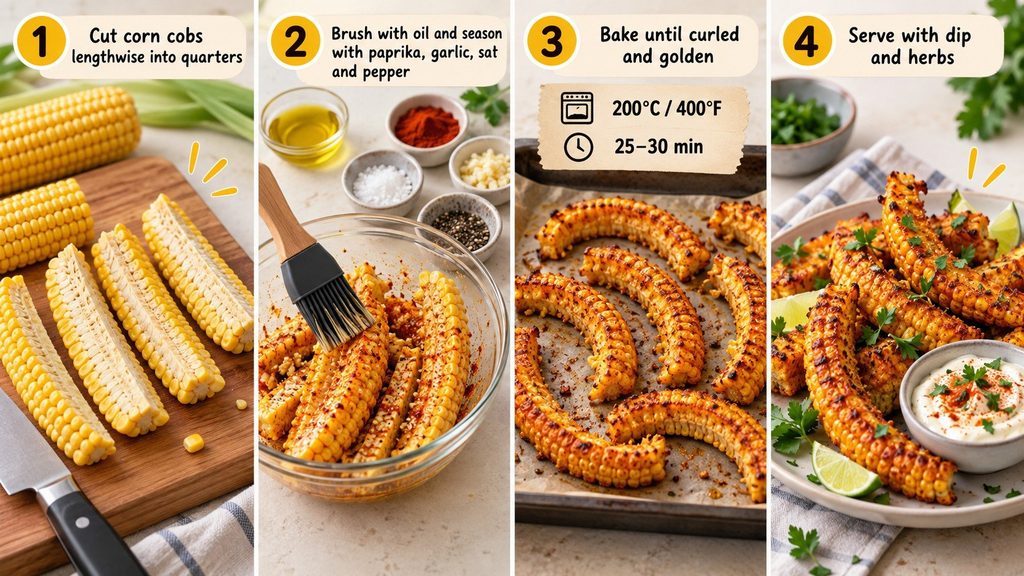
Cutting is the difficult part of a corn ribs recipe. The safest practical strategy is to create stable surfaces before applying downward pressure.
Use this sequence:
- Remove the husk and all visible silk.
- Trim both ends to create flat surfaces.
- Cut a long ear in half crosswise if easier handling is needed.
- Stand the corn upright on its widest flat end.
- Use a sharp, heavy chef’s knife to split it lengthwise.
- Lay each half cut-side down.
- Split each half lengthwise again to create quarters.
Do not try to saw rapidly through the cob. Controlled downward pressure keeps the blade more predictable. A damp kitchen towel beneath the cutting board can reduce movement. Very large or unusually hard ears are easier to manage when cut into shorter sections first. Some recipes briefly soften corn before cutting, but that also begins cooking the kernels. For oven ribs, shorter raw sections give good control without adding another preparation stage.
The same principle of controlling shape before high-heat cooking appears in air fryer hot honey chicken. Even pieces cook more predictably than irregular ones.
If the cob feels unstable under the knife, stop and create a flatter base instead of applying more force.
How to Make Corn Ribs in the Oven
Preheat the oven before seasoning the corn. A fully heated oven begins evaporation and browning immediately, while a slowly warming oven can leave the surface softer.
For reliable oven baked corn ribs, follow these steps:
- Heat the oven to 425°F, or 218°C.
- Line a large baking sheet with parchment paper.
- Mix oil, paprika, garlic, chili powder, salt and pepper.
- Brush the mixture over the kernels and exposed sides.
- Arrange the ribs in one layer without stacking.
- Roast for 18–22 minutes.
- Turn the pan once if the oven browns unevenly.
- Remove the corn when edges are browned and strips have started curling.
- Finish with lime juice, herbs and optional cheese.
Space matters because crowded pieces trap steam. Steam softens the surface and delays the browned edges that distinguish this preparation from ordinary boiled corn. The ribs do not need to become deeply charred across every kernel. Scattered brown patches provide enough roasted flavor without drying the corn.
A convection setting may shorten cooking time, so checking around 15 minutes is sensible. Thick ribs may remain almost straight while still being fully cooked. Curling is useful visually, but it is not a reliable doneness test by itself.
For serving alongside seasoned rice, meat and vegetables, the ribs also fit the same casual meal format as a homemade taco bowl.
Oven, Air Fryer and Grill Compared
The best method depends on the amount of corn and the desired surface texture. An oven handles a larger batch, while an air fryer exposes a smaller quantity to concentrated moving heat.
| Method | Temperature | Typical time | Best characteristic |
|---|---|---|---|
| Oven | 425°F / 218°C | 18–22 min | Easy large batches |
| Air fryer | 400°F / 204°C | 10–14 min | Fast browning and strong curl |
| Grill | Medium-high | 8–12 min | Direct char and smoky flavor |
| Convection oven | 400–425°F | 15–20 min | Even dry heat |
These times are working ranges rather than fixed deadlines. Corn with high moisture content generally needs longer to brown. Narrow ribs also cook faster than thick quarters from very large ears. Air fryers differ considerably in basket size and airflow, so overcrowding changes results quickly. Grilled ribs need more turning because direct heat can blacken individual kernels before the center warms. The oven remains the simplest option when preparing 4 or more ears at once.
USDA MyPlate classifies corn among starchy vegetables, with 1 large ear listed as a cup-equivalent serving. Sauces and toppings can alter the nutritional profile far more than the basic roasting method.
Seasoning Ideas That Do More Than Add Heat
The basic paprika-garlic mixture is only a starting point. How to season corn ribs depends on whether they are being served as a snack, side dish or component of a larger meal.
Useful combinations include:
- smoked paprika, garlic, lime and cilantro;
- Cajun seasoning with butter and scallions;
- Parmesan, black pepper and lemon zest;
- chili-lime seasoning with cotija;
- cumin, coriander and yogurt sauce;
- barbecue seasoning with a light honey glaze.
Apply sugary glazes late. Honey, maple syrup and brown sugar can burn before thick corn ribs finish cooking. A glaze brushed on during the final 3–5 minutes has enough time to become sticky without turning bitter. Dairy-based sauces work better after cooking for the same reason. Fresh herbs should also remain off the baking sheet because delicate leaves darken quickly at 425°F.
A creamy sauce benefits from acidity because corn is naturally sweet. Lime yogurt, chipotle mayonnaise or a thin garlic sauce all provide contrast. Heavy toppings can hide the toasted corn flavor, so a small amount usually works better than completely coating each rib.
Food Network’s published version finishes roasted corn with a mustard-mayonnaise mixture rather than baking the sauce onto the kernels.
Source: Food Network recipe instructions for Corn Ribs, serving context after oven roasting.
Why Corn Ribs Sometimes Stay Flat or Turn Soft
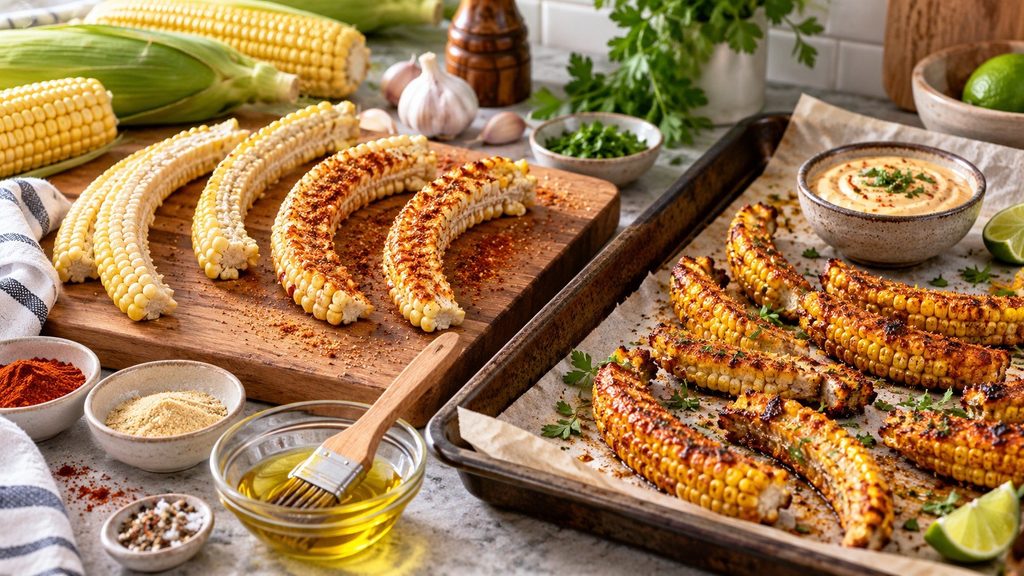
A dramatic curl makes good photographs, but crispy corn ribs depend more on moisture and spacing. The cob structure varies naturally between ears.
Several common problems explain disappointing batches:
- thick quarters resist bending;
- wet corn steams before browning;
- crowded pans trap moisture;
- too much sauce shields kernels from dry heat;
- low oven temperatures prolong cooking without strong browning;
- old corn can become chewy before its surface develops good color.
Drying the ears after rinsing solves one of the easiest problems. Brushing rather than pouring oil prevents excess fat from pooling on the baking sheet. Leaving space between strips exposes more surfaces to hot air. Narrower pieces usually curl more noticeably, but cutting an ear into more than 4 strips becomes difficult and less stable.
Do not judge the batch only by shape. Properly roasted kernels should be hot, tender and lightly blistered. The exposed edges can become toasted while the center remains juicy. If browning is weak after 20 minutes, a brief broiler finish can help. Keep the pan close enough to monitor because the sugars in corn darken rapidly.
The best corn rib is not necessarily the most curved one; texture and browning matter more than geometry.
FAQ About Corn Ribs
Can corn ribs be made without an air fryer?
Yes. A standard oven at 425°F works well. Roast seasoned ribs for about 18–22 minutes until browned and tender.
Why do corn ribs curl when cooked?
The narrow cob sections lose moisture and heat unevenly. This can bend the strips outward as the kernels roast and the exposed cob dries.
Do you eat the cob in corn ribs?
No. Eat the kernels from the strip and leave the firm central cob, much like eating conventional corn on the cob.
Should corn be boiled before making ribs?
Boiling is optional. Brief softening can make cutting easier, but raw corn can go directly into the oven after careful quartering.
How many corn ribs come from 1 ear?
A standard ear usually produces 4 long ribs. Cutting the ear crosswise first can produce 8 shorter riblets.
What temperature is best for baked corn ribs?
425°F, or about 218°C, provides enough heat for browning while keeping the kernels tender. Begin checking around 18 minutes.
Earlier we wrote about How to Make Cowboy Caviar Without Soggy Vegetables: The Bean-to-Dressing Ratio That Keeps It Crisp