 Frank Rondel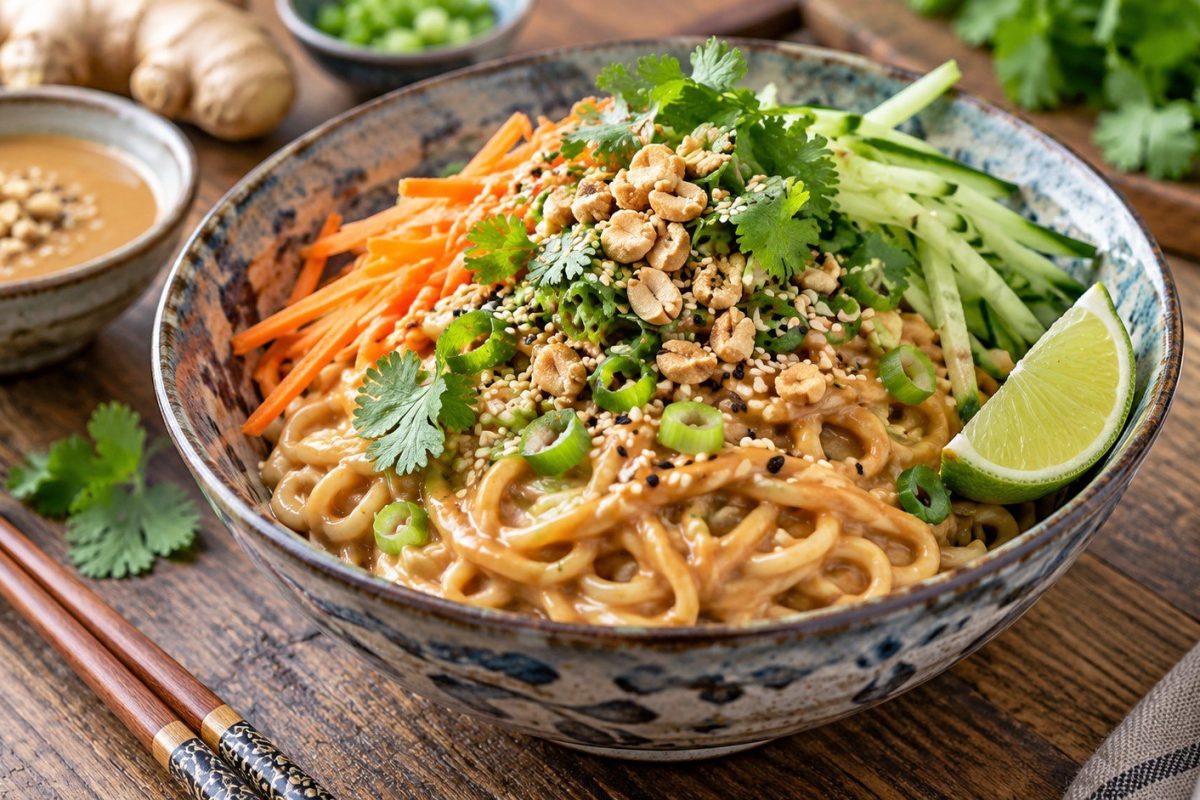
Cold Peanut Ginger Noodles combine springy noodles, creamy peanut sauce, fresh ginger, and crisp vegetables in a meal that needs little stove time. The dish works for lunch, meal prep, or a warm evening when another steaming bowl feels unnecessary, as noted by customreceipt.com.
The real challenge is not cooking the noodles. It is building a sauce that stays creamy after chilling instead of becoming thick and pasty. Peanut butter needs acidity, salt, sweetness, and enough liquid to loosen it. Fresh ginger adds heat without making the sauce heavy.
The best cold peanut noodles should taste brighter than the same sauce served warm. Chilling softens aromas, so acidity and ginger need enough presence.
Ingredients for Cold Peanut Ginger Noodles
This recipe makes about 4 servings. Wheat noodles, ramen, udon, soba, or rice noodles can work, although each produces a different texture. Choose noodles that remain pleasantly firm after rinsing and chilling.
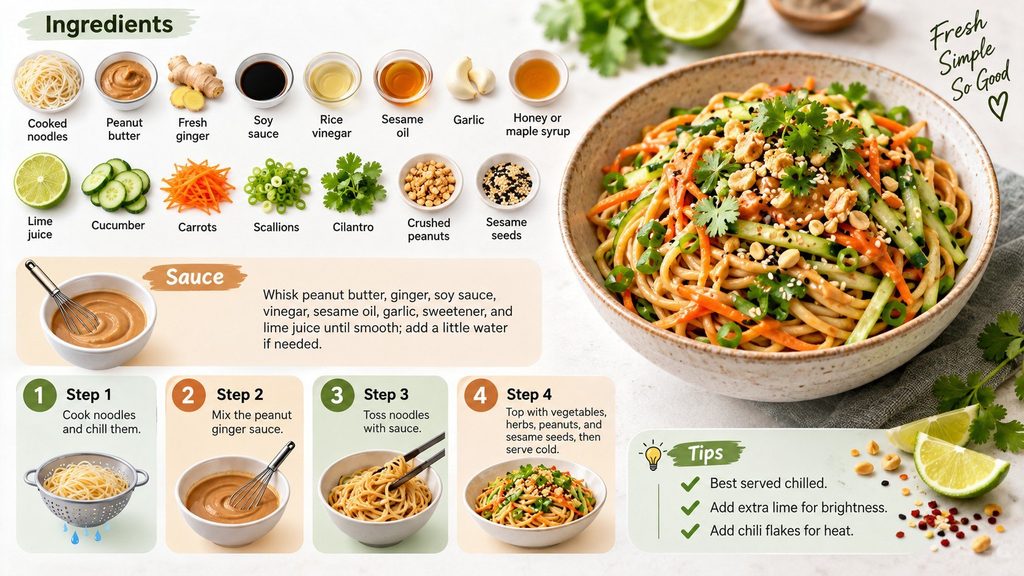
| Ingredient | Amount | Purpose |
|---|---|---|
| Noodles | 12 oz / 340 g | Base of the dish |
| Smooth peanut butter | 1/2 cup | Creamy body |
| Soy sauce | 3 tbsp | Salt and umami |
| Rice vinegar | 2 tbsp | Acidity |
| Fresh ginger | 1 tbsp, finely grated | Heat and aroma |
| Garlic | 1 small clove, grated | Savory depth |
| Sesame oil | 2 tsp | Toasted aroma |
| Honey or maple syrup | 1–2 tbsp | Balances salt and acidity |
| Warm water | 1/3–1/2 cup | Controls sauce consistency |
| Cucumber | 1 medium | Fresh crunch |
| Carrot | 1 medium | Sweetness and texture |
| Scallions | 3 | Fresh onion flavor |
| Sesame seeds | 1 tbsp | Optional finish |
| Chili crisp or chili oil | To taste | Optional heat |
Natural peanut butter can produce a stronger roasted flavor, but its consistency varies considerably. A conventional smooth peanut butter usually creates a more predictable sauce. If using an unsweetened variety, increase honey gradually rather than adding everything at once.
Rice vinegar keeps the sauce cleaner and softer than strongly flavored vinegars. Lime juice can replace part of it when a sharper citrus profile is preferred. Dark soy sauce is less suitable because its color and concentrated flavor can dominate the dressing.
For another practical meal-prep dish, the site’s guide to spinach egg bites explains how moisture changes texture during refrigeration.
How to Make Cold Peanut Ginger Noodles
The sequence matters because warm noodles continue absorbing moisture. Mixing thick peanut sauce directly into steaming noodles can leave the finished dish dry after refrigeration.
A reliable method follows this order:
- Cook the noodles according to the package directions.
- Stop cooking while they still have a slight bite.
- Drain immediately and rinse under cold water.
- Shake off as much excess water as possible.
- Whisk peanut butter, soy sauce, vinegar, ginger, garlic, sesame oil, and honey.
- Add warm water gradually until the dressing pours easily.
- Toss the cold noodles with about 3/4 of the sauce.
- Add cucumber, carrot, and scallions.
- Chill for 20–30 minutes before checking the texture.
- Add the remaining sauce or a splash of water before serving.
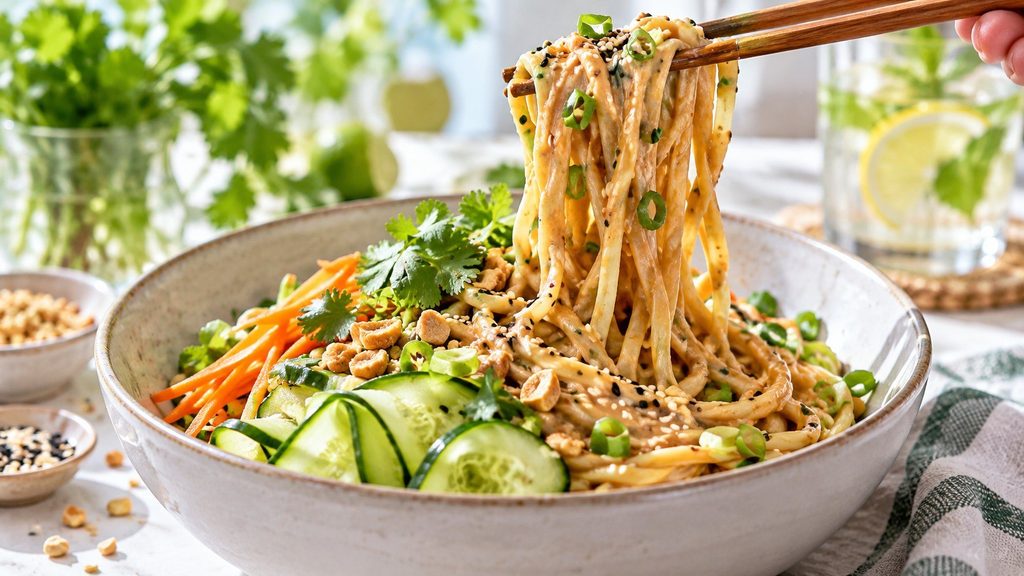
Rinsing is useful here because the noodles are deliberately served cold. It removes surface starch and quickly stops further cooking. That helps prevent strands from clumping into a dense mass.
Do not leave the noodles dripping wet. Too much rinse water weakens the sauce and can make the first serving taste bland. A few firm shakes in a colander usually remove enough moisture.
The dressing should initially look slightly thinner than seems necessary. Peanut butter firms as it cools, while noodles continue taking up liquid. A sauce that appears perfect at room temperature may become too dense after 1 hour in the refrigerator.
The same relationship between moisture and finished texture appears in Japanese ground beef curry, although that dish uses reduction rather than chilling.
How to Get the Peanut Ginger Sauce Right
A good cold peanut noodle sauce should cling to every strand without settling in a heavy layer at the bottom. The easiest way to achieve that texture is to add water last.
Start with 1/3 cup of warm water. Whisk thoroughly before adding more. Different peanut butters contain different amounts of oil and solids, so a fixed amount of water cannot guarantee the same result every time.
The flavor can then be corrected in small increments:
- too salty: add water, vinegar, or a little honey;
- too sweet: add rice vinegar and soy sauce;
- too thick: add warm water 1 tbsp at a time;
- too flat: add fresh ginger or lime juice;
- too sharp: add another spoonful of peanut butter;
- not spicy enough: finish with chili crisp or chili oil.
Taste the sauce on a noodle rather than from the spoon. The noodle dilutes seasoning, so sauce that tastes intense alone may become balanced after mixing.
Fresh ginger is preferable to dried ginger in this preparation. Its citrus-like sharpness survives refrigeration and cuts through the fat in peanut butter. Grating it finely also prevents fibrous pieces from interrupting the texture.
Garlic requires more restraint. Raw garlic becomes increasingly assertive while the noodles rest. One small clove is usually enough for 4 servings.
For make-ahead noodles, hold back several spoonfuls of sauce. That reserved portion can restore the creamy texture immediately before serving.
Which Noodles Work Best
The peanut ginger noodles recipe does not depend on one particular noodle. The best option depends on whether the priority is chewiness, speed, or a gluten-free preparation.
Soba brings a nutty flavor that works naturally with sesame and peanut. Check the package carefully, because many soba products contain both buckwheat and wheat.
Udon produces thicker, chewier bites and carries plenty of sauce. Ramen noodles are lighter and particularly good when vegetables are sliced finely.
Rice noodles create a different result. They can be excellent cold, but overcooking makes them fragile and sticky. Cooling them promptly is more important.
| Noodle type | Texture when cold | Best feature | Main caution |
|---|---|---|---|
| Soba | Firm, slightly earthy | Nutty flavor | Often contains wheat |
| Udon | Thick and chewy | Holds creamy sauce | Can feel heavy |
| Ramen | Springy | Fast cooking | Easy to overcook |
| Rice noodles | Light, slippery | Gluten-free options available | Can become sticky |
| Spaghetti | Firm | Easy to find | Less traditional texture |
Ordinary spaghetti is a practical substitute when Asian noodles are unavailable. Cook it just to al dente, rinse thoroughly, and use the same dressing technique.
The sauce carries enough personality that the recipe does not depend on specialty noodles. Texture matters more than authenticity for this particular cold dish.
Vegetables, Protein, and Easy Variations
The basic cold peanut noodles recipe benefits from vegetables with crisp texture rather than vegetables that release lots of water. Cucumber is the exception, but it should be cut shortly before mixing.
Carrots, red cabbage, bell pepper, sugar snap peas, radishes, and bean sprouts all provide contrast. Herbs can shift the flavor substantially. Cilantro makes the noodles brighter, while mint adds a cooler finish.
Several additions can turn the noodles into a fuller meal:
- shredded cooked chicken;
- baked or pan-seared tofu;
- shelled edamame;
- cooked shrimp;
- thinly sliced omelet;
- extra cucumber and cabbage for a vegetable-heavy version.
Keep strongly seasoned proteins relatively simple. A very sweet teriyaki chicken, for example, can compete with the peanut dressing instead of supporting it.
For tofu, press out excess water before browning. A dry surface develops better color and prevents additional moisture from thinning the sauce.
Shrimp should be cooked separately and chilled before mixing. Edamame is the simplest option because it adds protein and color without another sauce.
A spoonful of chili crisp creates a spicy peanut ginger noodles variation with almost no additional work. Add it to individual bowls when different heat levels are needed.
Storage and Food-Allergy Considerations
Cold noodles are convenient for meal prep, but refrigeration still matters. The USDA Food Safety and Inspection Service advises refrigerating perishable leftovers within 2 hours. That limit falls to 1 hour above 90°F.
“Within 2 hours of cooking food or after it is removed from an appliance keeping it warm, leftovers must be refrigerated.”
USDA Food Safety and Inspection Service, official leftovers and food-safety guidance.
Store the noodles in a covered container. Keeping a little extra dressing separately makes the next serving noticeably better. Add water only in small amounts because chilled noodles need less adjustment than expected.
For the best texture, eat the noodles within several days rather than preparing an oversized batch. Vegetables gradually lose crunch, while peanut sauce continues thickening.
Peanuts, soy, wheat, and sesame can all appear in this recipe. The U.S. Food and Drug Administration identifies peanuts, soy, wheat, and sesame among the 9 major food allergens recognized in the United States.
“A food product’s ingredients can be changed at any time.”
The FDA gives this guidance when explaining why consumers with food allergies should check packaged-food labels repeatedly.
That point matters for bottled soy sauces, chili crisps, peanut butter, and prepared noodle products. Ingredient lists differ between brands. Anyone preparing food for a person with allergies should verify every packaged ingredient.
FAQ About Cold Peanut Ginger Noodles
Can Cold Peanut Ginger Noodles be made the night before?
Yes. Prepare the noodles and reserve part of the dressing separately. Stir in the extra sauce before serving if the noodles have absorbed too much moisture overnight.
Why did my peanut sauce become too thick?
Peanut butter firms when chilled, and noodles continue absorbing liquid. Whisk in water 1 tbsp at a time until the sauce becomes creamy again.
Can I make peanut noodles without sesame oil?
Yes. Leave it out and slightly increase the peanut butter or use a neutral oil. The final flavor will be less toasted but still balanced.
What can replace peanut butter?
Sunflower seed butter is one possible alternative when peanuts must be avoided. Tahini produces a different sesame-based sauce and is not suitable for sesame allergies.
Are Cold Peanut Ginger Noodles served completely cold?
They can be served chilled or at cool room temperature. A short rest outside the refrigerator often softens the dressing and improves the noodle texture.
How can I make the noodles spicier?
Add chili crisp, chili oil, sambal, or finely sliced fresh chili. Adding heat at the table makes it easier to serve people with different preferences.
Earlier we wrote about How to Make Chicken and White Bean Stew in 45 Minutes With One Pot and Canned Beans