 Frank Rondel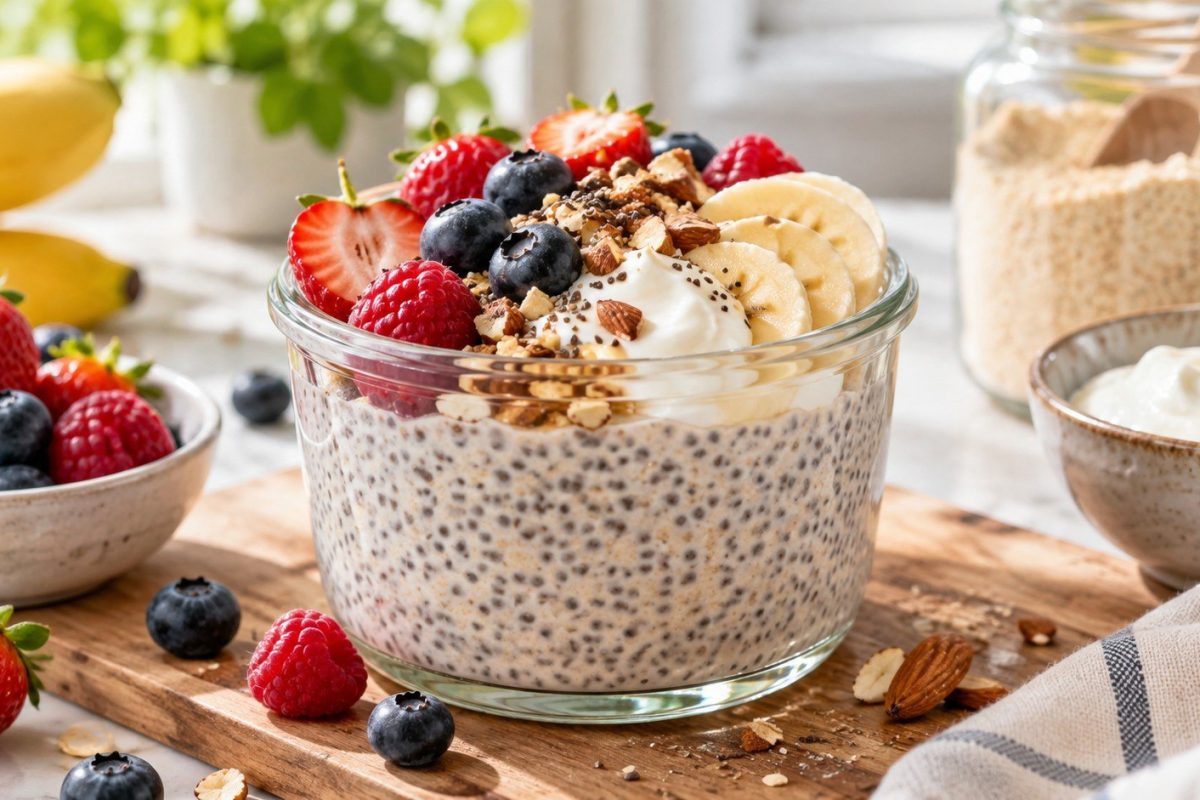
Protein Chia Pudding turns a familiar overnight breakfast into something much more substantial. Chia seeds provide texture and fiber, while Greek yogurt and protein powder raise the protein content significantly. The recipe needs about 5 minutes of active preparation, then several hours in the refrigerator. The crucial step is not adding more chia, but balancing protein, liquid, and resting time, as noted by the editors at customreceipt.com.
A good batch should be thick enough for a spoon but softer than refrigerated oatmeal. It should not contain dry pockets of protein powder or dense clusters of chia seeds. Those problems usually come from mixing everything at once and immediately walking away.
What makes chia pudding genuinely high in protein
Ordinary chia pudding gets most of its structure from hydrated seeds. Chia contributes some protein, but a normal serving does not automatically become a high-protein meal.
The practical solution is Greek yogurt. It adds dairy protein while also producing a creamier texture. Protein powder can raise the total further without requiring a much larger serving. Anyone interested in similar dairy-based techniques can compare this approach with cottage cheese basil pasta with a protein-rich sauce.
The aim is not to pack the jar with the maximum possible protein. The better target is a pudding that remains creamy, balanced, and easy to eat.
The exact nutritional result depends heavily on the brands chosen. Plain Greek yogurt can differ substantially between products, especially between nonfat and whole-milk versions. Protein powders also vary by serving size and protein concentration. The USDA FoodData Central provides searchable nutrient data for foods and commercial products.
“USDA’s comprehensive source of food composition data with multiple distinct data types.”
USDA FoodData Central, official food-composition database. The database includes analytical, foundation, survey, and branded-food information.
For a practical high protein chia pudding, Greek yogurt and protein powder do different jobs. Yogurt supplies protein while improving body. Powder supplies concentrated protein but can thicken the mixture quickly. Milk controls the final consistency, and chia creates the gel that holds everything together.
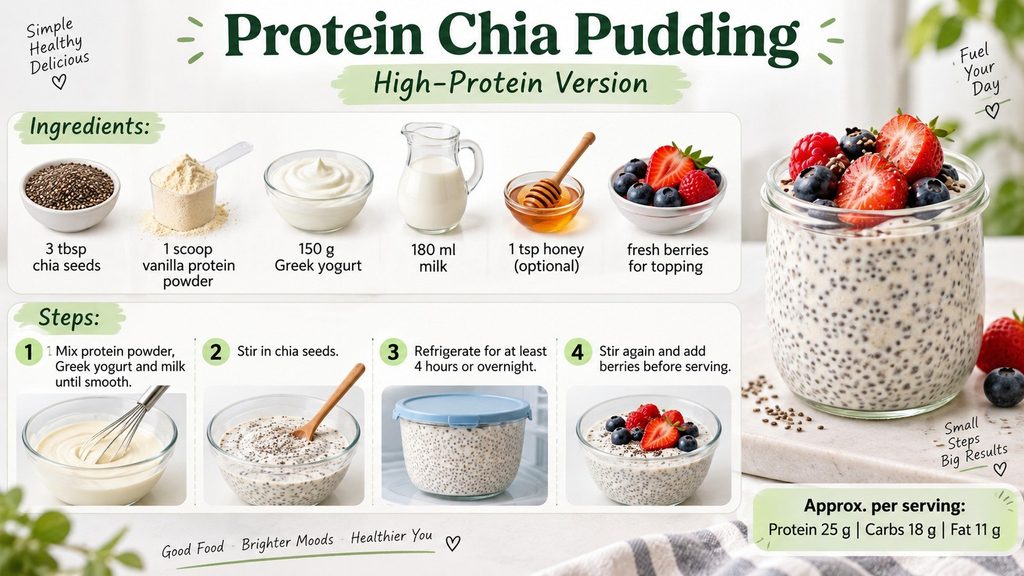
Ingredients for 2 servings
This formula produces 2 breakfast-size portions. It is deliberately less sweet than many dessert-style chia puddings, so toppings can provide the final adjustment.
- 1/4 cup chia seeds, about 40 g
- 1 cup plain Greek yogurt
- 2/3 cup milk or unsweetened soy milk
- 1 scoop vanilla protein powder
- 1 to 2 teaspoons maple syrup or honey
- 1 teaspoon vanilla extract
- 1 small pinch of salt
- 1/2 cup berries for serving
- 1 tablespoon chopped almonds or walnuts, optional
Choose a protein powder that already tastes good when mixed with milk. Chia pudding will not hide a strong artificial aftertaste. Whey usually creates a smooth result, while some plant proteins absorb more liquid. Soy milk is useful when extra plant protein is preferred. Almond milk works for texture, but many varieties contain relatively little protein. Unsweetened products also make sweetness easier to control.
Greek yogurt is particularly useful because it combines protein with thickness. The current U.S. Dietary Guidelines include dairy, seeds, nuts, soy, and other nutrient-dense foods within a varied eating pattern. Their current guidance emphasizes whole and nutrient-dense foods rather than relying mainly on highly processed products.
For another meal built around beans and grains, the site also has a broccoli, barley and white bean soup recipe. It uses a different protein strategy and relies on whole ingredients rather than powder.
How to make protein chia pudding without lumps
The order of mixing matters. Protein powder clumps more easily after chia begins absorbing liquid, so the powder should dissolve first.
- Pour the milk into a medium bowl or measuring jug.
- Add protein powder and whisk until no dry pockets remain.
- Whisk in Greek yogurt, vanilla, sweetener, and salt.
- Stir in the chia seeds until evenly distributed.
- Leave the mixture at room temperature for 10 minutes.
- Stir again, scraping the sides and bottom thoroughly.
- Divide between 2 jars and refrigerate for at least 2 hours.
- Stir before serving and add berries or nuts.
The second stir is the small step that saves the recipe. Chia begins swelling quickly and tends to settle or gather in pockets. Breaking those pockets after 10 minutes produces a more even pudding. Refrigerating overnight creates the firmest result, although 2 to 4 hours is usually enough. A sealed jar also prevents the surface from drying. If the finished pudding becomes too dense, a splash of milk restores a softer consistency.
A successful chia pudding with Greek yogurt should hold a spoonful without feeling rubbery. If it cuts like gelatin, the mixture needs more liquid.
Do not keep adding chia to correct a thin mixture immediately. The seeds need time before their final texture becomes obvious. Adding extra tablespoons too early often produces an excessively stiff breakfast by morning. The same principle applies to many thickening ingredients used in make-ahead meals.
How much protein can one serving provide
A realistic estimate is more useful than a fixed number. Labels differ enough that no universal protein figure applies to every version.
| Ingredient per serving | Example amount | Approximate protein contribution |
|---|---|---|
| Chia seeds | 20 g | 3–4 g |
| Greek yogurt | about 120 g | 12–15 g |
| Milk | about 80 ml | 2–3 g |
| Protein powder | 1/2 scoop | 11–13 g |
| Estimated total | 1 serving | about 28–35 g |
These figures are estimates rather than a nutritional label for the finished recipe. The yogurt and protein powder create most of the variation. Changing dairy milk to low-protein almond milk can reduce the total. A higher-protein soy milk can move it in the opposite direction. Toppings also matter, particularly nuts, nut butter, or high-protein granola. Package labels remain the best source for calculating a specific batch.
The NIH Office of Dietary Supplements explains that Daily Values provide standardized label references. Individual recommended intakes can differ by age, sex, and other factors. Its Daily Values reference explains how percentages on food labels relate to standard nutrient values.
“Eat Real Food.”
U.S. Dietary Guidelines for Americans 2025–2030, published by HHS and USDA in January 2026. The guidance prioritizes nutrient-dense foods across protein, dairy, vegetables, fruits, fats, and grains.
That principle also helps keep chia pudding from becoming a protein-powder delivery system. Yogurt, chia, fruit, and nuts contribute texture and nutrients beyond a protein number. The powder works best as one ingredient rather than the entire foundation.
Flavor variations that do not ruin the texture
The base recipe can move toward chocolate, fruit, coffee, or nut flavors without changing the preparation method. The main rule is to account for ingredients that absorb liquid.
Useful variations include:
- Chocolate: add 1 tablespoon unsweetened cocoa and 1 to 2 tablespoons extra milk.
- Berry: mash 1/3 cup raspberries before mixing them into the yogurt.
- Peanut butter: stir in 1 tablespoon smooth peanut butter before adding chia.
- Coffee: replace 2 tablespoons of milk with chilled espresso.
- Cinnamon banana: add cinnamon before chilling and sliced banana before serving.
- Coconut: use coconut extract and finish with unsweetened shredded coconut.
Cocoa makes the pudding noticeably thicker, so additional liquid is usually necessary. Peanut butter does the same, especially after refrigeration. Mashed berries introduce both water and natural acidity, creating a softer result. Bananas are better added shortly before serving because their color and texture deteriorate during storage. Coffee should be cooled before it enters a dairy mixture. These small adjustments keep each variation close to the original consistency.
The protein chia pudding recipe can also be made without protein powder. Increase the Greek yogurt and reduce the milk slightly. The resulting protein content will usually be lower, but the texture becomes particularly smooth.
For people planning several protein-focused meals together, chicken and white bean stew offers another approach using poultry and legumes. It also shows why protein does not need to come from the same ingredient at every meal.
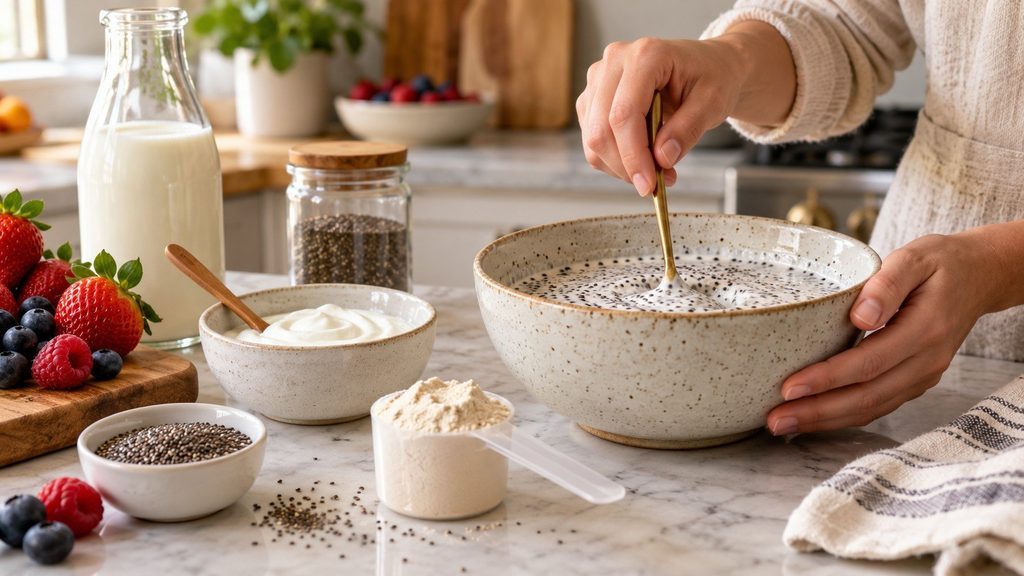
Storage, meal prep and common mistakes
Chia pudding is suited to advance preparation because no reheating is required. Two or 3 jars can be prepared together without adding meaningful work.
The most common problems are simple:
- Adding chia before protein powder has dissolved creates stubborn dry lumps.
- Skipping the second stir leaves dense chia clusters at the bottom.
- Using too much protein powder can create a chalky texture.
- Adding too little liquid produces a stiff pudding after refrigeration.
- Sweetened yogurt, flavored powder, and syrup together can make the recipe excessively sweet.
A failed texture is usually repairable. Thick pudding needs milk added gradually rather than another full pour. Thin pudding should first receive more refrigeration time. If it remains loose, 1 teaspoon of chia can be stirred into each serving. Grainy protein powder is harder to correct after chilling. Blending the liquid and powder before adding the seeds prevents that problem more reliably.
For meal preparation, keep crunchy toppings outside the jar until serving. Nuts and granola soften after several hours against wet pudding. Fresh berries can be added in advance, although delicate raspberries break down quickly. Banana is best sliced at the last moment. A healthy high protein breakfast still needs to taste good after spending a night in the refrigerator.
FAQ
How long does Protein Chia Pudding need to chill?
Allow at least 2 hours. A 4-hour or overnight rest produces a more stable, evenly hydrated texture.
Can Protein Chia Pudding be made without protein powder?
Yes. Use more Greek yogurt and slightly less milk. Protein content will depend on the yogurt chosen.
Why is chia pudding still runny after refrigeration?
The liquid-to-chia ratio may be too high. Stir first, then add 1 teaspoon chia and allow additional resting time.
Why does protein chia pudding become too thick?
Chia and protein powder both absorb liquid. Add milk 1 tablespoon at a time until the pudding becomes spoonable again.
Is Greek yogurt necessary?
No, but it raises protein while adding creaminess. Thick soy yogurt can work in a dairy-free version, with nutrition varying by brand.
Can Protein Chia Pudding be prepared for several breakfasts?
Yes. Prepare several sealed portions and keep toppings separately when possible. Check the storage guidance on the dairy products used in the recipe.
Earlier we wrote about how to make chia seed pudding without clumps: the second stir and chilling time that change the texture