 Frank Rondel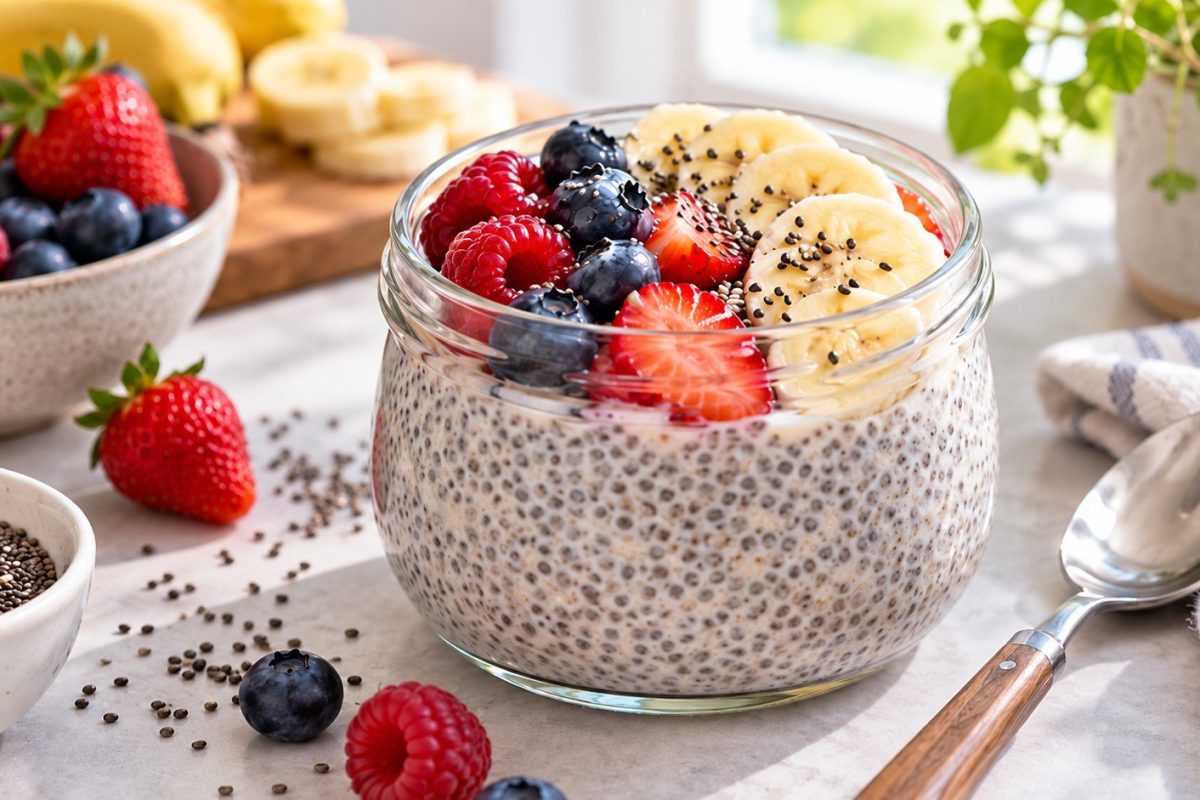
Chia pudding turns 2 basic ingredients into a cold breakfast that needs no cooking. The essential formula is chia seeds plus milk, followed by enough resting time for proper thickening. A second stir prevents clumps and gives the pudding a more even texture. That small detail matters more than expensive toppings, as noted by the customreceipt.com.
A basic serving takes about 5 minutes of active preparation. It can then sit in the refrigerator while the seeds absorb liquid. The result resembles a softer tapioca pudding, with small seeds suspended throughout the mixture.
The practical advantage is timing: breakfast is finished before the morning begins.
What chia pudding is and why the ratio matters
Chia pudding recipe searches often lead to very different ratios. Some versions produce a dense gel, while others remain closer to a drink. A reliable starting point is 3 tablespoons of seeds for every 1 cup of milk.
Chia seeds develop a gel-like coating after contact with liquid. That process gives the mixture body without starch, eggs, or cooking. Harvard’s Nutrition Source also identifies chia as a source of fiber, protein, calcium, phosphorus, zinc, and ALA omega-3 fats.
“Two tablespoons of chia seeds contain about 140 calories, 4 grams of protein, 11 grams of fiber.”
Source: Harvard T.H. Chan School of Public Health, The Nutrition Source, chia seed nutrition overview.
That figure applies to the seeds themselves. Milk, yogurt, fruit, nuts, and sweeteners change the final nutritional profile. Unsweetened milk also produces a different breakfast from sweetened flavored milk.
For readers building a wider meal-prep routine, the CustomReceipt Food section includes other recipes based on simple preparation methods.
Ingredients for a basic chia pudding
The base recipe makes about 2 modest servings. Use a jar or bowl that leaves enough room for vigorous stirring.
- 1 cup milk or unsweetened plant-based milk
- 3 tablespoons chia seeds
- 1 to 2 teaspoons maple syrup or honey
- 1/2 teaspoon vanilla extract
- 1 small pinch of salt
- Fresh fruit, nuts, or seeds for serving
Whole chia seeds work without grinding. Black and white seeds behave similarly in pudding. Harvard reports no meaningful nutritional difference between the 2 colors.
Dairy milk gives the pudding a familiar creamy flavor. Soy milk adds more protein than many plant beverages. Coconut milk creates a richer result but can raise the calorie content considerably. Almond milk keeps the base lighter and allows fruit flavors to dominate.
Sweetener is optional rather than structural. The pudding thickens without sugar, honey, or syrup. Mashed banana can provide sweetness while making the texture heavier.
For another protein-focused meal, cottage cheese basil pasta uses a similarly short ingredient list.
How to make chia pudding step by step
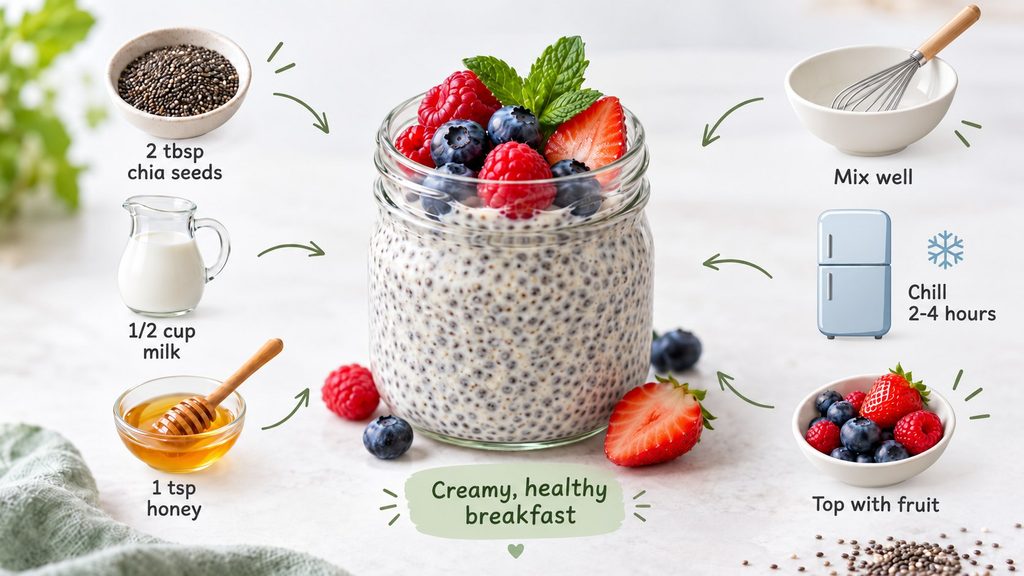
How to make chia pudding successfully comes down to mixing twice. The first stir hydrates the seeds. The second breaks apart clusters before they become firm.
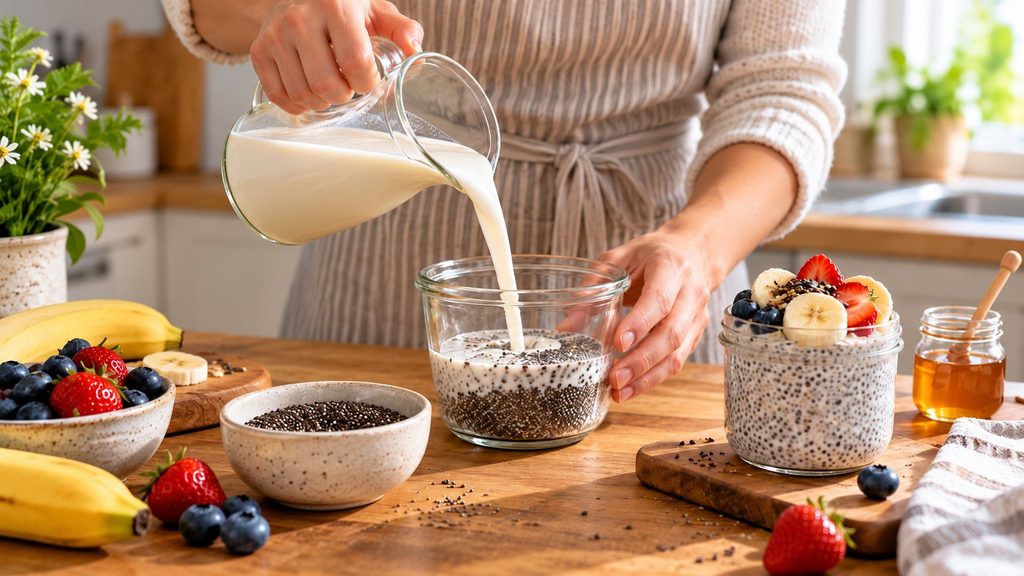
- Pour 1 cup of milk into a jar or medium bowl.
- Add 3 tablespoons of chia seeds.
- Add vanilla, salt, and the chosen sweetener.
- Whisk for 30 to 45 seconds.
- Leave the mixture for 5 to 10 minutes.
- Stir thoroughly again and scrape the bottom.
- Cover the container and refrigerate until thick.
- Add fruit or crunchy toppings immediately before serving.
The second stir should not be skipped. Chia seeds can collect at the bottom within the first few minutes. Once those clusters gel, they become harder to distribute evenly.
A short soak can work when time is limited. Harvard suggests allowing soaked chia to sit refrigerated for at least 15 minutes. A longer rest usually creates a firmer and more uniform breakfast.
Utah State University Extension uses a longer chilling period in its strawberry lime chia pudding recipe. Its version chills for about 1.5 to 2 hours.
“Cover and chill the pudding for one and a half to two hours, or until the chia is gelled.”
Source: Utah State University Extension, Strawberry Lime Chia Pudding recipe.
The pudding can also be prepared before bed. Overnight chilling gives the seeds ample time to hydrate. It also eliminates morning preparation beyond adding toppings.
If the pudding separates into liquid and dense seeds, the problem is usually mixing rather than refrigeration time.
Chia pudding ratios for different textures
There is no single ideal consistency. The useful ratio depends on whether the pudding will be eaten plain or layered with yogurt and fruit.
| Chia seeds | Liquid | Expected texture | Best use |
|---|---|---|---|
| 2 tbsp | 1 cup | Thin and loose | Smoothies or drinkable breakfasts |
| 3 tbsp | 1 cup | Creamy | Everyday breakfast |
| 4 tbsp | 1 cup | Thick | Fruit layers and meal prep |
| 5 tbsp | 1 cup | Very dense | Dessert-style portions |
A thick batch is easier to correct than many people expect. Add milk 1 tablespoon at a time and stir again. The mixture normally loosens within several minutes.
A runny batch needs a different correction. Add 1 teaspoon of chia seeds, stir carefully, and refrigerate again. Adding a large handful at once can create an unpleasantly dense center.
Blending changes the experience without changing the basic formula. A blender breaks the visible seeds and creates a smoother pudding. This approach suits people who dislike the tapioca-like texture.
Chia pudding ratio also changes when thick yogurt is included. Greek yogurt already contributes body, so slightly less chia may be enough.
The same planning principle works with savory meals. A chicken and white bean stew can also be prepared around pantry ingredients.
Is chia pudding a healthy breakfast?
Chia seeds provide a concentrated amount of fiber for their size. The National Institutes of Health Office of Dietary Supplements also lists chia among plant sources of ALA omega-3 fatty acids. The agency’s omega-3 fact sheet distinguishes ALA from EPA and DHA found mainly in seafood.
One ounce of dried chia contains about 5.055 grams of ALA in USDA nutrient data reproduced by NIH. That amount is close to 28 grams of seeds.
“Chia seeds and walnuts also contain ALA.”
Source: NIH Office of Dietary Supplements, Omega-3 Fatty Acids fact sheet for health professionals.
Fiber is another practical reason chia works at breakfast. Harvard reports about 11 grams in a 28-gram portion. However, a high-fiber breakfast can feel uncomfortable for someone who usually eats little fiber.
Drinking enough fluids during the day remains sensible. Larger servings are not automatically better. The pudding should fit into the rest of the day’s diet rather than replace dietary variety.
The protein content also deserves context. Chia contributes plant protein, but a plain seed-and-almond-milk pudding may remain modest in protein. Greek yogurt, dairy milk, soy milk, or nuts can make the meal more substantial.
The phrase healthy chia pudding therefore depends on the complete recipe. A bowl containing seeds, plain milk, berries, and nuts differs greatly from one loaded with syrup and chocolate spread.
5 variations that do not ruin the base recipe
Flavor additions work best after the basic ratio is understood. Wet fruit purées can thin the pudding. Cocoa powder does the opposite and absorbs additional liquid.
- Berry: add blueberries, raspberries, or sliced strawberries.
- Chocolate: mix in 1 tablespoon unsweetened cocoa powder.
- Banana: mash 1/2 ripe banana into the milk before adding chia.
- Apple cinnamon: add diced apple, cinnamon, and chopped walnuts.
- Tropical: use mango, pineapple, and unsweetened coconut flakes.
Frozen berries are useful when fresh fruit is expensive or out of season. They soften while thawing and release juice into the pudding.
Cocoa may require another tablespoon of milk. Mashed banana often creates enough sweetness without syrup. Mango works especially well with coconut milk, although that combination is richer.
Crunchy ingredients should be added shortly before eating. Granola and nuts soften during overnight storage. Fresh fruit can be added earlier, but berries may stain the pudding.
For a higher-protein version, stir in Greek yogurt after the chia mixture sets. This preserves the gel while making the final texture creamier.
Chia seed pudding breakfast is also easy to portion into separate jars. Different toppings can turn one base batch into several distinct breakfasts.
Storage and common mistakes
Prepared pudding belongs in a covered refrigerator container. Utah State University Extension says its chia pudding leftovers can remain refrigerated for 3 to 5 days.
That range makes the recipe suitable for limited meal preparation. Fruit quality may decline before the pudding itself does. Bananas brown quickly, while berries and mango usually hold their texture better.
Several mistakes account for most failed batches:
- Using too much liquid creates a thin mixture.
- Skipping the second stir produces dense seed clusters.
- Adding granola overnight removes its crunch.
- Using only sweetened toppings can overwhelm the mild base.
- Eating dry chia separately from sufficient liquid is unnecessary.
Harvard specifically cautions against eating dry chia seeds by themselves. The seeds expand quickly after absorbing liquid. The institution advises consuming them already soaked or with moist foods.
People with swallowing difficulties should be particularly careful with dry chia. A fully hydrated pudding avoids the dry-seed texture entirely.
FAQ about chia pudding
How long does chia pudding need to set?
It can begin thickening within 15 minutes. A rest of 1.5 to 2 hours produces a more developed gel. Overnight refrigeration is convenient for breakfast.
What is the best chia pudding ratio?
A useful starting point is 3 tablespoons chia seeds per 1 cup liquid. Use 4 tablespoons for a noticeably thicker result.
Can chia pudding be made with water?
Yes, but the result tastes much leaner. Milk or fortified plant beverages add flavor and nutrients that water cannot provide.
Why is my chia pudding still watery?
The ratio may contain too much liquid. Poor mixing can also leave seeds clumped instead of evenly hydrated. Add chia gradually and chill again.
Can chia pudding be eaten every morning?
It can fit into a varied diet. Changing fruits, dairy products, nuts, grains, and other breakfast foods gives broader nutritional variety.
Is chia pudding good for meal prep?
Yes. It needs little active preparation and can be portioned before refrigeration. Keep crunchy toppings separate until serving.
Earlier we wrote about How to Cook Steak with Chimichurri: Why the Cut, Crust and 145°F Safety Standard Matter