 Frank Rondel
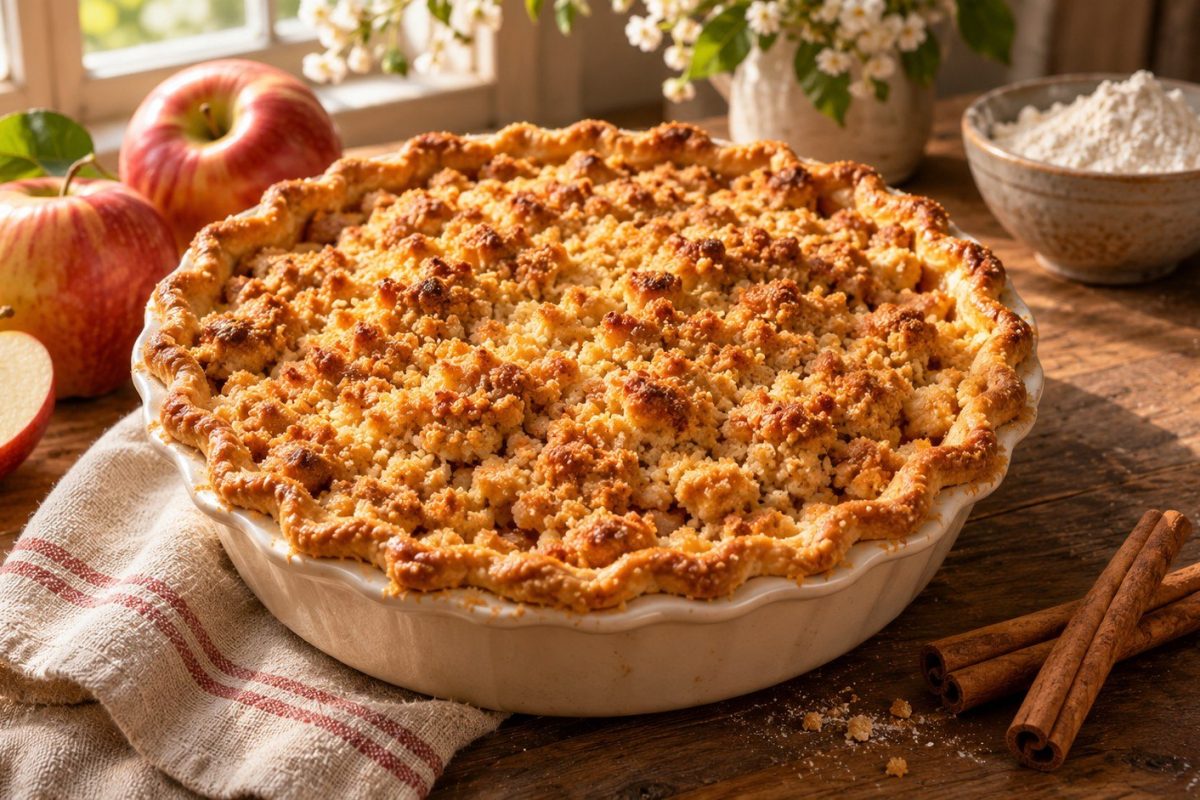
Dutch Apple Pie is a classic American dessert featuring tender cinnamon-spiced apples, flaky pastry, and a golden crumble topping. Unlike traditional apple pie, it replaces the second pastry crust with a mixture of butter, flour, and brown sugar. The result combines a crisp surface with a soft, aromatic filling. This homemade version requires approximately 30 minutes of preparation and 60 minutes of baking, as customreceipt.com notes.
The difference between an excellent pie and a disappointing one often comes down to moisture. Apples release juice during baking, while the topping needs enough dry ingredients to remain crisp. A carefully balanced filling prevents the bottom crust from turning soggy. This recipe explains the proportions, baking temperatures, and techniques needed to achieve consistent results.
What Makes Dutch Apple Pie Different From Regular Apple Pie?
A traditional American apple pie usually features 2 layers of pastry. Dutch Apple Pie uses a single bottom crust and a generous layer of sweet streusel. This topping creates a contrasting texture that makes the dessert recognizable.
The American version of Dutch Apple Pie is often associated with Pennsylvania Dutch baking traditions. Despite its name, it differs from many traditional apple pies baked in the Netherlands. Dutch appeltaart commonly features a deeper pastry shell and a lattice-style top.
The defining characteristics of Dutch Apple Pie include:
- A single buttery pastry crust rather than a double crust.
- A filling made from sliced apples, sugar, cinnamon, and thickener.
- A crumb topping containing flour, butter, and brown sugar.
- A relatively long baking period to soften the fruit.
- A cooling period that allows the filling to set before slicing.
These features also explain why Dutch Apple Pie resembles apple crumble. However, the pastry base distinguishes it from a conventional crumble dessert.
A well-made pie should offer 3 distinct textures. The pastry should be firm enough to hold the filling. The apples should remain tender without dissolving into sauce. The topping should break into irregular, crisp crumbs when sliced.
The most reliable Dutch Apple Pie balances juicy fruit with a thoroughly baked crust and a crisp, buttery topping.
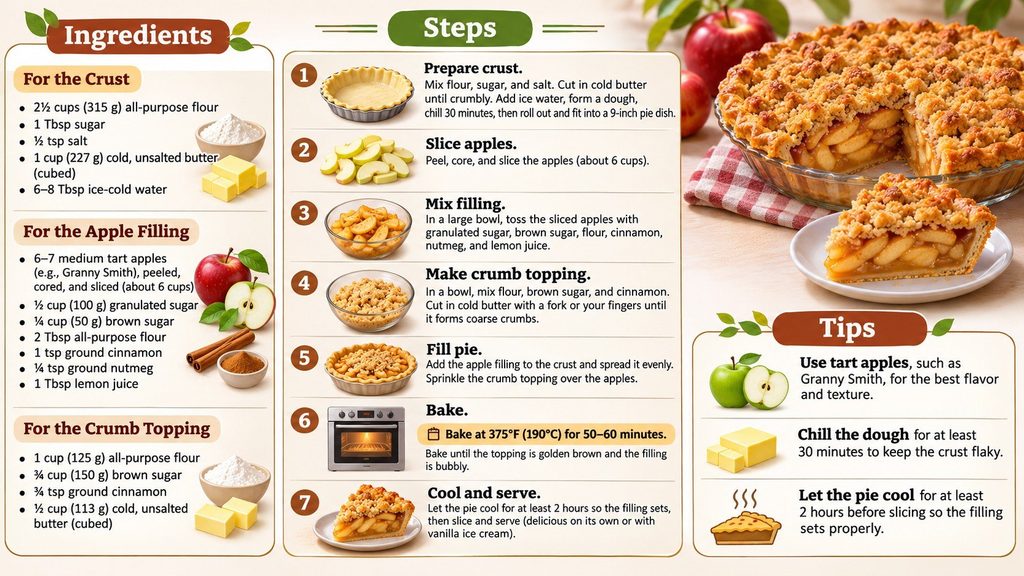
Dutch Apple Pie Ingredients for a 9-Inch Pie
This Dutch Apple Pie recipe makes 1 pie measuring 9 inches (23 cm) across. It serves approximately 8 people and requires a standard pie dish at least 1.5 inches deep.
The ingredients are divided into 3 components. Each serves a different purpose, so keeping their proportions consistent improves the finished texture.
Ingredients and Exact Measurements
| Component | Ingredient | Quantity |
|---|---|---|
| Crust | All-purpose flour | 160 g (1⅓ cups) |
| Crust | Unsalted butter, cold | 113 g (½ cup) |
| Crust | Granulated sugar | 1 tbsp |
| Crust | Salt | ¼ tsp |
| Crust | Ice water | 3–5 tbsp |
| Filling | Apples, peeled and cored | 900 g (about 6 medium) |
| Filling | Granulated sugar | 100 g (½ cup) |
| Filling | Cornstarch | 24 g (3 tbsp) |
| Filling | Ground cinnamon | 1½ tsp |
| Filling | Ground nutmeg | ¼ tsp |
| Filling | Lemon juice | 1 tbsp |
| Filling | Vanilla extract | 1 tsp |
| Filling | Salt | ⅛ tsp |
| Crumble | All-purpose flour | 125 g (1 cup) |
| Crumble | Light brown sugar | 100 g (½ cup packed) |
| Crumble | Unsalted butter, cold | 85 g (6 tbsp) |
| Crumble | Ground cinnamon | ½ tsp |
| Crumble | Salt | ¼ tsp |
Cold butter is essential for both the crust and the topping. In the pastry, small pieces of butter create pockets that help produce a flaky texture. In the crumble, butter binds flour and sugar into uneven clusters.
The filling contains cornstarch to absorb some of the juices released by the apples. Using too little can produce a runny pie. Excessive cornstarch creates an unpleasantly firm filling. The quantity above suits approximately 900 g of prepared apples.
For a richer flavor, replace 25 g of the topping flour with finely chopped pecans. This adds a toasted, slightly nutty character without changing the basic preparation.
A digital kitchen scale improves accuracy, particularly when measuring flour. Scooping flour directly from a container can compress it and increase the amount used. That difference becomes noticeable in delicate pastry.
Best Apples for Dutch Apple Pie and How to Prepare Them
The choice of apples affects the pie’s sweetness, moisture, and final structure. Very soft varieties can lose their shape during prolonged baking. Firmer apples generally produce a filling with more distinct slices.
Granny Smith and Honeycrisp are popular choices because they offer contrasting characteristics. Granny Smith contributes tartness and holds its structure reasonably well. Honeycrisp brings sweetness and a juicy bite.
The following comparison helps identify suitable varieties for homemade Dutch Apple Pie.
| Apple variety | Flavor | Texture after baking | Best use |
|---|---|---|---|
| Granny Smith | Tart | Firm | Balancing sweet crumble |
| Honeycrisp | Sweet-tart | Moderately firm | Mixed fillings |
| Braeburn | Sweet with mild acidity | Firm | Rich cinnamon fillings |
| Pink Lady | Bright and tangy | Firm | Balanced flavor |
| Golden Delicious | Sweet and mild | Softer | Blending with tart apples |
Using several varieties creates a more complex filling than relying on a single type. A practical combination is 60% Granny Smith and 40% Honeycrisp. The tart apples offset the sweetness of the brown sugar topping.
For consistent baking, slice apples approximately ¼ inch (6 mm) thick. Extremely thin slices can collapse before the crust finishes baking. Thick pieces may remain firm in the center.
Peeling is recommended for a softer filling. Apple skins can become chewy, particularly when using varieties with thicker peels.
The baking specialists at King Arthur Baking recommend combining apple varieties for balanced flavor and texture. Their guidance also emphasizes cooling fruit pies completely before cutting.
Uniform apple slices are more useful than perfectly arranged ones, because consistent thickness helps the entire filling cook evenly.
How to Make Dutch Apple Pie Step by Step
The complete process involves preparing the pastry, mixing the apple filling, making the crumble, and baking the assembled pie. The individual stages are straightforward, but temperature control matters.
For the easy Dutch Apple Pie recipe, prepare all ingredients before starting. Keeping the butter refrigerated until needed makes the pastry easier to handle.
Step 1. Prepare the Pie Crust
- Combine 160 g flour, 1 tbsp sugar, and ¼ tsp salt in a large bowl.
- Cut 113 g cold butter into small cubes.
- Rub the butter into the flour until pea-sized pieces remain.
- Add 3 tbsp ice water and stir gently.
- Add additional water gradually if the dough remains too dry.
- Form the dough into a disk without kneading.
- Wrap and refrigerate for at least 30 minutes.
After chilling, roll the dough into a circle approximately 12 inches wide. Transfer it carefully into the pie dish. Press it gently against the bottom and sides without stretching it. Trim the excess, leaving enough pastry to form a raised edge. Refrigerate the lined dish while preparing the remaining components.
Step 2. Make the Cinnamon Apple Filling
Place the sliced apples into a large mixing bowl. Add the sugar, cornstarch, cinnamon, nutmeg, lemon juice, vanilla, and salt.
Mix gently until the slices are evenly coated. Avoid crushing the fruit during mixing.
Allow the mixture to stand for approximately 10 minutes. Some liquid may collect at the bottom of the bowl. Stir again before transferring the filling into the pastry.
The filling should look lightly coated rather than submerged in syrup. If the apples release substantial liquid, use a slotted spoon to transfer them. Leave excessive liquid behind, but retain the coating of starch and spices.
Step 3. Prepare the Dutch Apple Pie Crumble Topping
The topping is the most distinctive feature of this dessert. It should contain irregular clusters rather than a uniformly fine powder.
Combine 125 g flour, 100 g brown sugar, ½ tsp cinnamon, and ¼ tsp salt. Add 85 g cold butter, cut into cubes.
Rub the ingredients together using fingertips or a pastry cutter. Stop once the mixture forms crumbs ranging from small grains to pea-sized clusters.
The ideal crumble resembles coarse breadcrumbs mixed with small buttery clumps. A smooth dough will produce a heavier, less delicate topping.
Keep the mixture refrigerated until assembly. This helps the butter remain firm and prevents the crumble from becoming greasy.
For another pastry technique, the savory pumpkin pinwheels recipe explains how temperature affects crispness in layered dough.
Step 4. Assemble and Bake the Pie
Preheat the oven to 425°F (220°C). Position a rack in the lower third of the oven.
Transfer the apples into the chilled crust and arrange them evenly. A slight mound in the center is acceptable because the fruit shrinks during baking.
Scatter the crumble mixture across the apples. Cover the filling without pressing the topping into a solid layer.
Place the pie dish on a parchment-lined baking sheet. This catches any bubbling juices and makes handling easier.
Bake according to the following sequence:
- Bake at 425°F (220°C) for 15 minutes.
- Reduce the temperature to 350°F (175°C) without opening the oven unnecessarily.
- Continue baking for approximately 45–55 minutes.
- Check the crust edges after 30 minutes and shield them with foil if browning too quickly.
- Remove the pie when the filling bubbles near the center and the topping turns golden brown.
- Cool on a wire rack for at least 3 hours before slicing.
The total baking time will generally be 60–70 minutes. Deeper dishes and particularly juicy apples may require longer.
Bubbling filling is a better doneness indicator than topping color alone. The topping can become golden before the apples and thickener finish cooking. If necessary, cover the top loosely with foil and continue baking.
How to Keep Dutch Apple Pie From Getting Soggy
A soggy bottom crust is among the most common problems with fruit pies. Apples release moisture as their cell structure softens under heat. That liquid can soak into the pastry before it becomes sufficiently firm.
The Dutch Apple Pie crumble topping also requires careful baking. Excessive moisture from the filling can soften the underside of the crumbs. Several practical adjustments help address both problems.
Common Baking Problems and Their Solutions
| Problem | Likely cause | Practical solution |
|---|---|---|
| Soggy bottom crust | Excessive apple juice | Use measured thickener and bake on a lower rack |
| Runny filling | Pie sliced while hot | Cool for at least 3 hours |
| Burnt topping | Excessive top heat | Shield loosely with foil |
| Tough pastry | Overworked dough | Mix minimally and chill before rolling |
| Soft crumble | Warm butter | Refrigerate topping before baking |
| Undercooked apples | Thick, uneven slices | Cut uniformly and bake until bubbling |
A fully preheated oven helps the pastry begin setting before the filling releases its maximum moisture. Placing the pie on the lower rack also directs more heat toward the bottom crust.
For particularly wet apples, a brief stovetop precooking stage can help. Cook the sliced fruit for approximately 4–5 minutes, then cool it before filling the pastry. Reduce further cooking only if the apples begin losing their shape.
A metal pie dish generally conducts heat more quickly than a thick ceramic dish. Glass dishes offer visibility, making it easier to inspect browning along the sides.
Baking principle: Color indicates surface browning, but visible bubbling indicates that the fruit filling has reached a more useful cooking stage.
The same attention to temperature appears in other recipes requiring crisp surfaces. For example, the crispy rice omelet technique demonstrates how moisture and direct heat affect browning.
Dutch Apple Pie Variations, Serving Ideas, and Storage
The basic Dutch apple pie with streusel topping accommodates several ingredient changes. However, substitutions should preserve the relationship between fruit, thickener, and crumble.
For a deeper caramel flavor, replace 25 g of the filling’s granulated sugar with brown sugar. Adding orange zest produces a brighter aroma. A small quantity of chopped walnuts introduces extra crunch.
Flavor Variations Worth Trying
- Apple-pecan pie: Add 40 g chopped pecans to the crumble.
- Maple apple pie: Replace 20 g filling sugar with 1 tbsp maple syrup.
- Cranberry apple pie: Replace 100 g apples with fresh cranberries and adjust sweetness.
- Spiced apple pie: Add ¼ tsp ground ginger and a pinch of cloves.
- Oat crumble pie: Replace 30 g topping flour with rolled oats.
Each variation changes the balance slightly. Cranberries increase acidity and release additional moisture during baking. Maple syrup introduces liquid, so the quantity should remain modest. Oats create a chewier topping rather than the traditional flour-based crumble.
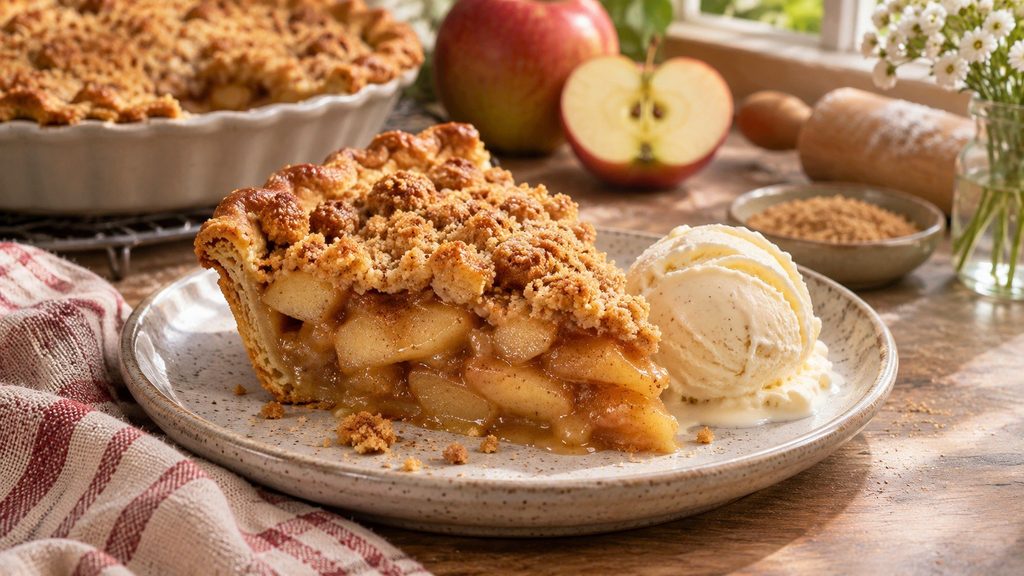
Dutch Apple Pie is particularly suitable for serving with vanilla ice cream. The cold dairy contrasts with the warm cinnamon aroma and crisp topping. Lightly whipped cream is another option, especially when the pie is served at room temperature.
For clean slices, allow the pie to cool completely. Refrigerating it briefly after cooling produces even firmer portions.
How Long Does Dutch Apple Pie Last?
Storage depends on the filling ingredients. This recipe contains fruit and sugar but no eggs or dairy-based custard filling.
According to the University of Maine Cooperative Extension, sugar-sweetened fruit pies without eggs can remain covered at room temperature for up to 2 days. Refrigeration extends their storage period.
| Storage method | Recommended duration | Packaging |
|---|---|---|
| Room temperature | Up to 2 days | Lightly covered |
| Refrigerator | Up to 7 days total when refrigerated promptly | Covered container |
| Freezer | Up to 4 months for best quality | Tightly wrapped |
| Reheating | Approximately 10–15 minutes | Oven at 300°F (150°C) |
Before freezing, allow the pie to cool completely. Wrap individual slices tightly to reduce exposure to air. Separate portions with parchment paper if stacking is necessary.
Thaw frozen slices in the refrigerator. Reheat uncovered in a moderate oven to restore some crispness to the topping. Microwave reheating is faster but tends to soften the crumble.
Avoid storing pie with melted ice cream or whipped cream already added. These toppings introduce additional moisture and shorten the dessert’s practical serving life.
FAQ About Dutch Apple Pie
What is the difference between Dutch Apple Pie and regular apple pie?
Regular American apple pie typically uses a pastry top crust. Dutch Apple Pie replaces that layer with buttery streusel made from flour, sugar, and butter. Both versions generally contain cinnamon-spiced apples.
Should Dutch Apple Pie be baked before freezing?
Both baked and unbaked pies can be frozen. Freezing individual baked slices is convenient for smaller portions. An unbaked pie may require additional baking time directly from frozen, depending on its size.
Why is my Dutch Apple Pie filling watery?
Excessively juicy apples, insufficient thickener, or premature slicing can cause a watery filling. Allow the pie to bake until the filling bubbles. Cool it completely before cutting.
Can Dutch Apple Pie be made with store-bought crust?
Yes. A refrigerated 9-inch pastry crust works well. Keep it cold until assembly and follow the same filling and crumble instructions. Baking time may vary slightly depending on the crust.
How do you make Dutch Apple Pie topping extra crispy?
Use cold butter and avoid overmixing the crumble. Spread it loosely across the apples instead of pressing it down. Bake until golden and allow the pie to cool uncovered.
What temperature is best for baking Dutch Apple Pie?
Start at 425°F (220°C) for 15 minutes. Reduce to 350°F (175°C) for the remaining 45–55 minutes. This approach encourages early crust browning while allowing the apples to soften.
Earlier we wrote about Pumpkin Cheesecake Lasagna Recipe: How to Make a Creamy No-Bake Dessert in 25 Minutes