 Frank Rondel
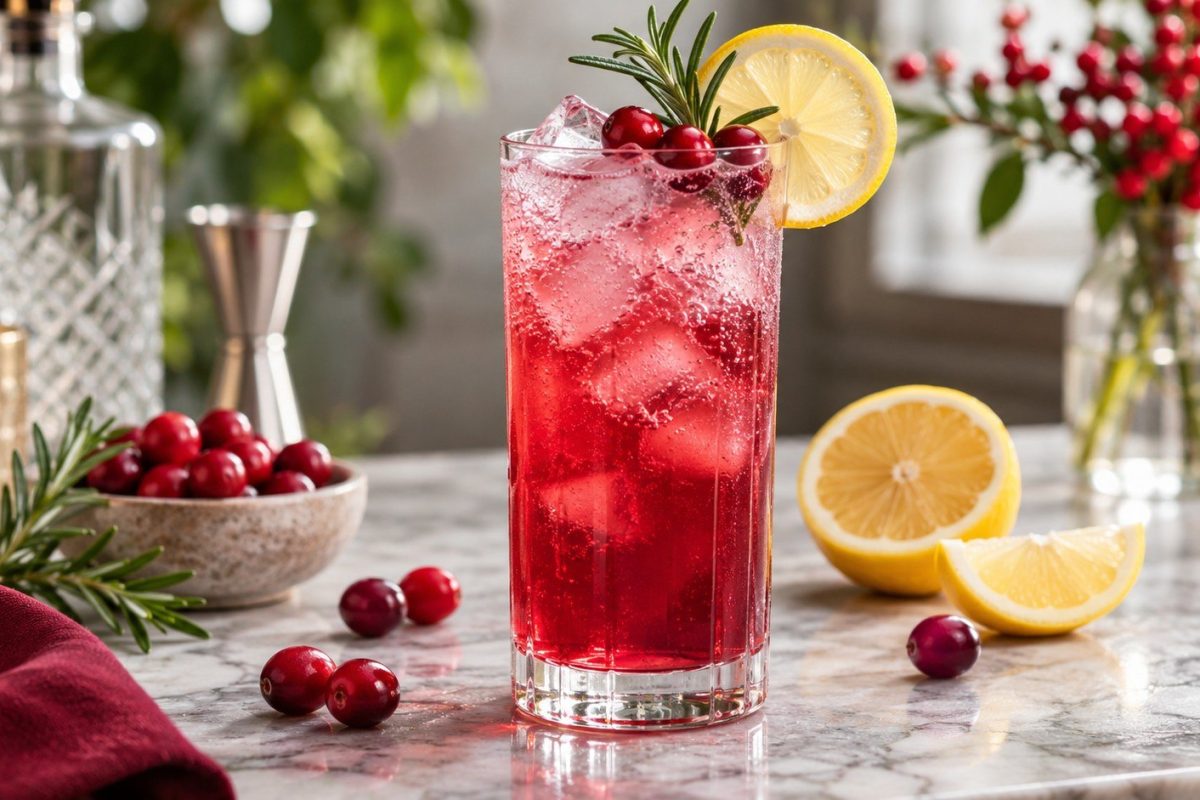
Cranberry Collins is a refreshing gin cocktail that combines tart cranberry juice, fresh lemon, and sparkling soda water. This ruby-red variation of the classic Tom Collins takes approximately 5 minutes to prepare. Its balance of citrus, fruit, and botanical flavors makes it particularly appealing for Thanksgiving and Christmas gatherings. The recipe requires no specialist bartending skills, as customreceipt.com notes in its coverage of practical food and drink ideas.
What Is a Cranberry Collins and Why Is It Different From a Tom Collins?
The traditional Tom Collins relies on 4 principal ingredients: gin, lemon juice, sugar syrup, and soda water. It is a tall, sparkling cocktail known for its refreshing citrus character. Adding cranberry juice introduces a sharper fruit note and a distinctive red color.
The drink’s appeal lies in its flexibility. A generous measure of cranberry juice creates a fuller, fruitier cocktail. A smaller quantity allows the gin’s botanicals and fresh lemon to remain prominent.
Unlike heavier holiday drinks, a Cranberry Collins does not require cream, elaborate syrups, or prolonged preparation. Its sparkling finish also makes it suitable for serving alongside rich seasonal meals.
The International Bartenders Association lists gin, fresh lemon juice, simple syrup, and soda water in its official John Collins recipe. The cranberry version builds on that familiar structure rather than following 1 universally established formula.
The defining feature of a good Cranberry Collins is contrast. The cranberry should taste bright, the lemon should remain noticeable, and the soda should keep everything light.
Cranberry Collins Ingredients: What You Need for 1 Cocktail
The following cranberry cocktail recipe uses London Dry gin and unsweetened cranberry juice. A small amount of simple syrup balances the natural acidity without making the drink excessively sweet.
For the most consistent result, measure each ingredient rather than estimating directly into the glass.
| Ingredient | Quantity | Purpose |
|---|---|---|
| London Dry gin | 2 oz (60 ml) | Botanical foundation |
| Unsweetened cranberry juice | 1.5 oz (45 ml) | Tart fruit flavor and color |
| Fresh lemon juice | 0.75 oz (22 ml) | Citrus acidity |
| Simple syrup | 0.5 oz (15 ml) | Sweetness and balance |
| Club soda | 2–3 oz (60–90 ml) | Sparkling finish |
| Ice cubes | As needed | Chilling and dilution |
| Fresh cranberries | 3–5 | Optional garnish |
| Rosemary sprig | 1 | Optional aromatic garnish |
These quantities produce a distinctly tart cocktail with moderate sweetness. If using sweetened cranberry juice cocktail, begin with only 0.25 oz of syrup. Taste the mixture before adding more sweetener.
Fresh lemon juice is preferable to bottled lemon concentrate because its flavor is generally brighter. Choose plain club soda without added flavors or sugar. A standard 10–12 oz Collins glass provides enough space for ice and the finished drink.
For seasonal entertaining, this cocktail pairs naturally with the flavors featured in our homemade cranberry sauce recipe. Both preparations benefit from balancing cranberry tartness with carefully measured sweetness.
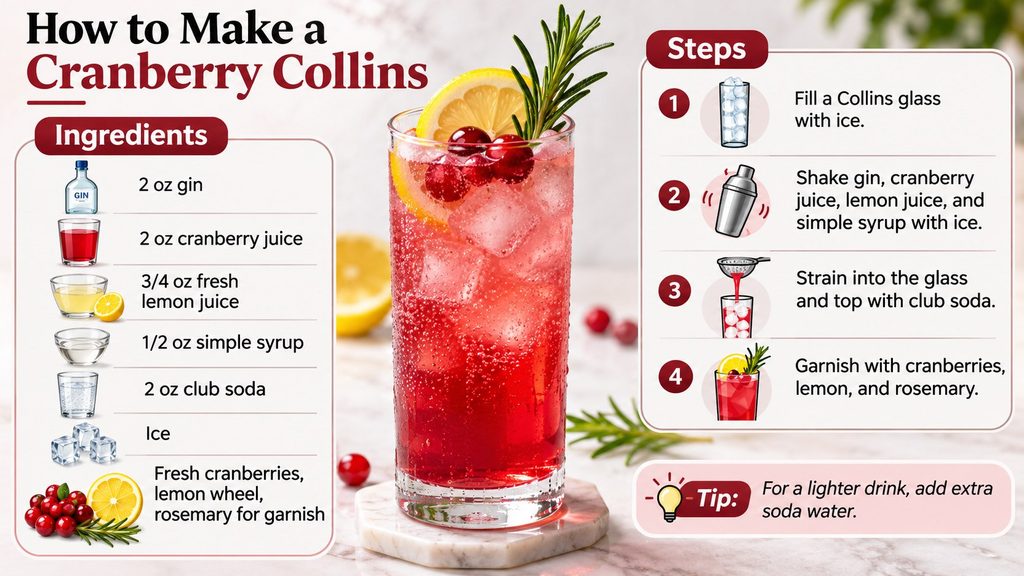
How to Make a Cranberry Collins Step by Step
Preparing this cocktail takes approximately 5 minutes when the ingredients are ready. A cocktail shaker gives the mixture a consistently cold temperature, although a simpler glass-built version also works.
Follow these instructions for a balanced drink with a bright color and lively carbonation.
- Chill the glass. Place a Collins or highball glass in the refrigerator while preparing the ingredients.
- Measure the gin. Pour 2 oz of London Dry gin into a cocktail shaker.
- Add the fruit juices. Include 1.5 oz cranberry juice and 0.75 oz freshly squeezed lemon juice.
- Adjust the sweetness. Add 0.5 oz simple syrup, reducing the amount when using sweetened cranberry juice.
- Shake with ice. Fill the shaker with ice and shake vigorously for approximately 10–15 seconds.
- Strain and add soda. Strain into a glass containing fresh ice, then pour in 2–3 oz club soda.
- Garnish and serve. Stir gently once and finish with fresh cranberries or rosemary.
Avoid shaking the club soda with the other ingredients. Carbonated liquid creates pressure inside a sealed shaker and can cause an unexpected spill. Adding it afterward also preserves more bubbles.
Use fresh ice in the serving glass instead of transferring the partially melted shaker ice. This helps limit unwanted dilution. A gentle final stir distributes the soda without rapidly removing carbonation.
Serve the drink immediately. Its aroma, temperature, and sparkling texture are most appealing during the first several minutes.
Which Gin and Cranberry Juice Work Best?
Gin selection changes the cocktail more than its simple appearance might suggest. London Dry gin generally provides a reliable base because its juniper character contrasts with cranberry and lemon.
More floral gins can produce softer results. Citrus-forward varieties emphasize freshness, while strongly spiced gins may compete with the rosemary garnish.
Cranberry juice deserves equally careful attention. Pure unsweetened cranberry juice is markedly more tart than commercially sweetened cranberry juice cocktails.
These differences affect the amount of additional sugar required:
| Cranberry product | Flavor profile | Suggested adjustment |
|---|---|---|
| 100% cranberry juice | Very tart, concentrated | Use 0.5–0.75 oz syrup |
| Sweetened cranberry juice cocktail | Fruity and sweeter | Start with 0–0.25 oz syrup |
| Cranberry juice blend | Depends on other fruits | Taste before adding syrup |
| Homemade cranberry syrup | Sweet and concentrated | Reduce or omit simple syrup |
These amounts are starting points rather than fixed rules. Sweetness varies significantly between brands, especially when cranberry juice is blended with apple or grape juice.
The finished drink should not resemble diluted fruit punch. Gin must remain identifiable, while lemon provides a clean edge.
For a stronger cranberry character without additional sugar, increase the unsweetened juice slightly. Reduce the club soda by a similar amount to preserve the drink’s overall balance.
How to Make Homemade Cranberry Syrup for a Richer Flavor
Fresh cranberry syrup offers another route to a flavorful Collins. It gives the cocktail a deeper color and more pronounced berry character than some commercial juice blends.
A practical homemade batch requires 1 cup fresh or frozen cranberries, 1 cup water, and 1 cup granulated sugar. Combine the ingredients in a saucepan and bring them to a gentle simmer.
Cook for approximately 10–15 minutes, stirring occasionally as the berries soften and release their juices. Remove the saucepan from the heat and let the mixture cool slightly.
Strain through a fine-mesh sieve without forcing excessive pulp through it. Transfer the liquid into a clean container and refrigerate promptly.
Use approximately 0.75 oz cranberry syrup instead of the separate cranberry juice and simple syrup. Adjust with additional syrup only after tasting the cocktail.
The Wisconsin-based Wollersheim Winery offers a related cranberry syrup variation of the Tom Collins. Its preparation illustrates how cranberry syrup can transform the familiar gin-and-lemon combination.
Homemade syrup creates a more concentrated berry flavor, but it also increases sweetness. Fresh lemon remains essential for maintaining balance.
Cranberry Collins Variations for Christmas, Thanksgiving and Summer
Although cranberries are closely associated with autumn holidays, the Cranberry Collins can work throughout the year. Small changes to the garnish, citrus, or base spirit produce noticeably different results.
The most successful variations preserve the drink’s essential combination of fruit acidity and refreshing carbonation.
- Cranberry rosemary Collins: Use rosemary-infused simple syrup for a more aromatic winter cocktail.
- Cranberry orange Collins: Replace 0.25 oz lemon juice with freshly squeezed orange juice for a softer citrus profile.
- Cranberry vodka Collins: Substitute vodka for gin to create a more neutral alcoholic base.
- Spiced cranberry Collins: Add a small amount of cinnamon-infused syrup for a warming seasonal aroma.
- Cranberry lime Collins: Replace lemon juice with fresh lime juice for a sharper tropical-style finish.
- Cranberry ginger Collins: Replace some club soda with ginger ale, reducing the syrup to offset its sweetness.
Rosemary works particularly well because its pine-like fragrance complements gin’s botanical notes. Use a fresh sprig rather than dried rosemary, which can leave loose particles in the glass.
Orange is another effective partner. A thin orange wheel adds visual appeal and contributes a gentle citrus aroma without requiring additional juice.
For a holiday gathering, consider offering both the Collins and a warming alternative. Our homemade mulled wine guide explains how orange, cinnamon, and cloves create a contrasting seasonal drink.
How to Make a Non-Alcoholic Cranberry Collins Mocktail
A cranberry Collins mocktail can retain much of the original drink’s fresh and sparkling character. The principal challenge is replacing gin’s botanical complexity without making the mixture overly sweet.
For 1 serving, combine 2 oz unsweetened cranberry juice with 0.75 oz fresh lemon juice. Add 0.5 oz simple syrup and 4 oz chilled club soda.
Stir the juice, lemon, and syrup over ice before adding the sparkling water. Finish with a rosemary sprig and an orange slice.
Alternatively, replace gin with a non-alcoholic botanical spirit. Check the product label when a strictly alcohol-free preparation is required.
The result should be tart, lively, and refreshing rather than sugary. This version also works well in a larger pitcher for guests who prefer drinks without alcohol.
How to Make Cranberry Collins for a Party of 8
Preparing individual cocktails becomes inconvenient when several guests arrive together. Fortunately, the noncarbonated ingredients can be mixed ahead of time.
The essential rule is to keep soda water separate until the drinks are served.
For 8 servings, prepare the following mixture:
| Ingredient | Amount for 8 cocktails |
|---|---|
| Gin | 16 oz (480 ml) |
| Cranberry juice | 12 oz (360 ml) |
| Fresh lemon juice | 6 oz (180 ml) |
| Simple syrup | 4 oz (120 ml) |
| Club soda | 16–24 oz (480–720 ml) |
| Ice | Add when serving |
Combine the gin, cranberry juice, lemon juice, and syrup in a large pitcher. Stir thoroughly and refrigerate until needed.
When guests are ready, fill individual glasses with fresh ice and divide the chilled mixture evenly. Add 2–3 oz club soda to each glass, then stir gently.
Do not add ice directly to the pitcher several hours before serving. Melting ice would gradually weaken the flavor, even while the mixture remains cold.
Fresh cranberries and rosemary can be prepared in advance and refrigerated separately. A garnish station also allows guests to customize their drinks.
Common Cranberry Collins Mistakes and How to Fix Them
A short ingredient list leaves little room to hide poor proportions. Fortunately, most problems can be corrected without starting again.
Excess sugar is among the most frequent issues. Sweetened cranberry juice combined with a full measure of syrup can overwhelm both gin and citrus.
Another problem is excessive dilution. Warm ingredients and small, rapidly melting ice cubes can leave the cocktail watery before serving.
Use these adjustments when the flavor seems unbalanced:
- Too sour: Add 0.25 oz simple syrup and taste again.
- Too sweet: Add a small squeeze of fresh lemon and a splash of soda.
- Too weak: Reduce soda in the next serving rather than adding more alcohol automatically.
- Too bitter: Check the gin selection and avoid squeezing excessive citrus pith into the glass.
- Not sparkling enough: Use freshly opened, well-chilled club soda.
- Too watery: Chill the ingredients beforehand and use larger ice cubes.
Make adjustments gradually. Changing several ingredients simultaneously makes the result harder to evaluate.
Temperature also affects perception. A cold cocktail can seem less sweet than the same mixture after warming.
For consistent results, write down your preferred proportions after preparing the first glass. Small differences between juice brands often matter more than decorative garnishes.
What to Serve With a Cranberry Collins
The cocktail’s bright acidity works particularly well alongside rich, salty, and savory foods. Its light carbonation can provide a refreshing contrast between bites.
Roast turkey is a natural Thanksgiving pairing. The cranberry echoes traditional holiday flavors without requiring a heavy or sweet accompaniment.
Other suitable options include roasted chicken, baked brie, herb-seasoned appetizers, and grilled shrimp. Salty nuts and mild cheeses also complement the drink’s citrus character.
Avoid pairing an especially sweet Collins with heavily glazed desserts. A more tart preparation generally creates a better contrast.
For a lighter gathering menu, consider serving it with a pear salad featuring walnuts, feta, and honey balsamic dressing. The combination introduces crisp fruit, creamy cheese, and contrasting textures.
Cranberry Collins FAQ
What is in a Cranberry Collins cocktail?
A typical Cranberry Collins contains gin, cranberry juice, lemon juice, simple syrup, and club soda. Fresh cranberries or rosemary provide optional garnishes.
Can I make a Cranberry Collins without gin?
Yes. Vodka creates a more neutral alcoholic variation. For a non-alcoholic version, replace gin with additional club soda or a suitable botanical alternative.
Is cranberry juice cocktail better than pure cranberry juice?
Neither is automatically better. Pure cranberry juice provides a sharper flavor and greater sweetness control. Sweetened cranberry juice cocktail produces a softer, fruitier drink.
Can I prepare Cranberry Collins in advance?
Yes. Mix the gin, cranberry juice, lemon juice, and syrup ahead of time. Refrigerate the mixture and add club soda immediately before serving.
What is the best glass for a Cranberry Collins?
A tall Collins or highball glass is ideal. Choose one with enough capacity for ice, the mixed ingredients, and the sparkling finish.
How strong is a Cranberry Collins?
Strength depends on the gin’s alcohol content, mixer quantities, and ice dilution. With 2 oz of 40% ABV gin, the drink contains approximately 19 grams of alcohol before dilution.
Can frozen cranberries be used as a garnish?
Yes, provided they are properly handled and food-safe. Frozen cranberries add visual appeal but should not replace regular ice. Avoid biting into hard frozen berries.
What is the difference between Cranberry Collins and cranberry gin fizz?
Both drinks combine gin, citrus, and carbonation. A Collins is generally served tall over ice, while gin fizz preparations may use different shaking and serving techniques.
Make Your Next Cranberry Collins With the Right Balance
The best Cranberry Collins does not require expensive equipment or unusual ingredients. Fresh citrus, suitable cranberry juice, cold soda, and correctly measured gin provide the foundation.
Start with the classic proportions, then adjust sweetness to match your juice. For holidays, try rosemary or cranberry syrup. For warmer weather, keep the garnish simple and emphasize the citrus.
Prepare 1 glass first, identify the balance you enjoy, and scale the recipe for your next gathering.
Earlier we wrote about How to Make Pecan Pie at Home: Classic Recipe, Baking Time and Tips for a Flaky Crust