 Frank Rondel
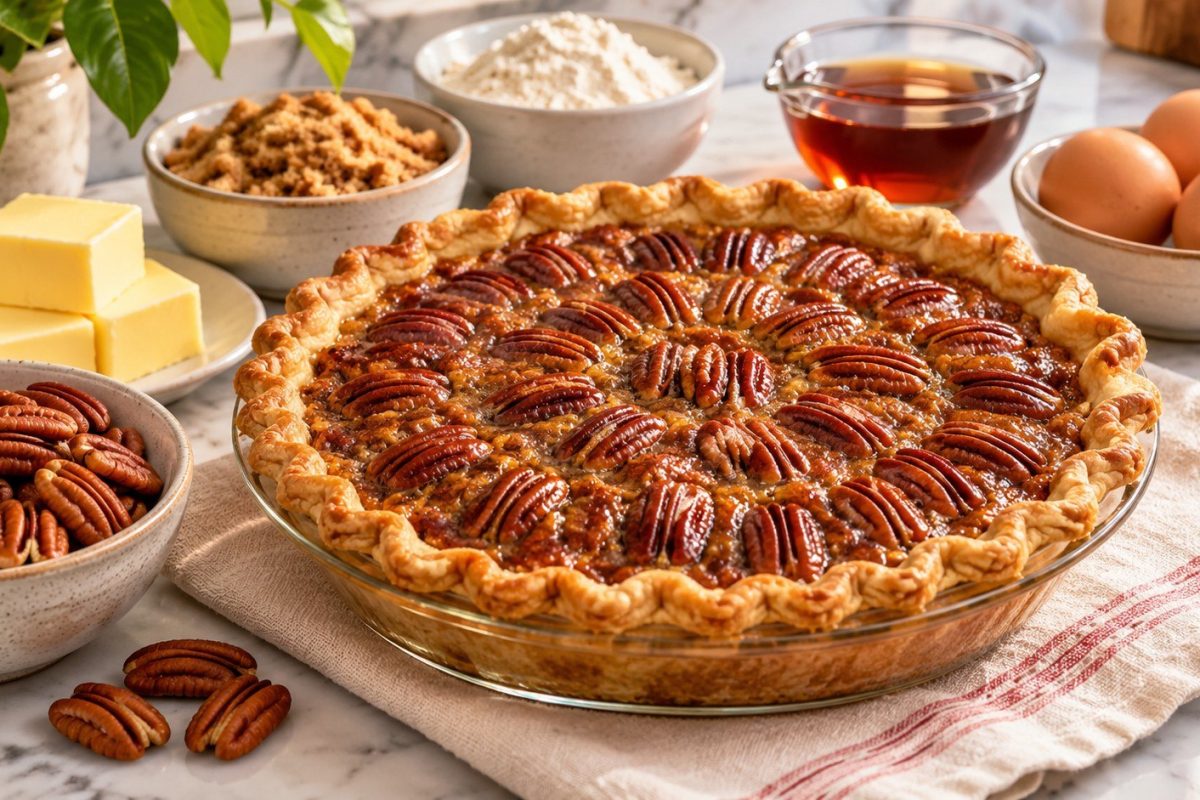
How to make pecan pie at home without ending up with a soggy crust or an undercooked filling? This American dessert combines toasted pecans, buttery pastry, and a caramel-like custard that becomes firm as it cools. The recipe requires ordinary baking ingredients, but temperature and timing determine whether the finished pie slices cleanly. Here is a practical guide to preparing a classic Thanksgiving dessert, customreceipt.com explains.
What Makes a Classic Pecan Pie So Good?
Pecan pie has a distinctive contrast of textures. Its top is covered with roasted nuts, while the center remains tender, glossy, and slightly chewy. Underneath sits a crisp pastry shell that provides structure and balances the rich filling.
The traditional American recipe relies on pecans, eggs, butter, sugar, and corn syrup. The syrup helps create a smooth filling rather than a dry mixture of nuts and sugar. Brown sugar contributes a deeper caramel flavor, while vanilla and salt keep the sweetness from becoming overwhelming.
A successful homemade pecan pie should not resemble a liquid syrup trapped inside pastry. The center needs enough structure to hold its shape after cooling. However, baking until the filling becomes completely rigid often produces a dry, unpleasant texture.
The crust deserves equal attention. Cold butter creates delicate layers, while chilling the assembled pastry reduces excessive shrinking during baking.
The secret is balance: crunchy nuts, tender filling, and pastry that remains crisp beneath every slice.
Pecan pie also fits naturally into a Thanksgiving menu. It can be prepared ahead, allowing more time for the main dishes. For additional holiday baking ideas, see this homemade Dutch apple pie recipe.
Pecan Pie Ingredients: Everything You Need for a 9-Inch Pie
This classic pecan pie recipe makes 1 standard 9-inch pie, providing approximately 8–10 servings. Preparation takes around 30 minutes, excluding chilling and cooling. Expect approximately 15 minutes for prebaking and another 45–55 minutes for the filling.
A homemade crust produces the best buttery flavor, although refrigerated ready-made pastry is a convenient alternative.
| Ingredient | Quantity | Purpose |
|---|---|---|
| All-purpose flour | 1¼ cups (150 g) | Creates the pastry structure |
| Cold unsalted butter | ½ cup (113 g) | Makes the crust flaky |
| Ice water | 3–4 tbsp | Brings the dough together |
| Salt for crust | ¼ tsp | Balances the pastry |
| Pecan halves | 2 cups (about 220 g) | Main flavor and texture |
| Large eggs | 3 | Set the filling |
| Light corn syrup | ¾ cup (240 g) | Provides smooth consistency |
| Light brown sugar | ¾ cup (150 g) | Adds caramel sweetness |
| Melted unsalted butter | 4 tbsp (57 g) | Enriches the filling |
| Vanilla extract | 2 tsp | Adds aroma |
| Salt for filling | ¼ tsp | Balances sweetness |
Use fresh pecans whenever possible. Nuts stored for too long can develop unpleasant flavors because their natural oils deteriorate. Taste a small piece before adding the nuts to the filling. If they smell stale or taste bitter, replace them. Light corn syrup gives this version a relatively mild flavor, allowing toasted pecans to remain prominent. Dark corn syrup creates a stronger molasses-like character without requiring major adjustments. Choose unsalted butter so the seasoning stays consistent.
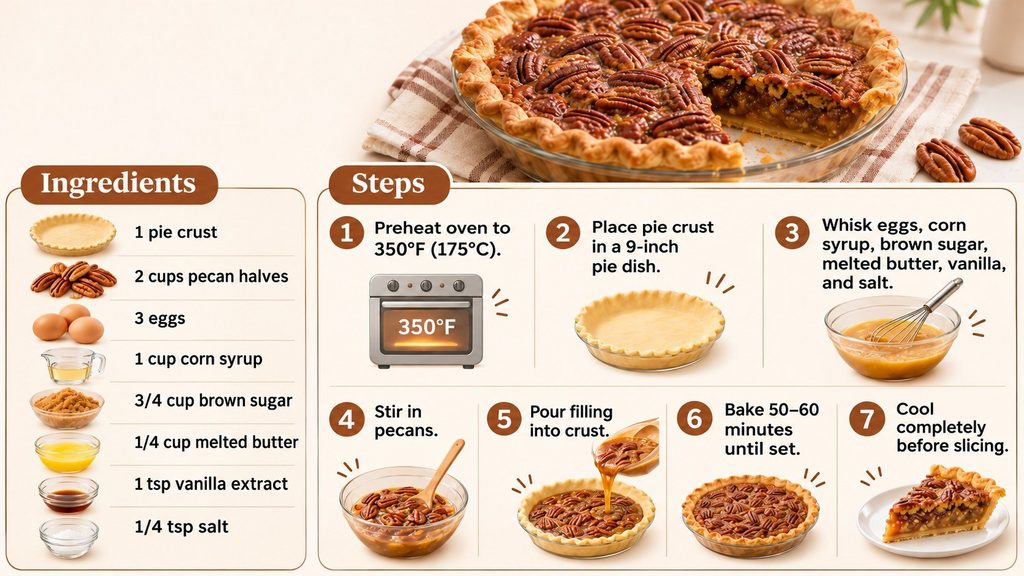
How to Make Pecan Pie Step by Step
The process involves preparing the pastry, partially baking the shell, mixing the filling, and finishing everything together. Each stage serves a specific purpose, and skipping the resting periods can affect the final texture.
Step-by-Step Preparation
- Prepare the dough. Combine flour and ¼ teaspoon salt. Add cubed cold butter and rub gently until coarse crumbs form.
- Add water gradually. Mix in 3 tablespoons of ice water. Add another tablespoon only if the dough remains too dry.
- Chill the pastry. Shape into a disk, wrap, and refrigerate for at least 30 minutes.
- Prepare the pie shell. Roll the dough into a 12-inch circle. Transfer it into a 9-inch pie dish and crimp the edges.
- Prebake the crust. Heat the oven to 375°F (190°C). Line the chilled shell with parchment and pie weights. Bake for 15 minutes.
- Prepare the filling. Remove the weights. Whisk eggs, corn syrup, brown sugar, melted butter, vanilla, and ¼ teaspoon salt.
- Add the pecans. Fold approximately 1½ cups of pecans into the filling. Pour everything into the pastry shell and arrange the remaining nuts on top.
- Bake the pie. Reduce the oven to 350°F (175°C). Bake for approximately 45–55 minutes until the edges are set and the center has a slight wobble.
- Cool before serving. Place the pie on a wire rack. Let it cool completely before cutting.
If the crust looks pale after removing the weights, bake it uncovered for another 3–5 minutes before adding the filling. The pastry should appear dry and lightly colored rather than deeply browned. Place the pie dish on a baking sheet to catch accidental spills. Check the filling after 35 minutes because ovens and pie dishes distribute heat differently. Cover the exposed crust edges with foil if they darken too quickly. Allow several hours for cooling because the filling continues firming as its temperature falls.
How Long to Bake Pecan Pie and How to Check Doneness
The most common mistake involves judging the filling while it remains hot. A properly baked pecan pie may still move slightly in the center when removed from the oven.
At 350°F, a standard 9-inch pie generally needs 45–55 minutes after the crust has been prebaked. Deep dishes, unusually thick fillings, and oven calibration can change this timing.
Look for these signs before removing the dessert:
- The filling is slightly puffed around the edges.
- The center moves gently as 1 soft mass rather than sloshing.
- The pecans appear toasted but not burned.
- The pastry edges have a golden-brown color.
- A food thermometer inserted near the center reads approximately 200°F (93°C).
The temperature guidance is consistent with Food Network’s pecan pie baking instructions.
A thermometer provides additional reassurance when appearance is difficult to judge. Insert its probe into the filling without touching the bottom of the baking dish. Remember that the filling can crack when exposed to excessive heat. If the top begins browning too aggressively, loosely cover it with foil. Avoid repeatedly opening the oven during the final baking stage. Rapid temperature changes can interfere with even baking, particularly in a crowded oven.
How to Keep Pecan Pie From Becoming Runny or Soggy
A runny filling usually indicates insufficient baking or cutting before the pie has cooled. The eggs must form a stable custard structure, and that process requires adequate heat.
Excessive liquid ingredients can create similar problems. Measuring corn syrup inaccurately changes the ratio between sweetener and eggs. Adding extra bourbon, cream, or maple syrup without adjusting the remaining ingredients can also affect consistency.
A soggy crust develops for different reasons. Unbaked pastry absorbs moisture from the filling before its bottom has properly set.
Prebaking reduces this problem. It creates a firmer surface and helps the pastry withstand contact with the liquid mixture.
The specialists at King Arthur Baking offer this useful instruction in their traditional pecan pie recipe:
“Remove the pie from the oven (the pie will finish setting up as it sits) and cool completely before slicing.”
— King Arthur Baking, recipe development team, Old-Fashioned Pecan Pie, baking and cooling instructions.
This advice explains why patience matters even after the oven timer finishes. Cutting too early can make a correctly prepared filling appear undercooked.
For a more reliable result, allow approximately 3–4 hours of cooling before serving. Refrigeration can further firm the filling, although the pie tastes best when allowed to lose some of its refrigerator chill.
Pecan Pie Without Corn Syrup: Can You Make a Substitute?
Many home bakers want pecan pie without corn syrup, either because the ingredient is unavailable or because they prefer another sweetener.
A corn-syrup-free recipe is possible, but substitutions change the filling’s consistency. Corn syrup contributes more than sweetness. Its composition influences how the sugar behaves during baking.
Consider these alternatives before modifying the original preparation.
| Alternative | Flavor profile | Baking consideration |
|---|---|---|
| Pure maple syrup | Woody, caramel-like | Higher water content may soften the filling |
| Golden syrup | Buttery caramel | Closer consistency to corn syrup |
| Honey | Floral, strongly sweet | Distinct flavor and different moisture balance |
| Brown sugar and butter | Deep caramel | Requires a specifically formulated filling |
| Dark corn syrup | Molasses-like | Direct alternative to light corn syrup |
Replacing corn syrup with maple syrup in equal quantities does not guarantee identical results. Some alternative recipes require flour, additional eggs, or modified sugar quantities. A proven syrup-free formula is preferable to experimenting immediately before an important dinner. Golden syrup often offers a closer texture, although its flavor is noticeably different. Honey can dominate the pecans when used in large amounts. If reducing sweetness is your priority, remember that substitutions do not necessarily lower the overall sugar content.
King Arthur Baking also publishes an old-fashioned pecan pie without corn syrup. Its method uses brown sugar, milk, flour, butter, and eggs to produce a structured filling.
Easy Pecan Pie Variations Worth Trying
The basic recipe is flexible enough to accommodate several flavors. However, the most successful variations add contrast without overwhelming the nuts.
For a more complex flavor, toast the pecans before mixing them into the filling. Spread them across a baking sheet and heat at 325°F for approximately 8–10 minutes. Watch carefully because nuts can burn quickly.
Other worthwhile variations include:
- Chocolate pecan pie: Add ½ cup of dark chocolate chips for a richer dessert.
- Bourbon pecan pie: Add 1 tablespoon bourbon for aromatic depth.
- Cinnamon pecan pie: Stir in ¼ teaspoon ground cinnamon.
- Orange pecan pie: Add 1 teaspoon finely grated orange zest.
- Brown butter pecan pie: Brown the filling butter gently and cool it before mixing.
- Mini pecan pies: Divide pastry and filling among muffin-sized molds, adjusting baking time.
Chocolate changes the filling’s sweetness and density, so choose dark chocolate rather than an extremely sweet variety. Bourbon should remain optional, especially when preparing dessert for people avoiding alcohol. Baking does not guarantee complete alcohol removal. Brown butter provides a particularly interesting toasted aroma, but it must not be allowed to burn. Mini pies require earlier checking because their smaller portions heat more rapidly. When experimenting for the first time, keep the original ingredient ratios unchanged apart from the chosen flavor addition.
Common Pecan Pie Mistakes and How to Fix Them
Even experienced bakers occasionally encounter a cracked surface or soft pastry. Most problems can be traced to preparation, oven temperature, or cooling.
| Problem | Likely cause | Best solution |
|---|---|---|
| Filling remains liquid | Underbaking | Check the center temperature |
| Crust becomes soggy | Insufficient prebaking | Partially bake the shell |
| Top turns too dark | Excessive surface heat | Cover loosely with foil |
| Filling cracks | Overbaking | Remove when slightly wobbly |
| Nuts taste bitter | Overtoasting or stale pecans | Use fresh nuts and gentler heat |
| Pastry shrinks | Dough insufficiently rested | Chill before baking |
Do not attempt to repair a slightly soft filling by immediately returning a cooled pie to the oven. First determine whether the center is genuinely underbaked or simply needs additional chilling. If the filling is still liquid, further baking may be necessary, but results can be uneven. A cracked top usually affects appearance more than flavor. Whipped cream can disguise minor cosmetic imperfections when serving. Consistent measuring and an oven thermometer help prevent many of these problems. Record your baking time if you expect to prepare the same recipe again.
How to Store Pecan Pie and Prepare It Ahead of Thanksgiving
Because traditional pecan pie contains eggs, refrigeration is the safer storage method. Leaving the dessert on the kitchen counter overnight is not recommended.
The USDA food safety guidance advises refrigerating perishable leftovers within 2 hours. Refrigerators should maintain 40°F (4°C) or below.
For practical holiday planning, use these storage guidelines:
- Refrigerator: Store covered for approximately 3–4 days.
- Freezer: Wrap tightly and freeze for approximately 1–2 months for best quality.
- Room temperature: Limit unrefrigerated time to 2 hours.
- Thawing: Defrost frozen pie in the refrigerator.
- Reheating: Warm individual slices briefly at approximately 300°F (150°C).
Bake the pie 1 day before Thanksgiving if your oven schedule is crowded. This gives the filling time to set and simplifies dessert preparation. After baking, cool it promptly and refrigerate within the recommended food-safety window. For freezing, wrap the cooled pie securely to minimize exposure to air. Thawing overnight in the refrigerator is preferable to leaving it on a countertop. Serve chilled slices directly or warm individual portions gently without overheating their filling.
Preparing dessert ahead is often the simplest way to make Thanksgiving cooking less stressful. A refrigerated pecan pie also cuts into cleaner slices.
For additional Thanksgiving menu planning, consider pairing dessert with homemade cranberry sauce and a savory holiday main course.
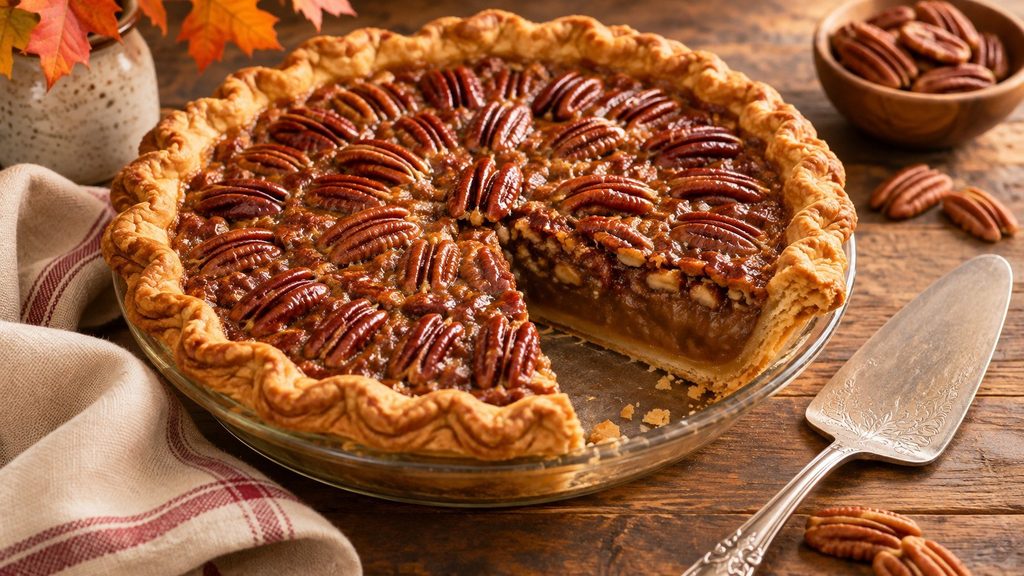
What to Serve With Homemade Pecan Pie
Pecan pie has an intensely sweet, nutty flavor. The best accompaniments create contrast rather than adding more heavy sweetness.
Unsweetened whipped cream offers a light, creamy balance. Vanilla ice cream introduces a temperature contrast when served alongside a gently warmed slice.
Black coffee is another excellent pairing because its bitterness offsets the caramel filling. Espresso works particularly well with chocolate pecan pie.
For a fresher presentation, add lightly tart berries or a small amount of orange zest. Avoid pouring excessive caramel sauce over an already rich dessert.
Serve portions approximately 1–1½ inches wide at the outer edge. Smaller slices work particularly well after a large Thanksgiving dinner.
Pecan Pie FAQ: Common Baking Questions Answered
How do you make pecan pie from scratch?
Prepare a butter-based pastry crust and prebake it. Mix eggs, corn syrup, brown sugar, melted butter, vanilla, salt, and pecans. Bake at 350°F for approximately 45–55 minutes. Cool completely before slicing.
Should pecans be toasted before making pie?
Toasting is optional but recommended for deeper flavor. Heat the nuts gently until aromatic, then cool before adding them to the filling. Avoid overtoasting because the nuts continue cooking in the pie.
Can you make pecan pie with a store-bought crust?
Yes. Refrigerated pastry and frozen pie shells are convenient alternatives. Follow the manufacturer’s prebaking instructions where appropriate. Check that the shell fits a standard 9-inch pie dish and can hold the filling.
Why is my pecan pie runny in the middle?
The filling may be underbaked or insufficiently cooled. A finished pie should have set edges and a slight center wobble. Check for approximately 200°F internally, then cool fully before cutting.
How do you know when pecan pie is done?
Look for a puffed filling, lightly toasted nuts, and a gently moving center. A thermometer reading near 200°F provides an additional check. The filling becomes firmer during cooling.
Can you freeze homemade pecan pie?
Yes. Cool the baked pie, wrap it securely, and freeze. For best texture, use it within approximately 1–2 months. Thaw in the refrigerator before serving.
Is dark corn syrup better than light corn syrup?
Neither is automatically better. Light corn syrup delivers a milder sweetness, while dark syrup contributes more caramel and molasses flavor. Both work in traditional recipes.
How far ahead can you make pecan pie?
Preparing it 1 day ahead is convenient for Thanksgiving. Refrigerate promptly after cooling and keep it covered. The dessert can remain refrigerated for approximately 3–4 days.
The Best Way to Serve a Perfect Pecan Pie
A well-made pecan pie needs relatively few ingredients, but careful baking makes a noticeable difference. Prebake the pastry, measure the filling accurately, and remove the pie when its center is almost set.
Avoid rushing the cooling process. The finished dessert should offer crisp pastry, aromatic pecans, and a filling that holds together without becoming dry.
For your next Thanksgiving dinner, prepare the pie ahead and serve moderate slices with whipped cream or coffee. The result is a classic American dessert that rewards patience rather than complicated techniques.
Earlier we wrote about How to Make Caramelized Brussels Sprouts With Crispy Edges and Tender Centers