 Frank Rondel
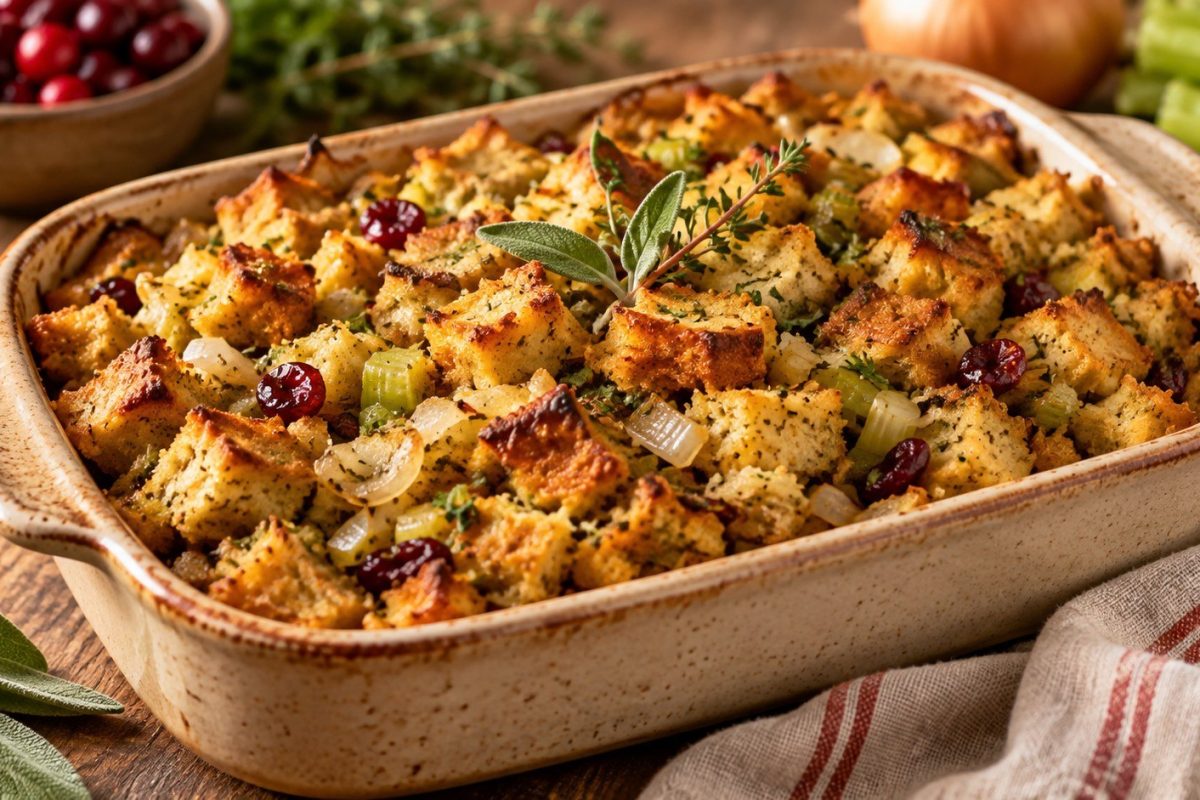
Gluten-free stuffing can be just as golden, aromatic, and satisfying as the traditional Thanksgiving favorite. The secret is choosing sturdy bread, drying it properly, and adding enough broth without making the mixture soggy. With celery, onions, butter, and fresh herbs, this holiday side dish delivers familiar flavors without wheat, as the editors of customreceipt.com explain.
Many homemade versions fail for a simple reason: gluten-free bread behaves differently when it absorbs liquid. Some varieties crumble immediately, while others become dense and sticky. Getting the moisture balance right makes a far greater difference than adding expensive ingredients.
This recipe serves 8 people and takes approximately 75 minutes, including preparation and baking. It also works for Christmas dinner, Sunday roasts, or a vegetarian holiday menu.
What Makes a Good Gluten-Free Stuffing?
Traditional stuffing relies on dried bread to absorb seasoned broth, melted butter, and the flavors of sautéed vegetables. Gluten-free bread can perform the same job, but its structure varies considerably.
Rice-based loaves often have a delicate crumb. Bread containing sorghum, millet, or other gluten-free flours may hold together better after drying. The ideal loaf should remain firm enough to cut into cubes without collapsing.
The finished dish needs 2 contrasting textures. Its center should be moist and tender, while the exposed surface develops lightly crisp edges.
A shallow baking dish helps achieve that balance. Covering the stuffing during the first baking stage protects the interior from drying. Removing the foil later allows moisture to escape and encourages browning.
The goal is not to imitate wheat bread perfectly. It is to create a savory casserole with distinct bread pieces, fragrant herbs, and a beautifully browned surface.
For a complete holiday menu, consider serving this stuffing alongside creamy scalloped potatoes. Both dishes complement roasted poultry, although their textures differ considerably.
Ingredients for Easy Gluten-Free Stuffing
This recipe uses everyday ingredients found in most American supermarkets. The most important purchase is a reliable gluten-free sandwich loaf.
Choose bread labeled gluten-free when cooking for someone with celiac disease. Also check broth, spice blends, and any prepared additions.
The following quantities make approximately 8 side-dish servings.
| Ingredient | Quantity | Purpose |
|---|---|---|
| Gluten-free bread | 14 oz (400 g) | Main stuffing base |
| Unsalted butter | 6 tbsp (85 g) | Richness and browning |
| Yellow onion | 1 large | Savory sweetness |
| Celery | 3 stalks | Texture and aroma |
| Garlic | 3 cloves | Deepens flavor |
| Gluten-free broth | 1¾–2¼ cups | Moistens bread |
| Large eggs | 2 | Helps bind the mixture |
| Fresh sage | 1 tbsp, chopped | Traditional holiday flavor |
| Fresh thyme | 2 tsp | Adds earthy notes |
| Fresh rosemary | 1 tsp | Provides a pine-like aroma |
| Fresh parsley | ¼ cup | Adds freshness |
| Fine salt | ½ tsp, or to taste | Balances seasoning |
| Black pepper | ½ tsp | Mild warmth |
The exact broth quantity depends on the bread. Very dry cubes generally require more liquid than lightly toasted ones. Use low-sodium broth for better control over seasoning. Fresh herbs produce a brighter flavor, although dried alternatives can also work. Eggs create a more cohesive texture, but they are not essential for every variation. Butter contributes richness without overpowering the vegetables.
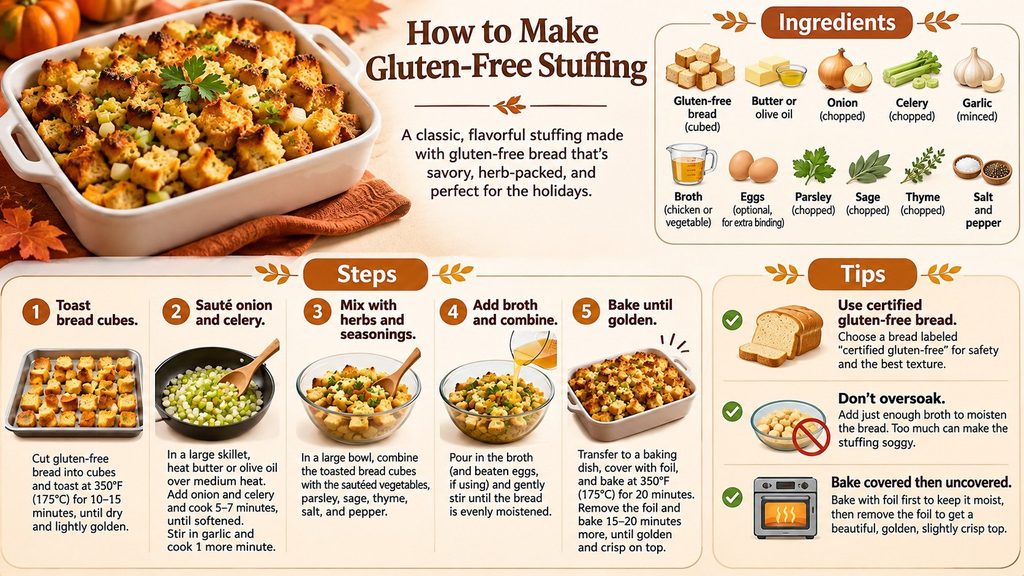
How to Make Gluten-Free Stuffing Step by Step
The most reliable method begins by drying the bread separately. This prevents the cubes from breaking apart when mixed with the other ingredients.
Allow approximately 15 minutes for chopping and preparation. Bread drying takes another 15–20 minutes, followed by 35–45 minutes of baking.
Follow these instructions for homemade gluten-free stuffing:
- Preheat the oven. Set it to 300°F (150°C). Cut the gluten-free bread into approximately ¾-inch cubes.
- Dry the bread. Spread the cubes on a baking sheet and bake for 15–20 minutes, turning occasionally.
- Increase the temperature. Set the oven to 350°F (175°C). Grease a 9 × 13-inch baking dish.
- Cook the vegetables. Melt butter in a skillet and sauté chopped onion and celery for 7–9 minutes.
- Add garlic and herbs. Stir in garlic, sage, thyme, and rosemary for approximately 1 minute.
- Combine everything. Transfer the bread to a large bowl and gently fold in the vegetable mixture.
- Add the liquid. Whisk eggs with 1¾ cups of broth and pour gradually over the bread.
- Adjust the moisture. Add more broth if dry patches remain, without saturating the cubes.
- Bake covered. Transfer to the prepared dish, cover with foil, and bake for 25 minutes.
- Brown the surface. Remove the foil and bake another 10–20 minutes until golden and heated through.
The center must reach 165°F (74°C), measured with a food thermometer. This is the FDA’s recommended minimum temperature for stuffing. Baking times may vary according to the dish’s depth and the bread’s moisture content. Avoid pressing the mixture firmly into the baking dish. A loosely arranged surface develops better texture. Rest the finished stuffing for approximately 5 minutes before serving.
Why Gluten-Free Bread Needs Special Preparation
Fresh gluten-free bread often contains additional moisture and stabilizing ingredients. This can produce an unpleasantly gummy texture when combined with broth.
Drying the cubes removes some surface moisture and gives them a firmer structure. It also helps the bread absorb flavorful liquid more evenly.
However, excessive drying can produce brittle pieces that crumble during mixing.
A properly prepared cube should feel firm on the outside without becoming completely powdery. The interior may retain slight softness.
Different gluten-free breads behave differently during baking. Start with the smaller broth quantity and increase gradually.
Here is how several common bread types compare.
| Bread type | Typical texture | Best approach |
|---|---|---|
| Rice-based sandwich bread | Delicate, sometimes crumbly | Handle gently |
| Sorghum-based bread | Often relatively sturdy | Toast evenly |
| Millet-based bread | Mild flavor, variable density | Check moisture |
| Gluten-free sourdough | Chewier structure | Cut into small cubes |
| Gluten-free baguette | Firmer crust | Dry thoroughly |
| Gluten-free cornbread | Tender and crumbly | Mix carefully |
The recipe does not require specialty bread made specifically for stuffing. Ordinary gluten-free sandwich bread can produce excellent results. The important factors are density, freshness, and moisture. Very soft bread benefits from additional drying time. Dense loaves may need a little more broth. Whichever variety you choose, avoid vigorous stirring after adding liquid.
How Much Broth Should You Add to Gluten-Free Stuffing?
Too much broth is one of the most common reasons stuffing becomes soggy. Too little produces a dry casserole with hard bread pieces.
For approximately 14 oz of dried bread, begin with 1¾ cups of broth. Add additional liquid in small amounts only when necessary.
The mixture should feel uniformly moist without collecting liquid at the bottom of the bowl.
A useful test involves pressing a spoonful gently against the side of the bowl. It should hold together loosely while retaining visible pieces of bread.
Do not pour all the broth into the stuffing at once. Different gluten-free loaves absorb moisture at dramatically different rates.
If the mixture looks slightly dry after resting for 3 minutes, add another 2–3 tablespoons of broth. Repeat until the bread feels evenly hydrated.
Avoid adding excess liquid to compensate for insufficient baking time. More moisture will not necessarily make the finished dish softer.
How to Get Crispy Edges Without Drying the Center
The best stuffing combines moist interior layers with lightly toasted pieces on top.
This contrast develops when the casserole spends part of its cooking time uncovered. Steam escapes, and exposed bread surfaces begin browning.
Butter also contributes flavor and encourages an appealing golden finish.
Several adjustments can improve the results:
- Use a wide, shallow baking dish instead of a deep casserole.
- Leave the bread mixture loosely arranged rather than tightly compressed.
- Cover the dish during the first 25 minutes.
- Remove the foil for the final browning stage.
- Add a few small pieces of butter to the surface before baking.
- Check the center temperature before removing the dish.
The stuffing should never appear completely dry when it enters the oven. Some moisture is necessary to soften the interior. However, liquid should not pool around the bread cubes. A ceramic baking dish provides gentle, even heating. Metal pans may produce slightly stronger browning along the edges. If the top darkens too quickly, cover it loosely while the center finishes cooking.
For another holiday side dish with contrasting textures, try caramelized Brussels sprouts with crispy edges. Their slightly bitter flavor balances the richness of stuffing.
How to Keep Stuffing Safe for People With Celiac Disease
Gluten-free cooking involves more than replacing ordinary bread.
Small amounts of gluten can enter food through shared cutting boards, contaminated utensils, or ingredients containing wheat or barley.
The US Food and Drug Administration regulates gluten-free labeling in the United States.
Under FDA rules, foods carrying a gluten-free claim must meet specific ingredient requirements. Any unavoidable gluten presence must remain below 20 parts per million.
For people with celiac disease, careful ingredient selection and kitchen preparation are essential.
FDA guidance establishes that a gluten-free label must comply with federal ingredient restrictions and the applicable gluten threshold.
Source: US Food and Drug Administration, Gluten and Food Labeling, explaining federal gluten-free labeling requirements.
Before preparing the recipe, clean the work surface thoroughly. Use utensils and equipment free from gluten-containing crumbs.
Shared toasters are particularly problematic because crumbs can remain inside. Use a clean oven tray instead.
Check packaged broth and seasoning blends individually. Wheat-containing ingredients may appear in processed products that otherwise seem suitable.
Best Gluten-Free Stuffing Variations for Thanksgiving
Classic sage-and-onion stuffing is dependable, but the recipe offers considerable flexibility.
Apples add sweetness, mushrooms provide savory depth, and sausage creates a heartier side dish. Each variation requires a different moisture balance.
Try these combinations when adapting the basic recipe:
- Apple and cranberry: Add 1 diced apple and ⅓ cup dried cranberries.
- Mushroom and thyme: Sauté 8 oz of chopped mushrooms until their moisture evaporates.
- Sausage stuffing: Add 8 oz of fully cooked, crumbled gluten-free sausage.
- Pecan and rosemary: Stir in ½ cup toasted, chopped pecans.
- Vegetarian stuffing: Use gluten-free vegetable broth instead of chicken broth.
- Dairy-free stuffing: Replace butter with olive oil or suitable plant-based butter.
Fruit-based variations work particularly well alongside roast turkey. Mushrooms create a deeper savory profile without requiring meat. Sausage should be fully cooked before entering the mixture. Toasted pecans contribute crunch but must be avoided when serving guests with relevant allergies. Vegetarian broth can produce excellent results when properly seasoned. Each addition should complement the bread rather than overwhelm it.
Can You Make Gluten-Free Stuffing Without Eggs?
Yes. Eggs help bind the bread mixture, but stuffing can be prepared without them.
For an egg-free version, omit the eggs and begin with approximately 1¾ cups of broth. Adjust the liquid until the cubes are evenly moistened.
The finished casserole may be more crumbly, particularly when using delicate gluten-free bread.
Choose a sturdier loaf if you want clearly defined pieces. Sautéed vegetables and butter will still contribute considerable flavor.
For a vegan version, use olive oil or plant-based butter and vegetable broth. Check every packaged ingredient for both gluten and animal-derived components.
Can Gluten-Free Stuffing Be Made Ahead of Time?
Preparing ingredients ahead can save valuable time on Thanksgiving morning.
The bread can be cut and dried 1–2 days before baking. Once completely cool, store the cubes in an airtight container.
Onions and celery can also be chopped in advance and refrigerated separately.
For food safety, it is preferable to keep the wet and dry components separate until baking.
The FDA’s holiday food safety guidance recommends combining wet and dry stuffing ingredients shortly before cooking.
This method also helps preserve the bread’s structure.
On serving day, reheat the vegetable mixture if needed, combine the ingredients, and bake normally.
Already cooked stuffing can be refrigerated and reheated. Make sure the center reaches 165°F (74°C) before serving.
How to Store and Reheat Leftover Gluten-Free Stuffing
Leftover stuffing should be refrigerated promptly. Do not leave the finished casserole at room temperature for longer than 2 hours.
Use shallow, airtight containers to promote quicker cooling.
The FDA recommends using refrigerated holiday leftovers within 3–4 days. Refrigerators should remain at 40°F (4°C) or colder.
The following methods can help restore the stuffing’s texture.
| Method | Temperature | Approximate time |
|---|---|---|
| Conventional oven | 350°F (175°C) | 15–25 minutes |
| Air fryer | 325°F (165°C) | 5–10 minutes |
| Microwave | Medium-high power | 2–4 minutes per portion |
| Covered skillet | Medium-low heat | 8–12 minutes |
| Freezer storage | 0°F (-18°C) | 2–3 months for best quality |
These heating times are estimates rather than guarantees. Portion size and appliance performance affect the results. Reheated stuffing must reach 165°F (74°C) internally. A splash of gluten-free broth can help restore moisture. An oven generally preserves the surface texture better than a microwave. Frozen portions should be packaged tightly to limit freezer burn.
What to Serve With Gluten-Free Stuffing
Stuffing is traditionally associated with Thanksgiving turkey, but it suits many other meals.
Roasted chicken, glazed ham, and baked vegetables provide natural pairings. A tart sauce can balance the richness of butter and herbs.
Cranberry sauce is especially useful because its acidity contrasts with the savory bread mixture.
For a vegetarian dinner, combine stuffing with roasted squash and a fresh green salad. Add a mushroom-based gravy prepared without wheat flour.
Another satisfying option is crispy oven-roasted potatoes. Their browned surfaces provide a pleasant contrast to the softer stuffing.
When serving guests with celiac disease, ensure that gravy and accompanying dishes also meet gluten-free requirements.
FAQ: Gluten-Free Stuffing Recipe
What is the best bread for gluten-free stuffing?
Sturdy gluten-free sandwich bread or sourdough usually works well. Choose bread that holds its shape after drying and absorbing broth.
How do you keep gluten-free stuffing from getting soggy?
Dry the bread cubes before mixing and add broth gradually. Avoid excessive stirring or tightly packing the baking dish.
Can you use store-bought gluten-free bread?
Yes. Most gluten-free sandwich loaves can work, although moisture absorption varies between brands.
Does gluten-free stuffing taste different from regular stuffing?
Some breads have slightly different textures or flavors. Butter, herbs, broth, and sautéed vegetables help create a familiar holiday taste.
Can you make gluten-free stuffing without eggs?
Yes. Omit the eggs and adjust the broth quantity. The finished dish may be slightly more crumbly.
How long should gluten-free stuffing bake?
Approximately 35–45 minutes at 350°F (175°C) is a useful starting point. The center must reach 165°F (74°C).
Can you prepare gluten-free stuffing the night before?
You can prepare the bread and vegetables separately. Combine wet and dry ingredients shortly before baking for better food safety.
Is cornbread stuffing naturally gluten-free?
Not necessarily. Many cornbread recipes contain wheat flour, so the ingredients and preparation method must be checked.
Can I freeze gluten-free stuffing?
Yes. Cool the cooked stuffing promptly, package it tightly, and freeze. Use within 2–3 months for the best texture.
Should stuffing be cooked inside or outside the turkey?
Cooking separately in a casserole dish is easier to control. Both methods require a stuffing center temperature of 165°F (74°C).
Make Gluten-Free Stuffing a Holiday Favorite
A successful gluten-free stuffing recipe depends on a few careful decisions. Start with sturdy bread, dry it properly, and add seasoned broth gradually.
Fresh herbs, sautéed vegetables, and butter provide the classic flavor. Covered baking protects the center, while a final uncovered stage creates golden edges.
Prepare the ingredients ahead, then combine them shortly before baking. Serve the stuffing warm with roast turkey, cranberry sauce, or your favorite gluten-free gravy.
Earlier we wrote about How to Make Sweet Potato Bites Crispy: The Cornstarch Trick and 30-Minute Oven Recipe