 Frank Rondel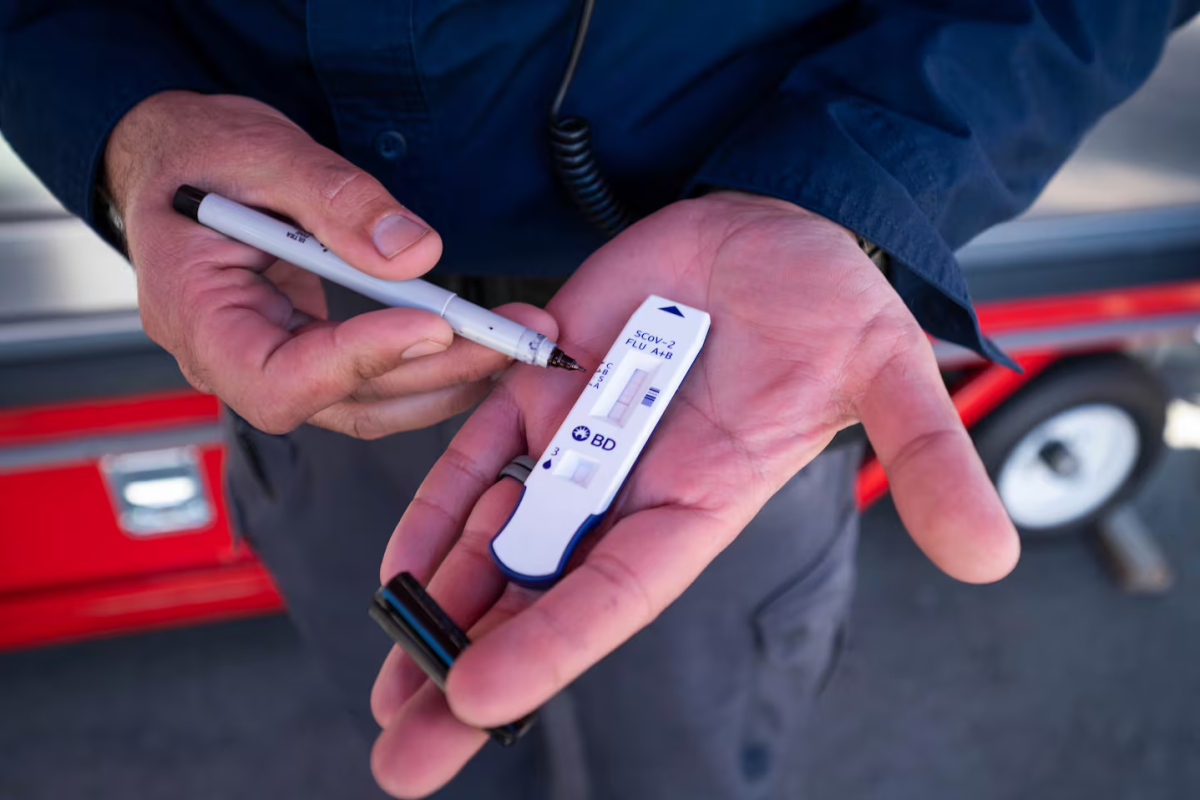
Home COVID/Flu test kits have become essential tools for managing respiratory symptoms during the unpredictable winter seasons. These rapid antigen tests allow individuals to distinguish between different viral infections within fifteen minutes at home. Accuracy depends heavily on the user following every step of the manufacturer instructions without any deviation. Many people feel confused when they see a faint line appearing on the plastic test strip. Understanding the difference between a control line and a positive result is vital for public health safety. The timing of the swab and the depth of the nasal sample directly impact the final outcome. New multi-virus tests can now identify influenza A and B alongside the coronavirus in one single session. Reliable testing reduces the risk of spreading illness to vulnerable family members and coworkers in shared spaces. Proper interpretation of these visual markers is crucial for effective self-isolation, as noted by the customreceipt.com.
The technical mechanics of rapid antigen diagnostic testing
Rapid diagnostic tests work by detecting specific proteins found on the surface of the target respiratory viruses. When you apply the liquid sample to the well, it travels across a strip containing specialized antibodies. If the virus is present, these antibodies bind to it and create a visible colored line. The control line must always appear to prove that the liquid moved correctly through the device. A missing control line means the test is invalid and you must repeat the entire process. Users often rush the process, which leads to incorrect readings and false senses of security.
Key components to check before starting your diagnostic procedure:
- Expiration date: chemical reagents lose their sensitivity after the printed date on the box.
- Seal integrity: ensure the individual test cassette remains in its foil pouch until the very last moment.
- Swab type: only use the provided sterile swab to avoid introducing external contaminants to the buffer.
- Buffer liquid: verify that the small tube contains the correct amount of fluid for the extraction.
- Testing surface: place the cassette on a flat and level area to ensure even flow.
- Room temperature: avoid performing tests in extreme heat or cold as it affects the chemical reaction.
- Timing device: use a digital timer instead of guessing the elapsed minutes for the final reading.
Following these preliminary steps ensures that the chemical reaction occurs under the best possible environmental conditions. Most errors happen when the user does not wait long enough for the lines to fully develop. Conversely, reading the test after thirty minutes can produce evaporation lines that look like positive results. The color intensity of the line does not necessarily indicate the severity of the viral load. Even the most subtle shadow of a line should be treated as a confirmed positive result. Always dispose of the used materials in a sealed bag to prevent any potential environmental contamination.
Interpreting specific markers for coronavirus and influenza
Modern combo tests feature multiple letters on the plastic casing to indicate which virus has been detected. The letter C stands for the control, while T usually represents COVID, and A or B represent Flu types. A positive result for one does not automatically mean you are negative for the others. It is possible, though rare, to be co-infected with multiple respiratory viruses at the same time. Each section of the strip functions independently within the same liquid flow path during the test.
Detailed guide for reading the test window indicators:
| Marking | Meaning of the line | Required next step for the user |
| Line at C only | Negative for all tested viruses | Monitor symptoms and retest in forty eight hours. |
| Lines at C and T | Positive for the coronavirus | Begin immediate isolation and contact a healthcare provider. |
| Lines at C and A | Positive for Influenza Type A | Rest and use appropriate over the counter medications. |
| Lines at C and B | Positive for Influenza Type B | Focus on hydration and avoid contact with others. |
| No line at C | Invalid test result | Discard the cassette and start over with a new kit. |
A negative result today does not guarantee that you will be negative tomorrow if symptoms persist. Viral loads often take a few days to reach a detectable level after the initial exposure. This is why doctors frequently recommend serial testing over two or three consecutive days for better accuracy. If your symptoms are severe despite a negative home test, seeking professional medical advice is necessary. Professional PCR tests remain the gold standard for confirmation due to their much higher sensitivity. Keep a record of your test results and the dates they were taken for your medical history.
Common mistakes and how to avoid false readings
User error is the most frequent cause of inaccurate home diagnostic results in the general population. Moving the swab too quickly or not rotating it enough times fails to collect sufficient viral material. The buffer solution must be mixed thoroughly with the swab to release the proteins into the liquid. Some people accidentally touch the tip of the swab with their fingers, which ruins the sample. Another mistake is adding too many or too few drops of the liquid into the sample well.
Precise instructions for a successful sample collection:
- Blow your nose gently before swabbing to remove excess mucus that can block the reaction.
- Insert the swab only to the depth indicated in the manual to avoid injury.
- Rotate the swab at least five times against the inside wall of each nostril.
- Squeeze the sides of the buffer tube while rotating the swab inside the liquid.
- Hold the dropper bottle vertically when adding drops to the test cassette for consistent volume.
- Wait the exact number of minutes specified before looking at the results window for answers.
Accuracy significantly improves when the user remains calm and follows the steps in a systematic manner. If you find the process difficult, ask a family member to assist with the swabbing or timing. High quality tests usually have a sensitivity rate above eighty percent when performed correctly by the user. If you have been in close contact with a confirmed case, act as if you are positive. Self-quarantine protects your community while you wait for definitive confirmation from a secondary test or doctor.
Earlier we wrote about how to prevent motion sickness in a bus or car: expert seating tips and visual hacks