 Frank Rondel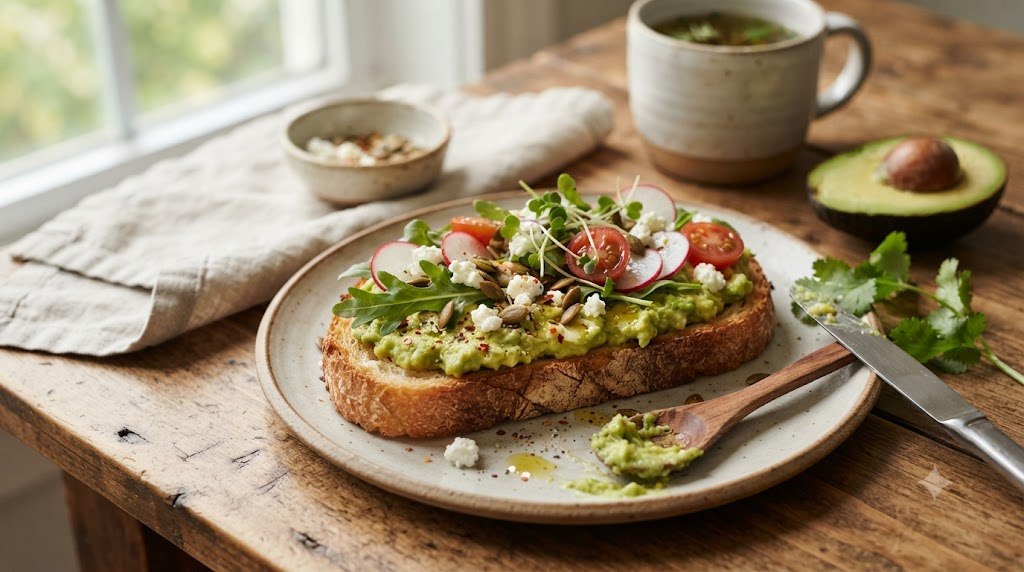
Healthy avocado toast combines crisp whole-grain bread, creamy avocado, fresh lemon, and carefully chosen toppings. It takes about 10 minutes and works for breakfast, lunch, or a filling snack. The key is controlling the avocado portion while adding protein and texture, as the customreceipt.com editorial team notes.
Avocado toast often carries a “healthy” label without much scrutiny. Yet its nutritional value depends on the bread, portion size, seasonings, and toppings. A thick restaurant slice covered with an entire avocado, cheese, oil, and processed meat can contain far more calories and sodium than expected.
This recipe keeps the familiar buttery texture while building a more balanced plate. One serving uses half an avocado, one slice of whole-grain bread, vegetables, and an optional lean protein.
Why This Healthy Avocado Toast Recipe Works
A good diet avocado toast recipe needs contrast. The bread should remain crisp beneath the soft topping. The avocado needs acidity, salt, and a little heat rather than extra oil.
Avocado provides fiber and mostly unsaturated fat. A medium avocado contains about 240 calories, 10 grams of fiber, and 22 grams of fat, according to the Harvard T.H. Chan School of Public Health. Using half creates a generous topping without turning breakfast into an oversized meal.
Whole-grain bread adds more structure and fiber than a soft white loaf. Federal dietary guidance recommends making at least half of consumed grains whole grains.
For another vegetable-based spread, this homemade vegan hummus recipe explains how chickpeas, tahini, and lemon create a smooth, protein-containing alternative.
The toast becomes more satisfying when it combines fiber, unsaturated fat, and protein. Avocado alone supplies little protein, so toppings matter.
Ingredients for 1 Serving
The quantities below produce one large toast. Double every ingredient for 2 servings, but season the avocado gradually.
- 1 thick slice whole-grain or seeded bread, about 45–55 grams
- ½ ripe medium avocado, about 70–80 grams
- 1 teaspoon fresh lemon or lime juice
- ¼ teaspoon red pepper flakes
- 1 small tomato or 4 cherry tomatoes
- 1 tablespoon chopped parsley, cilantro, or chives
- Black pepper to taste
- A small pinch of salt
- 1 poached or boiled egg, optional
- 1 teaspoon pumpkin, sesame, or hemp seeds, optional
Choose bread with whole-grain flour listed near the beginning of the ingredient list. A slice containing at least 3 grams of fiber is usually more filling than highly refined toast.
The avocado should yield gently under finger pressure without feeling hollow or mushy. Dark skin alone does not prove ripeness because appearance varies among cultivars.
Lemon juice brightens the flavor and slows visible browning. It does not preserve mashed avocado indefinitely, so prepare the topping shortly before serving.
Seeds provide crunch without requiring fried onions or salty bacon. They also make a plain breakfast feel more complete.
An egg changes the dish from a light snack into a stronger breakfast. For a vegan version, use mashed white beans, tofu, chickpeas, or hemp seeds.
How to Make Diet-Friendly Avocado Toast
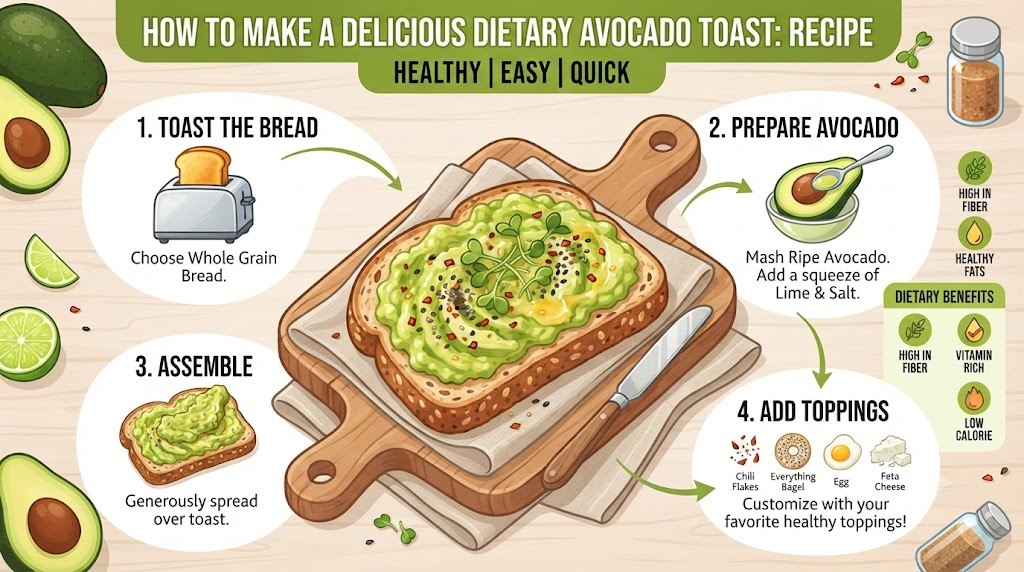
The method is simple, but the order matters. Toast the bread before mashing the avocado, and add wet vegetables only at the end.
- Toast the bread until the surface feels dry and the edges become golden.
- Cut the avocado, remove the pit, and scoop half into a small bowl.
- Add lemon juice, black pepper, and a very small pinch of salt.
- Mash with a fork, leaving several small pieces for texture.
- Spread the mixture across the hot toast from edge to edge.
- Add sliced tomatoes, herbs, pepper flakes, and optional seeds.
- Place an egg or another protein topping on top.
- Serve immediately before the bread absorbs moisture.
Do not mash the avocado into a completely smooth paste. Small pieces make the topping feel richer and prevent a glue-like texture.
Toast the bread slightly darker than usual. Moist avocado softens the surface quickly, especially when tomatoes are added.
Salt should remain restrained. The U.S. Food and Drug Administration sets the Daily Value for sodium at less than 2,300 milligrams. Many breads and packaged seasonings already contain sodium.
For another crisp breakfast method, read this guide to homemade hash browns that stay crunchy. Its moisture-control principles also explain why tomatoes should be added after the avocado.
Serve the toast on an open plate rather than inside a covered container. Trapped steam quickly removes its crisp texture.
Estimated Calories and Nutrition
Exact values change with bread size, avocado weight, and toppings. The figures below are practical estimates rather than laboratory measurements.
| Version | Main ingredients | Estimated calories | Estimated protein | Best use |
|---|---|---|---|---|
| Basic toast | Bread, ½ avocado, lemon, herbs | 250–290 kcal | 7–9 g | Light breakfast |
| Egg avocado toast | Basic version plus 1 egg | 320–370 kcal | 13–16 g | Filling breakfast |
| Vegan protein toast | Basic version plus 50 g white beans | 300–340 kcal | 10–13 g | Vegan lunch |
| Cottage cheese toast | ⅓ avocado and 60 g cottage cheese | 280–340 kcal | 15–20 g | High-protein meal |
| Smoked salmon toast | ⅓ avocado and 50 g salmon | 300–360 kcal | 16–20 g | Weekend brunch |
These estimates show why avocado quantity matters. Half an avocado creates a substantial layer, while an entire fruit can add roughly 240 calories before bread or toppings.
Calories alone do not determine food quality. A balanced version can provide fiber, micronutrients, and unsaturated fat while remaining satisfying.
Protein is the main weakness of basic avocado toast. Adding an egg, cottage cheese, beans, tofu, or salmon can make it suitable as a complete meal.
Portion needs also differ. A physically active adult may need 2 slices, while one slice may suit a lighter breakfast.
The final total should be assessed within the entire day. A single food cannot guarantee weight loss or cause weight gain independently.
How to Make Avocado Toast Better for Weight Management
A low-calorie avocado toast should not become tiny, dry, or flavorless. Better results come from adjusting proportions and adding volume.
Use ⅓ to ½ avocado per large slice. Add tomato, cucumber, radish, arugula, or sprouts for freshness and crunch.
Choose one concentrated topping rather than several. Seeds, cheese, oil, smoked salmon, and eggs can all fit, but stacking them together increases calories quickly.
Avoid drizzling olive oil automatically. Avocado already supplies fat and usually needs acidity more than additional richness.
Keep these practical rules in mind:
- Use one substantial slice instead of 2 thin refined slices.
- Measure seeds, cheese, and sauces before adding them.
- Add vegetables to increase volume and texture.
- Include protein when the toast replaces a full meal.
- Skip sugary balsamic glaze and heavy mayonnaise.
- Check sodium in bread, smoked fish, cheese, and spice blends.
After applying these rules, the toast should still taste generous. The goal is not removing every calorie but spending calories on ingredients that add satisfaction.
Fiber-rich bread and vegetables increase chewing time. A firm, crisp base also feels more substantial than soft sandwich bread.
Protein becomes especially useful during a long morning. An egg or a measured serving of cottage cheese usually offers more staying power than extra avocado.
Hot sauce can add flavor with few calories, but its sodium content varies. Read the label when using it frequently.
Eat slowly while the toast remains crisp. A rushed breakfast can feel less satisfying even when the portion is nutritionally adequate.
Best Healthy Toppings for Avocado Toast
Toppings should solve a specific problem. Protein makes the meal fuller, vegetables add volume, and acidic ingredients balance the avocado’s richness.
Good combinations include:
- Poached egg, black pepper, and chives
- Tomato, cucumber, parsley, and lemon
- Cottage cheese, radish, and dill
- White beans, arugula, and chili flakes
- Smoked salmon, cucumber, and capers
- Tofu scramble, spinach, and paprika
- Hemp seeds, sprouts, and lime
- Strawberries, chili, and a few pumpkin seeds
Each combination has a different nutritional profile. Smoked salmon and capers deliver strong flavor but can contain considerable sodium.
Cottage cheese brings protein and creaminess. Choose a lower-sodium variety when it appears regularly in your breakfast rotation.
White beans create a budget-friendly vegan option. Mash them lightly beneath the avocado so both layers remain visible.
Fruit works surprisingly well because avocado has a mild taste. Strawberries, mango, or pomegranate add acidity and color without sugary sauce.
For a larger lunch, pair the toast with soup. This New England clam chowder recipe suits a richer menu, while vegetable soup keeps the meal lighter.
Common Mistakes That Ruin Avocado Toast
The most common failure is soft bread. Under-toasted slices collapse beneath the topping and become difficult to eat.
Another problem is an unripe avocado. Hard avocado resists mashing and has little flavor. Heating it does not create the creamy texture of naturally ripe fruit.
Too much lemon can make the topping watery and sharp. Begin with 1 teaspoon, then taste before adding more.
Heavy seasoning can also hide the avocado. Garlic powder, chili, cumin, pepper, and mixed seasoning should not all compete in one serving.
Diet-friendly does not mean unlimited. Avocado contains valuable nutrients, but it remains energy-dense and benefits from sensible portions.
Avoid preparing assembled toast hours in advance. The bread softens, tomatoes release liquid, and avocado darkens after prolonged air exposure.
Is Avocado Toast Actually Healthy?
Avocado toast can form part of a healthy eating pattern, but the phrase does not describe one fixed dish. A homemade version differs sharply from restaurant toast covered with oil, feta, bacon, and multiple eggs.
Avocados contain fiber and monounsaturated fat. The American Heart Association notes that unsaturated fats can support healthier cholesterol levels when they replace saturated fats.
“Monounsaturated and polyunsaturated fats can help reduce bad cholesterol levels in your blood.”
— American Heart Association, “Fats in Foods,” guidance updated January 9, 2026.
That statement describes substitution, not a magical effect. Adding avocado to an already excessive meal does not automatically make the meal healthier.
Bread quality, portion size, sodium, and protein remain significant. The best version uses whole grains, a measured amount of avocado, vegetables, and an appropriate protein source.
People following medically prescribed diets should adapt ingredients to their individual needs. Bread, salt, potassium, and total energy may require special attention in some conditions.
How to Store Avocado and Prevent Browning
An unopened ripe avocado can remain refrigerated for several days. Firm fruit should ripen at room temperature before chilling.
To store the unused half, keep the pit in place and coat the exposed flesh lightly with lemon juice. Press reusable wrap directly against the cut surface and refrigerate it.
Use the remaining half within 24 hours for the best color and texture. Browning on the surface is usually oxidation, but discard avocado with a sour odor, mold, or widespread sliminess.
Prepared avocado mash should be kept in a small airtight container. Minimize empty space because oxygen accelerates discoloration.
Do not freeze assembled avocado toast. Frozen avocado becomes softer after thawing, while bread absorbs water and loses its crust.
FAQ
How many calories are in healthy avocado toast?
One slice with whole-grain bread and half an avocado usually contains about 250–290 calories. An egg raises the estimate to roughly 320–370 calories.
Is avocado toast good for weight loss?
It can fit a weight-management plan when portions match daily energy needs. Use ⅓ to ½ avocado, whole-grain bread, vegetables, and protein.
What bread is best for diet avocado toast?
Choose whole-grain, seeded, rye, or sprouted bread with a firm texture. Check the label for fiber, sodium, added sugar, and serving size.
Can I eat avocado toast every day?
It can appear regularly within a varied diet. Change vegetables and protein toppings to avoid relying on one narrow breakfast pattern.
How can I add protein without eggs?
Use cottage cheese, Greek yogurt, tofu, white beans, chickpeas, smoked salmon, hemp seeds, or pumpkin seeds.
How do I keep avocado toast from getting soggy?
Toast the bread thoroughly, drain sliced tomatoes, and assemble the toast immediately before eating. Never cover hot toast.
Is avocado toast suitable for vegans?
The basic recipe is vegan. Add beans, tofu, hummus, or hemp seeds when you need more protein.
Can I prepare avocado toast the night before?
Assembled toast does not store well. Prepare the ingredients separately and combine them shortly before serving.
Earlier we wrote about How to Make Sloppy Joe: The Original Homemade Recipe