 Frank Rondel
How to make piña colada at home becomes simple when pineapple, coconut, rum, and ice are properly balanced. The classic drink needs only 3 core ingredients, yet small mistakes can make it watery or excessively sweet. Below are exact recipes for alcoholic and non-alcoholic versions, plus methods without a blender, as the customreceipt.com editorial team notes.
Piña colada delivers several contrasting sensations in one glass. Pineapple provides acidity, coconut cream gives body, and rum adds warmth. Crushed ice cools the mixture and creates its familiar frozen texture.
The cocktail is strongly associated with Puerto Rico. Its Spanish name translates as “strained pineapple.” Today, bartenders serve it blended, shaken, frozen, or poured over ice.
What Is a Classic Piña Colada Made Of?
The classic recipe contains white rum, cream of coconut, fresh pineapple juice, and ice. Some versions include lime juice, dark rum, heavy cream, or frozen pineapple.
The International Bartenders Association lists piña colada among its Contemporary Classics. Its official proportions are 50 ml white rum, 30 ml coconut cream, and 50 ml pineapple juice. The ingredients are blended with ice and served in a large glass.
Do not confuse cream of coconut with coconut milk. Cream of coconut is thick, sweetened, and designed for desserts or cocktails. Coconut milk is thinner and usually unsweetened.
Readers using fresh fruit can also consult this guide to opening a coconut and preparing coconut milk. It explains how coconut water, milk, meat, and cream differ.
“Blend all the ingredients with ice in an electric blender.”
International Bartenders Association, official Piña Colada recipe and preparation guidance.
The strongest homemade piña colada tastes fresh rather than sugary. Pineapple acidity should remain noticeable beneath the coconut cream.
Alcoholic Piña Colada Recipe
This version produces 1 large cocktail of about 300–350 ml. It follows the classic balance while adding lime juice for a cleaner finish.
Ingredients
Prepare every ingredient before adding ice. This prevents unnecessary melting while measuring.
- 50 ml white rum;
- 30 ml cream of coconut;
- 60 ml pineapple juice;
- 10 ml fresh lime juice;
- 100–120 g crushed ice;
- 1 pineapple wedge for garnish;
- 1 cocktail cherry, optional.
White rum keeps the drink bright and clean. A lightly aged rum creates deeper vanilla and caramel notes. Coconut-flavored rum makes the drink sweeter, so reduce the coconut cream slightly.
Fresh pineapple juice gives the sharpest flavor. Refrigerated pasteurized juice also works well. Avoid pineapple nectar unless you reduce other sweet ingredients.
Lime juice is optional, but it improves balance. Use 5 ml for mild acidity or 10 ml for a sharper cocktail. Bottled lime concentrate may taste harsh.
The ice quantity controls texture. Too little ice produces a warm, thin drink. Excessive ice dilutes the pineapple and coconut.
For a complete party menu, pair the cocktail with creamy homemade hummus. Salty dips and crisp vegetables contrast well with sweet tropical drinks.
How to Make Piña Colada in a Blender
A standard kitchen blender provides the smoothest frozen texture. Powerful blades help crush ice without leaving large fragments.
Follow these steps:
- Chill the serving glass for 10 minutes.
- Pour rum, pineapple juice, lime juice, and coconut cream into the blender.
- Add crushed ice after the liquid ingredients.
- Blend for 15 seconds at medium speed.
- Increase the speed and blend for another 10–15 seconds.
- Check the consistency before adding more ice.
- Pour immediately into the chilled glass.
- Garnish with pineapple and a cherry.
The finished drink should move slowly but remain pourable. It should not resemble solid sorbet. Add 15 ml pineapple juice when the mixture becomes too thick.
If the cocktail is thin, add 2 tablespoons of crushed ice. Blend for another 5 seconds only. Longer blending creates heat and accelerates melting.
Taste the drink before serving. Add several drops of lime juice when sweetness dominates. Add 1 teaspoon coconut cream when acidity feels aggressive.
Serve the cocktail immediately. A blended piña colada separates as the ice melts and coconut fat rises.
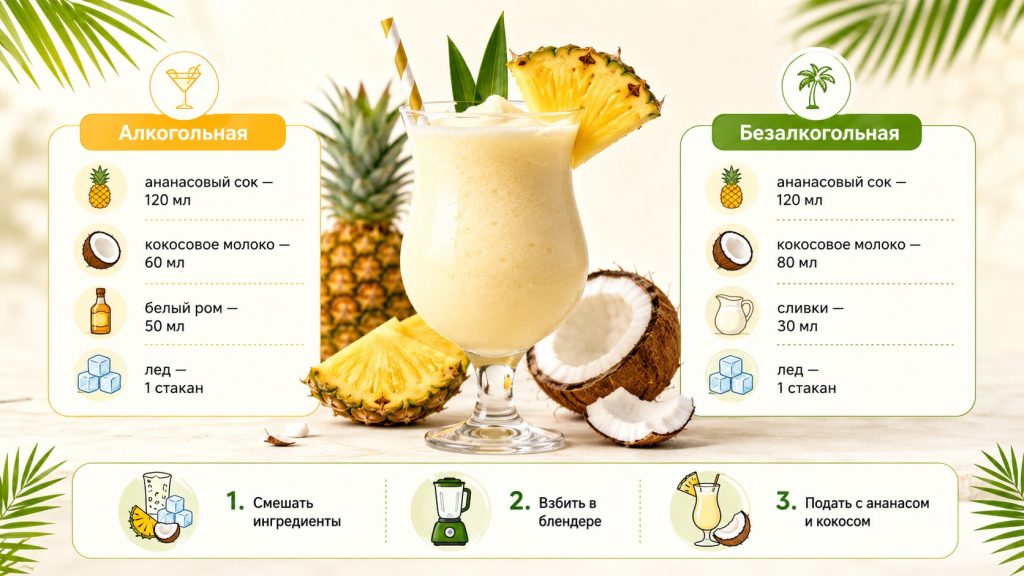
Ingredient Ratios for Different Piña Colada Styles
The following comparison helps adjust sweetness, strength, and consistency without guessing.
| Style | Rum | Pineapple juice | Coconut ingredient | Ice | Result |
|---|---|---|---|---|---|
| IBA-style classic | 50 ml | 50 ml | 30 ml coconut cream | 100 g | Balanced and strong |
| Creamy frozen | 50 ml | 70 ml | 40 ml cream of coconut | 120 g | Rich and dessert-like |
| Lighter version | 40 ml | 90 ml | 25 ml coconut cream | 100 g | Fresher and less alcoholic |
| Strong rum version | 60 ml | 60 ml | 30 ml coconut cream | 110 g | Pronounced rum flavor |
| Virgin piña colada | 0 ml | 100 ml | 40 ml coconut cream | 120 g | Sweet and alcohol-free |
These proportions are starting points rather than rigid rules. Pineapple juice varies greatly in sweetness and acidity. Fresh juice usually needs less lime than packaged nectar.
Cream of coconut brands also differ. Some products contain large amounts of added sugar. Taste the mixture before adding syrup or other sweeteners.
A stronger drink does not always need more rum. Reducing coconut cream can make the alcohol more noticeable. However, excessive reduction removes the cocktail’s characteristic texture.
For several guests, multiply every ingredient equally. Do not fill the blender beyond two-thirds of its capacity. Prepare large quantities in separate batches for consistent texture.
Freeze glasses before the first batch. This slows melting while later servings are prepared.
Non-Alcoholic Piña Colada Recipe
A non-alcoholic piña colada recipe should retain acidity, richness, and aromatic depth. Simply removing rum works, but the flavor may become flat.
This recipe makes 1 large mocktail.
Ingredients
The pineapple should remain the dominant ingredient. Coconut supports the fruit instead of masking it.
- 100 ml pineapple juice;
- 40 ml cream of coconut;
- 15 ml fresh lime juice;
- 20 ml coconut water;
- 100–120 g crushed ice;
- 2 drops alcohol-free vanilla extract, optional;
- 1 small pinch of salt;
- pineapple for garnish.
Blend all ingredients for 20–30 seconds. Pour the mixture into a chilled glass and serve immediately.
Coconut water replaces part of the volume lost by removing rum. Lime supplies needed sharpness. Vanilla creates gentle barrel-like aromas without making the drink taste like dessert.
A tiny pinch of salt can reduce perceived bitterness and improve body. Use very little because the drink should never taste salty.
Fresh pineapple can replace juice. Blend about 100 g ripe pineapple with the remaining ingredients. Frozen fruit produces a denser, colder mocktail.
For children, omit cocktail cherries containing artificial colors or alcohol-based flavoring. A fresh pineapple triangle provides a simpler garnish.
How to Make Piña Colada Without a Blender
A blender is convenient but not essential. The cocktail can be shaken and served over crushed ice.
Add rum, pineapple juice, coconut cream, and lime juice to a cocktail shaker. Fill the shaker halfway with ice. Shake vigorously for 15–20 seconds.
Strain the mixture into a tall glass filled with crushed ice. Stir gently to combine the drink with the ice. Garnish and serve with a reusable straw.
Coconut cream may stick inside a cold shaker. Mix it with pineapple juice before adding ice. This creates a smoother emulsion.
A tightly sealed jar can replace a shaker. Check the lid carefully before shaking. Never use a thin glass container with large ice cubes.
The shaken version is less frozen and slightly more aromatic. Melting occurs more slowly because the ice remains mostly separate.
Which Rum Is Best for Piña Colada?
White rum is the safest choice for a classic homemade piña colada. It has a clean profile that allows pineapple and coconut to remain prominent.
Lightly aged rum adds vanilla, oak, and caramel. Dark rum creates a heavier drink with molasses notes. Spiced rum introduces cinnamon or clove, which may overpower fresh pineapple.
Several useful options include:
- white rum for a clean, traditional flavor;
- gold rum for greater depth;
- equal parts white and dark rum for complexity;
- coconut rum for a sweeter cocktail;
- alcohol-free rum alternative for a more complex mocktail.
For a split-rum recipe, use 30 ml white rum and 20 ml dark rum. Float another 5 ml dark rum over the finished drink only when a stronger aroma is desired.
Avoid pouring several rum styles without measuring. The cocktail’s sweetness can conceal its alcohol strength. Use a jigger or measuring cup for every serving.
One drink containing 50 ml rum remains an alcoholic serving. Consume it responsibly and never serve it to minors.
Fresh, Canned, or Frozen Pineapple
Fresh pineapple delivers vivid acidity and natural aroma. However, its sweetness changes according to ripeness and season.
Canned pineapple is reliable and convenient. Choose fruit packed in juice rather than heavy syrup. Drain it before blending and adjust the sweetness afterward.
Frozen pineapple works particularly well in frozen cocktails. It reduces the amount of ice required and prevents excessive dilution. Use 80–100 g per serving.
Pineapple juice from a carton produces the smoothest consistency. Shake the container before measuring because sediment may settle.
Do not use spoiled or fermented pineapple. Discard juice with an unusual smell, swollen packaging, or unexpected foam.
Common Piña Colada Mistakes
Most disappointing results come from incorrect products or uncontrolled dilution. The recipe itself is uncomplicated.
Watch for these problems:
- using coconut milk instead of cream of coconut;
- adding warm ingredients;
- blending for too long;
- using large ice cubes in a weak blender;
- choosing heavily sweetened pineapple nectar;
- adding rum without measuring;
- preparing the drink too early;
- using an unripe, sour pineapple;
- adding too much coconut cream.
A watery cocktail can be fixed with frozen pineapple or another spoonful of coconut cream. Add ingredients gradually because excess cream creates heaviness.
When the drink is too sweet, add 5–10 ml lime juice. Extra rum is not an effective sweetness correction. It can create an unbalanced and unexpectedly strong cocktail.
When coconut dominates, add pineapple juice and a small pinch of salt. Blend only briefly after making corrections.
When the drink separates, stir it immediately. Severe separation usually means the cocktail stood too long or contained thin coconut milk.
Piña Colada Variations Worth Trying
The basic recipe accepts fruit, spices, and different rum styles. Each addition should preserve the pineapple-coconut foundation.
Try these combinations:
- Strawberry colada with 70 g frozen strawberries;
- Mango colada with 80 g frozen mango;
- Banana colada with ½ ripe banana;
- Spicy colada with a thin jalapeño slice;
- Coffee colada with 20 ml chilled espresso;
- Lime colada with additional juice and zest;
- Berry mocktail colada without rum;
- Light colada with unsweetened coconut milk.
Add frozen fruit before the ice. Reduce pineapple juice by 20–30 ml to prevent a thin consistency. Very ripe bananas require extra lime.
Strawberries introduce acidity and a bright color. Mango makes the cocktail softer and sweeter. Coffee creates a dessert-style drink that works better with dark rum.
For spicy versions, blend only a small chili piece. Taste before adding more because heat develops quickly. Remove seeds for a gentler result.
Unsweetened coconut milk can produce a lighter version. However, it will not match the thick texture of cream of coconut.
How to Prepare Piña Colada for a Party
For 8 alcoholic servings, combine 400 ml rum, 480 ml pineapple juice, 240 ml coconut cream, and 80 ml lime juice. Refrigerate this liquid mixture for several hours.
Blend each serving with ice shortly before pouring. Do not blend the entire batch in advance. The ice will melt and separate from the coconut.
Prepare a second jug without rum for guests choosing mocktails. Label both containers clearly. Use different garnish shapes to prevent confusion.
Keep coconut cream and opened juice refrigerated. Place cut pineapple in a covered container. Do not leave prepared dairy-free mixtures in direct sunlight.
Set out chilled glasses, straws, napkins, and garnishes before guests arrive. Efficient serving protects the cocktail’s texture and temperature.
FAQ
Can I make piña colada without cream of coconut?
Yes. Use thick coconut milk and sweeten it with simple syrup. The result will be lighter and less creamy.
Can I use coconut milk instead of coconut cream?
Yes, but reduce the pineapple juice slightly. Coconut milk contains more water and produces a thinner drink.
How much alcohol is in a piña colada?
A standard homemade serving usually contains 40–60 ml rum. The final strength depends on rum percentage, ice, and total volume.
Can piña colada be prepared in advance?
The liquid base can be refrigerated for several hours. Blend it with ice immediately before serving.
Why is my piña colada watery?
The ingredients may be warm, the ice may be melting, or the blender may run too long. Use chilled liquids and crushed ice.
How can I make a less sweet piña colada?
Reduce cream of coconut and add fresh lime juice. Choose unsweetened pineapple juice instead of nectar.
Is virgin piña colada suitable for children?
A rum-free version can be suitable. Check vanilla, cherries, and flavorings for hidden alcohol or unsuitable additives.
What glass should I use?
A hurricane glass is traditional. Any tall, chilled glass with enough space for 300–350 ml also works.
Earlier we wrote about What Can Vegetarians Eat Instead of Meat? Practical Ideas and Easy Recipes