 Frank Rondel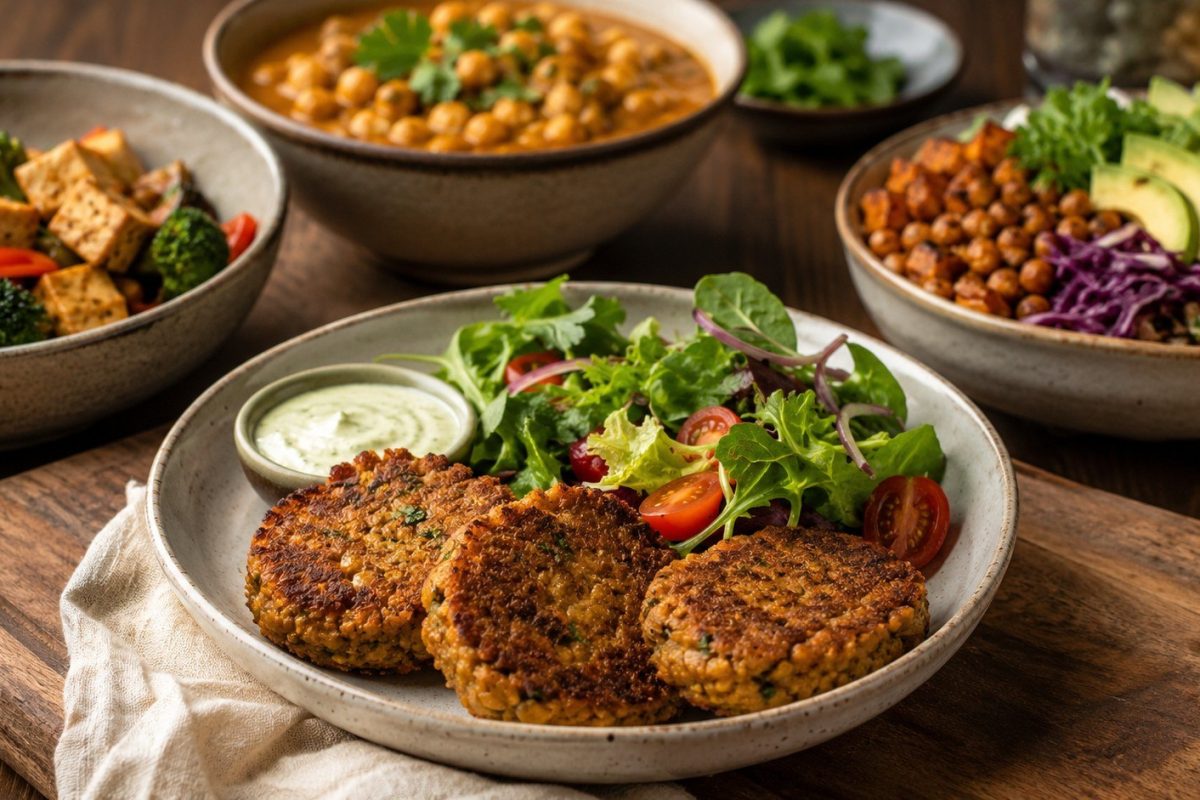
What can vegetarians eat instead of meat without losing protein, flavor, or a satisfying texture? The strongest alternatives include legumes, tofu, tempeh, seitan, mushrooms, eggs, dairy products, nuts, seeds, and whole grains. Each ingredient performs a different culinary task and requires its own cooking method, as the customreceipt.com editorial team notes.
Replacing meat is not simply a matter of removing chicken, beef, or pork from the plate. Meat usually provides protein, fat, salt, chewiness, and savory flavor. A successful vegetarian meal must restore those elements through several ingredients.
Lentils can create substance in a sauce. Mushrooms add deep umami notes. Tofu absorbs marinades, while nuts and seeds bring richness. The best results often come from combining 2 or 3 alternatives rather than relying on one product.
The Best Meat Substitutes for Vegetarians
There is no universal alternative for every recipe. Black beans work well inside burgers, but they cannot replace grilled chicken in every dish. Tempeh remains firm during frying, while red lentils soften into sauces.
The choice should depend on texture, cooking time, protein content, and flavor. This comparison helps match each ingredient with the right meal.
| Meat substitute | Best uses | Main advantage | Main limitation |
|---|---|---|---|
| Lentils | Pasta sauces, soups, pies | Affordable and rich in fiber | Soft texture |
| Chickpeas | Curries, wraps, patties | Versatile and filling | Can become dry |
| Tofu | Stir-fries, kebabs, bowls | Absorbs marinades well | Needs seasoning |
| Tempeh | Tacos, stews, sandwiches | Firm texture and nutty taste | Can taste bitter |
| Seitan | Fajitas, kebabs, wraps | Dense and meat-like | Contains gluten |
| Mushrooms | Burgers, ragù, pies | Strong umami flavor | Relatively low in protein |
| Eggs | Curries, rice, breakfasts | Quick and protein-rich | Unsuitable for vegans |
| Halloumi | Burgers, skewers, salads | Firm and satisfying | Often high in salt |
| Beans | Chili, casseroles, burgers | Cheap and widely available | Require strong seasoning |
| Jackfruit | Tacos and sandwiches | Pulled-meat texture | Low in protein |
The comparison shows why direct substitutions sometimes disappoint. Jackfruit resembles pulled pork, but it provides far less protein. Mushrooms deliver flavor and moisture, yet they cannot form a balanced main course alone.
Tofu, tempeh, lentils, beans, eggs, and dairy products provide stronger nutritional foundations. Vegetables can then improve texture, color, and aroma. A mushroom-lentil ragù is more complete than a sauce made only from mushrooms.
Cooking technique remains equally important. High heat creates browning, while acidity balances rich ingredients. A crisp topping can make a soft bean dish feel more substantial.
How Vegetarians Can Get Enough Protein
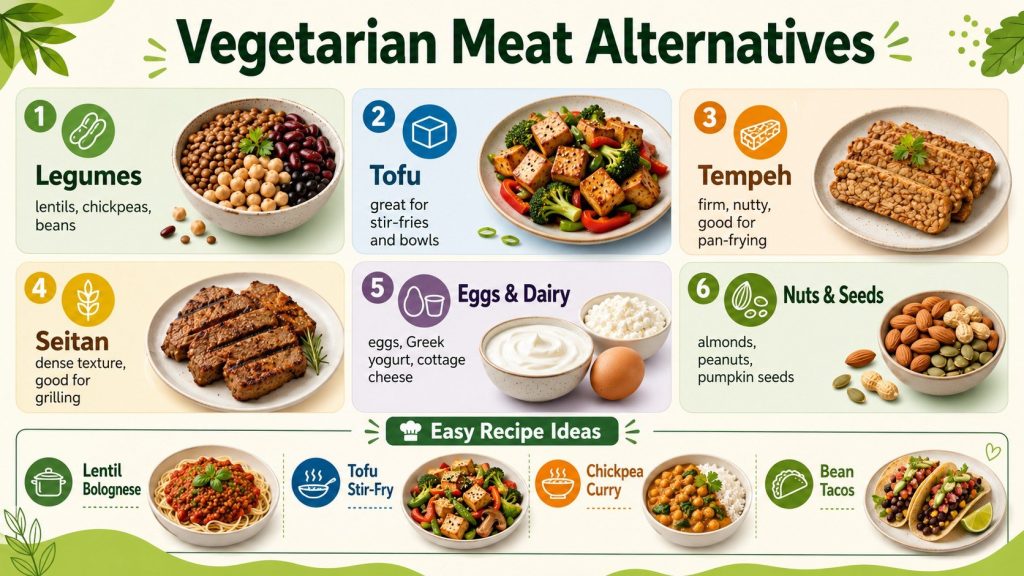
Protein is usually the first concern when meat disappears from the menu. However, many ordinary foods contain meaningful amounts of it. The main task is choosing varied sources and eating suitable portions.
Strong vegetarian protein sources include:
- tofu, tempeh, edamame, and soy milk;
- lentils, chickpeas, beans, and peas;
- eggs, Greek yogurt, cottage cheese, and firm cheese;
- seitan and wheat-based protein products;
- peanut butter, tahini, nuts, and seeds;
- quinoa, oats, buckwheat, and whole-grain bread.
Protein should appear throughout the day rather than only at dinner. Breakfast can include yogurt, oats, and pumpkin seeds. Lunch may combine chickpeas with bread or whole grains.
Dinner can feature tofu, lentils, eggs, or tempeh. Snacks may include hummus, roasted chickpeas, yogurt, or nuts. This approach is easier than trying to obtain all protein from one large evening meal.
Plant proteins do not need precise combining during every meal. A varied diet across the day usually provides a broader amino acid profile. Portion size still matters, especially for active adults.
Nuts and seeds contain protein, but they are also energy-dense. They work best as supporting ingredients. Tofu, legumes, eggs, or dairy usually form a stronger main protein source.
Lentils and Beans as Everyday Meat Replacements
Lentils are among the most practical answers to what to eat instead of meat. They are inexpensive, easy to store, and suitable for many recipes. Brown and green lentils remain firm, while red lentils break down quickly.
Beans offer a denser texture and work well inside tacos, chili, soups, and burgers. Black beans pair naturally with cumin and smoked paprika. Kidney beans suit tomato sauces, while cannellini beans create creamy soups.
Chickpeas can become patties, fillings, salads, and spreads. A reliable homemade vegan hummus recipe also turns them into a practical sandwich filling. Hummus can replace mayonnaise in wraps and vegetable sandwiches.
For stronger flavor, cook legumes with aromatics rather than plain water. Onion, garlic, bay leaves, smoked paprika, cumin, and tomato paste add depth. A splash of lemon juice or vinegar improves the final balance.
Plant-based iron is absorbed less efficiently than iron from meat. Pair legumes with tomatoes, bell peppers, citrus, broccoli, or fresh herbs. These foods provide vitamin C, which supports iron absorption.
Recipe: Smoky Lentil and Mushroom Bolognese
This recipe replaces minced meat with 2 complementary ingredients. Lentils provide substance, while mushrooms create savory depth. The quantities produce 4 portions.
Ingredients
- 200 g cooked brown or green lentils;
- 300 g mushrooms, finely chopped;
- 1 onion, diced;
- 2 garlic cloves, minced;
- 2 tablespoons tomato paste;
- 400 g canned chopped tomatoes;
- 1 teaspoon smoked paprika;
- 1 teaspoon dried oregano;
- 1 tablespoon soy sauce;
- 250 ml vegetable stock;
- 300 g pasta;
- olive oil, salt, and black pepper.
Heat a wide pan and add the chopped mushrooms. Cook them until their released water evaporates. Crowded mushrooms will steam instead of browning.
Add a little oil and the diced onion. Cook for 5 minutes, then add garlic and tomato paste. Stir until the paste becomes darker and aromatic.
Add paprika, oregano, tomatoes, lentils, soy sauce, and vegetable stock. Simmer uncovered for about 20 minutes. The sauce should become thick enough to cling to pasta.
Finish with black pepper and a small splash of vinegar. Serve with Parmesan, grated hard cheese, or nutritional yeast. A spoonful of chopped walnuts can add extra texture.
Tofu and Tempeh: Better Results Through Technique
Tofu has a mild flavor before cooking. This makes it an effective carrier for soy sauce, garlic, ginger, curry paste, herbs, or barbecue seasoning. Firm tofu works best for frying, baking, and grilling.
Pressing removes excess water and improves browning. Tearing tofu creates rough edges that hold seasoning. Perfect cubes look neat, but irregular pieces usually become crispier.
Follow this method for reliable results:
- Press firm tofu for 15–20 minutes.
- Tear it into medium pieces.
- Add soy sauce and selected spices.
- Coat the pieces lightly with cornstarch.
- Bake at 220°C for 25–30 minutes.
- Add the sauce shortly before serving.
Adding sauce too early can leave tofu soft and pale. Cornstarch forms a thin crust without deep-frying. Turn the pieces once during baking for even color.
Tempeh has a firmer texture and a slightly nutty taste. Steaming it for 10 minutes can reduce bitterness. After steaming, it can be marinated, fried, baked, or grilled.
Tempeh works particularly well in tacos, sandwiches, kebabs, and rice bowls. Its dense structure remains intact inside sauces. Thin slices also develop crisp edges quickly.
Recipe: Crispy Tofu With Ginger-Peanut Sauce
This dish combines crisp tofu with a creamy, spicy sauce. Serve it with rice, noodles, or roasted vegetables. The recipe makes 3 generous portions.
Ingredients
- 400 g firm tofu;
- 2 tablespoons cornstarch;
- 1 tablespoon soy sauce;
- 1 tablespoon neutral oil;
- 2 tablespoons peanut butter;
- 1 teaspoon grated ginger;
- 1 small garlic clove;
- 1 tablespoon lime juice;
- 1 teaspoon maple syrup or honey;
- 3–5 tablespoons warm water.
Press the tofu and tear it into pieces. Coat it with soy sauce, cornstarch, and oil. Spread the pieces across a lined baking tray.
Bake at 220°C until golden and crisp. Turn the tofu once after about 15 minutes. Avoid placing the pieces too close together.
Whisk peanut butter, ginger, garlic, lime juice, and maple syrup. Add warm water gradually until the sauce becomes pourable. Taste before adding extra salt.
Pour the sauce over the tofu immediately before serving. This keeps the crust firm. Add cucumber, scallions, sesame seeds, or steamed broccoli.
Mushrooms, Eggplant, and Jackfruit for Texture
Vegetables can replace some of meat’s texture and flavor. However, they rarely provide equivalent protein. A portobello burger may feel substantial, but it needs a protein-rich side.
Mushrooms contain natural savory compounds that strengthen umami. Roast them at high heat and leave enough space between pieces. Moisture must escape before browning begins.
Eggplant becomes silky when roasted and firmer when grilled. It works inside kebabs, pasta, sandwiches, and casseroles. Salt can help control moisture before frying.
Jackfruit separates into strands and absorbs barbecue sauces well. Choose young green jackfruit packed in water or brine. Ripe jackfruit is sweet and unsuitable for savory dishes.
Jackfruit should be paired with beans, cheese, tofu, or another protein source. It contributes texture rather than nutritional equivalence. This distinction prevents an attractive meal from becoming unbalanced.
Seitan as a Meat-Like Vegetarian Alternative
Seitan is made from wheat gluten. It has a dense, springy texture that resembles sliced meat. This makes it suitable for kebabs, fajitas, wraps, stews, and sandwiches.
Prepared seitan often contains substantial sodium. Check the label before adding salty sauces or stock. Homemade versions allow greater control over flavor and texture.
Seitan is unsuitable for people with celiac disease or gluten intolerance. Tofu, tempeh, legumes, eggs, and dairy products offer safer alternatives. Those options also provide more variety.
Seitan works best beside vegetables and whole grains. A meal based only on mock meat may contain little fiber. Add salads, roasted vegetables, beans, or brown rice.
How to Make Vegetarian Food Taste More Satisfying
Weak vegetarian meals often lack contrast rather than meat. Soft ingredients need crisp toppings. Mild foods need acidity, spice, fermentation, or proper browning.
Use several flavor-building methods:
- brown tofu, mushrooms, onions, or cheese properly;
- add miso, soy sauce, tomato paste, or nutritional yeast;
- use smoked paprika, cumin, chipotle, or toasted spices;
- finish dishes with lemon juice, vinegar, or pickles;
- add crunch through nuts, seeds, or toasted breadcrumbs;
- include tahini, yogurt, pesto, or olive oil.
Salt alone cannot produce deep flavor. Browning creates aromas that boiling cannot provide. Acid prevents creamy sauces from becoming heavy.
Fermented ingredients offer complexity in small amounts. Miso, soy sauce, kimchi, sauerkraut, and pickles can transform plain grains or beans. They should support the dish rather than dominate it.
Texture is equally important. Add roasted seeds to soup, crisp tofu to noodles, or toasted breadcrumbs to pasta. Introduce these toppings shortly before serving.
Temperature creates another useful contrast. Warm beans taste more interesting beside a cold, acidic salad. Crisp tofu should not remain under sauce for too long.
Vegetarian Tacos and Bowls Without Meat
Tacos do not require processed meat substitutes. Black beans, spiced lentils, roasted cauliflower, tofu, and tempeh can provide stronger flavor. The filling should combine protein with contrasting toppings.
A practical vegetarian taco can include:
- black beans seasoned with cumin;
- roasted corn or peppers;
- shredded cabbage;
- pickled onion;
- fresh cilantro;
- lime juice;
- avocado or guacamole.
A fresh guacamole recipe for nachos and tacos adds richness without dairy. It also balances smoky beans and spicy sauces. Keep the texture slightly chunky for better contrast.
For grain bowls, start with rice, quinoa, or bulgur. Add lentils, chickpeas, tofu, or eggs. Complete the bowl with roasted vegetables and an acidic dressing.
Sauces determine whether a bowl feels finished. Tahini-lemon dressing suits chickpeas and vegetables. Peanut sauce works with tofu, while yogurt sauce fits lentils and roasted eggplant.
Prepare toppings separately and combine them shortly before eating. This keeps vegetables crisp and grains fresh. It also prevents every ingredient from tasting identical.
Coconut Milk for Vegetarian Curries
Coconut milk does not replace meat’s protein, but it creates richness and body. It works particularly well with chickpeas, tofu, lentils, peas, and vegetables.
A vegetable curry with fresh coconut milk offers a useful base for meat-free dinners. Add chickpeas or tofu to make the meal more substantial. Serve it with rice or flatbread.
Coconut milk should simmer gently. Intense boiling can separate the fat and produce an oily surface. Add lime juice only near the end.
Strong curry flavor begins before the liquid enters the pan. Fry onion, garlic, ginger, and spices briefly in oil. This releases their aromas and prevents a flat taste.
Coconut milk contains significant fat, so portion size matters. It works best with vegetables, legumes, and fresh herbs. A lighter second pressing can be used for soups.
A 3-Day Vegetarian Meal Plan Without Meat
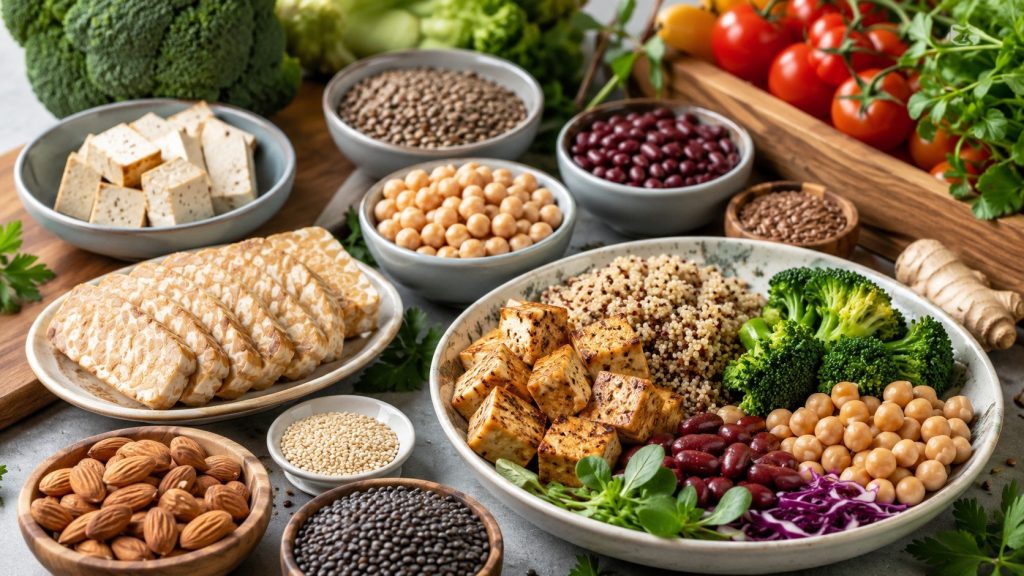
Planning becomes easier when ingredients appear in several meals. Cook extra lentils, rice, and roasted vegetables. Reuse them with different sauces and toppings.
| Day | Breakfast | Lunch | Dinner |
|---|---|---|---|
| 1 | Greek yogurt, oats, berries | Chickpea and hummus wrap | Lentil-mushroom Bolognese |
| 2 | Eggs with spinach and toast | Leftover Bolognese bowl | Crispy tofu with rice |
| 3 | Peanut butter banana oats | Tofu vegetable wrap | Black bean tacos with guacamole |
This plan uses ordinary supermarket ingredients. It also distributes protein throughout the day. Leftovers reduce cooking time without creating identical meals.
Vegan diners can replace Greek yogurt with fortified soy yogurt. Eggs can become tofu scramble. Feta or cheese can be replaced with hummus or marinated tofu.
Add fresh vegetables to each meal when possible. Fruit, herbs, pickles, or citrus can improve variety. Different sauces help repeated ingredients feel new.
Batch cooking works best when components remain separate. Store grains, sauces, vegetables, and proteins in different containers. Combine them only before serving.
Nutrients Vegetarians Should Monitor
Replacing meat involves more than protein. Iron, vitamin B12, zinc, iodine, calcium, vitamin D, and omega-3 fats also deserve attention. Individual needs depend on age, health, and activity.
Ovo-lacto vegetarians may obtain vitamin B12 from eggs and dairy. Vegans usually need fortified foods or supplements. Product labels should state the actual B12 amount.
Useful plant-based iron sources include lentils, beans, tofu, seeds, and fortified cereals. Pair them with vitamin C foods. Bell peppers, citrus, tomatoes, and broccoli are practical choices.
Calcium can come from dairy, fortified plant drinks, calcium-set tofu, and selected greens. Ground flaxseed, chia seeds, hemp seeds, and walnuts provide plant omega-3 fats.
Iodized salt can contribute iodine, depending on local products. Sea salt is not automatically iodized. People with dietary restrictions may benefit from professional nutritional advice.
FAQ
What Is the Healthiest Substitute for Meat?
There is no single healthiest choice. Legumes, tofu, and tempeh provide protein and useful nutrients. Minimally processed products are suitable for regular meals.
Which Vegetarian Food Tastes Most Like Meat?
Seitan has the closest chewy texture. Tempeh offers a firm bite, while mushrooms provide strong umami. Proper seasoning matters more than appearance.
Can Mushrooms Replace Meat Nutritionally?
No. Mushrooms can replace savory flavor and some texture. They contain less protein, so combine them with beans, tofu, eggs, or cheese.
What Can Replace Minced Beef in Recipes?
Use lentils, chopped mushrooms, textured vegetable protein, crumbled tofu, or black beans. A lentil-mushroom mixture provides the best balance.
What Is the Best Meat Substitute for Beginners?
Lentils are affordable and forgiving. Firm tofu is also practical after pressing and seasoning. Start with chili, pasta sauce, tacos, or curry.
Can Vegetarians Get Enough Iron Without Meat?
Yes, but meal composition matters. Legumes, tofu, seeds, and fortified cereals provide iron. Vitamin C foods can support its absorption.
Is Jackfruit a Good Protein Source?
No. Jackfruit provides texture but little protein. Combine it with beans, tofu, cheese, eggs, or another substantial protein source.
How Often Can Vegetarians Eat Processed Meat Alternatives?
They can be used occasionally for convenience. Check sodium, saturated fat, protein, and ingredient lists. Whole legumes and tofu remain stronger everyday choices.
Earlier we wrote about How to Make Hummus at Home: An Easy Creamy Vegan Recipe